50 Essential Sci-Fi Films of the 21st Century (So Far)
Counting down the 50 must-see science fiction films from across the last 25 years.

The 20th century defined the science fiction genre. As man-made tech came on leaps and bounds, growing far beyond what once seemed impossible, the fiction that sought to predict and outstrip it did the same. As a result, the century gave us the classic films of the genre: 2001: A Space Odyssey, Star Wars, Blade Runner, Back to the Future, The Matrix.
This has given 21st century filmmaking a lot to live up to, competing with its forebears while facing the rapid development of the internet, digital systems, and AI. But live up to this, it has.
Across this century so far, we have seen innovations and explorations in sci-fi cinema that continue to surprise us, with creators predicting the trajectory of society, and film technology allowing the realisation of stupendous, out-of-this-world spectacles.
So now, at the quarter-century mark, it seems high time to identify the essential sci-fi films we have seen so far, with "essential" meaning not merely "best", but those films that offer something exciting, compelling, new, or unique in aesthetic, structure, character, sound, and narrative (or lack thereof). We look to established giants of the genre, like Steven Spielberg, as well as newcomers like Coralie Fargeat; technological behemoths like Christopher Nolan, and barebones operators like Shane Carruth.
Animated and live action, English and foreign language, black and white and colour, blockbuster and indie - all are considered, in these 50 essential sci-fi films of the past 25 years.
50. Edge of Tomorrow (2014)
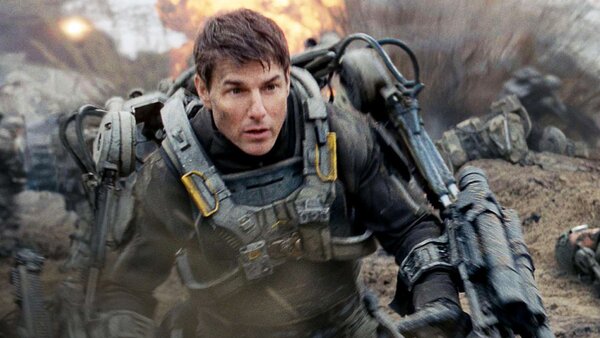
Although the film has gone on to become known as Live. Die. Repeat. in some quarters due to its confusing marketing materials, those of us there at the beginning remember Doug Liman’s Edge of Tomorrow not for the size of the text on its posters, but for the way it took its big budget and stars and made something genuinely interesting that deserves its life beyond the standard blockbuster release cycle.
Tom Cruise is Major William Cage, a coward who serves as a handy poster boy for the United Defence Force (UDF), a planetary military tasked with expelling the alien "Mimics" vying for global domination. Abruptly thrown into combat alongside Sergeant Rita Vrataski (Emily Blunt), William finds himself face-to-face with the aliens in an unexpected offensive, and a close call with an “Alpha” grants him one of its powers - namely, the ability to loop back in time when he dies.
Handy. Or it would be, if he could get anyone to listen to his warnings about the impending attack.
A high-tech, sci-fi Groundhog Day with all the stylised action of a Marvel movie and none of the obligatory tie-ins, cameos, or kowtowing to a bigger universe, Liman’s film adapts Christopher McQuarrie’s screenplay into something that feels studio but remixes enough of the familiar elements to keep things fresh.
49. Predestination (2014)

Ethan Hawke has made a name for himself across pretty much all genres this century, and while he may be better known for his horror output or drama work with the likes of Richard Linklater, he slots neatly into pretty much anything - including the Spierig brothers’ Predestination.
Predestination sends Hawke’s unnamed US Temporal Bureau agent back in time to prevent the Fizzle Bomber attacks, but the wibbly-wobbly timey-wimeys soon set in, and things go topsy-turvy. The film uses the agent's changing appearance (a prerequisite of being a clandestine operative), the inherently splayed nature of his actions across time, and his gradually disassembling psyche to bring him face-to-face with something like fate. And fate comes in the form of John/Jane (Sarah Snook), a transgender columnist recruited by the government and who turns out to be the agent themselves…
Adapted from Robert A. Heinlein's short story “All You Zombies”, Predestination is an Oedipal meditation on the dire consequences of time travel. It drives its narrative along the single timeline theory, and admirably, if unsettlingly, refuses to let things pull themselves up by their bootstraps.
48. The Timekeepers of Eternity (2021)
What do you do when you’ve got one crap TV miniseries and a whole lotta lockdown time to play with? If you’re director-animator Aristotelis Maragkos, you make The Timekeepers of Eternity.
Sculpted from the charred remains of Tom Holland’s middling 1995 miniseries The Langoliers (itself based on Stephen King’s novella), Timekeepers boards us on a red-eye flight from LA to Boston, on which most of the passengers and crew suddenly go missing. Timekeepers’ rag-tag band of survivors land the plane and go out in search of answers, while battling the strange and obsessive Mr. Toomy (Bronson Pinchot), who is determined to get to his meeting on time.
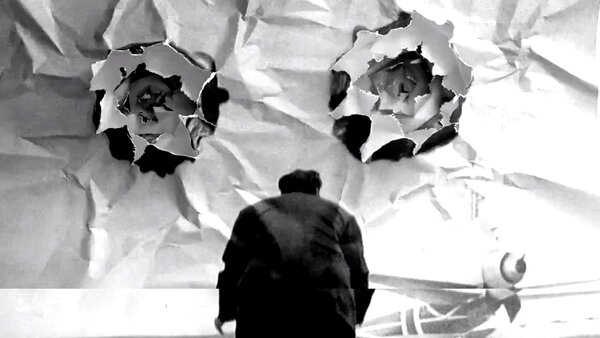
Reworked in a grainy, Xerox, black and white style, Maragkos takes one small but significant element from the original series - that antagonist Mr. Toomy obsessively tears strips of paper to remain in control of his invisible childhood monsters - and runs with it.
Paper animations dominate the film, tearing, crumpling, and adding new details. Maragkos' editing and animation provide fresh meaning to scenes, remixing characters' actions and expressions, breaking through into surreal sequences that reflect their inner turmoil and conflicts, and intercutting footage from elsewhere (past, present, and new renderings) to expand and create alternative meanings from the original material. And there really isn’t another film like it, sci-fi or otherwise.
47. District 9 (2009)

The film that launched director Neill Blomkamp’s career, District 9 takes us into the slums of Johannesburg, where a group of sick and malnourished illegal aliens are penned up in an internment camp. This sounds all too familiar, and yet District 9’s illegal aliens are bona fide insectoid aliens from outer space, known derogatively by the locals as “Prawns”.
After the government hires defence contractor Multinational United (MNU) to relocate the aliens outside the city, dozy MNU bureaucrat Wikus van de Merwe (Sharlto Copley) finds himself leading the relocation. Hit in the face by a special fuel the peaceful aliens have been developing, Wikus begins mutating into a Prawn, bringing him face-to-face with the reality of their subjugation.
This is an alien invasion movie in which the aliens are not just the good guys, but are subjected to precisely the kind of cruelties we would never want to admit to, but which are far more likely than welcoming them with open arms. District 9 doesn’t just play as a cipher for apartheid South Africa, but offers a hard look at the way we use perceived differences to create insurmountable barriers between ourselves and others.
If made today, there would be a massive online backlash against it, with everyone complicit in this kind of behaviour feeling called out; but as it stands, District 9 has slotted into the canon as a modern sci-fi classic, with every other person who saw it ignoring its core message.
46. Annihilation (2019)
Alex Garland is a name that crops up time and again in 21st century sci-fi, rivalling Christopher Nolan and Denis Villeneuve for sheer presence and achievement in the genre, but without the name recognition of the former or the studio/financial backing of the latter. Nonetheless, Garland has steadily chugged away, writing and helming many important sci-fi films across the past 25 years, not least his sophomore directorial effort, Annihilation.
Adapted from Jeff VanderMeer’s novel, Annihilation takes a virtually all-female cast into the heart of an alien invasion event. Following the arrival of a meteor containing a mysterious alien substance, an anomalous zone known as the Shimmer emerges, into which teams of troops and scientists enter, few of whom return.
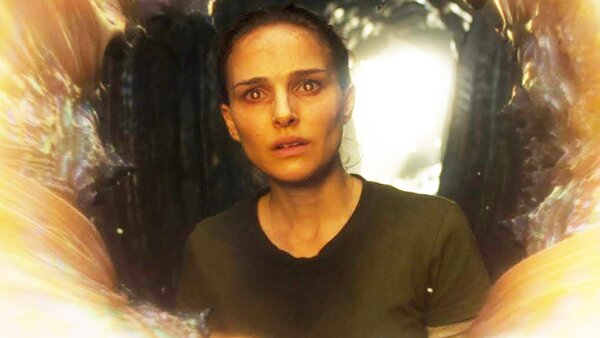
Cellular biologist and former soldier Lena (Natalie Portman) ventures into the ever-expanding zone with an expedition team in a last-ditch attempt to save her Shimmer-sick husband Kane (Oscar Isaac), and hopefully find a way to stop it expanding before it’s too late. Once inside, however, things don’t go as expected, and after cutting the team off from the outside and pitting them against its many mutations, the Shimmer begins to distort and transform them on a genetic level.
In all, Annihilation is an unsettling piece of sci-fi cinema that pairs hallucinogenic visuals, horror imagery, and hints of larger ideas about personhood, challenging us to think bigger than the average alien invasion movie.
45. Safety Not Guaranteed (2012)
Back before Aubrey Plaza was shilling for the dairy industry, she was a minor indie darling, playing supporting and character roles in the likes of Scott Pilgrim vs. the World, Damsels in Distress, and Safety Not Guaranteed.
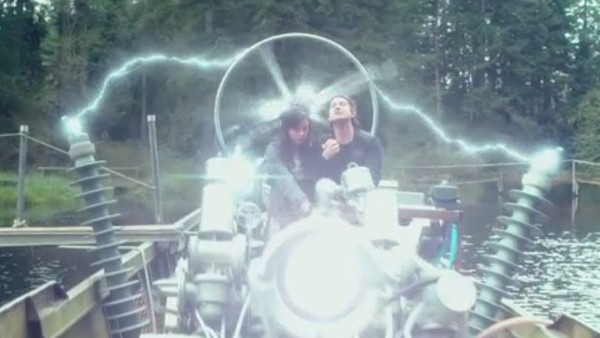
Directed by Colin Trevorrow in his feature film debut, Safety stars Plaza as Darius Britt, a disillusioned college graduate whose internship at Seattle Magazine takes her farther than she imagined. When staff writer Jeff Schwensen (Jake Johnson) investigates a classified ad seeking individuals to go back in time, he takes Darius along for the ride, and they are drawn into the world of Kenneth Calloway (Mark Duplass), a grocery store clerk whose mission is to return to 2001 and prevent the tragic accident that killed his girlfriend.
Although the film is set up as a quirky comedy, in which the dopey, lost male lead is shown the way out of the fantasy world he has created, this is not how things progress. Because that time machine Kenneth has been working on? It actually works.
Safety Not Guaranteed’s various twists leave us wondering what the truth of the whole thing is, especially after the late-in-the-day time machine reveal casts doubt on everything that has been established before - and this is the genius of it. Low budget, no frills, and with a plot that leaves you thinking about it after the credits.
44. Prey (2022)

Like most sci-fi horror franchises, the Predator series has had its ups and downs over the years - and mostly downs, if we’re being honest - yet Dan Trachtenberg’s Prey has managed to rejuvenate the franchise, taking it away from the tired Mercs vs. Yautja narratives of previous entries and trying something new.
In this, the series’ most recent live-action instalment, we are transported back to 1719, before any of the other films’ events, and introduced to the franchise’s first female lead, Naru (Amber Midthunder), a young Comanche warrior and native inhabitant of North America’s Great Plains. Seeking to become a great and respected hunter, Naru takes a series of risks that bring her into conflict with the Feral Predator (Dane DiLiegro), a savage version of the monster we all know, which wields primitive Yautja weaponry.
The new setting, new characters, and new Yautja all make Prey an enduring success, forgoing the complex plots, intricate technology, and space escapades we usually associate with the genre, in favour of a down-to-earth outing that expertly balances tension, excitement, and all-timer kills.
43. High Life (2018)

With High Life, Claire Denis launches R-Patz, Juliette Binoche, and Mia Goth into space for a squirmingly uncomfortable time. Putting a disjointed narrative to use against the mise en scene of cold space, cold light, and cold people, a series of striking images is forced upon us across a 110-minute runtime, which begins in the credible and descends into the kind of arthouse insanity we might expect from Denis.
Pattinson plays Monte, a criminal astronaut aboard a square ship, sent by humanity on a doomed mission to seek an alternative energy source for the planet from the edge of a black hole. So far, so Interstellar. But the crew Monte shares his space with each have their own agenda, controlled by the scheming Dr. Dibs (Juliette Binoche), who leads experiments on them with the intention of achieving artificial insemination in space.
It's sexual but not sexy, and lit or filtered with every colour on the spectrum, but never colourful. And there is violence beginning to end, as, contrary to Kubrick’s thesis in 2001, mankind seems to shrink within itself and devolve back to apes the further it journeys into space. The weird juxtaposition of grand space visuals against sets that look like the storage cupboard at work only adds to the overall sense of unease that High Life delights in, and yet even after all this, it manages to end on a hopeful note.
42. The Jacket (2005)
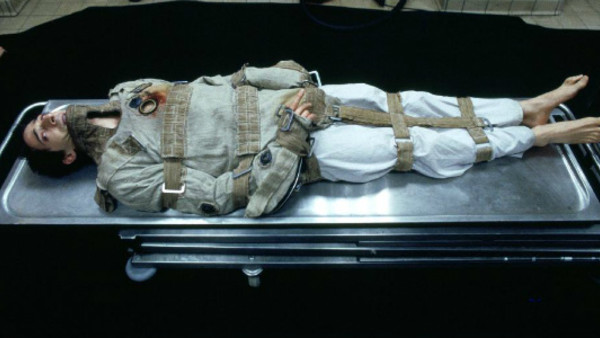
With a cast list boasting Adrien Brody, Keira Knightley, Daniel Craig, Kris Kristofferson, and Jennifer Jason Leigh, you may be wondering how you’ve never seen John Maybury’s The Jacket. Well, despite its star power, it didn’t go far either at the box office or with critics, and has been lost down the back of the couch ever since. But no more!
We join Jack Starks, a Gulf War veteran who returns to the States in 1992 after surviving a bullet wound to the head and suffering from bouts of amnesia for his troubles. But he gets into a spot of bother while hitchhiking, waking up to find himself next to a dead cop with no memory of what happened. Thus, Jack is tried and thrown in the clink - or, a locked psychiatric institution - where he’s injected with drugs, bound in a straitjacket, and locked in a morgue drawer as a form of experimental treatment. While in the jacket, though, he travels 15 years into the future and finds the woman he loves, using their bond to investigate what really happened.
Like Twelve Monkeys but on a far smaller and more personal scale, The Jacket expertly navigates the tropes of the psychological thriller while finding time for a genuinely affecting romance. Yes, the sci-fi element is a vehicle for the film’s other interests - but isn’t this what good genre is all about?
41. Brian and Charles (2022)

In 2022, Jim Archer’s loveable sci-fi comedy Brian and Charles finally brought David Earle and Chris Hayward’s fictional comedy duo to the big screen after over a decade of stand-up adjacent work in character, and it delivered on all fronts.
Set in rural Wales, the film focuses on ragged inventor Brian Gittins (Earle), who lives a lonely and somewhat reclusive life making madcap machines that usually fail spectacularly - suffice to say, the flying cuckoo clock ends in flames - but after finding a mannequin head and an old washing machine, he clobbers together an AI robot that actually works for once. The rickety, lumbering robot’s name is Charles Petrescu (Hayward), and he wants nothing more than to get out of the house, explore his surroundings, and jet off to Honolulu.
Relying fully on Earle’s and Hayward’s well-drawn characters to propel it forward, Archer infuses the film with a down-to-earth Britishness that keeps every scene feeling delightfully familiar. In all, Brian and Charles is hilarious, heartwarming, and shows that you don’t need anything fancy to make a decent sci-fi flick.