52 Movies That All Take Place In The Same Universe

Now here's a crossover we really want to see.
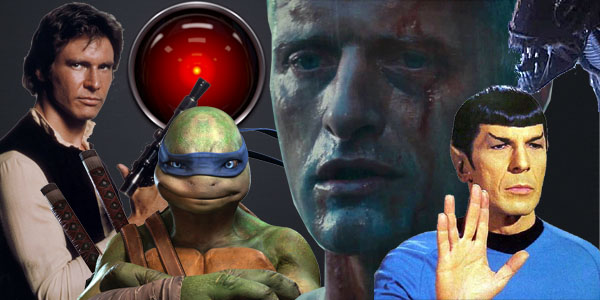
In days gone by an in-joke referencing another movie was just that - an little wink for the more obsessive fans to pick up on. But thanks to all this shared universe malarkey dominating Hollywood, our minds now automatically try and link them all together into some form of cohesion. Maybe Frozen isn't just Disney's best since The Lion King, but also the missing link between Tangled and The Little Mermaid. And perhaps Pixar have been building a massive, millennia spanning timeline with their animated masterpieces. As your English teacher always said, everything means something. Creators rarely put as much thought into the continuity as their fans, meaning things can get pretty ridiculous if you start to join the dots. Which, naturally, is exactly what we did. We followed the trails easter eggs left behind and discovered something shocking - many of our most beloved films all occur in the same plane of reality. Here is our 100% unofficial and most likely utterly unfounded theory that links fifty-two movies together in one kinda neat package. We only used official easter eggs to make the links, but even then things got pretty damn complicated. Maybe they weren't meant to be taken this seriously...

52-49. Indiana Jones

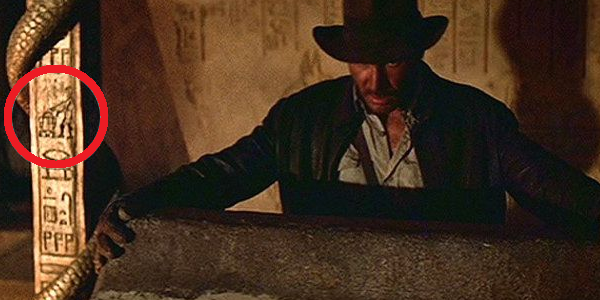
Let's kick things off with the man who made everyone over-estimate just how fun it is to be an archeologist. Through his adventures Indiana Jones comes up against all manner of strange fantastical powers - aliens, cult magic and even God - but it's all centred in his own world; he never comes up against a Jedi or anything. Although some in his universe may have; look closely during the uncovering of the Ark of the Covenant in the Well of Souls and you may spot some familiar characters hidden amongst the hieroglyphs. Which brings us to a central power in all this...

48-42. The Star Wars Saga

Those hieroglyphs are of R2-D2 and C-3PO (or some other astromech/protocol droid pairing). We know Star Wars is set in "A long time ago in a galaxy far, far away', meaning that most of the characters who got to know and love through the six movies (as well as The Clone Wars CGI movie which, while not part of the main series, is considered canon by Lucasfilm) will be dead by the time us Terrans come around. The only ones who have a hope of surviving that long are the droids, who, as far as we know, can remain functional indefinitely. The galaxy may be far, far away, but as their ships can travel faster than the speed of light there is the potential for someone to travel from their worlds to ours. The hieroglyphs strongly suggest this is what happened and that the bickering duo left their galaxy and landed in our world a few thousands years ago where they were (once again) treated like deities. There's also a Star Wars Tales comic, Into The Great Unknown, which sees Indy finding a crashed Millennium Falcon in the woods, but that, unlike the hieroglyphs, is regarded as non-canon. Henry Jones Jr. isn't the only Spielberg icon to factor into Star Wars, however...

41. E.T. The Extra Terrestrial

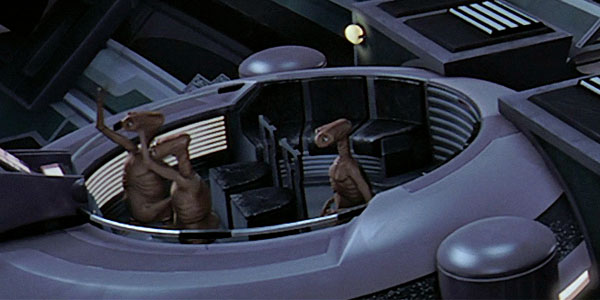
It seems Artoo and Threepio weren't the only ones to make the jump from one galaxy to another. There's strong evidence that the home E.T., eponymous hero of E.T. The Extra Terrestrial, pines for is in fact somewhere amongst Tatooine, Yavin et al. In the Senate scene where Amidala calls for a vote of no confidence in The Phantom Menace one group of the aliens getting riled up are the same species as the Reese's Pieces-loving creature. So, likely some time after the droids made their trip, his lot must have travelled on a long term exploration trip, accidentally leaving him behind. Quite why they were there we don't know - perhaps something went wrong and, like R2 and 3PO, they were looking for a new home. This explains why he gets so excited when he sees the Yoda costume on Halloween; this incredible coincidence genuinely reminds him of home.

40-39. 2001: A Space Odyssey And 2010: The Year We Make Contact
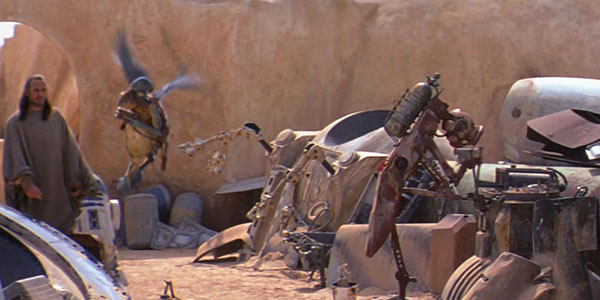
Star Wars Episode I doesn't just reference E.T. though. When trying to get a hold of a hyperdrive the old fashioned way (with money rather than extravagant bets), Qui-Gon Jinn and Watto walk past one of the EVA Pods from 2001: A Space Odyssey. Quite how one of the "smaller dealers" has not only the device the character's need, but something from a different galaxy we don't know, but it means Stanley Kubrick's 1968 genre masterpiece (and its better-than-you'd-expect sequel) is somehow related to that galaxy far, far away. Given how abstract 2001's monoliths are, it's entirely possible that Dave's transformation into the Star Child took him lightyears away from his home, dumping his vessel in the seeming middle of nowhere. Perhaps the beings who kept jumping man's development forward were even imbued with the Force.

38-27. Star Trek

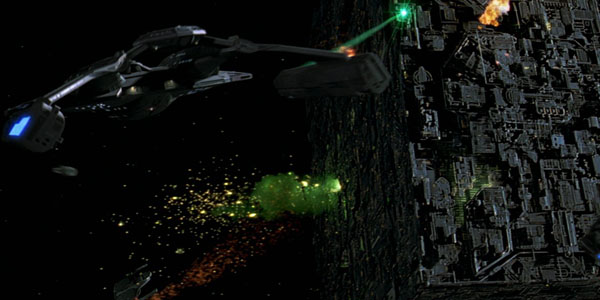
As an even numbered Star Trek, First Contact, the second film starring The Next Generation crew and their first without the help of Kirk and co., is regarded as one of the franchise's better films. Dealing with the Enterprise travelling back in time to stop the Borg from destroying humanity, the film boasts some exciting space battles. In amongst all the lasers and explosions, a recurring ship in the background is an immediately recognisable piece of junk. The ship is clearly a YT-1300 light freighter; whether it's the ship that was once known as the Millennium Falcon (as well as being called Stellar Envoy, Jackpot and Second Chance at various points) is unclear, but it's clearly of Star Wars galaxy origins. The third example of a denizen of the galaxy moving to ours, it suggests at some point well down the line from the reign of the Empire there was a sizeable exodus. What it also means is that all of Star Trek, ranging from the Original Series, through the various other time periods and even the alternate universe from the recent movies are all set some millennia after Star Wars. The alternate timeline happens long after most of the movies on this list, so doesn't have much of an impact on the theory, but the powers of red matter serve as a nice way to explain away some involved series' (cough, Star Wars, cough) narrative complications.

26. Cloverfield

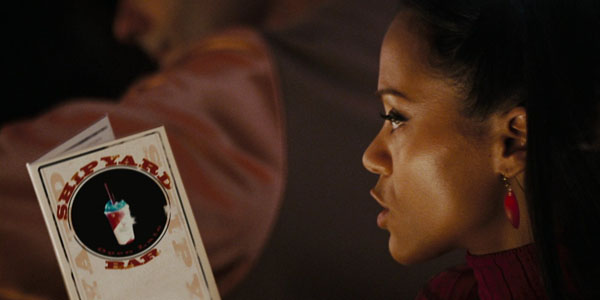
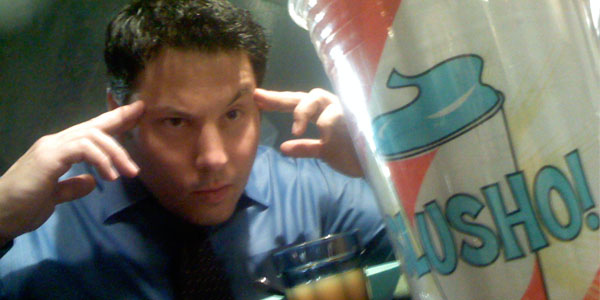
In the scene where Kirk and Uhura first meet in the alternate timeline there's some rather painful product placement - she orders three Budweiser Classics - but it doesn't distract from a cheeky little in-joke on behalf of J.J. Abrams; she also orders some Slusho, a mysterious ice-drink that is also seen on the menu. Slusho was an integral part of the Cloverfield ARG (alternate reality game) in the build up to its release, with the deep-sea origins of the drink paralleling the movie's city smashing titan. That's not the only link between Cloverfield (which Abrams produced) and Star Trek though. Tagruato, an oil drilling company who are implied to have awoken the monster, are likewise seen in Star Trek; clearly leading to the destruction of New York City didn't hurt their shares too badly.

25. Super 8

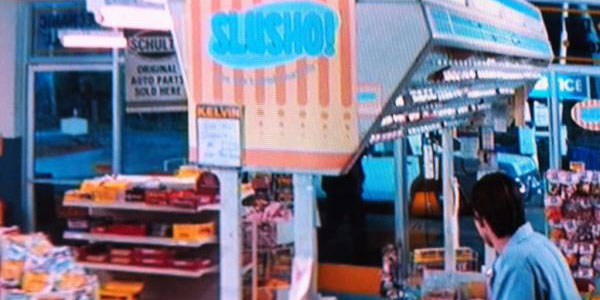
Slusho brings with it a whole universe of opportunities; it may be most integrally linked with Cloverfield, but the incredibly addictive drink has popped up in more than just Star Trek. Sticking with other Abrams directed movies before diving into the wider world, a poster advertising the drink (with a slightly different logo) can be seen in the convenience store that provides one of the first points of attack in Super 8. Not just an E.T. homage, but also set in the same world. Could its space monster also be from the Star Wars galaxy?

A Brief Interlude - TV

To continue with the theory we need to take a step away from movies and head into the world of TV. This whole point is greatly expanded upon in Baz Greenland's look at films set in the same world as Lost, but essentially Slusho and fictional airlines Oceanic are constant through many shows from the past couple of decades (many with a passing relation to Abrams). And, coming out the other end it ties into a group of other movies.

24-20. Twin Peaks: Fire Walk With Me, Executive Decision, The X-Files And Veronica Mars
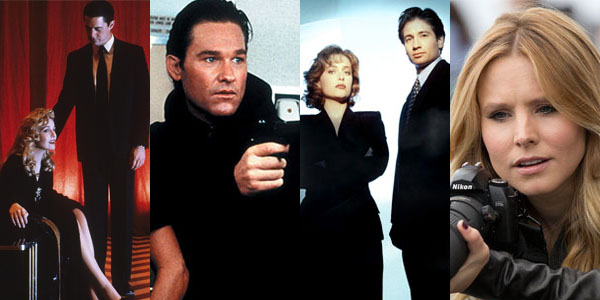
Fringe also features Slusho relatively prominently and also shares universe elements with The X-Files and Twin Peaks (and obviously their subsequent movies); the FBI's "X designation" from the former is mentioned in Season 2's A New Day In The Old Town and Season 4's The Firefly sees Walter Bishop namecheck Laura Palmer's psychiatrist Dr Lawrence Jacoby. Fringe also features adverts for Oceanic Airlines, a fictional and misfortunate airline most prominently appearing in Lost, tying in a couple more movies into our universe. Executive Decision, the middling Kurt Russell actioner sees an Oceanic Airlines plane explode (they just don't get any luck), while in the Season 2 episode Donut Run of Veronica Mars, the investigator gets a fortune cookie with the numbers 4, 8, 15, 16, 23 and 42 in; in the Lost universe a direct suggestion of a candidate to be protector of the Island. So with that crowd-funded effort earlier this year we did ultimately get a movie about Lost, sort of.

A Second Interlude - Daredevil Comics
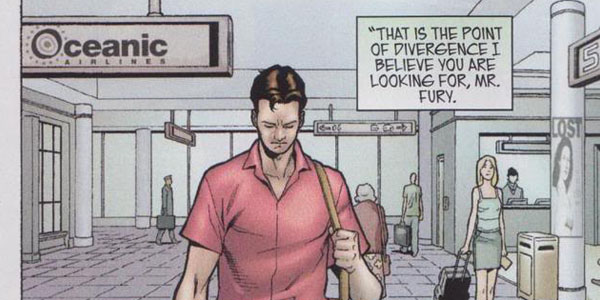
The Oceanic connection doesn't end there though; not only popping in movies and TV shows, an advert also appears in the background of Daredevil #104 (Volume 2). Now we could stretch this to suggest all of Marvel's (and thanks to various crossovers D.C.'s) comic universe are linked to this theory, but even if that is the case it has no relation to the movies; it's clear there's no tangible in-world relation between any Superhero Cinematic Universe and their comic counterparts. This easter egg isn't without merit though.

19-15. Teenage Mutant Ninja Turtles

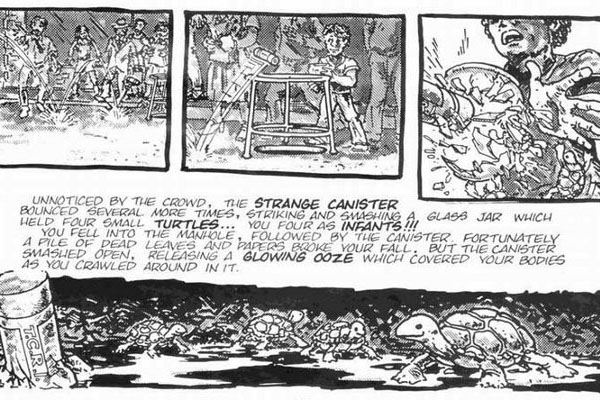
You see, Daredevil has an intrinsic link to another comic world. The truck accident that gave made him blind also had another, unexpected side effect; a canister of ooze from the truck ended up mutating four baby turtles who became, obviously, the Teenage Mutant Ninja Turtles. Obviously coming from a different comic house meant this connection is never explicitly stated, but the intent is clear. And with the turtles that whole different medium issue is less of a problem; the brains behind them are gleefully aware of the various incarnations, with the different versions of the characters meeting up multiple times throughout their existence, meaning the Oceanic connection is maintained. While not all versions are name-checked, the implication is that there's multiple dimensions out there that with each take on the turtles coming from a different one. Welcome aboard Michael Bay's lot.

14-13. Mighty Morphin Power Rangers

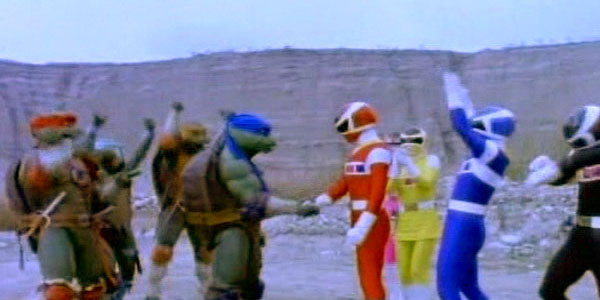
That Teenage Mutant Ninja Turtles to Lost connection was a tricky one, so now let's do something more explicit. In Shell Shocked, the fourth episode of Power Rangers In Space, the Ninja Turtles (from Ninja Turtles: The Next Mutation, which exists in the continuity of the original films) team up with the Rangers to take on Astronema. As Power Rangers In Space continues the mythology of the earlier series, that means this version (and by the dimension mash-up all versions) of the Ninja Turtles are in the same universe as the Mighty Morphin Power Rangers: The Movie and Turbo: A Power Rangers Movie. Unlike some other connections, like, say, Star Wars and Indy, the logistics of this are a little less clear, but nevertheless there is clearly an element of a shared universe on show here.

12. Blade Runner

As you may have guessed Power Rangers is something of a cul-de-sac in the universe, so let's go back to the central series in all this, Star Wars. Although it's hard to see in amongst all the other traffic, flying through the skies of Coruscant in both The Phantom Menace and Attack Of The Clones are some spinners, the flying cars from Blade Runner. It requires a little reasoning, but this suggests that, on top of E.T. and 2001, Ridley Scott's masterwork is also linked to that galaxy far, far away. In fact, this connection could answer a niggling question about the film; why did technology seem to leap forward so much between 1982, when the movie was made, and 2019 when the movie was set? Because they had a little help from some extra-galactic beings, including the giving of some of their technology in the form of the spinners.

11. Soldier

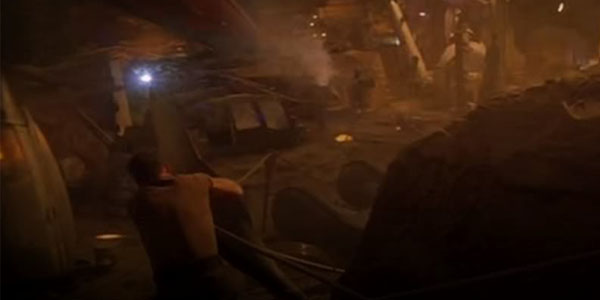
In 1998 the inept Paul W. S. Anderson made a dire, Kurt Russell-starring sci-fi action flick that would have been all but forgotten now if it wasn't for one little techniciality - it's set in the same universe as Blade Runner (and, by extension, many, many more films). In one scene a wrecked spinner can be seen (see above image, bottom middle) and there's multiple nods in the dialogue to the world of replicants and Tyrell, the most interesting being recurrent references to the Tannhauser Gate; turns out it was actually a battle.

10. Prometheus

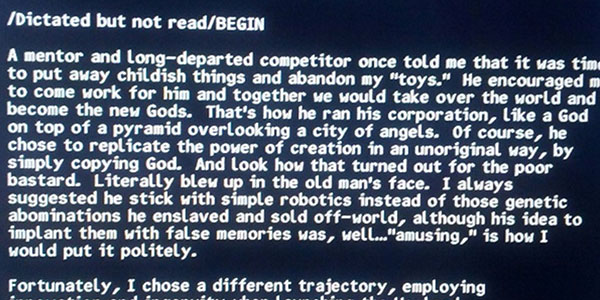
Soldier isn't the only film to frame itself in the same reality as Deckard. On top of dealing with some rather similar ideas, Ridley Scott's latest sci-fi draws some links between Weyland Industries and the Tyrell Corporation. The bonus features on the film Blu-ray boasts some journal entries from an aged Peter Weyland, including one where he discusses the story of a competitor with more than a passing similarity to Eldon Tyrell; pyramid, city of angels, sold off-world, memories - it couldn't be anyone else. With sequels to both movies coming in the next few years, expect this connection to be expanded upon.

9-6. The Alien Quadrilogy

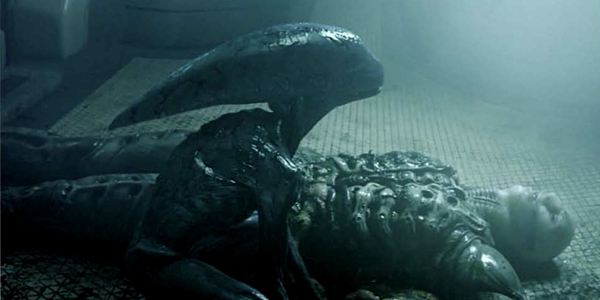
The film may have sharply diverged from the initial plan for a straight prequel, but Prometheus, still sharing many contextual elements, as well as boasting a Xenomorph at the end, clearly didn't go as far as to fully remove itself from the Alien universe. There's some monitor displays from Alien seen again in Blade Runner (probably for production reasons), but from our standpoint it strengthens the previous link. So welcome to the increasingly convoluted reality Ripley, Hicks et al.

5-4. Alien Vs. Predator

Of course, if you bring in the Alien Quadrilogy you have to care for the runt as well. The Alien Vs. Predator franchise transplanted the xenomorphs to the modern day, where they're hunted by yautja. For all their inability to instil any sense of terror, the films do manage to tie up their narratives tightly enough that it doesn't impact the rest of the franchise. The only real continuity blip between these and the current universe we've built is that the first film boasts a different Weyland - Lance Henriksen's Charles Bishop instead of Guy Pearce's Peter - although given the time period it's conceivable the Weyland killed by a predator in the arctic is the father of the Weyland killed by an engineer on LV-223 (the ages could match up).

3-1. Predator

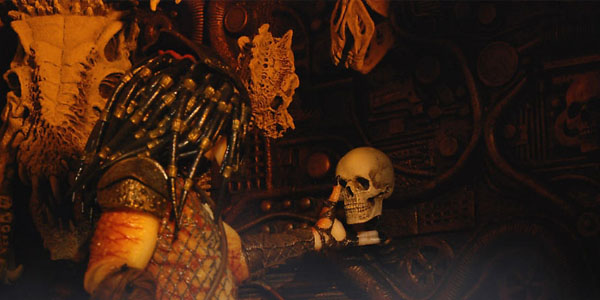
And so we come to our conclusion. Obviously if you're going to have AVP in the universe there's no avoiding Predator. The other great sci-fi monster franchise that lost its way a little, Predator has has been tightly woven into the Alien world on screen since a xenomorph skull appeared in the lair of the hunter from Predator 2. Thanks to the subsequent showdowns it's become one of the most widely-known connections between franchises, which makes it a fitting point to end this bonkers run down. So there you go, from Indiana Jones to Predator with a stop-off to see Power Rangers. What do you make of the whole thing? Do you have any more films you can add to the universe, or have a completely different movie theory entirely? Let us know in the comments below.

 
Posted On: 
Contributor
Contributor

Film Editor (2014-2016). Loves The Usual Suspects. Hates Transformers 2. Everything else lies somewhere in the middle. Once met the Chuckle Brothers.