8 Directors Who Admitted They Pushed Their Stars Too Far
These directors didn't know when to stop.
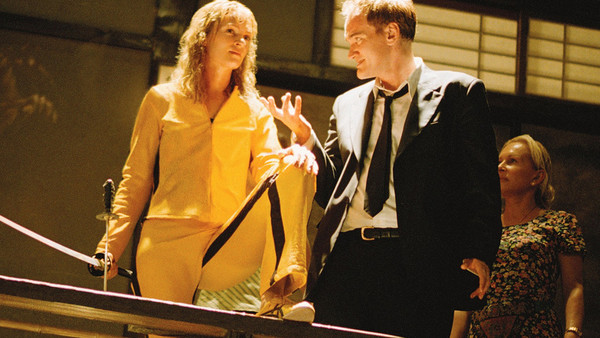
With the recent success of the #MeToo movement, it's fair to say that there's a brighter spotlight being shone on the entertainment industry - and Hollywood in particular - than ever before.
Directors are being rightly taken to task left and right for their abuses of power - be they sexual in nature or otherwise - though the majority of the accused filmmakers have unsurprisingly lawyered-up rather than admit any wrongdoing.
Refreshing it is, then, when a director throws their hands up in the air and cops to the suffering they've put cast members through, whether it's merely an unpleasant time on a movie set, or something closer to the boundaries of consent and legality.
These 8 filmmakers, largely some of the most acclaimed and celebrated in the history of cinema, put their actors through hell for various reasons, and in spite of how it tarnished their own reputations in Hollywood, they at least didn't lie about it...
8. Bernardo Bertolucci
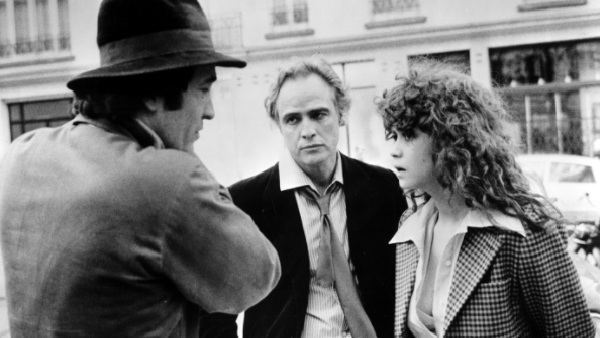
Bernardo Bertolucci's controversial 1972 erotic drama Last Tango in Paris is best remembered for an infamous sequence in which Maria Schneider's character is anally raped by Marlon Brando's protagonist, who uses butter as lubricant.
In recent years, a clip emerged online in which the filmmaker admits that Schneider wasn't made fully aware of the scene's content in order to evoke a legitimately surprised reaction from her.
Schneider herself brought this to light back in 2007, but it mostly fell on dear ears until Bertolucci himself confirmed it more recently. She said of shooting the sequence, "I was crying real tears. I felt humiliated and, to be honest, I felt a little raped, both by Marlon and Bertoucci."
Bertolucci fully acknowledges that he took things too far, though stops short of wishing it hadn't happened. He said, "I feel guilty but I do not regret. To make movies sometimes to obtain something we have to be completely free. I didn’t want Maria to act her humiliation, her rage, I wanted Maria to feel, not to act. Then she hated me for all her life."
7. Francis Ford Coppola

Francis Ford Coppola is no stranger to movie sets that turn into battlefields, and after the utter chaos of working on Apocalypse Now - where Coppola had a nervous breakdown and threatened to kill himself - making Winona Ryder cry on the set of 1992's Bram Stoker's Dracula probably seemed like just another day at the office.
While shooting a pivotal scene, Ryder couldn't bring herself to cry, so Coppola opted to go old-school by berating her to evoke the desired response. Coppola shouted at her, "You whore! You f***ing whore! You! Look at you! Look at yourself! And your own husband’s looking at you!"
This prompted Ryder to burst into tears, but not merely content with one great take, Coppola had her perform the scene a staggering eight times before moving on. Afterwards, Ryder says he ran over to her, scooped her up in his arms and said, "I’m sorry, I’m so sorry...I don’t mean it."
He clearly knew he went too far, but did he regret it? Knowing Coppola, probably not.
6. Gene Kelly

Though Singin' in the Rain is a sweet, light-hearted musical classic, the mood on the set apparently wasn't quite so chipper, with director-star Gene Kelly pushing his female lead Debbie Reynolds to the limit.
Because Reynolds wasn't a classically trained dancer, Kelly would scold her for her lack of dance experience, making her cry on numerous occasions. Furthermore, when he insisted she shoot the "Good Morning" dance number in one continuous 15-hour filming setup, her feet were left bleeding by the end.
That's not all, though. Reynolds also said, "He criticised everything I did and never gave me a word of encouragement", and claims when it came time to shoot their first kiss, Kelly took directorial liberties by shoving his tongue down a 19-year-old Reynolds' throat. She said, "It felt like an assault."
Though Kelly never apologised for the assault specifically - and he was long-dead by the time Reynolds finally talked about it - he did publicly state that he hadn't treated her well, and was surprised that she was still willing to speak to him after filming was complete.
5. John Landis
As abusive and potentially illegal as the actions of many of these filmmakers were, none of them caused the deaths of three cast members as John Landis did while shooting his segment for 1983's Twilight Zone: The Movie.
While filming a set-piece involving a helicopter, a series of pyrotechnics were detonated too close to the chopper, causing it to crash to the ground, instantly killing actor Vic Morrow - father of Jennifer Jason Leigh - along with two child actors who were working on the film illegally.
Though Landis and his co-defendants were acquitted of manslaughter in a court of law, when later asked if he felt responsible for the incident, he declared, "Of course. It was my set...I live with the 'Twilight Zone' every day of my life."
There's making your cast cry, making their feet bleed, and even sexually assaulting them, but then there's flagrantly ignoring child labour permits and getting three people killed. Jeez.
4. Sidney Lumet
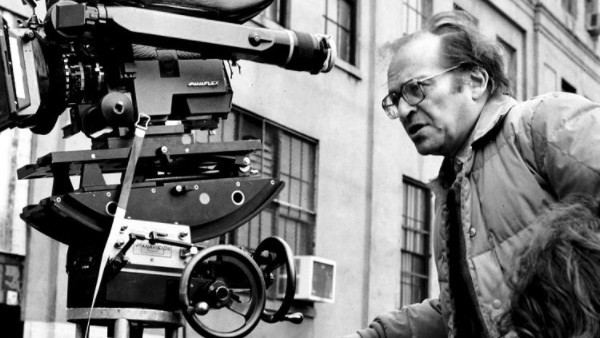
Sidney Lumet is responsible for some of the greatest films ever made: 12 Angry Men, Serpico, Dog Day Afternoon and Network to name just a few.
However, in his legendary filmmaking book Making Movies, Lumet fully admitted that he took extreme measures to get the necessary performance out of an actress earlier in his career, though stopped short of admitting which poor actress it was (he said it was many years before 1976's Network, which narrows it down a little).
Lumet says it best himself: "I needed tears from an actor on a particular line. She couldn’t do it. Finally, I told her that no matter what I did during the next take, she should keep going and say the line. We rolled the camera. Just before she reached the line, I hauled off and slapped her.
Her eyes widened. She looked stunned. Tears welled up, overflowed, she said the line, and we had a terrific take. When I called, 'Cut, print!' She threw her arms around me, kissed me, and told me I was brilliant. But I was sick with self-loathing…and knew that I would never do anything like that again. If we can’t get it by craftsmanship, to hell with it. We’ll find something else that’ll work as well."
Considering how many successful directors believe in "art at all costs", it's a refreshingly compassionate, reflective stance from one of Hollywood's all-time great filmmakers.
3. Spike Lee
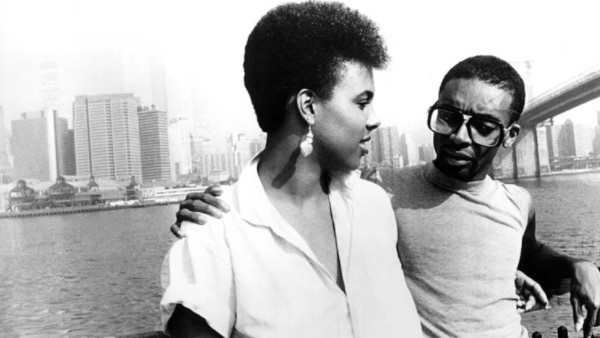
Spike Lee's 1986 directorial debut may have earned him rave reviews and kick-started an incredibly fruitful filmmaking career, but it also features his one apparent regret as a filmmaker: putting actress Tracy Camilla Johns through a grueling rape scene.
Lee said, "If I was able to have any do-overs, that would be it. It was just totally…stupid. I was immature. It made light of rape, and that's the one thing I would take back. I was immature and I hate that I did not view rape as the vile act that it is."
Watching the film today, the rape scene has a queasy tenor of victim-blaming to it, and though Johns thoroughly committed herself to it regardless of its uneasy content, Lee himself fully admits he crossed the line with conceiving and shooting the scene.
2. Quentin Tarantino

A few weeks ago, Uma Thurman spoke out against Quentin Tarantino for his cavalier approach to safety on the set of the Kill Bill movies.
Specifically, she spoke of an incident where the director pressured her into driving an unsafe car rather than have a stuntman do it, which resulted in the car crashing, giving her neck and knee injuries which still linger almost 15 years later.
Tarantino was firmly raked over the coals for his part in Thurman's injury, especially after the actress posted damning footage of the crash.
He responded by holding his hands up and calling it "one of the biggest regrets" of his life. Though things were rough between the two for a while after the accident, they have since reportedly made amends.
1. Tony Kaye
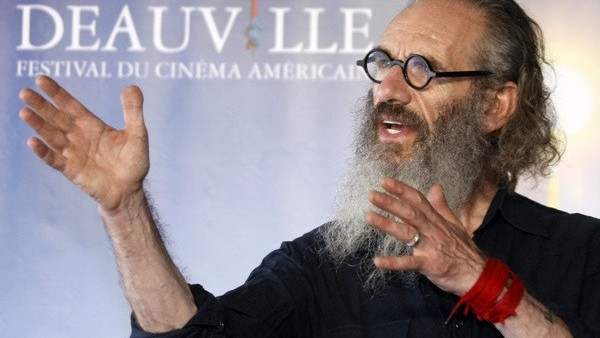
In a rare case of a male director hurling abuse at someone who isn't a woman in Hollywood, Tony Kaye pushed Edward Norton to his wits' end during post-production on racism drama American History X.
Kaye, who made his feature debut with the film, apparently wanted Joaquin Phoenix for the Norton role originally, but principal photography nevertheless went off without a hitch, and problems only occurred during the editing process.
Kaye delivered a first cut of the film and received notes from both the studio and Norton himself, but Kaye's adversarial approach - including punching a wall and breaking his hand - resulted in him being locked out of the editing process, with Norton creating a new edit that ultimately became the theatrical version.
The director publicly disparaged the film in interviews and lobbied to have his name removed from it - wishing to be credited as "Humpty Dumpty" - while Norton, who received an Oscar nod for his performance, made this legendary proclamation: "Let’s not make any mistake: Tony Kaye is a victim of nothing but his own professional and spiritual immaturity."
In recent years Kaye has admitted his part in testing Norton's patience, stating, "I wasn't what you'd call 'user friendly'...I did a lot of very insane things. A lot of very, very insane things."
What do you make of these filmmakers pushing their actors past the brink? Shout it out in the comments!