8 Movies From 2013 That Completely Went Over Audiences' Heads

It's not that they were bad - it's just that you didn't really get them.

If film history has shown us one thing, it's that first impressions of movies are usually not what ultimately shapes their legacies: the original Godzilla, Fight Club, Citizen Kane, Shawshank Redemption, It's a Wonderful Life, The Shining, 2001: A Space Odyssey, and The Night Of The Hunter are just some of the classics that had to fight for recognition from both critics and audiences before being appreciated for the major accomplishments they were. While movies come out all the time that for whatever reason don't connect very well with audiences, 2013 was an odd year insofar as many movies with so many good qualities ended up dividing viewers. The following five movies probably won't ever become as revered as the movies listed in the first paragraph, and to be honest, only one or two of these are likely "great" movies by traditional definitions but all eight deserved more attention and praise from both critics and audiences alike. For a multitude of reasons, these films just didn't quite hit home with many people because of either featuring too strange a concept, not spelling enough out for the audience, or for being mistakingly perceived as either too ugly or too shallow. These are some of the movies from 2013 that received bad reviews either from critics and/or audience, faired poorly at the box office, and that received little in the way of awards recognition. All of them will hopefully be reevaluated in coming years and they get some needed props here, where they are ranked in order of how under-appreciated they were.

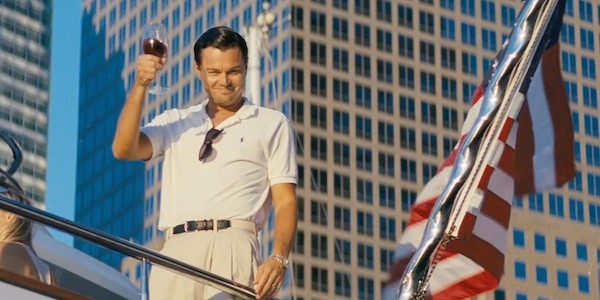
8. The Wolf Of Wall Street

Martin Scorsese has never been one to back down from controversy and his latest film has become one of the most controversial films of 2013. Part of this is due to the incredible amount of profanity, sex, and drug use seen on screen. In fact, The Wolf Of Wall Street is now the all-time record holder for the most f-bombs dropped in one movie. Due to its rampant depiction of vulgarity, many have seen The Wolf Of Wall Street as glorifying its subjects, the criminals who made a fortune in the 80's and 90's stealing from everyone they could, or at least failing to properly condemn them. The Wolf of Wall Street has not fared particularly well with audiences because of these issues, garnering a dismal C cinemascore, even though it did end up doing decent business financially. Although The Wolf of Wall Street definitely has its flaws, being repetitive and perhaps too stylish in a way, most of the criticisms of this film from audiences are completely unfounded. Scorsese is in now way approving of the behavior seen on film, but most audiences miss the fact that the film takes place from the point of view of Jordan Belfort. From his point of view, the sort of lifestyle he lives is a sort of paradise on Earth, and Scorsese's camera portrays it as such. The point is that most of what the main characters do on-screen is disgusting when you think about it, but most people, if given the chance, would act much the same way.

7. Inside Llewyn Davis

The Coen Brothers rarely make films that are exactly commercial friendly, but their latest film Inside Llewyn Davis has seemingly already been forgotten about, despite being one of the best movies of the year and focusing on a subject that would seemingly have a built in fanbase. Inside Llewyn Davis follows the trials and tribulations of a broke folk singer in the early 1960's, who routinely misses out on opportunities to become part of something special. Although the opportunities are never explicitly stated during the course of the film, Llewyn misses out on a chance to become a part of Peter, Paul & Mary while auditioning for the manager of a major record company. Ironically, this manager is based on the one who in real life gave Bob Dylan his first shot, and later in the film Llewyn briefly crosses paths with Dylan whose massive success later in the decade redefined the folk music scene. While the common interpretation of the film is that it is a story of man constantly in the wrong place at the wrong time, other have pointed to it as a study in depression, while others have noted the influence of James Joyce on the narrative. More out there theories have gone so far as to note the parallels between Llewyn and a cat that he ends up stuck with early in the movie, suggesting that somehow they are "linked." Regardless of the right interpretation, if there even is one, the point is that Inside Llewyn Davis somehow went almost unnoticed at the end of last year. Despite being the work of some of America's most famous directors, Inside Llewyn Davis only pulled in 12 million dollars at the U.S box office. Whether or not its popularity is due to bad marketing or its difficult content, Inside Llewyn Davis was clearly one of 2013's least appreciated films.

6. Upstream Color

The most enigmatic and confusing film of 2013, Upstream Color went over the heads of more than just audiences. Even the smartest and most insightful viewers had trouble deciphering Shane Carruth's sophomore directorial effort, one of the most head-scratching movies in recent memory. The plot is much too complex to delve into much detail here, but it's fair to assume that the reason it wasn't more popular and well marketed was because no one really knew how to explain it without writing a dissertation. While it has been acclaimed at film festivals for its inventiveness, cinematography, and acting, it has made less than 500,000 dollars at the box office and never saw a release of more than 43 theaters. Right now it's hard to tell how Upstream Color will be remembered in coming years. Few people have seen it and even fewer people have understood it, but it seems a good bet to become something of a cult classic. Maybe after a few viewings, Upstream Color will either become clearer and be appreciated as a lost gem, or be confirmed as simply incomprehensible. Either way, Upstream Color is definitely an intriguing film that completely went over most people's heads.

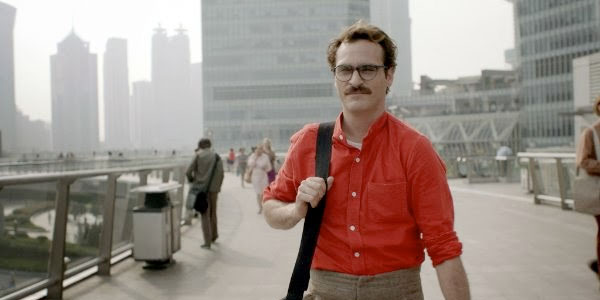
5. Her

Up next is Her, which, despite being one of the most intelligent and though provoking American films of 2013, ended up being a bit of a flop when it came to popular reception. Her failed to crack the top ten at the box office on its opening weekend, and received a poor B- Cinemascore from viewers. For context, that's lower than Ender's Game's, and is the same score that audiences gave The Legend of Hercules. A lot of the mixed reception came from discomfort with the strange concept, as well as audiences missing out on the fact that the movie was a bit more than just a portrayal of a futuristic relationship.While the love-story between the two main characters is the central theme of the movie, Her is also a character study, a superbly crafted sci-fi film, and a probing, understated investigation into human interaction. The numerous themes in the movie demand multiple viewings before they can properly be understood, but the very fact that so much of this movie takes place beneath the surface probably damaged it in the short run. While it will undoubtedly be a classic years from now, Her might have been a bit much for audiences to take in 2013.

4. The Counselor

Ridley Scott's team-up with legendary author Cormac McCarthy proved to be one of the year's most derided films, flopping at the domestic box office, earning a rare D cinemascore, and posting 34% on Rotten Tomatoes. A bizarre screenplay, over the top acting, and several long spur-of-the-moment monologues teamed up to befuddle just about everyone who saw it. To be fair, The Counselor is not the masterpiece a lot of people were hoping for, and in all actuality it doesn't even necessarily reach "very good" status, but in no way was it as bad as people made it out to be. The Counselor is the result of two artists who prefer to convey ideas stylistically: Scott's visuals have always been the best part of his movies, while McCarthy's rich prose deals more with character's inner monologues than plot devices and character-to-character interaction. The result of the two working together is a movie that is probably too blunt with its message and too sparse on plot, but nevertheless gorgeous, stylish, and completely original. The biggest mistake The Counselor made, at least in terms of trying to achieve widespread success, is that it's such a cold, depressing movie. It is arguably the most hopeless movie of 2013, ending in utter defeat for all but the most unlikeable character, and while it will make for fascinating analysis in retrospect, its failure with audiences was all but a guarantee. Clumsy in parts, and definitely unconventional, The Counselor will be a fascinating movie to keep track of, in terms of whether or not the critical consensus surrounding it changes over time. Since Ridley Scott's filmography will be studied for as long as movies are popular because of Alien, Blade Runner, and Gladiator, The Counselor definitely has a chance to stick around in moviegoers memory for a long time.

3. Spring Breakers

Marketed as the very thing it was being extremely critical of, Spring Breakers might be the most misunderstood movie of 2013. Although its merits as "entertainment" are hard to establish, Spring Breakers is more easily defended as one of the smartest American movies of the decade so far. While an in-depth examination of many of the themes and critiques of American culture contained in Spring Breakers would take up too much space for this list, some of the existing critical analysis of it is fascinating to read. To sum up mainstream audiences acceptance of this film, it should be noted that Spring Breakers is one of only nine films to ever receive an F Cinemascore grade and before it came out it was already brutalized by religious and conservative groups. A more in-depth analysis of the film though, reveals one of the most fascinating satires of American culture and behavior ever put on film, even if is purposely one of the most uncomfortable films ever made at the same time. While Spring Breakers is deservedly controversial and goes way overboard in depicting the same behavior it criticizes, it is also a brilliantly crafted film with several inspired sequences, and a career best performance from James Franco. It baffled just about everyone who saw it, but Spring Breakers is a near lock to become a cult classic over the next few years, after people have spent more time trying to figure out what exactly it all means.

2. To The Wonder

Although it is probably Terrence Malick's weakest film to date, the latest from the legendary director hardly deserved the largely negative reception it received, as many have even gone so far as to say that Malick had made almost a parody of his previous work. To the Wonder's sluggish pace, near lack of dialogue, and religious themes have alienated it from critics and audiences who don't seem to grasp the brilliance lying under its gorgeously photographed exterior. To the Wonder appears to be, and was marketed as, a romantic film featuring a love triangle of sorts that alternates between Paris and the plains of Oklahoma. Although at a certain level that's what the film is about, to reduce To the Wonder to such a simplistic formula undermines the very complexities that underlie all of Malick's films, as well as the metaphysical questions that have driven his narratives and stories. To the Wonder examines love in its spiritual, religious, and physical forms, evoking the biblical Song of Solomon while also showing the struggles that such emotions cause in people. The breathtaking visuals, the lyrical examinations of profound issues, the trancelike effect that all of Malick's films inflict on viewers, and the comforting conclusions he comes to, have appeared to go completely unappreciated in a film that few seemed to enjoy. Like all Malick films though, To the Wonder is likely to only grow in stature in coming years as more of its mysteries are uncovered.

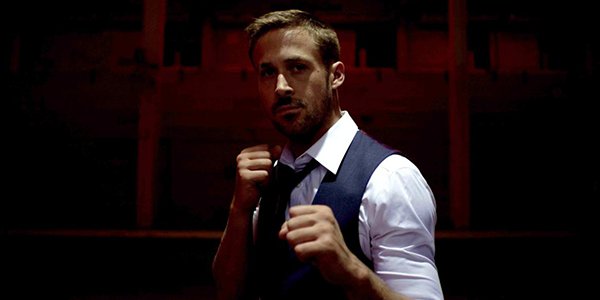
1. Only God Forgives

Fresh off one of the surprise hits of 2011, Nicolas Winding Refn's follow-up film proved to be anything but a consensus hit. Listed on a number of year-end Worst Of lists and never receiving a wide-release in the United States, Only God Forgives has been decried as one of the most regrettable failures of 2013. Like many films that received mixed feelings upon release only to become classics later, Only God Forgives is the kind of movie that everyone seems to either really love or really hate. Despite Only God Forgives being the victim of outsized expectations, and its own daring and uniqueness it is undoubtedly one of the most visually dazzling films of the year as well as one of the most thematically complex. In fact in many ways, Only God Forgives is in many ways one of 2013's most impressive films in many respects. Critics have put forth many fascinating theories while working to unravel this difficult film. One viewpoint is that Only God Forgives should be watched as a Western, with Julian being the archetypal silent hero. Another interpretation is that the city of Bangkok is a representation of hell, as evidenced by the overwhelming use of orange and red color schemes, and that the police officer Chang is a representation of God's wrath. Other critics have pointed out the Freudian symbolism and "stranger in a strange land" element of the story, and whatever the correct interpretation of Only God Forgives is, it's clearly the polar opposite of the shallow, superficial failure it has seemingly been branded as. With the level of formal brilliance and thematic daring on display going virtually unheralded, Only God Forgives is ultimately evidence that even though people constantly demand films with ideas and innovation, they usually don't appreciate the few films that actually contain both. If one movie this year deserved more recognition and more praise, Refn's riveting tour-de-force would have to be it. Do you agree that these movies completely went over audiences' heads? Share your observations below.

Contributor

I love movies, literature, history, music and the NBA. I love all things nerdy including but not limited to Star Wars, Star Trek, Lord of the Rings, and Firefly. My artistic idols are Dylan, Dostoevsky, and Malick and my goal in life is to become like Bernard Black from Black Books. When I die, I hope to turn into the space baby from 2001: A Space Odyssey.