8 Problems Which Prevent Interstellar From Becoming A Masterpiece

So, it's not alright, alright, alright?

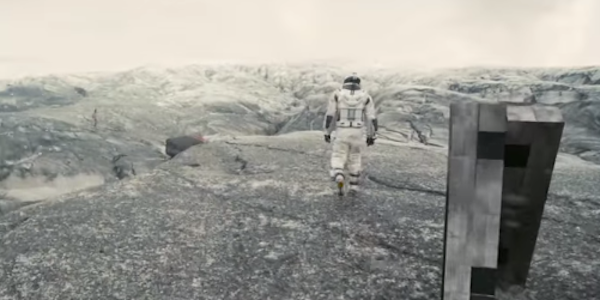
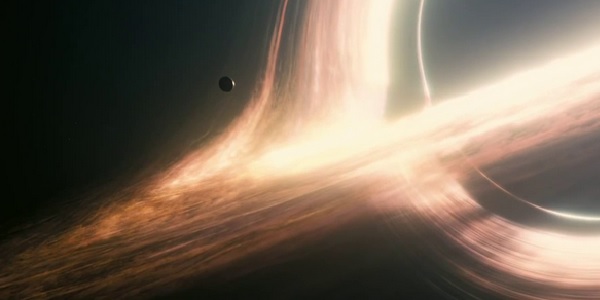
So Interstellar has finally arrived and, as many probably predicted, it has divided the audiences and critics alike. This is a Christopher Nolan movie, after all, so the two rough camps of opinion which have been set up either staunchly defending or harshly criticising were perhaps inevitable. It's certainly an ambitious film and clearly a personal project for Nolan, condensing some of his preoccupations about the nature of time and memory and the role technology has to play in our society into nothing less than an epic about mankind's survival. It's also a film with more than a few moments of visual flair and invention - while some might argue that the watery and icy vistas on display on the planets the crew of the Endurance end up visiting are sci-fi cliches, Nolan renders them in impressive scale, not least on account of the fact that he used actual locations rather than green screen backdrops. And yet, for all its grand ambitions and desire to be taken as a serious work of high concept science fiction, Interstellar contains a few flaws too many to elevate it to the status of masterpiece that some would have us label it. Perhaps this is a reflection of the limitations of Nolan's filmmaking abilities, or maybe it's simply a case of studios being unwilling to shell out large sums of money to finance a movie which might alienate more mainstream audiences. Whatever the reasons, Interstellar falls short of the potentially amazing movie it could have been. Here are 8 problems which prevent Interstellar from being a true masterpiece. As you might expect, spoilers lie ahead!

8. Poor Character Development

For a movie which hinges its central premise on the survival of the human race, Interstellar seems to have deficit of rounded and human characters for the audience to care about. That's not to say that there aren't characters you can connect to, and Nolan's attention to the relationship between Coop (Matthew McConaughey) and his daughter (played as an adult by Jessica Chastain) certainly feels as if time has been given to flesh this out, but unfortunately the same can't be said for some of the other characters in the movie. Cooper's other offspring, his son Tom (played by Casey Affleck in his adult incarnation) feels woefully underdeveloped both in terms of his relationship with his family and as an individual, while many other characters feel as if they are more representative of the ideas Nolan wishes to impart rather than flesh and blood human beings. It's perhaps ironic that the one character audiences appear to have warmed to the most is TARS, the robot who accompanies the scientists on their mission. For one thing, it's the only time any humour creeps into the otherwise sombre screenplay.

7. Some Shoddy Dialogue

Interstellar is a movie with grand ambitions and a wealth of ideas it wishes to get across, and it is perhaps inevitable that these concepts, voiced through the mouths of its characters, might get in the way of convincing-sounding dialogue. That they do so to such a large degree is just a part of the problem when it comes to the dialogue in the movie - the explanations and exposition (more on that later) could be dismissed as necessary if the dialogue didn't feel so incongruous with the characters, who often feel like just that - characters in a movie reciting cliched and predictable dialogue. Lines like €œMankind was born on earth but it was ­never meant to die here€ and €œWe€™re not meant to save the world. We€™re meant to leave it," proliferate throughout the script, and while they might make for good taglines on movie posters ultimately they hardly resemble the manner in which actual human beings talk, and this staginess inevitably distracts from the grounded authenticity Interstellar otherwise strives for.

6. Clear Issues With The Pacing

The longer the running time of any movie the more likely it's going to run into pacing issues, and as we've seen with Nolan's previous works - most notably The Dark Knight Rises - the director is no stranger to them himself. Nolan should of course be praised for the scope of his vision, and weighing in just shy of 3 hours long it certainly has the duration to get these ideas across in an unhurried manner. And yet, Interstellar's slow, almost languorous pacing at times drags the film down, an issue most noticeable in the first act, where many in the audience became quite frankly bored as they impatiently glanced at the time waiting for the mission to leave earth. Other great - and long - films have successfully played out at a similarly slow pace, but often the weight of ideas behind them make this meandering approach acceptable. Despite its ambitions Interstellar falls short of its peers.

5. Too Many Plot Holes

Another problem which Interstellar shares with other films by Christopher Nolan is plot holes, of which there are, sadly, far more than there are wormholes in the movie. A few can be acceptable even for a film which considers itself to rely on hard science, but others are not so forgivable. From Coop being NASA's only hope upon his unexpected arrival at their secret facility (were they just sitting around waiting in hope for a pilot to magically appear?), to the fact that he spends pretty much the entire movie trying to get back to his children only to leave them after a very brief reunion, not to mention technology which inexplicably cannot chart the surface of a planet and requires a ground mission in order to ascertain conditions, Interstellar contains a few too many plot holes and contrivances for its own good. Interstellar's grand attempt to fuse science with metaphysics is the theme from which ultimately many of these plot holes emerge - as viewers of entertainment we can suspend disbelief and still enjoy the movie, but when it comes to ascertaining whether or not a film is a masterpiece, these holes are harder to overlook.

4. Sophomoric Philosophizing

With Memento, Christopher Nolan explored the idea of the subjectivity of the nature of memory with a subtlety not often seen in movies; similarly with The Prestige he dazzled audiences with a clever approach to both perception and the deception, articulating these themes through well-staged scenes played out by rounded characters. Interstellar strives for similarly revealing insights into the nature of humanity and the universe around us, but on reflection feels decidedly inferior to his earlier efforts. Two lines of dialogue reveal just how little potentially interesting philosophical ideas are explored in Interstellar - firstly, the line €œOut in space, we face great odds but not evil" hints at the idea of exploring the concept of evil in a context broader than that of mankind's own propensity for evil acts but roundly drops the ball and goes nowhere with it. Secondly, the line €œWe€™re not meant to save the world. We€™re meant to leave it" similarly serves up a blanket statement about the future of the human race with a mixture of manifest destiny and arrogance; an assumption that Nolan seems to believe is a fact. There was great potential to explore and reflect on our hubris as a species but instead there's an almost naive sense of our inherent goodness which reduces the idea to a soundbite. Just as the notion that love can transcend time and space is offered with little in the way of fleshing it out and exploring the implications, so too do the other ideas in Interstellar often feel like throwaway lines which give the impression of philosophical depth but ultimately lead to nowhere.

3. It's Tonally Imbalanced

Consistency of tone is a crucial aspect of any great movie, in which once a mood has been established the film works best only when shifts and deviations from the established tone flow naturally and plausibly. Interstellar's main flaw in this respect is in its failed attempt to merge two opposing tones into one unified whole. On the one hand Interstellar strives to be a serious science fiction movie based around plausible theories in which the cold, rational scientific mind sits front and centre. Yet on the other, particularly as you move into the second half of the film, an emphasis on the importance of family and the power of love becomes increasingly paramount. It's not hard to view the tone of the film as going from one extreme of grim portentousness to sickly sentimentality with little in the way of events bridging this gap smoothly. It can be argued that the recourse to emotional appeal is Nolan's attempt to reconcile some of the more abstruse theories emerging from quantum research and their metaphysical implications, but given that these ideas are not well articulated in the film it's easy to see this more as a concession to audience expectations for big budget movies and the need for a happy ending which can be identified outside of the hard science which has transpired.

2. Endless Exposition

Anyone with even a passing familiarity with the works of Christopher Nolan will have probably seen this criticism coming a mile off - Nolan has frequently had a problem with telling rather than showing, and a heavy amount of exposition has become almost a trademark of his films. Interstellar is perhaps his worst offender yet in this regard, bogging the audience down under a relentless assault of scientific jargon, hypothetical theories and explaining the overall plot in drawn out conversations. All too often there's the feeling that Nolan and his co-writer/brother Jonathan are holding the hands of the audience, and the film sometimes runs the risk of feeling more like an educational video for scientific ideas than it does a work of entertainment (the explanation of the wormhole to Coop using pencil and paper as they hover around its edge felt particularly forced, as if Coop wouldn't be aware of these basics before setting off on the mission). Stanley Kubrick's 2001: A Space Odyssey, which Nolan has frequently cited as an inspiration, proved that more is often less, and that sometimes not explaining everything in detail can be far more rewarding for the audience. It is a lesson that Nolan, overly keen to impress us with his array of ideas, perhaps should have heeded more astutely.

1. The Clichéd Ending

To draw one last final comparison with Kubrick's 2001 would seem overly harsh were it not for the fact that this is an assessment of Interstellar's shortcomings as a potential masterpiece and that Christopher Nolan himself has stated just how important Kubrick's own film was as a point of influence. But in comparing the endings of these two films you can truly see just how short Interstellar falls alongside 2001. Whereas the ending in 2001: A Space Odyssey works so well because of its ambiguity, Interstellar's considerably more clear cut conclusion - and the "twist" which many saw coming the moment Murph started to mention ghosts to her father in the opening scenes - felt like a contrived attempt to escape from the science upon which the film is largely founded and suggest that love and fatherhood are the most powerful forces in the universe. If this sounds like the kind of sentimentality you might expect from Steven Spielberg, his previous attachment to the project might offer a clue as to why Interstellar ends with such a Hollywood cliche. Like the overuse of Dylan Thomas's poetry "Do not go gentle into that good night" these emotional appeals felt all too simplistic, as if Nolan and his collaborators found themselves crushed under the weight of their ambitions and reverted back to mainstream audience expectations. A masterpiece would bravely go where no film has gone before - Interstellar ultimately orbits those masterpieces it aspires to emulate. Do you think Interstellar could be considered a masterpiece or do you agree with the problems on this list? Why not post a comment and let us know below?

Contributor
Contributor

Andrew Dilks hasn't written a bio just yet, but if they had... it would appear here.