8 Terrible Films That Somehow Won The Best Picture Oscar

How?
While the Oscars often get it spectacularly wrong, it remains that, when choosing a Best Picture winner, they're usually right. That's not right in that the absolute best film of the year has won (hell, the best film of the year is rarely even nominated anymore), or that the best nominee has actually won, but rather right in that despite everything, the Best Picture winner is nearly always, at the very least, a good film. For instance, in 1979 Apocalypse Now should have of course won Best Picture, but it didn't, losing out to Kramer vs. Kramer instead. That's not the right choice, but Kramer vs. Kramer is still a very good film in it's own right. For a more recent example, Boyhood absolutely deserved to win in 2014, but the film it lost out to, Birdman, is too an extraordinary film. There are instances when Oscar does get it outrageously wrong, though, awarding the Best Picture statuette to not only the worst nominee, but to a film that can't even be considered good in its own right. Such instances are rarer than you might think, and by my count there are only really about fifteen times this has happened in the Academy Awards' near ninety-year history. Here are eight of the very worst examples.

8. Out Of Africa

Year: 1985 Fellow Nominees: Witness, The Color Purple, Prizzi's Honor, Kiss Of The Spider Woman In a weak year for Best Picture nominees, the weakest film of the lot took home the statuette back in 1985, when Sydney Pollack's Out of Africa beat out a pretty unremarkable board of fellow candidates (Witness is far and away the best film here, and the only one of the five that's anything even close to a great movie) to take top prize. The film, a lifeless romance between Meryl Streep's Danish plantation owner and Rober Redford's big-game hunter in postcolonial Kenya, was nominated for a staggering eleven Oscars, making Out of Africa the joint-fourth most nominated film of all time. What's more, it actually won seven of the categories it was nominated in, including triumphs for director Pollack and his screenwriter, Kurt Luedtke (the other were for Music, Cinematography, Art Direction, Sound and Set Design). Starring one of Meryl Streep's "just because she's Meryl Streep" nominations, and featuring a Robert Redford who frankly looks bored, Out of Africa is an instantly forgettable film; handsome enough, but ultimately unworthy as an Oscar nominee, let alone a winner. It's also a near-three-hour movie set in Africa, with Africa in its title, that makes little-to-no mention of actual African people.

7. Driving Miss Daisy

Year: 1989 Fellow Nominees: Born on the Fourth of July, Dead Poets Society, My Left Foot, Field of Dreams Somehow beating out a strong board of Best Picture nominees, Driving Miss Daisy is one of only four films to win Best Picture without the director, in this case Bruce Beresford, being nominated, an occurrence that's only happened twice since 1932 (Ben Affleck's Argo is the other instance since then). The director statuette went to firebrand Oliver Stone in 1989, and his Born of the Fourth of July really should've taken home the Best Picture prize as well. Instead, it went to this film, which is oft- cited as a key example of the Academy playing it safe rather than rewarding a truly outstanding motion picture. Nominated for nine Oscars, including a pair of Best Actor/Actress nods for stars Morgan Freeman and Jessica Tandy, the latter of whom won, Driving Miss Daisy won four Oscars in total, a baffling achievement when you consider how bland the film actually is (and when you consider how rapidly its status has descended over time).

6. Braveheart

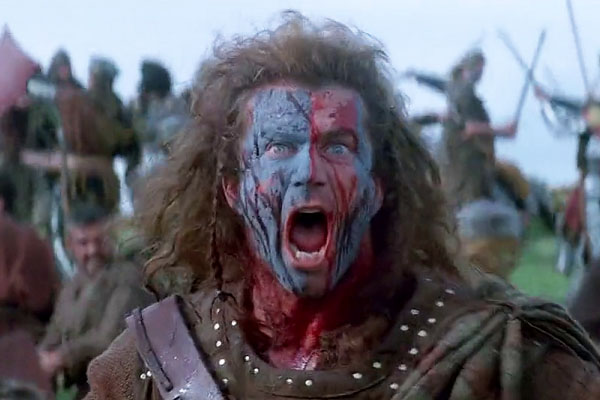
Year: 1995 Fellow Nominees: Apollo 13, Babe, Il Postino, Sense and Sensibility If it didn't come in such an insipid lineup, Braveheart's win would be even harder to take. As it is, Mel Gibson's film, enjoyable though it can be (in the battle scenes, at least), is still a terrible Best Picture winner, overlong and historically-all-over-the-place and helmed by a director and star (Gibson, obviously) to whom nuance is an alien word. Granted, it's a big, bombastic picture about William Wallace's revolt against King Edward I, but it remains that Mel Gibson as a director is about as subtle as a stomach ulcer. Nominated for ten Oscars overall, Braveheart won half, with Gibson winning for best director amid a bunch of technical wins for cinematography, effects, and makeup. Like I said, in a year comprised of not one truly great film, Braveheart's win doesn't jar as much as it could, and you can perhaps see the Academy's thinking in regard to the esoteric nature of films like Il Postino or Ang Lee's Sense and Sensibility. Still, Braveheart is one of the most nominated films in Oscar history, and its success no doubt paved the way for other Mel Gibson "history" pieces like The Passion of the Christ, a film so overwrought and ridiculous that it makes Braveheart look quaint.

5. Shakespeare In Love

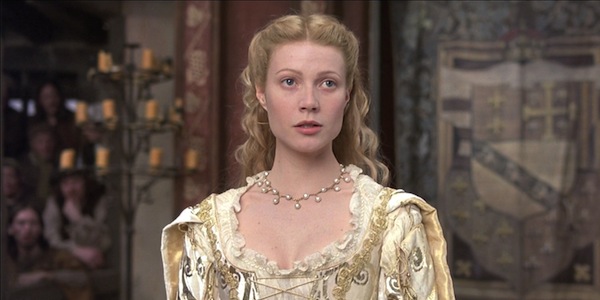
Year: 1998 Fellow Nominees: The Thin Red Line, Saving Private Ryan, Elizabeth, Life is Beautiful Winning in a much stronger field, Shakespeare in Love serves as one of the very worst Best Picture winners of recent years, inexplicably beating out two huge, brilliant war movies from two of the greatest directors of all time: Steven Spielberg's Saving Private Ryan, which won the director his second Best Director Oscar on the night, and Terrence Malick's The Thin Red Line, one of the most transcendent war pictures ever released. Nominated for a staggering thirteen Academy Awards, Shakespeare in Love is the joint-second most nominated film in history, sitting only behind All About Eve and Titanic, which both received fourteen nods to hold the top-spot. John Madden's film won seven of its categories, most notably for its actresses, Gwyneth Paltrow (Lead) and Judi Dench (Supporting), the latter of whom was on screen for roughly eight minutes. Madden, a distinctly average director whose last film was the sequel to The Best Exotic Marigold Hotel, was thankfully not presented with a statuette (though he was nominated), an act that would've surely taken the p*ss to another level considering what Speilberg and Malick had been up to in the same time.

4. Chicago

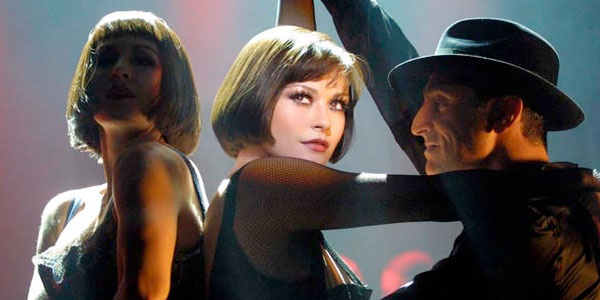
Year: 2002 Fellow Nominees: Gangs of New York, The Hours, The Pianist, The Lord of the Rings: The Two Towers Another year, another spectacular oversight from Oscar, who somehow gifted Rob Marshall's anodyne Chicago with a Best Picture award in the same year that Roman Polanski released an absolute masterwork in The Pianist. Also sitting at joint-second all-time with thirteen (sigh) Oscar nods, the film, based on Cabaret director Bob Fosse's book, was the first musical to win Hollywood's top honour since Oliver! in 1968. How exactly it managed to do so in a year when Roman Polanski and Martin Scorsese both had huge movies nominated, and when the second instalment of The Lord of the Rings was nominated, and when the critical darling that was The Hours was nominated, is a different matter entirely. Marshall thankfully lost out on Best Director to Polanski, but that didn't stop Chicago from winning six Oscars on the night, mostly technically ones bar Catherine Zeta-Jones' pretty surprising win for Best Supporting Actress. A well designed film (you can't really argue with its wins for set-design or art-direction), Chicago is otherwise a bit of an embarrassment as a Best Picture winner; good in its musical moments, yes, but ultimately a piece of pop fluff in comparison to some of the major concertos it was nominated with.

3. Crash

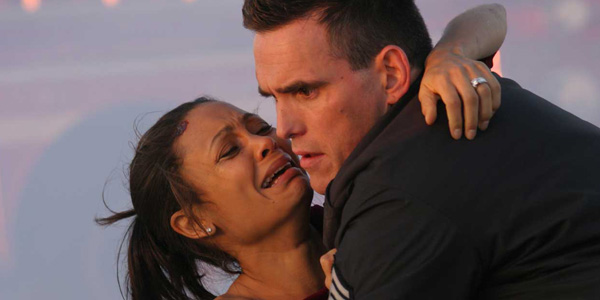
Year: 2005 Fellow Nominees: Brokeback Mountain; Good Night, and Good Luck; Capote; Munich Presenter Jack Nicholson's face says it all: what the f*ck? One of the biggest upsets and oversights in Academy Awards history happened in 2005, when Paul Haggis' insufferable, "racism is bad" movie, Crash, beat out Ang Lee's timeless, transcendent, aching masterpiece, Brokeback Mountain (amongst others: people tend to forget that Steven Spielberg's near-masterpiece, Munich, was also nominated in 2005). In what seems to be becoming a trend here, Haggis lost out on the Best Director prize to Lee, continuing a throughline of pictures which are deemed Best Picture worthy but not, seemingly, for how they are actually directed. (This plays into the Academy's hands as it means they can play it relatively safe with their Best Picture choice, safe in the knowledge that they will be honouring a more critically lauded director as a kind of balancing act). Nominated for six awards on the night, Crash won three, with Haggis and co-writer, Robert Moresco, winning for best Original Screenplay, and Hughes Winborne winning for his editing. Haggis, a likeable presence despite the vapidity of his film here, ended the night with two actual Oscars for himself (he co-produced, meaning he gets a gong for Best Picture, too), but it could've been much worse. It could've been three.

2. Slumdog Millionaire

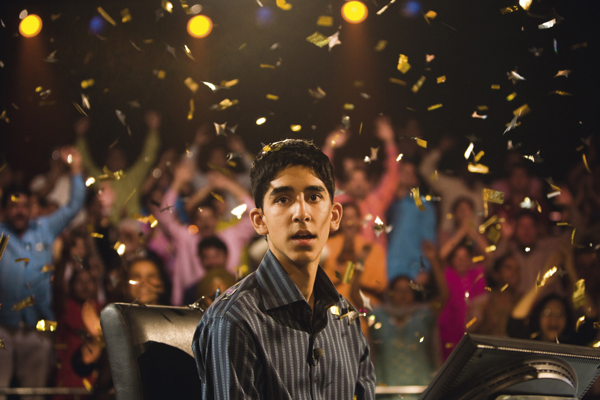
Year: 2008 Fellow Nominees: The Curious Case of Benjamin Button, Frost/Nixon, Milk, The Reader Moving on to some bona fide poverty porn now, and Danny Boyle's Slumdog Millionaire, which we all somehow seemed to lose our collective sh*t about when it was released. Nominated for ten Oscars in 2008, Boyle's film won eight, including this time a directorial win for Boyle, nominated here for the first time as Best Director (other wins inc. Best Adapted Screenplay, Music, Editing, Cinematography, Score, and Song). Beating out one genuine masterpiece in David Fincher's The Curious Case of Benjamin Button (an assertion I stand by and will defend always), Boyle's crowdpleaser too beat out Frost/Nixon, a whip-smart entertainer that would've also made a far better Best Picture winner (Gus Van Sant's Milk was always going to be a little too esoteric). Filled with average performances and an annoying, jaunty style of directing, Slumdog panders to the worst kind of populist filmmaking, imbuing itself with just enough surface-level awareness for it to be taken seriously, but nowhere near enough depth into such issues that it becomes possible to truly care about them. A slight sprinkling of good-natured heart saves Slumdog from being an outright awful movie, but as Best Picture winners go, it's pretty bad.

1. The King's Speech

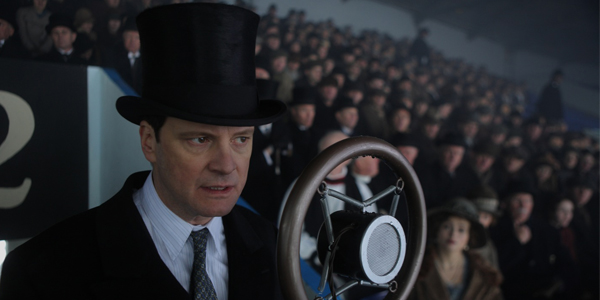
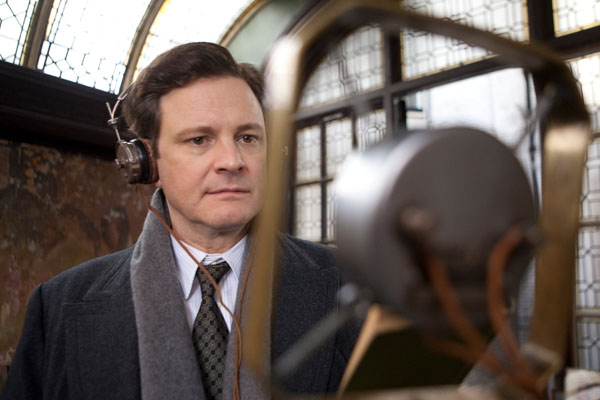
Year: 2010 Fellow Nominees: 127 Hours, Black Swan, The Fighter, Inception, The Kids Are Alright, The Social Network, Toy Story 3, True Grit, Winter's Bone The most recent entry on this list, 2010's The King's Speech at least boasts a group of decent performances in its midst, albeit ones nowhere near good enough to save them from director Tom Hooper's - a filmmaker who time and again proves himself an amateur behind the camera - shoddy hand. Naturally, he won the Best Director award to go along with The King's Speech's three other wins (Original Screenplay, for David Seidler, and Lead Actor, for Colin Firth, who's good here but was far better a year earlier in Tom Ford's A Single Man). A quintessential Academy-friendly prestige picture, The King's Speech beat out a whole host of great films (this was the second year that the Best Picture race had been extended to include up to ten films), not least another David Fincher masterwork in The Social Network, which to my mind is one of the three-or-four most important American pictures of the decade. Nominated for a whopping twelve Oscars overall, Hooper's film is actually the least deserving of all ten nominees (though admittedly I haven't seen The Kids Are Alright), and it still remains baffling that it actually won here, especially when you consider just how much better films like The Fighter and Black Swan are. It's not really a surprise that The King's Speech (or most of the films on this list, for that matter) did win, however, and in a list that has given us multiple things to be sad about in regard to the Oscars, this is what we should despair most.

Contributor
Contributor

No-one I think is in my tree, I mean it must be high or low?