9 Horror Directors Who Deserve An Honorary Oscar
In grateful recognition of their contributions.

If you’re a horror filmmaker, don’t bother writing that Oscar acceptance speech: not only has no horror picture ever won Best Picture, but no genre filmmaker has ever won Best Director.
The closest horror ever came to recognition was at the 64th Academy Awards, when The Silence Of The Lambs received all the major trophies (Actor, Actress, Screenplay, Director, Picture), but that movie was marketed as a “psychological thriller” lest it be tarnished by association with Silent Night Deadly Night 5: The Toy Maker, released the same year.
Lambs was directed by Jonathan Demme, who graduated from Roger Corman’s schlock shop, as did future Oscar winners James Cameron, Francis Ford Coppola and Jack Nicholson. It was for helping launch their careers (and those of many others) that Corman received an honorary Oscar in 2009.
Though he was never going to stretch the boundaries of cinema by making pictures like Attack Of The Crab Monsters, Corman’s influence on the horror genre – and on filmmaking in general – is not open for debate. Another of Corman’s disciples is Monte Hellman, who later fought to get Reservoir Dogs made, so you can feel his influence even without watching his films.
Corman’s not the only filmmaker to leave a cultural footprint, but unlike him, his colleagues aren’t likely to find themselves feted at awards parties. Here are 9 horror filmmakers who deserve mainstream recognition.
9. Dario Argento

When a killer wearing black gloves stabs a young woman to death in close-up moments before binding her with a cord and hanging the body in mid-air to the accompaniment of a thunderous Goblin score, the viewer has no doubt that they’re watching a film directed by one of the most distinctive filmmakers in Italian cinema.
So distinctive are his set pieces, in fact, that his gialli had a profound impact on several American filmmakers. In Deep Red (1975), Argento’s POV camera prowls through dark corridors in much the same way as it would years later in Halloween (1978), and it’s not difficult to imagine Michael Myers as the Americanized version of that film’s black gloved killer. Also, note the similarities between Argento’s kill scenes and those in Quentin Tarantino’s Kill Bill movies. Doesn’t the lopped off arm in Tenebrae look familiar?
As a producer, Argento was instrumental in getting George Romero’s Dawn Of The Dead (1978) made and is indirectly responsible for that film’s enormous impact on the genre. He’s also fostered some amazing talent, including Lamberto Bava, who he hired to direct fan favourite Demons (1985) and Michele Soavi, whose horror pictures owe no small debt to Argento.
8. Herschell Gordon Lewis

If Bob Dylan can win the Nobel Prize for literature, isn’t it about time the Academy recognised the filmmaker who single-handedly changed the horror genre forever?
With Blood Feast (1963), Herschell Gordon Lewis pioneered the splatter movie, dragging horror out of the B&W 1950s into the era of “blood colour”, and his DIY ethic influenced filmmakers from John Waters to Robert Rodriguez. Waters named him one of the most important independent directors of all time in Cecil B Demented and Frank Henenlotter later dedicated Basket Case to the filmmaker.
At a time when movies were more difficult and expensive for amateur filmmakers to get off the ground (never mind distribute), Lewis was able to write, direct and produce his own pictures, often handling other chores such as operating the camera and providing the special effects. Ironically enough, he left filmmaking behind just as the major studios saw the commercial possibilities of his type of pictures. The horror boom of the early 80s owes a debt to his efforts.
7. Frank Henenlotter

The Academy gave an honorary Oscar to Hal Needham, the former stuntman who directed Smokey And The Bandit, so they can at least consider shortlisting Frank Henenlotter, whose Basket Case (1982) was a virtual textbook for low budget, independently financed genre films in the 1980s. An underground hit, the movie’s mix of raucous humour and wild invention later informed the pictures made by Lloyd Kaufman at Troma Films.
Like the exploitation films he grew up watching, Henenlotter’s films are filled with an attitude that you don’t find in mainstream productions. “They’re a little ruder,” he says, “a little raunchier, they deal with material people don’t usually touch on.” For an example of his irreverence, check out Frankenhooker (1990), whose Frankenstein-style protagonist not only believes he can bring his departed fiancée back from the dead, he can supply her with a better-looking body than she had in life.
Away from the camera, Henenlotter has been instrumental in rescuing several low budget pictures from oblivion and releasing them through Something Weird Video. Thanks to his efforts, a series of exploitation pictures, including the cult classic The Curious Dr Humpp, were saved from destruction.
6. Joe Dante

Joe Dante’s verdict on Ed Wood mirrors his own career: “His movies all have a certain consistency and you have to probably say this guy was an auteur of sorts because you can recognise his movies. That’s quite an achievement in this day of homogenized movies, where people’s personalities are not really encouraged to shine on film.”
With Piranha, The Howling and Gremlins, Dante developed the tongue-in-cheek, cine-literate horror movie that would later inform the work of such filmmakers as Rob Zombie, Eli Roth, Adam Green and Robert Rodriguez. In these films, you’ll find a playful sense of humour, a ton of movie references and a cameo from some genre veterans. How many other filmmakers would think to reunite Miller with Jackie Joseph, his co-star in The Little Shop Of Horrors (1960), the way Dante did in Gremlins?
Like all the best artists, his themes endure – the corporate satire in Gremlins 2, for instance, seems more relevant now than it did in 1990 (also, how many filmmakers can say they were satirizing Donald Trump a quarter of a century ago?) Even when he turned his hand to family fare with Innerspace and Small Soldiers, he was ahead of the curve, prefiguring the later spirit of Pixar’s animated films.
5. David Cronenberg

David Cronenberg’s “body horror” pictures were married to developments in special effects technology and he provided enough spectacular set pieces – James Woods inserting a cassette into his stomach in Videodrome, say, or Scanners’ exploding head – to become a poster child for the Fangoria set. In 1986, his remake of The Fly won an Oscar for Best Makeup and gave him enough clout to make Naked Lunch, whose neo-noir look later influenced Dark City and The Matrix.
Cronenberg had his biggest influence, however, on Japan, and his explorations of infection and bodily mutation have informed such outstanding films as Evil Dead Trap (1989) and Shinya Tsukamoto’s Tetsuo (1990), the latter of which can be read as a cyberpunk take on The Fly. His grisly set pieces also massively influenced the effects of Yoshihiro Nishimuru, most obviously on Tokyo Gore Police (2008), where genetically-modified criminals transform any injury into a weapon.
What Jack Arnold was to 50s sci-fi, Cronenberg is to the modern monster film. According to critic Terrence Rafferty, the director “seems to have isolated, in remarkably potent form, the poignant monster form that runs through so many horror pictures.”
4. Lloyd Kaufman
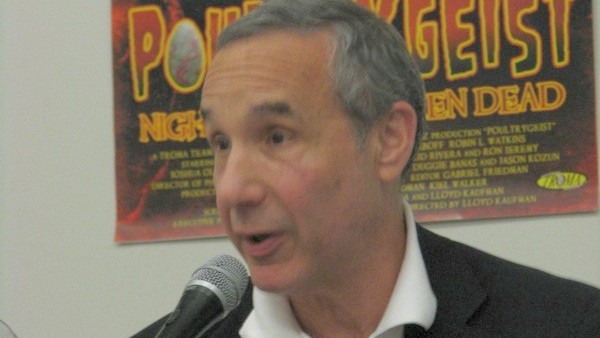
Lloyd Kaufman makes small, independently financed pictures, and since co-founding Troma entertainment he’s become a guru of backyard filmmakers who’s done more to help DIY directors than anyone, including Roger Corman. Oliver Stone made his screen debut in the Kaufman-directed The Battle Of Love’s Return and future Oscar winner Marisa Tomei (Aunt May in Spider-Man: Homecoming) first appeared in The Toxic Avenger, while Troma distributed Cannibal The Musical, the first feature from the makers of South Park.
Kaufman’s biggest find was James Gunn, who he hired to script Tromeo & Juliet in 1996, little realizing his protégé would go on to write Scooby Doo, the Dawn Of The Dead remake and Guardians Of The Galaxy. The filmmaker’s real claim to fame, however, is turning down Madonna not once, not twice but three times for a role in 1983’s The First Turn On. The man really does have an eye for talent.
Even if you’ve never seen one of Kaufman’s thrifty pictures, you’ve felt his Corman-esque influence on the industry, from distributing an early film from director John G Avildsen (who later won Best Director for Rocky) to releasing Malibu Hot Summer, which marked the first screen appearance of one Kevin Costner.
3. Tobe Hooper
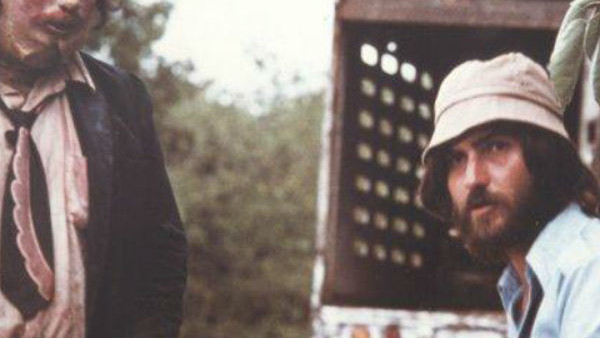
As blackly comic as Night Of The Living Dead was subversive, Tobe Hooper’s The Texas Chain Saw Massacre (the onscreen title) is a virtual textbook on how to make a claustrophobic, trend-setting genre piece with modest resources. Sensationalist but unforgettable, violent but not gory and unrestrained but never camp or overblown, TCM should be screened to the makers of modern multiplex horror pictures as an example of how to get it right.
No career could produce two movies of that calibre, but Hooper came pretty damn close with Eaten Alive, Poltergeist, The Funhouse and Lifeforce. They have a nice line in black humour, eccentric characters and a garish, unsettling look that influenced, among others, Rob Zombie. Face it: every time you see a movie about backwoods cannibals, you’re watching a movie made by someone who grew up watching Tobe Hooper’s movies.
Lauded by author Carol J Clover, in her seminal study Men Women And Chainsaws, as “a jolting experience in more ways than one”, Chain Saw’s unrelieved intensity influenced genre filmmaking more than any picture since Night Of The Living Dead, and you can feel Hooper’s economy and dark humour present in everything from Pete Walker’s films to Rob Zombie’s 31.
2. John Carpenter

When Halloween became one of the most commercially successful independent films of all time, John Carpenter went from a nobody whose first 2 features were ignored by critics and audiences to being the director who drew up the fool-proof blueprint for the slasher movie. The fact that he was a more sophisticated filmmaker inspired by Welles, Hawks and Argento was lost on the clods that followed his example.
Together with John Landis and Joe Dante, Carpenter was one of the first film buff directors, and his pictures are loaded with movie references (Halloween’s Sheriff is named after the screenwriter of Rio Bravo) not in the pseudo-hip, show-off manner of modern filmmakers, but because he wanted to acknowledge his influences. When you’re watching a John Carpenter movie, his passion for cinema – all kinds of cinema – is there in every frame.
All of his films bear his personal stamp, and each has a certain look that other filmmakers have attempted to replicate, most successfully in It Follows. But nobody shoots a horror movie the way Carpenter does, and nobody else can make a seemingly empty street look as eerie as he does in Halloween and The Fog.
1. George Romero

John Carpenter credits Alfred Hitchcock as the director who took the horror film out of Eastern European castles and placed it in modern day America, but it fell to George Romero to add the subversion that was hitherto missing from the genre. In Night Of The Living Dead and its sequels, authority, religion and even the family unit are all proven to be useless against the encroaching apocalypse. The only thing that works: shoot the zombies in the head.
Romero is the only director to have made two masterpieces in the same series, and when Dawn Of The Dead proved a hit a decade later, he became arguably the most imitated genre director of all time. Every zombie film, book, video game or TV series you see today is an nth generation copy of his contribution to the genre.
Even if he’d never directed his Living Dead films, Romero would be remembered for The Crazies (1973), Knightriders (1981) and Creepshow (1982), though his most horrifying film is surely Martin (1978), which Kim Newman calls “the most sophisticated re-examination of vampire lore yet attempted.”
Along the way, he helped launch the careers of Tom Savini (who made his acting debut in Martin, and also provided the effects), John Russo (who co-wrote NOTLD, and later directed 1981’s Midnight) and a jobbing actor named Ed Harris, who he cast in Knightriders and Creepshow.