10 Horror Movies That Were Cancelled Because Of Other Movies
Would you believe a Friday the 13th reboot got canned because of a Ring sequel?

Every time an ambitious movie project gets cancelled, it's like a dagger to the heart for cinephiles. These situations can be unavoidable, but it’s still painful when a potential hit vanishes into thin air.
The horror community knows this disappointment all too well, since there've been countless slashers and monster movies that never made it past development hell. (Alas, we're still wondering how Freddy vs. Jason vs. Ash might’ve played out.)
Even when these features had real promise, they fell apart for one reason or another, like studio interference or budget issues.
Strangely, horror movies can get scrapped because of a completely separate property. If a scary film is too similar to something else, studios may decide to pull the plug. If a director’s previous work is met with scathing reviews or pitiful box office returns, the next project can get quietly shelved. And when a subgenre starts losing ticket sales, anything riding that wave can get axed without a second thought.
It’s frustrating when horror movies end up on the chopping block, but it’s worse when they’re casualties because of something else entirely.
10. Planet Of The Dead Was Cancelled Because Of Rebel Moon

Whether moviegoers love or hate Zack Snyder, there's no denying the man has vision. So, when he decided to undertake an original zombie flick, he intended it to be the foundation of an undead universe.
As such, Army of the Dead dropped on Netflix with serious hype, since it served as the launchpad for something more. Snyder planned to follow the action-oriented zomfest with a prequel, Army of Thieves, an anime-styled series, Lost Vegas, and a sequel, Planet of the Dead.
While Army of the Dead proved polarising, the prequel got released and the Army sequel got the go-ahead (as reported here by The Hollywood Reporter). The animatics and voice recordings for Lost Vegas were completed, suggesting the Dead universe was still live and kicking.
But it didn't last. Snyder hoped to direct Planet of the Dead after wrapping up Rebel Moon I + II, but the project was put on hold. Despite strong viewership numbers, several of Snyder's Netflix projects underperformed critically, with the lukewarm response to the Rebel Moon saga not only halting the continuation of that franchise, but Planet of the Dead as well.
It's a mighty shame, but due to Snyder's repeated misfires recently, it's understandable as to why Netflix gave Planet of the Dead the boot.
9. Friday The 13th Reboot Got Cancelled Because Of Rings
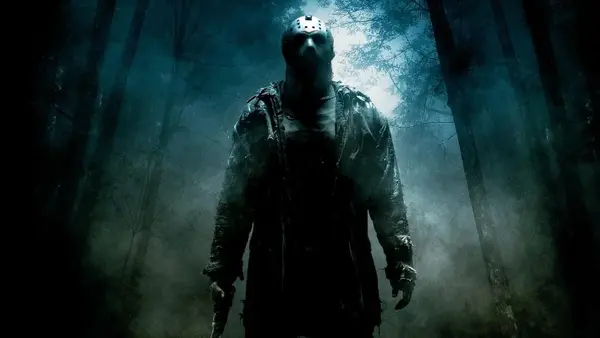
It's baffling to think Friday the 13th has been on hiatus for 17 years, especially when Jason Voorhees has remained a horror icon since the 1980s.
That said, Paramount was on the verge of rebooting Friday the 13th almost a decade ago. The slasher was set to be produced by Michael Bay's Platinum Dunes, overseen by The Crazies director, Breck Eisner, and penned by Prisoners screenwriter, Aaron Guzikowski. With that kind of talent attached, the studio looked ready to go all in on turning Friday the 13th into a powerhouse brand once again.
Now, it's worth mentioning Paramount also hoped to revive The Ring franchise in 2017, with a loose sequel called Rings. The Ring was a globally recognised IP (much like Friday the 13th), so the follow-up's success should've been a safe bet.
While Rings made a profit, it earned nowhere near as much as expected, causing the studio to go into panic mode. Believing the Friday the 13th reboot could suffer the same fate, Paramount thought it was in its best interest to remove it from its slate indefinitely.
It's been a long time since Jason fans have seen their guy on the big screen, but hopefully the upcoming release of A24's Crystal Lake TV series changes that soon.
8. Saw VIII Was Cancelled Because Of Paranormal Activity

Saw was a dominant force in horror during the millennium. Even as the later instalments declined in quality, Lionsgate's franchise kept printing money, earning back 10, 20, or 30 times its budget with various instalments.
The creators knew Saw couldn't last forever, but they wanted the torture-soaked gorefest to go out with a bang. While Saw VI was in production, David Hackl was brought in to direct the first of a two-part finale.
Unfortunately, Saw VI was the least successful entry in the series, largely because it was competing against Paranormal Activity. It was immediately clear that the found-footage indie was the new hot horror property, indicating Saw was on the way out sooner than expected.
Worse still, Paranormal Activity 2 was being released in the same window as Saw VII. Adding insult to injury, Saw V director, Kevin Greutert, was set to direct, which felt like a blow to Saw's production company, Twisted Pictures.
In response, Twisted Pictures pulled Greutert back and urged him to direct a singular finale called Saw 3D. Although Saw 3D's plot was similar to the original Saw VII and Saw VIII, major elements were condensed or cut
Although Saw had a revival years later and an eighth instalment was released, it bore no resemblance to the planned Saw VIII.
7. The Crooked Man Was Cancelled Because Of The Nun
The Annabelle doll from The Conjuring became an instant horror icon, inspiring director James Wan and producer Peter Safran to forge a spin-off centred around the cursed figurine. When 2016's Annabelle earned over 40 times its budget, the pair agreed to turn The Conjuring into a cinematic universe.
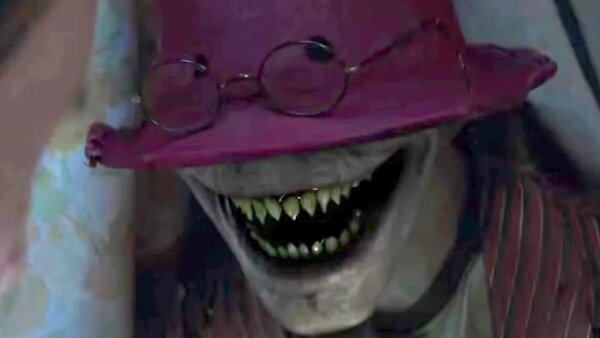
The following year, Wan directed The Conjuring 2, which introduced the demonic nun, Valak. The film also briefly featured another unsettling entity called The Crooked Man, inspired by the English nursery rhyme. Though little was revealed about the creepy spectre, his distorted design struck a chord with audiences, prompting Safran to consider a standalone spin-off.
But during development, Safran noticed the fanbase was more intrigued by Valak. Sensing greater potential, Safran fast-tracked a project centred on her instead.
It proved to be the right call, since The Nun and The Nun II grossed over half a billion dollars. It's also refreshing to hear filmmakers can actually listen to the fans and take their suggestions on board.
Interest for the Crooked Man has since faded, so it's highly unlikely the spin-off will ever come to fruition.
6. Clive Barker's The Mummy Was Cancelled Because Of Brendan Fraser's The Mummy
Universal Pictures was desperate to revive The Mummy property during the 1990s. A string of major names were attached at various points, including Joe Dante, George A. Romero, and Wes Craven.
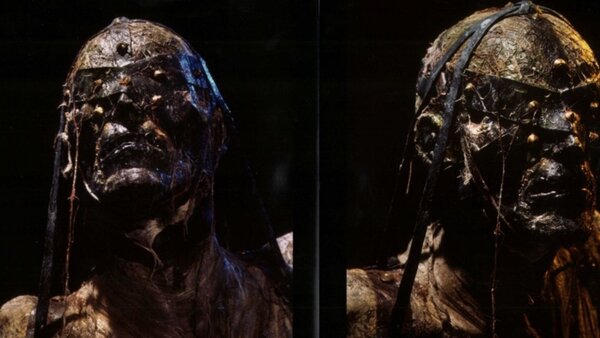
But following the success of Clive Barker's Hellraiser, the producers, James Jacks and Sean Daniel, believed he was the perfect fit. Mick Garris was brought in to develop a script that reimagined the titular character as a tragic figure who must consume human organs to stay alive. This version was "dark, sexual, and filled with mysticism," which was very much in line with Barker's style.
Sadly, the producers felt the concept was too challenging for mainstream audiences, causing them and Barker to part ways. Seeking broader appeal and commercial potential, Jacks and Daniel retooled The Mummy into an action blockbuster instead of a psychosexual reimagining.
It was a ballsy move, but it paid off massively. Stephen Sommers' swashbuckling action-comedy was a monstrous triumph, spawning multiple sequels and cementing star Brendan Fraser as a Hollywood leading man.
While Clive Barker's take on The Mummy remains an intriguing "what if", shelving it was probably the smarter decision.
5. John Carpenter's Firestarter Was Cancelled Because Of The Thing

John Carpenter's Halloween is often considered the definitive slasher and among the most influential horrors of all time. Following the back-to-back success of The Fog and Escape from New York, Carpenter had proven he was anything but a one-hit wonder.
Given his mastery of slow-burn tension and atmosphere, it made sense when Carpenter was hired to adapt Stephen King's Firestarter, which centres on a girl who can manifest flames with her mind. Carpenter already helmed a King adaptation, Christine, so he was more than qualified for the gig. Carpenter envisioned Burt Lancaster and Richard Dreyfuss in starring roles and hired Bill Lancaster (Burt's son) and Bill Philips to write the screenplay.
But everything unravelled when John Carpenter's The Thing bombed at the box office. Though now regarded as a masterpiece, the groundbreaking body-horror was eviscerated by critics at the time. Universal Pictures lost confidence in Carpenter, urging the studio to replace him with Mark L. Lester.
Firestarter still made it to the screen, but was far removed from Carpenter's interpretation since it was based on a script by Stanley Mann and featured a different cast.
4. Battle Royale Got Cancelled Because Of The Hunger Games

Kinji Fukasaku's Battle Royale follows dozens of Japanese high school students who are left stranded on an island and ordered to kill each other until only one remains. The dystopian thriller only earned the equivalent of $30 million, but quickly developed a huge cult following.
At the time, Japanese horror remakes were all the rage, so it wasn't surprising when it was announced Battle Royale was getting the same treatment. Initially targeting a 2008 release, the American Battle Royale was put on hold following the Virginia Tech massacre in April 2007.
Although development continued, Suzanne Collins threw a wrench in the works with her 2008 novel, The Hunger Games, which was adapted for the big screen in 2012. Both properties share striking similarities, so the Battle Royale remake suddenly felt unneeded.
But that's not the only issue. Despite the fact Fukasaku's film predated it, The Hunger Games had a broader appeal, raising the risk that the Battle Royale remake could be misconstrued as a cheap knock-off. With The Hunger Games franchise still active over a decade later, there are no plans to redo Battle Royale.
3. The Dark Universe Got Cancelled Because Tom Cruise's The Mummy Reboot Bombed

Due to the runaway success of the Marvel Cinematic Universe, it was only a matter of time before other studios got in on the action.
Universal Pictures had been developing a Mummy reboot since 2012, but plans shifted when Alex Kurtzman took the reins. Rather than creating a one-and-done, Kurtzman's Mummy would kickstart a shared universe, incorporating a multitude of horror icons, like the Wolf Man, Dracula, Phantom of the Opera, and Quasimodo.
Universal was so confident in this Dark Universe that multiple features were lined up, including The Bride of Frankenstein, with Angelina Jolie as the eponymous character and Javier Bardem as The Creature. Johnny Depp was also set to star as the lead in an Invisible Man adaptation. After pouring significant time and money into this deal, everything hinged on The Mummy succeeding.
It did not.
Despite starring A-listers like Tom Cruise and Russell Crowe, the first and only entry in the Dark Universe flopped, due to its tonal inconsistency, messy plot, and weak characterisation. Rather than organically building a shared world, The Mummy awkwardly halts the story to force in-universe setup and teasers for the future (which ultimately amounted to nothing).
Rather than launching the Dark Universe, The Mummy buried it.
2. Neill Blomkamp's Alien 5 Was Cancelled Because Of Ridley Scott's Prequel Plans
Prometheus was meant to be a bold new chapter for Alien. With original director, Ridley Scott, back in the cockpit, there was every reason to expect something spectacular.
But the overall consensus for Prometheus was mixed, and while Scott aimed to expand the mythology, the fanbase at large wasn't convinced.
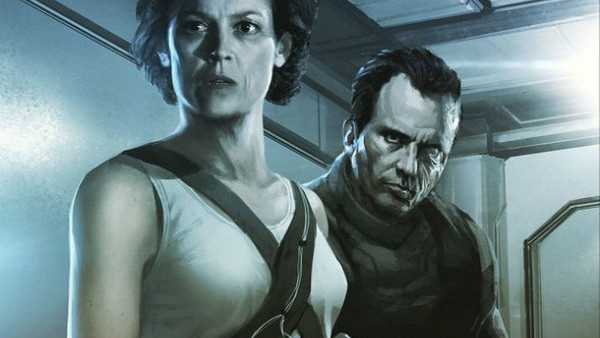
Still, interest reignited when District 9 director, Neill Blomkamp, pitched a direct sequel to Aliens. Better yet, Sigourney Weaver and Michael Biehn were expected to reprise the roles of Ripley and Hicks respectively. Considering Hicks and Newt died anticlimactically off-screen in Alien 3, Blomkamp's retcon was the perfect opportunity to set things right.
With momentum building, it seemed logical for Scott to step aside and let Blomkamp take over. Instead, Scott pushed forward with a Prometheus sequel, Alien: Covenant, effectively killing Blomkamp's idea in the process.
Covenant went on to repeat many of Prometheus' criticisms, leaving audiences just as divided and confused as before. Scott had planned further sequels, but they never materialised, making the cancellation of Blomkamp's film more pointless in hindsight.
1. At The Mountains Of Madness Was Cancelled Because Of Prometheus

In 2010, Guillermo del Toro announced plans to adapt HP Lovecraft's At the Mountains of Madness, which follows an expedition that uncovers an alien civilisation in Antarctica.
As brilliant as the story is, it was a tough sell, since it's an otherworldly period piece with no romance, a bleak tone, and an anticlimactic ending. Del Toro's vision was R-rated and massive in scale, making profitability unlikely from the outset.
However, things looked optimistic when James Cameron came on board as producer and pushed Tom Cruise for the lead role. When Universal gave At the Mountains of Madness the green light, it finally looked like the long-gestating adaptation would see the light of day.
To the dismay of everyone involved, the whole thing was abandoned, with the studio citing similarities to 2012's Prometheus. (That’s right - a potential classic was derailed by yet another Alien movie by Ridley Scott.)
The cancellation of At Mountains of Madness remains especially painful, given how long it had been del Toro's passion project. It's also hard to imagine any director better suited to bringing Lovecraft's most ambitious and complex story to life.