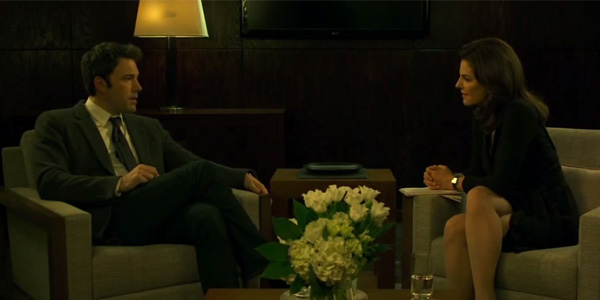
Although one of its central goals is looking at the effect of the media, with the scathing coverage of the story helping turn Nick into the chief suspect before him being christened a loving family man the moment Amy returns, the film doesn't push this to a nicely rounded conclusion. Fincher understands that it can't summed in a lovely quote and instead leaves it as in real life; an irritating constant. It could have been sorely mishandled; Rosamund Pike's other recent release, the dire Brit-com What We Did On Our Holiday, featured a third act that explored similar elements in a fleeting, but horrendously more explicit manner. The only form of any real pay-off to this strand is when Nick, in private, confronts Ellen Abbott about how she's being so friendly after previously relishing in the fact he may be killed by the state, to a dismissive response. In fact, the only public confrontation between the press and a key player in the story is when Detective Boney tells the press to get off Nick's lawn, which is only because that's in violation of the law. And it's in this distance that the film really makes its condemning look at the media. People can complain about how the press hounds victims and will make stories ahead of morals, but unless it's illegal (see the ongoing phone hacking scandal) people don't bat an eyelid.