Godzilla: 17 Easter Eggs, References & Fan Nods You Need To See

Godzilla is back!

After a slow-burn teasing campaign that started way back in 2012, Gareth Edwards' Godzilla lumbers back into cinemas this Friday to mark the 60th anniversary of Japan's most famous monster hero, reannouncing the monster movie as a bankable genre. Edwards has history of course, making his name on the much-loved Monsters, and it's obvious from his work in rebooting the Godzilla franchise that he was always the right man for the considerable, auspicious task. That comes down to his commitment to occasionally breath-taking spectacle, human relation, and mostly his passion for and knowledge of the genre: he's clearly a fan, and that has manifested itself in a lovingly crafted movie that is both brand new and nostalgic. As a result of that passion, this Godzilla is packed with Easter Eggs, References and fan-baiting moments designed to recapture our love of the monster and the genre, and the work deserves celebration through recognition. With that in mind we've put together a comprehensive look at all of the canon-nods and references to tease your excitement for the film further. Please note: this article contains spoilers for Godzilla. If you don€™t want to know what happens in 'Zilla's newest adventure, do abandon ship.

17. 1954

When the background of the creatures in the film - and especially Godzilla - are established, it is revealed that Godzilla was awoken when an undersea exploration trip in 1954 went too deep, and the date is no arbitrary choice. 1954 of course saw the first Godzilla movie released, and the release this year also marks the 60th anniversary of the character on screen.

16. The Trailer Monologue

https://www.youtube.com/watch?v=x_YbyjOtHcw The monologue that accompanied the Comic-Con teaser trailer belonged to J. Robert Oppenheimer, who created the atomic bomb, and thus, in the original Godzilla canon, the monster itself. Oppenheimer, of course, was christened one of the "fathers of the atomic bomb" for his crucial role in the Manhattan Project, and his words are clearly an echo of the original intention of Godzilla, who was designed as the personification of the nuclear threat. Though Oppenheimer was notoriously triumphant when the atomic bomb ended World War II, he quickly turned on his creation, and ultimately became increasingly concerned about the danger posed by rapid technological advancement - another of the inherent horrors of humanity explored in the Godzilla series.

15. The Nautilus

As the backstory of how Godzilla - established as an ancient creature who has been around for a lot longer than humanity on Earth - was awoken in 1954, we get a look at some extremely authentic looking aged footage (achieved using a 1960s camera lens and some clever digital trickery) that reveals the trigger. In Gareth Edwards' mythology, the beast was awoken by a deep sea exploration that went too deep and awoke something it didn't intend to - Balrog style - and the vessel in question was called the Nautilus, as a brief shot confirms. That of course is a reference to the submarine piloted by Captain Nemo in Jules Verne's classic "Twenty Thousand Leagues Under the Sea" - a story, naturally, about a sea monster and the dangers of unbound scientific thirst, whose film adaptation also came out in 1954. The name also explains the fake working title attached to the film, which is alternatively and playfully known as Nautilus during production.

14. Dr. Ichiro Serizawa

Ken Watanabe spends a lot of the movie wandering around war rooms offering his expertise on the kaiju, and reiterating his Jurassic Park-like assertion that nature will find a way, and that Godzilla represents the solution to the other monstrous threats facing the world. He is somewhat underused, or at least seems to function the same way as an "expert cameo" would, but extended out to multiple appearances, but his character's name is a reference to Godzilla lore. Though is isn't expressly stated, it's easy to assume that Dr Ichiro Serizawa is perhaps a relative of Daisuke Serizawa, the tragic hero of the 1954 original Godzilla, or more likely just a nod to his importance. In the original Serizawa creates the Oxygen Destroyer (a thinly-veiled allusion to the H-Bomb) and kills himself along with the creature to save his knowledge falling into other hands. The character parallels come in Ichiro Serizawa's commitment to the balance of nature and his horror at the human capacity to over-reach, though ultimately this new version of the character champions a natural solution, rather than reverting to devastating weaponry.

13. The Foreshadowing

As the film builds in its first act towards the monster reveals, we get a number of visual clues to what will happen: the first time we see young Ford in his parents' house in Japan he is playing with toys in his bedroom, and the set up is very clearly a number of military vehicles attacking dinosaurs, mirroring the traditional Godzilla vs Man dynamic. And then, as we watch the collapse of the Janjira plant - the event that Bryan Cranston's character accuses the government of covering up in the trailers - the camera uses Ford's classroom window as the frame. This is no accident, as the window display has dinosaurs on the ledge, with origami crane figures flying above, framing the plant with monsters in a nod to future events. The same visual trick is played out slightly later when Ford and Joe return to their ruined house and Ford sees a black beetle climbing over a toy tank, a shot that the camera lingers on almost lovingly, offering another hint. And finally, in another example of very obvious fore-shadowing, the lead up to the reveal of the first big bads focuses a lot on images of moths and chrysalises, offering the answer to the spore question in plain sight.

12. Ford's Poster

Godzilla Posters In the first scene when we are introduced to the Brody family and Bryan Cranston's Joe worries about strange seismic activity around the nuclear plant he works at, we are not only offered the foreshadowing toy set-up in Ford's room; there's also an incriminating poster on the wall. The brightly coloured, Japanese language design is a very obvious nod to the iconic, garish 1950s and '60s Godzilla and monster movies posters that typically followed the traditional design of two monsters facing off. And though it seems the poster was created for the film, its heritage is very plain to see. Crucially, it's very obvious that this new take on the franchise knows its roots, and the spirit of the character, and there's a very real sense that it knows what it owes to the franchise of the past.

11. The Mutos

While they were invented solely for this film, the MUTOs - or "Massive Unidentified Terrestrial Organism" as they are correctly labelled in-film (a misnomer considering one of them has wings) - are particularly evocative of Godzilla lore, as well as Japanese reference points too. The name, though presented as an acronym sounds like a Godzilla monster of old, and is a Japanese surname (used for a main character in Yu-Gi-Oh, and belonging, more intriguingly to a famously tenacious WWII Japanese fighter pilot who was in action over the Philippines like his monstrous name-sake in the film). The monsters themselves were inspired by Alien, King Kong, Jurassic Park and Starship Troopers (where the most genetic similarites are visible), and there's definitely an element of the Cloverfield monster in there too. The mutos were teased a long time before the film was unveiled, including a viral site that teases character details and establishes an atmosphere for the film.

10. Godzilla's Design

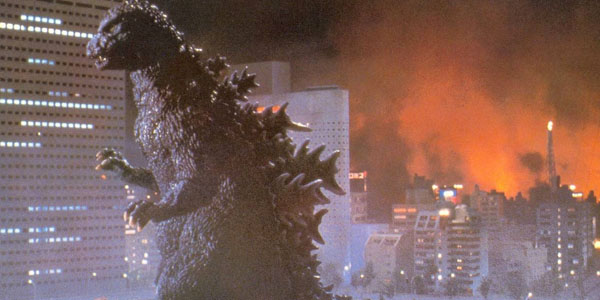
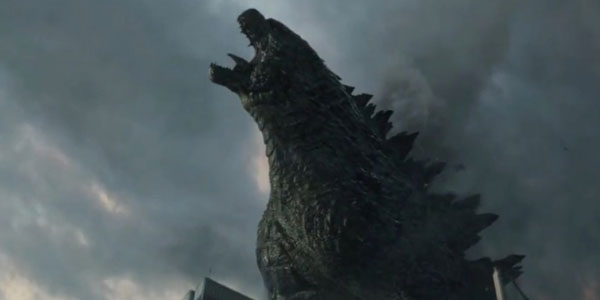
The famous monster's design has already been a point of contention, with Japanese audiences apparently calling him too fat (a fitting concern, as it happens) but it is still streets ahead of the Roland Emmerich version of the creature. Rather than being a dinosaur with another name, Gareth Edwards based the design on bears, komodo dragons and eagles, to add nobility to the creature, and his stance and fighting style are also based on bears. That revelation should be classed as an Easter Egg as the actor inside the suit for the original Gojira also based his movement on bears after studying them. And of course, the classic look is intentional, as it is a reference back to Toho's iconic concept, as Edwards confirms:
"The way I tried to view it was to imagine Godzilla was a real creature and someone from Toho saw him in the 1950s and ran back to the studio to make a movie about the creature and was trying their best to remember it and draw it. And in our film you get to see him for real."

9. Godzilla's Scars

As an indication of the monster's ancient age, as well as his explosive past, Godzilla is covered in keloid scars, another feature taken from the original Godzilla from 1954. The scars were included in both films in the monster's design to denote Godzilla's contact with nuclear weapons, and specifically the attacks on it that were passed off as testing exercises. The scars also have historical relevance, as they are designed to be reminiscent of the bodily scars worn by survivors of the nuclear bombings of Hiroshima and Nagasaki, a further evocation of the idea that man created Godzilla through that heinous scientific advancement. Of course Edwards' film suggests the origin differently, but the ant-nuclear message remains.

8. The USS Saratoga

The name of Admiral Stenz's warship, which acts as the flagship for Godzilla's fleet entourage/task force is no accident: the USS Saratoga has a rich history linked to atomic testing in the Pacific. Having been active from 1920 until 1945, including playing a part in the Battle of Iwo Jima and as a lead in the attempt to retake Wake Island after Pearl Harbour, the ship was wrecked in 1946, and was used in atomic testing to see how nuclear damage impacted vessels. The testing - called Operation Crossroads - took place at Bikini Atoll, a setting for the film's prologue, and the name is clearly a reference to them, as they are explained in the film to have been attempts to kill Godzilla with more and more powerful bombs.

7. The Attack On Las Vegas

After the reveal of the second MUTO in Nevada at the underground nuclear waste storage facility, the next sequence features the giant monster rampaging through Las Vegas, destroying the Eiffel Tower and generally wreaking havoc. This is clearly an allusion to Godzilla 3D To The Max, the IMAX 3D project that was a fore-runner to Edwards' feature. The short was to be made by Yoshimitsu Banno, director of 1971's Godzilla vs. Hedorah, which ironically got him banned from making Godzilla and Toho films by Gozilla creator Tomoyuki Tanaka. Over nine years from 2004, the short developed into a feature, with Peter Anderson and producer Brian Rogers coming on board, and Banno remaining as an executive producer.

6. The Spielberg Influences

Edwards has been very forthcoming about the influence of Steven Spielberg's film-making, with the most obvious, and most openly expressed by Edwards coming from Jaws. Not only are the central family called Brody, but there are similarities in Joe Brody's initial story:
"For a while there was this idea that Bryan Cranston's character had this dilemma about shutting the power plant down, but he had a lot of pressure on him to not do that. Some of that got lost in the development of the screenplay. But we always said he's like Brody in Jaws, so we always referred to him like that. Eventually Max Borenstein went, 'Aw, f*ck it, I'm going to call him Brody.'"
Jaws was also a reference point for how to build atmosphere and tension, as Edwards took cues from Spielberg's work on that monster flick and Jurassic Park and Close Encounters Of The Third Kind - as well as Alien - to draw out the drama of his own monster film:
"Something they all have in common is that slow-burn build, where the audience is drip fed the imagery to get them on tenterhooks. I thought that style of filmmaking was really effective. It stayed with me the whole time I grew up, and those films stand the test of time."
There's also a more obvious reference in the film, as a familiar looking plastic dinosaur head appears in the climactic battle for a moment, which looks suspiciously like the Spinosaurus from Jurassic Park 3.

5. Godzilla: "King Of The Monsters"

In the aftermath of the climactic battle, as it becomes obvious exactly what Godzilla is to humanity, a news report flashes on a screen carrying a headline calling Godzilla the "King Of The Monsters," a long-held title for the creature that originated with the 1956 movie of the same name. The film used footage from the original Godzilla film, which was dubbed with additional shots added starring actor Raymond Burr, and it is arguably the more important film in the history of the character. It was this version of the film, after all, which introduced the world to Godzilla, and which opened the door for multiple sequels thanks to the sheer number of reruns on TV. It also represents a key moment in world cinema as it was the first post-World World II American film to present Japanese characters in leading, heroic and sympathetic roles.

4. A Legendary Cameo For The Blu-Ray

Were it not for the editorial team, a true legend of the Godzilla series, and a veteran of Toho films would have made his tenth Godzilla series appearance in the reboot. Sadly for Akira Takarada, who was set to play a Japanese immigration officer, and who posed with director Gareth Edwards on set for the Godzilla geek-gasm image above. Takarada had starred in the original Godzilla (1954) as diver Hideto Ogata, and appeared in 8 other sequels and spin-offs in the same series, and though his scene was cut (presumably for run-time considering how long the film is) it will apparently appear on the DVD.

3. The Other Godzilla Series Nods

Gareth Edwards clearly knows his roots, and though the film is largely a reboot, there are a massive number of references to older films in the series that ardent fans will notice. Fans pointed out that the holes in buildings left by the monster are very much reminiscent of the 1998 Godzilla film as well as The Return Of Godzilla, and the first reveal of the creature creating a swell in the ocean also feels like a call-back. Though most Godzilla fans would happily forget the existence of Emerich's movie, Edwards actually partly based his plot on the original script for that predecessor - at least on the idea of 'Zilla rising to fight off other kaiju. The Return Of Godzilla is also referenced in the film's prologue, when it is revealed both the Soviets and the US blamed each other for the awakening of Godzilla in 1954, and also in the appearance of a destroyed Soviet submarine in Hawaii - the setting for Joe Dante's unmade Godzilla Reborn. The idea of Godzilla being an ancient creature clearly comes from Godzilla vs. King Ghidorah, and Godzilla Raids Again. Warning: The last two points on this list are particularly SPOILERISH.

2. Godzilla Breathes Fire

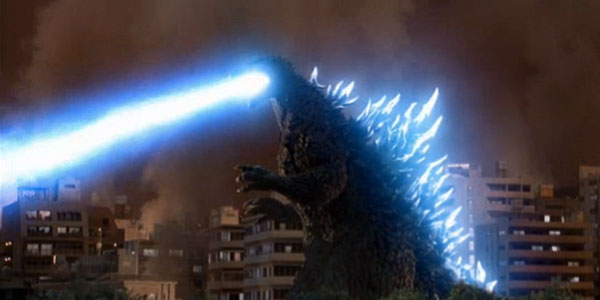
Easily the best moment of the film comes when Godzilla is fighting the pair of MUTOs in San Francisco; a sequence that offers some of the most enduring images from the entire film, including at least three hero shots for Gozilla itself, and a brilliant monster vs monster clash. Just when it seems like the MUTOs have gained the upper hand, one of the creatures notices that the plates on Godzilla's tail are glowing blue, and as the camera pans to reveal the rest of the monster, clearly charging up its energy, 'Zilla unleashes a blast of atomic breath at the MUTO in a moment that will have fans of the series internally whooping. The moment is revisited again when Godzilla comes to the rescue right at the end, and the decision to

1. Godzilla The Hero

As Gareth Edwards teased before the film first screened, Godzilla was set to be an anti-hero, rather than the villain of the piece, and the film delivers an even more heroic image of the monster. Rather than the destructive influence that he was when first introduced in 1954, Edwards takes the 1960s and '70s image of Godzilla the protector of Earth that started to surface at the end of the 1950s when Toho marketed more to younger audiences. Ultimately, Toho changed there approach back to Godzilla as a menace in 1985, but Edwards champions the idea of Godzilla as Japan's hero. Are you excited to see Godzilla when it is released? Share your thoughts below in the comments section, and read our review of the film here.

Contributor
Contributor

WhatCulture's former COO, veteran writer and editor.