Jurassic World: 5 Reasons Why Dinosaurs Shouldn't Have Feathers

They evolved into birds, but so what?
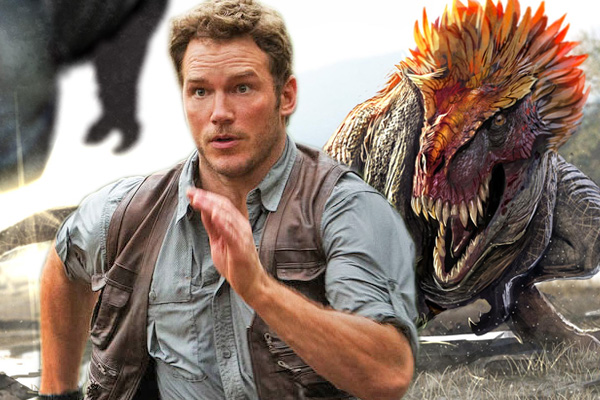
People can't stop talking about Jurassic World. Following it's record-breaking opening all bets are off on just how big it'll become, while the simple fact of whether the film's a fun nostalgic treat or a cynical cash-in spat out by a computer. But already the conversation has turned away from the film€™s merits and onto scientific accuracy. That dinosaurs had feathers is now a well-accepted theory and yet Jurassic World inexplicably keeps with the more reptilian design seen throughout the series and further back through cinema, causing uproar in the scientific community and an endless stream of criticisms on social media. Now, Colin Trevorrow and his team could have included feathered beasts, but they didn€™t. And that's totally OK and justified. Woah, calm down there before you dive to the comments section with the speed of a velociraptor and comment all the various quotes that have been flung around on the internet since the film's trailer premiered back in November. This isn't disputing the feathers theory nor is it saying feathered dinosaurs don't have a place on our screens. It's just that Jurassic World shouldn't be the movie to do so. World isn't a documentary, as much as the paleontologists bemoaning the film's representation of accepted prehistory want it to be. It's a film and as a film it's more than acceptable for the dinos to walk around naked. Here's why (and, don't worry, one of the points isn't that it'd look stupid).

5. The Original Didn't

The simplest justification for why the dinosaurs should have feathers in Jurassic World is one of legacy. Jurassic Park was, for the time, rather progressive in terms of our understanding dinosaurs, but that's not to say Spielberg didn't shy from embracing some more traditional iconography of dinosaurs, setting a franchise precedent that hasn't really been messed with at all since. And while it's churlish to halt scientific advancement just to maintain continuity between movies (heck, Mad Max: Fury Road showed you can build an incredible sequel by completely ignoring the events of the franchise thus far), it's likewise questionable to suggest a fundamental part of a series (in this case the design of the primary antagonists) should be altered. Star Wars fans were up in arms about the crossguard lightsaber (and a black Stormtrooper, but let's try and forget those people) in the teaser for The Force Awakens because of its lack of justification from the previous films and it's not too different a case here. It may have strong roots in reality, but Jurassic Park is, at the end of the day, science fiction, so deviations from reality can be accepted much more readily as long as it fits within the world presented, which scaled dinosaurs certainly do.

4. The Other Sequels Didn't Either

Although many would like to forget them, there were two sequels to Jurassic Park before World opened. And neither of them got even close to embracing the whole idea of dinosaurs having feathers. This may seem just like a continuation of the "they did it first" argument from before, but you have to remember that The Lost World and III came out in 1997 and 2001 respectively. By the time the final sequel rolled around feathered dinosaurs had gone from being a wild theory to a very plausible concept. And yet Joe Johnston didn't even consider changing up the look of his creatures, even for the newly introduced Spinosaurus. The film's lead velociraptor did boast some frills, but they were more hair than actual plumage. Of course, the film as a whole was about as lazy as Dennis Nedry, but that doesn't hide the fact that it knowingly flew in the face of the truth. The counter to this argument is that the dinosaurs in the first three films were all the product of the earlier genetic meddling from the original, where the bird theory was controversial and only amphibian DNA was used to fill the gaps in the dino-genome. Of course the dinos in 2001 would be feather-less - they were made with early-90's science. What's 2015's excuse? Well, Jurassic World actually provides one..

3. Audiences Expect Scales

There's a scene in Jurassic World where park owner Masrani (Irrfan Khan) confronts Dr. Wu (B.D. Wong) about the reckless gene-splicing present in the development of the Indominus Rex. He bemoans the inclusion of cuttlefish and snakes, to which the long-standing geneticist retorts that that level of horror is exactly what he wanted. They essentially asked whether they should and decided that if they could, why the hell not. And that's the exact same motivation behind plucking the dinosaurs in the real world too. The general public, both as visitors of the park in the film and viewers in reality, expect dinosaurs to look a certain way. The popular concept of, say, the T-Rex may now be strides ahead of the upright beast presented in the likes of King Kong (something partially thanks to Jurassic Park), but there's still an expectation of a classical look. That's why bird DNA wasn't included in the various mash-ups in the film and why the Indominus Rex hewed close to typical designs. "Dinosaurs" as you see them and dinosaurs as they actually looked are by all intents and purposes two different creatures; only one is real, but we're more familiar with the fiction. It may seem like a wholly commercial decision to maximise profits and, while that was no doubt a key thinking for Unviersal in the development of World, in addressing it in one of the film's moments of meta commentary reveals a more justified purpose. It was a choice not in terms of accuracy, but in terms of entertainment; just like a speeding velociraptor is scarier than a 6ft turkey, axing feathers makes for a more impactful movie. Oh yeah, feathers are far from the only scientific leap made in the franchise in the face of stone-cold facts...

2. It's About Realism, Not Accuracy

Had the internet been the force it is today back in 1993 then you'd have invariably seen all these feather complaints levelled against the original Jurassic Park as well. But, in doing so, the critics would have totally missed the entire filmmaking idea behind the film. Spielberg made a choice to embrace the traditional "terrible lizard" view of dinosaurs, even though the whole evolving into birds thing was already well established (Alan Grant even points it out in the opening ten minutes of the film) and suggestive (although not yet conclusive) feathered fossils has been found in the eighties. The reason he avoided this in the creature's designs was less scientific uncertainty and more about terror. It was the same reason the dilophosaurus has a frill and spits acid, or why the raptors were greatly increased in size, or why blood from mosquitos can bring back dinosaurs in the first place. Spielberg wasn't trying to make an accurate movie, he was trying to make a real one. It doesn't matter that a T-Rex will have sounded nothing like it did in the film (adjusted elephant and dog cries) or that it actually could see quite well. What matters is you believed de-extinction had been achieved and the heroes were facing up against a real Tyrannosaurus. If that involved twisting or neglecting the facts to make a leaner experience, so be it. That's why, twenty years later, the film still conjures up those same thrills it did back upon release. Jurassic World has followed a similar approach; while that€™s got armchair scientists up in arms, all it's really doing is wholly honouring the ethos of the original film.

1. It's Time This Fact-Obsessed Movie Criticism Stopped
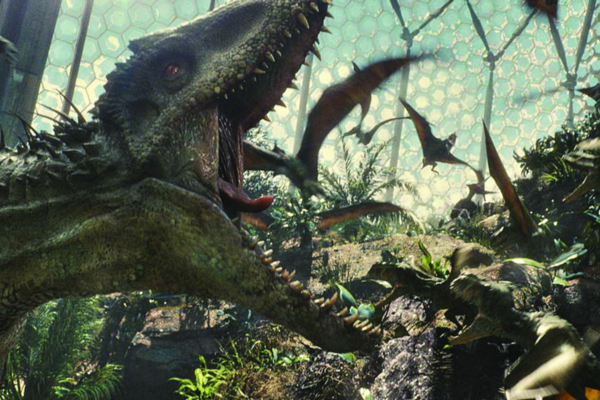
While it would certainly have been nice from a scientific standpoint to have a box office busting movie that showed the feathered theory in all its glory, Jurassic World just wasn't the movie to do it. But even in the face of the previously stated evidence, people are still going to moan about how it didn't, which is really just endemic of a wider problem within the online film community. Alfonso Cuarón's Gravity took audiences into space like never before, yet people still came out of the breathtaking ride complaining about the presentation of the distance between various satellites. Christopher Nolan's Interstellar used classical techniques to accurately represent its out-there science, yet many baulked at the sci-fi ending to a sci-fi film. You can only imagine what that same crowd would have made of 2001: A Space Odyssey if it wasn't regarded as an untouchable classic. It's fine to pick up on major logic leaps, but only if they don't work within the world a film has set up. Right from the early days of cinema film has always been about a suspension of disbelief, and for about a hundred years everyone seemed OK with that. But, with the rise of people who gleefully declare they f*cking love science (not a dig at the site - IFLScience is awesome and offered up some great links while researching this article) without grasping the whole picture, we're in a world where if a sci-fi film isn't 100% down-and-dirty realistic then it's treated as a creative failure. Yes, Indominus Rex should have been coated in fluff, but you know what? It€™s a lot more fun that she wasn€™t. But for those of you who can't quite jump on board with that, you might as well get thinking about the next big cinematic ruining of science. Star Wars: The Force Awakens - Why Explosions In Space Ruin The Film? Yeah, that'll do. Agree with this article? Or do you think Jurassic World's dinosaurs needed feathers? Share your thoughts down in the comments.

Contributor
Contributor

Film Editor (2014-2016). Loves The Usual Suspects. Hates Transformers 2. Everything else lies somewhere in the middle. Once met the Chuckle Brothers.