Nomadland Review: 9 Ups & 1 Down
Chloé Zhao's third film lives up to the hype.

Without question one of the most anticipated films of the year, Chloé Zhao's (The Rider) new drama Nomadland has been a wildly buzzed-about Oscar contender ever since it won the prestigious Golden Lion at the Venice Film Festival.
The film follows the travels of a widowed 60-year-old woman, Fern (Frances McDormand), who upon losing her home after the Great Recession of '08 decides to become a nomad, travelling across the American West while living in her van.
And as much as many early festival faves end up burning out long before Oscar night, it's tough to imagine a film of Nomadland's firm power losing much of its lustre, even with the 2021 Academy Awards being pushed to April 25th.
But away from all the awards chatter, Zhao's new film is a gorgeously lived-in piece of work that boasts one of the strongest performances of Frances McDormand's inestimable career.
Make sure to catch it on the festival circuit if you're able, or when it gets a wider release at the very end of 2020...
Downs...
1. The Occasionally Heavy-Handed Dialogue

There is so, so little to complain about in this movie, so this is really more of a nitpick than a real issue, but there are certainly a few moments where the dialogue feels a tad contrived.
As naturalistic as most of the chatter between Fern and her traveling pals seems, on occasion some of the overt social commentary re: the economy, the government's failure to provide for its citizens and so on feels laid a tad too thickly.
The film is largely so brilliantly subtle that its few soapbox-y moments stand out somewhat, perhaps in part because many of these lines are spoken by the non-professional actors McDormand is generally working opposite (who are otherwise very good, it has to be said).
A few contrived slivers of dialogue can't do much to detract from Nomadland's overwhelming power, though. Here's why you absolutely need to see it...
Ups...
9. Chloé Zhao's Amazing, Oscar-Worthy Direction

Though Chloé Zhao will likely be catapulted into the Hollywood A-list when she releases Marvel's Eternals next year, before that there's an exceedingly strong chance she ends up the first-ever Asian woman nominated for the Best Director Oscar - and perhaps the second-only woman ever to win it (after Kathryn Bigelow for The Hurt Locker).
As with her previous film The Rider, Zhao has an enormous amount of restraint with the way she stages scenes, refusing to tease out melodrama and simply letting shots last as long as they need to.
Much of the film has the intimacy and implied authenticity of a documentary, a testament to her non-intrusive camerawork as she follows Fern on her journey across America.
Though Zhao will face stiff competition for the Best Director gong this year - especially from David Fincher with Mank - her sublime work here is proof perfect that awards-worthy filmmaking need not be excessively showy or draw too much attention to itself.
8. It's A Devastating Examination Of Post-Recession America

It's tough to think of another film in recent memory which has examined the Great Recession with such clarity, focus, and empathy.
Beyond a few scattered discussions about how Fern lost her house in the wake of 2008's events, Zhao largely uses the global financial catastrophe less as a political tool and more as a primer for Fern's quest for self-discovery.
But Zhao's film certainly has a lot to say about the state of America over the last decade, painting a picture of courageous modern-day nomads who choose to forge ahead alone because they live in a society that's given them little other choice.
Though set in 2011, the scenario feels no less relatable today, especially in a year where so many jobs have been lost and people's livelihoods have been threatened. In that sense, it is most certainly a film for our time.
7. Frances McDormand's Mesmerising Performance
To the surprise of nobody, Frances McDormand adds another barnstorming performance to her sizable cachet with her deeply affecting turn as a woman attempting to make sense of her past pain and find a contented future for herself.
It goes without saying that McDormand has immediately announced herself as a major contender for the Best Actress Oscar next year, even if she'll face mighty opposition from the likes of Vanessa Kirby (Pieces of a Woman), Viola Davis (Ma Rainey's Black Bottom), Carey Mulligan (Promising Young Woman), Jennifer Hudson (Respect), and more.
Yet despite all this and McDormand already having two Best Actress Oscars to her name, it's a performance of such extraordinary restraint and compassion that it's easy to see her scoring the three-peat.
This would make her only the fourth actress in history to win three acting Oscars, following Ingrid Bergman, Meryl Streep, and Katherine Hepburn (who also won a fourth).
No matter whether she wins or not, though, McDormand proves herself a master of minimalist expressiveness with how much feeling she can convey in a single facial expression. Incredible stuff.
6. The (Mostly) Fantastic Script
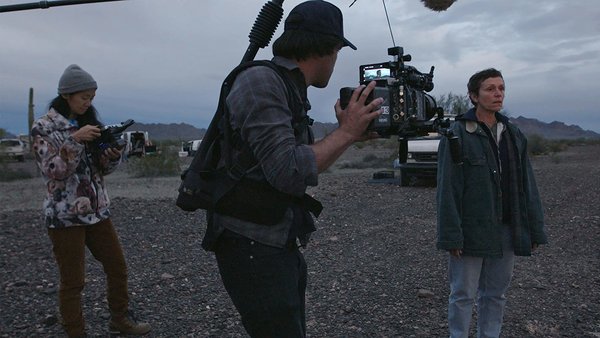
If you can forgive those aforementioned heavy-handed moments - and you almost certainly can - Nomadland boasts one of the strongest scripts of the entire year.
What's really striking about Zhao's screenplay, adapted from Jessica Bruder's hit 2017 novel, is how it avoids the "prestige film" tendency to contrive awards-baiting melodrama.
There's barely a voice raised throughout the entire movie, in fact: it's largely just a series of conversations between Fern and the various people she meets on her travels. They're still loaded with plenty of meaning and emotion, but Zhao clearly appreciates the virtue of quiet devastation.
Needless to say, a Best Adapted Screenplay Oscar nod is a lock, and it's got a damn strong chance of taking the gong home outright.
5. The INCREDIBLE Ensemble Cast
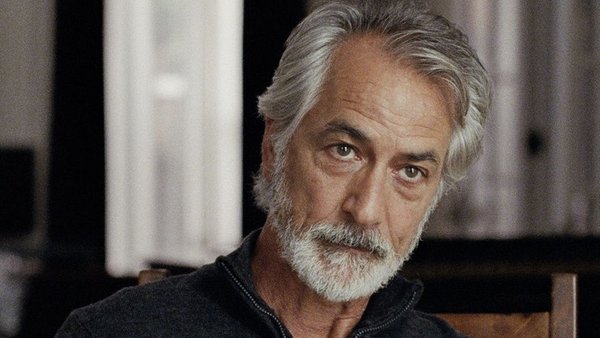
Nomadland has less famous faces than practically any other major movie vying for awards this year, given that in addition to Frances McDormand, the only other name actor at all is the great David Strathairn, who plays her quasi-love interest, a charming fellow nomad named Dave.
Stathairn is typically strong in a simple, affable role, but what's really evocative about the movie is Zhao's decision to generally cast non-professional actors in the bulk of the supporting roles.
Most of the characters Fern meets throughout the film, even the ones based on characters in the source material, are basically exaggerated versions of the amateur performers playing them.
Yet by clearly drawing so much from their own lives, the actors are able to convince in ways that even few A-list Hollywood types can, their stories wearing the hallmarks of truth - though we'll never know exactly how true.
Charlene Swankie, who plays Fern's elderly mentor simply named Swankie, in many ways forms the movie's emotional backbone, her philosophical approach to life and death, and her generally headstrong attitude are sure to steal your heart.
Collectively, these performances compliment McDormand's work perfectly, and are as vital to the film's success as the lead actress herself.
4. The Gorgeous Cinematography & Editing

Because all this isn't enough, Nomadland is also one of 2020's most handsome films, taking advantage of the American Midwest's natural beauty by way of Joshua James Richards' beautiful cinematography.
Richards clearly knows how to capture a breathtaking landscape, but at the same time his work here isn't overly showy or desperate: it feels like a suitably pared-down accompaniment to the movie's generally simple approach to telling its story.
This works in perfect conjunction with the snappy editing, undertaken by Zhao herself, which keeps up a dreamlike pace throughout, transporting us from one stop-off to another with an impressive seamlessness.
At just 108 minutes, Nomadland lets scenes and shots breathe just long enough, but Zhao is acutely aware of when it's time to move things along.
3. It Avoids The Obvious Genre Cliches

Though you may think you know where a movie about a middle-aged woman roving around the American West is going, you might be surprised by how it all turns out.
Without getting too specific, Zhao is sure to sidestep a number of obvious paths for Fern, especially as it pertains to her flirtations with Dave, which sensibly never overpower the focal story of a woman seeking her own place in the world.
It also never goes the Into the Wild route and piles excess tragedy on top of Fern: yes, it's made abundantly clear that nomadic living isn't for everyone, but despite her hardships, Fern's story never devolves into a miserable examination of how reliant we all our on modern conveniences.
And at the same time, it ensures not to glamorise a life which, no matter now you cut it, is full of challenges, and would send many running back home for their hot baths and 50-inch TVs.
2. Ludovico Einaudi's Stunning Musical Score
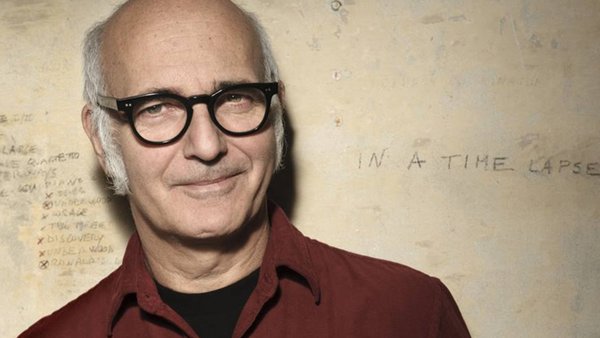
Though Nomadland would be one of the best films of the year even if it used only naturalistic sound, it happens to also be accompanied by a sumptuous musical score from accomplished Italian pianist and composer Ludovico Einaudi.
While Einaudi's heart-stoppingly affecting work won't qualify for next year's Oscars due to the compositions being pulled from several of his already-released albums, they nevertheless bolster the brilliant visuals and performances exceptionally.
Zhao is also smart enough to know when not to use music, and so Einaudi's songs are only deployed shrewdly, yet pull off an emotional knockout every single time.
1. It Would Be A Worthy & Adventurous Best Picture Winner

And finally, though Oscar season is far from sewn up, Nomadland has already earmarked itself as one of the frontrunners for the Best Picture Oscar, and what a winner it would indeed be.
Following on from Parasite's shock victory earlier this year, a Nomadland Best Picture win would be another boldly left-field choice, far away from the embarrassing recent success of the woefully Oscar-baiting Green Book.
Given how often the Academy looks the other way from card-carrying "arthouse" films, it'd great to see them go gaga for such a spare, minimalist piece of work, and one that isn't trying excessively hard to be an Issue Movie that appeals to the masses.
There's still a long time for other films to leap to the front of the pack - especially with the eligibility window being extended to February 28th of next year - but it's also easy to imagine Nomadland staying the course throughout.
Your move, Fincher.