Oscars 2015: Ranking The Best Picture Nominees From Worst To Best

Who should actually win?

No matter how much people say it doesn't matter, it's hard not to get excited about the Best Picture Oscar. The highest honour from the biggest movie awards ceremony, it's the ultimate endorsement of a film and has provided the motivation for Harvey Weinstein's entire career. This year's set of nominees (eight in total) is a mixed bag, with some movies destined to become classics stood next to films that'll be forgotten this time next year. None are ostensibly bad, but when dealing with the lower end of the nominees there's a pervasive feeling that some better films could have got recognition The big surprise omission from the category was Foxcatcher, which despite nabbing nominations in other big categories - Best Director, Best Actor and Best Supporting Actor - failed to get a shot at the big prize, although the lack of Nightcrawler and Gone Girl is, while expected, a really more upsetting oversight. Judging by the progression of the awards season so far, the Best Picture winner is pretty much ready to be engraved. But, of course, the Academy Awards are more about studio politics than they are a film's actual quality, and in recent years those two sides haven't matched up all that well. Will they this year? Let's take a look at the Best Picture nominees, ranked from worst to best, and see.


8. American Sniper

It's a bizarre loophole in the Academy shortlisting, a film that showed in a smattering of screens late in the year, but only goes on general release after the nominations, can still be a contender, and it's one that lends American Sniper some additional momentum - whereas many of the other films were out of cinemas by the time the nominations rolled around (two are even already available on DVD), this is at the forefront of audience's minds. Sniper is certainly the weakest of the Best Picture nominees, an intriguing true life story totally lacking in any sense of originality. Bradley Cooper runs through the life story of deadliest sniper in US history, Chris Kyle, with an all-American stoicism, but none of the depth present in similar recent movies (it vaguely touches on themes from both of Kathryn Bigelow's modern warfare efforts, The Hurt Locker and Zero Dark Thirty) is there. The footage of Kyle's funeral, shown over the end credits, packs more of an emotional punch and greater gets across the extent of Kyle's Legend than anything in the dramatisation, which is telling, especially as the film was in pre-production before his untimely death - without that unexpected event, the movie could have easily slipped by, making little impact. The Academy seems to love American Sniper, giving it six nominations, but that's not really in any way surprising; it's directed by a two-time Oscar winner, stars an emerging Academy favourite and deals with the war in Iraq. Simply mentioning 9/11 or its decade-spanning aftermath is a new shortcut to Oscar attention - just look as Extremely Loud & Incredibly Close. And as the movie's version of Chris Kyle is motivated to go to war by 9/11 (aha, parallels), this effect is only accentuated.

7. Selma

One of the most widely covered Oscar snubs was that of Selma, this year's late-in-the-day contender, which bagged a Best Picture nod, but missed out on Best Director. Actually watching the movie it's hard to see what all the fuss is about. Well, until you see who directed it. Yes, it's terrible that in 2015 Hollywood is still dominated by white men, but it's not the Oscar's fault if that's who they nominate - the problem is systematic with the studios, rather than those praising the eventual output. Had they nominated Ava DuVernay it would be because she's a black woman, not because she was one of the year's five best directors, which is insulting in its own right. At the end of the day, Selma is fine. That's it. It's a simple dramatisation of a chapter of Martin Luther King's life with a good, if not Keaton-bothering performance from David Oyelowo at its heart, that isn't hurt too badly by an obnoxious recurring cameo from producer Oprah Winfrey. If you've seen biopics of key political figures before, you know what to expect and DuVernay doesn't do much to subvert expectations. The unanimous praise Selma has received is thus perplexing, but the film doesn't do enough wrong to make it worth getting worked up about. What Selma really has going for it is that it got there first. There hasn't been a Martin Luther King dramatisation and thus this one can carry all the high emotion of the fight for equal rights at the fore.

6. The Imitation Game

Back when the awards season was on the horizon, The Imitation Game was a firm favourite. Benedict Cumberbatch was a lock in for Best Actor and the movie would prove to be a strong contender in other serious categories. And while it certainly amassed a nice number of nominations, its chance of success are now rather low, a film destined to go down in history as an "also ran". This drifting down the ranks could easily be excused by much stronger candidates racing to the fore, but it likely also has something to do with that the film isn't all that remarkable, never quite able to escape its Oscar baiting origins. Oh sure, in many ways The Imitation Game is a cut above other recent bait-y prestige picks. The presentation of the cracking of Enigma as an old-school spy thriller makes for an engaging second act, while Cumberbatch is convincing as Alan Turing, even if every personality divergence from Sherlock merely pushes him closer to Sheldon Cooper. What really stops The Imitation Game being an all round package is how it botches the ending. Although the film ostensibly about his actions in World War II, Morten Tyldum chose to broaden the scope and encapsulate all of Turing's life, all the way up to his outing as a homosexual, chemical castration and suicide, yet doesn't seem at all concerned with exploring the tragedy with anything more than a fleeting mention - the suicide, which could have been Cumberbatch's Oscar moment, is flippantly revealed in some on-screen text.

5. The Grand Budapest Hotel

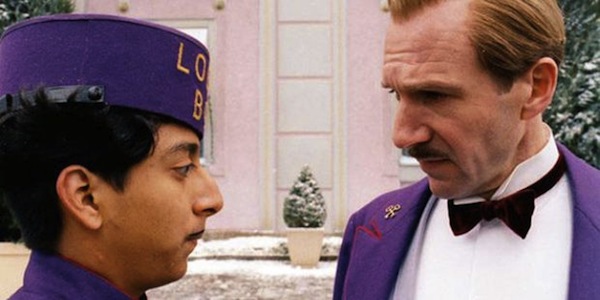
When it comes to long beloved directors, the Academy tends to take little notice until one film gets so much hype it's impossible to ignore. Just look at how they heaped awards on the Coen brothers for No Country For Old Men, or Danny Boyle for Slumdog Millionaire, almost as an apology for previously ignoring their work. It's a similar case with Wes Anderson's The Grand Budapest Hotel. Sure, the praise is mostly deserved, but it can't help but feel a bit bandwagon jumping; if Oscar loves Anderson, where was the acknowledgement of Moonrise Kingdom or, going further back, The Royal Tenenbaums? The Grand Budapest Hotel certainly sees Anderson operating at his most Anderson-iest, the director eschewing any convention he can (everything, from genre to aspect ratio, is gloriously inconsistent) and making something overwhelmingly fun. Ah, fun. It's been a while since you graced the Best Picture nominees. The film isn't just old school in a visual and technical level, however - in the real world it found its way to box office and awards success is a decidedly un-modern way. Whereas every major release operates on the well-worn blockbuster model, where opening weekends make or break a film, Grand Budapest used old fashioned word of mouth to build hype slowly throughout the year. It's so fitting with the time period Anderson is targeting that it's hard to think he somehow didn't have it all planned from the off.

4. The Theory Of Everything

A biopic of Stephen Hawking detailing his first marriage and his well known physical affliction. Could The Theory Of Everything sound any more like a film conceived to be a big bother come awards season? However, that it's a quintessentially typical Oscar contender shouldn't let you overlook the simple fact that it's a brilliant movie; not only a celebration of the man who inspired it, the film is an engaging story with a point to make beyond "wasn't he great?" In the hands of James Marsh, who stands as one of Britain's most versatile filmmakers, having previously made affecting documentaries Man On Wire and Project Nim, as well as the underrated Shadow Dancer, the usual real-life adaptation/young romance tropes become something fresh and joyous, with the film never getting lazy and falling back onto the proficiency of the surprisingly subtle central performances. Like The Imitation Game, which also chronicles the professional and personal life of a British genius and thus can be treated as a companion piece, there's some divergences from the true events, but while there it felt like an attempt to downplay the more shocking elements, here it's to accentuate the broader themes of the difficulties of marriage and the malleability of love. In terms of its road to the Oscars, there's not much more to comment about The Theory Of Everything. It sounded like an Oscar movie and happily wound up being incredible - of course it was going to get recognition.

3. Whiplash

With its musically dominated plot and wholly indie credentials, Whiplash risked being this year's Inside Llewyn Davis - a great movie about a topic only a small portion of the audience would care about (then folk, now jazz drumming) that would slip by contention at the major awards for no other reason than the universe hates great movies. So what a pleasant surprise that it managed to get five nominations, including a very deserving Best Picture nod. It's especially commendable when, earlier in the year, it looked like Whiplash's only hope at awards glory was J.K. Simmons' sure fire winning performance as conductor-cum-bully Terrence Fletcher. However, just like in the movie itself, that performance emerged as only one incredible part of Damien Chazelle's all-round adrenaline-pumping thriller. Like Llewyn Davis, the many musical scenes aren't padding exclusively for the benefit those into the subject (see Foxcatcher's wrestling), but heart-pounding action sequences that consistently build the characters and their world where genius and talent is so commonplace that to succeed requires total sacrifice. There's so much to praise, but special props should got to Miles Teller, who holds his own against a top-of-his-game Simmons, especially in a taught final scene, which provides a sick alternative punchline to the "How do you get to Carnegie Hall" joke.

2. Birdman

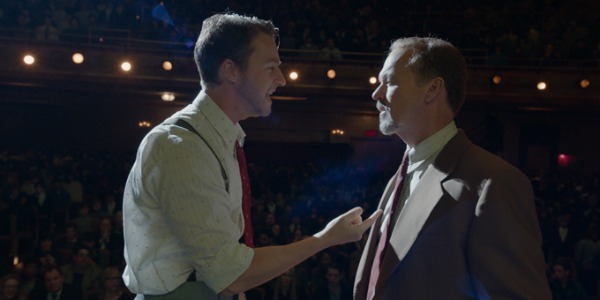
Birdman (Or Another Subtitle You'll Instinctively Gloss Over) will undoubtably go down in history as one of the best nominees for Best Picture to not win the award, and while it's difficult to get upset given who the likely recipient is, it's not hard to imagine that in any other recent year Alejandro González Iñárritu's masterpiece would have wiped the floor with the competition. King George VI's stammer vs Riggan Thompson's complete mental breakdown? No competition. Reassuringly, with nine nominations (tied with The Grand Budapest Hotel for the most), Birdman could still come home on the night as the statistical winner - it's got a solid shot at Best Actor and will need a really ill wind to not dominate the technical categories. Not bad for a movie that originally looked to be too "out there" for the stuffy Academy. Unlike Gravity or The Artist, which were both born out of an ambitiously high concept, Birdman is so impeccably constructed that what would be a key selling point for a lesser film (it's mostly one continuous shot, the central casting is delightfully meta, it's about the industry itself) can barely register. It's just such an all-round success, the script never dipping in tedium and its cast delivering across-the-board incredible performances, that re-watch after re-watch can't dull its delights. It's just a shame this is the closest we're likely to get to a superhero movie getting Best Picture.

1. Boyhood

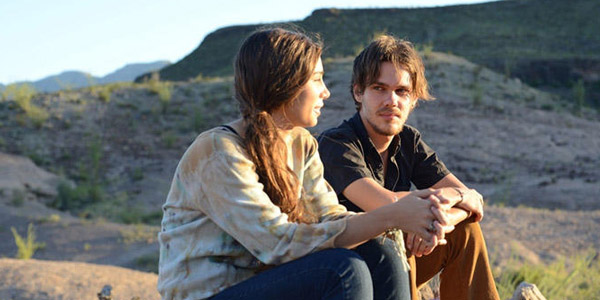
Well, that Birdman entry was pretty damn gushing, meaning that the best of the nominees must be something really special. Well, it is Boyhood - can't get much better than that. Richard Linklater has rendered all subsequent coming-of-age movies obsolete with his personal-yet-universal portrait of growing up. Mason Evans, Jr. may be photography obsessed and have had an abnormal homelife growing up, but the sheer naturalism of his life from ages six to eighteen means it's impossible to not be completely in tune with him. As has been heavily reported, Boyhood was shot over twelve years, with the characters and the world around them developing in real time, enhancing Linklater's already human script. However, like with Birdman, you're less marvelling at how it was made and more being overcome by the effect it has. When it was first put suggested in industry publications following the unanimous critical praise that the film was a potential Best Picture contender, it was easy to get swept up in a wave of emotion, only to be quickly brought back down to Earth, knowing that even in the hands of Harvey Weinstein the film was a hard sell to Academy members. So to see it going into the final leg of the Oscar race the undoubted favourite is a definite victory, a reminder that sometimes, if not very often, the Academy can get it right. How would you rank the 2015 Best Picture nominees? What other movies should have been nominated? Share your thoughts down in the comments.

Contributor
Contributor

Film Editor (2014-2016). Loves The Usual Suspects. Hates Transformers 2. Everything else lies somewhere in the middle. Once met the Chuckle Brothers.