Oscars: Every Best Picture Winner Ever Ranked From Worst To Best
41. Ordinary People (1980)

Robert Redford's directorial debut is a generally wonderful adaptation of Judith Guest's novel, providing insightful observations into the state of the modern American family, accentuated by excellent performances from Mary Tyler Moore and young Timothy Hutton (the latter winning a Best Supporting Actor Oscar yet his career curiously stagnating afterward).
Ordinary People gets a lot of flak for beating out both Raging Bull and The Elephant Man for the big gong - and justifiably so - but if you can approach it without that baggage, it is a pleasantly stripped-down Best Picture winner free of over-the-top sentiment or awards-baiting bombast.
40. The Last Emperor (1987)

An enduringly weird Best Picture choice but also an agreeably unconventional one, Bernardo Bertolucci's 163-minute drama about Puyi, the last Emperor of China, performed one hell of an Oscar sweep, winning all nine awards it was nominated for (including Best Director for Bertolucci).
The film is best remembered for its stunning visuals, immaculate production design and being the first film ever allowed to shoot inside Beijing's Forbidden City, though the ensemble cast is also uniformly excellent.
In terms of historical epics, it's an easy classic and fantastically conveys the passage of time, even if its effectiveness is definitely stifled somewhat by its brutal runtime.
39. The Sting (1973)

The Sting is often forgotten about in the annals of Oscar history due to winning Best Picture in-between the first two Godfather movies, which would frankly make any movie look meek by comparison.
It also beat out The Exorcist for Best Picture, underlining the Academy's historic prejudice against horror, but it is nevertheless a ludicrously entertaining froth-piece shot through by the easy chemistry between Paul Newman and Robert Redford.
It doesn't exactly linger in the mind like some of the better movies on this list, but it is a ton of fun while you're watching it, the performances are magnetic and it basically typifies star-driven entertainment at its best, such trivialities as "substance" be-damned.
38. The Shape Of Water (2017)

This year's Best Picture winner will certainly go down in Oscar history as one of the strangest and most unexpected victors, given the Academy's persistent allergy to fantasy fare and, well, films about women falling in love with scaly fish creatures.
While the script itself is fairly lightweight and like most of Guillermo del Toro's movies it's propelled forward by its style, it is a thoroughly charming, touching love story at its core, immaculately performed and wringing an incredible amount out of its mere $19.5 million budget.
It'll be interesting to see whether or not the popular narrative deems it to have robbed Three Billboards Outside Ebbing, Missouri in the future, for while it's nowhere near a top-tier Best Picture winner, it is one of the most diverting and daring picks the Academy has ever made.
It was the black-and-white sequence that won the crusty old men over, wasn't it?
37. The King's Speech (2010)

It will forever be one of the Academy's all-time biggest screw-ups that they gave Best Picture to Tom Hooper's historical drama over David Fincher's masterful The Social Network.
To be clear, The King's Speech is a fantastically executed crowd-pleaser with a Colin Firth performance for the ages - to say nothing of Geoffrey Rush or Helena Bonham Carter - but winning in a year against not only Fincher's film but also Inception and Toy Story 3 (unlikely but deserving alternates) made it hard not to feel a little adversarial against it.
Not a great Oscar winner, but outside of this context, a great film no question, perfectly braced between high-brow Oscar-baiting concerns and something a little more irreverent. A period drama for people who don't really like period dramas, basically.
36. In The Heat Of The Night (1967)
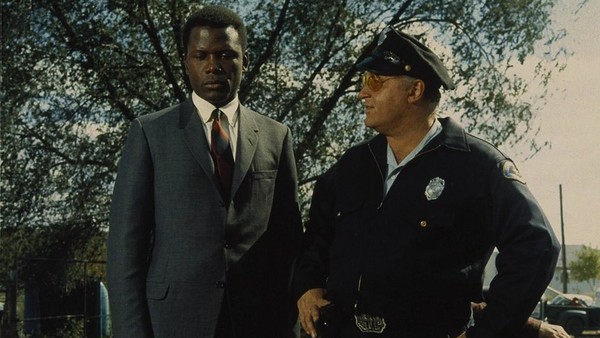
The Sidney Poitier-starring classic crime drama will forever be a contentious Best Picture winner for incredulously beating out Bonnie and Clyde and The Graduate for the award, but it does stand tall as a probing and mostly well-aged examination of racial tensions in the American South in the 1960s.
Poitier is typically excellent though he's actually outdone by a magnificent Rod Steiger here, who as a stern, questionable police chief, runs away with the movie, even winning a Best Actor Oscar for his efforts.
The best thing that can really be said about the film is that it's still as unsettling and intense as it must've been five decades ago: its commentary remains enormously relevant in a world still struggling to reconcile the same issues.
35. The Lord Of The Rings: Return Of The King (2003)

15 years later, it's still shocking that the Academy awarded Best Picture to a fundamentally daft - yet brilliantly crafted - fantasy threequel, essentially rewarding Peter Jackson for his work on the entire trilogy of epic features.
Though wildly overlong and infamously bloated out with several false endings, Return of the King's fantastically overblown style, sweeping emotion and terrific ensemble cast carried it effortlessly over the line, even if its record-tying 11-award sweep ultimately made for a pretty boring ceremony.
Fans may argue that it's not even the best of the three movies, but it was a refreshing case of the Academy proving they're not always total snobs.
34. American Beauty (1999)

Though Alan Ball and Sam Mendes' smash hit drama has taken on an unfortunate, queasy new meaning in recent months, American Beauty is a fantastically-wrought character piece about suburban discontent that managed to prevail in a fairly so-so year.
Almost two decades later, the movie has been parodied, dissected and copied enough that some elements don't seem quite so alluring or convincing, but the performances - especially Kevin Spacey, Annette Bening and Chris Cooper - are never less than first rate.
Yes, the bag scene is a toe-curler and the blowjob misunderstanding feels immensely hokey for a Best Picture winner, but American Beauty's meditations on middle-class existential angst are nothing if not intoxicatingly powerful all the same.
33. The Hurt Locker (2009)

The epitome of director Kathryn Bigelow's career up to that point, The Hurt Locker made her the first - and currently only - woman to win the Best Director Academy Award, in an Oscar season that all-too-poetically pitted her against her ex-hubby James Cameron and his uber-hit Avatar.
As a super-charged meditation on masculinity and the effects of war, The Hurt Locker is one of the better post-9/11 character-driven war films, aided hugely by Barry Ackroyd's eye-wateringly good lensing and a Jeremy Renner performance that propelled him into the spotlight.
Though the film had a surprisingly short shelf-life with audiences and is barely talked about anymore, it's a classic war movie any way you cut it.
32. Marty (1955)

From the pen of screenwriting genius Paddy Chayefsky (Network), Marty is a no-bulls*** Best Picture winner, a snappy, 90-minute romantic drama with no fancy tricks: just a wonderfully earnest, charming script and a deeply affecting, Oscar-winning Ernest Borgnine performance.
Sometimes it's the smallest pictures that hit home the hardest, and Marty certainly qualifies. Perhaps in a stronger year the Academy might've opted for something a little more "substantial", but Chayefsky's masterful screenplay makes a proud, powerful humanist statement and leaves audiences on a fuzzy high without talking down to them or trading in platitudes.
By turns sad, honest and joyful, it feels like a real slice of life more than most Best Picture winners of its era or, really, ever.