Physical Media Isn't Dying (You've Been Lied To)
Why Falling Back In Love With Blu-Rays Was So Easy
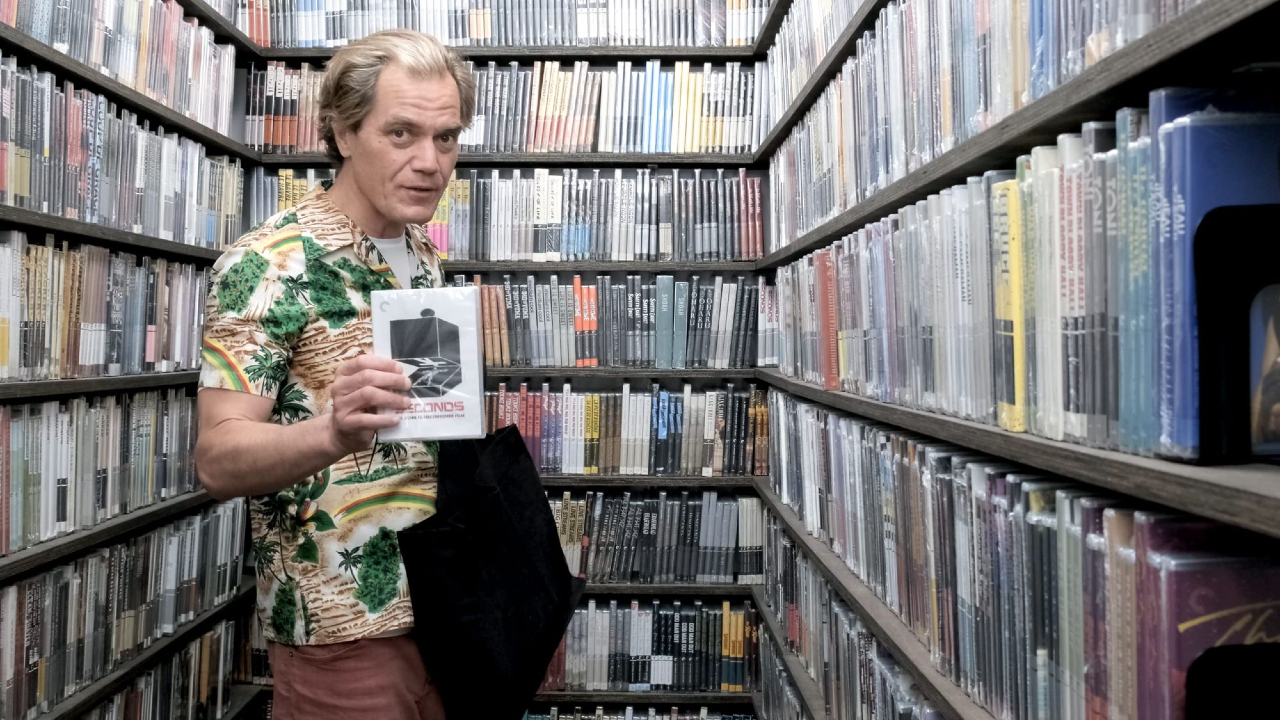
Before I go any further and extoll the virtues of Blu-rays and 4Ks as they exist today, an anecdote. Six years ago now, I had a bit of an epiphany. While I had grown up with physical media as a member of that awkward in-between generation known as the zillennials, waking up bleary-eyed on a Saturday morning to rewind my tapes of Batman: The Animated Series, Star Wars, and Independence Day, I'd come of age in the streaming era. Netflix came to the UK in the early 2010s and so, by the time university came around, I was locked in. The cost-benefit pay-off was obvious - pay a flat subscription fee and gorge on all the TV and films you could want, as opposed to forking out dozens of pounds for a bumper box-set that would also take up precious shelf space in a student haunt.
It was the kind of logic millions of people also followed around that time, as convenience, choice, and instant gratification expedited the movie-watching process and the binge TV model took FOMO and spoiler-related anxiety to new heights. They vacated the rental stores, sold their DVD players, and threw open the curtains to a neater, more seamless viewing experience.
But steadily, over time, streaming didn't remain such a no-brainer. Shows and films came and went, algorithms became more pernicious, and controversies surrounding censorship, delistings, cancellations, price hikes and so much more ignited a debate over the film and TV industries' digital transition and its various knock-on effects, especially as they relate to movie attendances, equitable industry compensation, and the nature of how we engage with medium of cinema itself.
It isn't clear how deeply these conversations have penetrated mainstream audiences (presumably little, given how Netflix, Disney and Prime Video continue to record strong figures year-on-year), but one consequence is that physical media has taken on another kind of cultural cache compared to its heyday, servicing primarily those film fans who are deeply invested in the medium, as well as those who have alerted to the lack that accompanies streaming in contrast to the DVDs they grew up with.
All of the aforementioned, plus the passing of my father - whose love for film was an ever-present in our relationship - galvanised me to reconsider my Blu-ray habits, and so, I took a wander to my nearest HMV and had a gander. The first thing I was struck by was the array of collectors' editions on offer, produced by independent labels like Criterion, Eureka, and 88 Films. One in particular stood out, however - Arrow Video, a label with a focus on genre whose branding recollected a retro rental store feel.
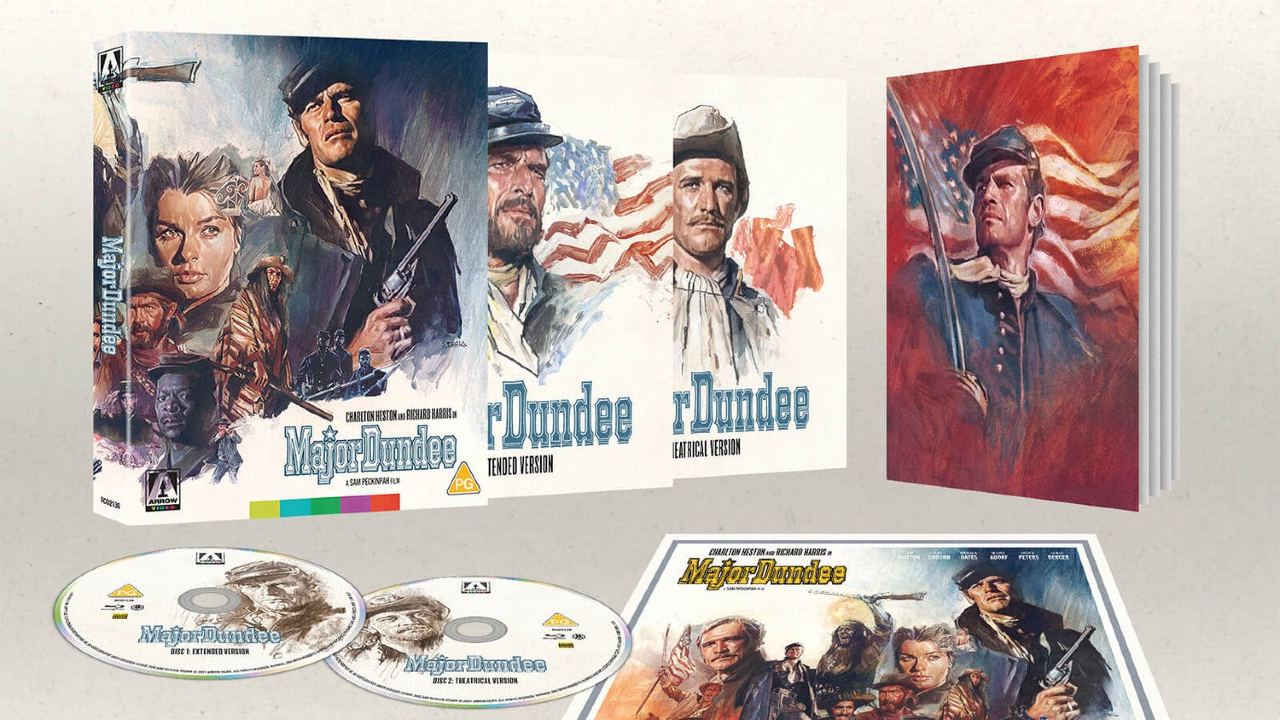
In and amongst the array of cult horror titles was something that struck an instant chord - a collector's edition of a film dad had recommended but that I'd never got around to watching: Sam Peckinpah's Major Dundee. The box was adorned with the stunning watercolours of artist Tony Stella, while the edition itself included a new 4K scan of the film, Stella's art as a full poster, a booklet of essays and complementary material, and copious amounts of bonus features to delve into.
The film itself is a brilliantly flawed masterpiece which you should absolutely watch if you're into Westerns, but the viewing experience overall was uniquely cathartic - both as a reintroduction to the full-bodied, comprehensive engagement that comes with taking your relationship with a film beyond the end credits, and as a totemic item that made a lost loved one feel just a little bit closer.
It was, in its own way, a kind of therapy, and it consequently recalibrated my relationship with cinema. Full shelves felt less like a burden and more like a comforting library - a reflection of my own filmic tastes and personality, and one that could be negotiated on my terms rather than an algorithm's. Streaming still had a function, but it was once again supplementary, not foundational, to my navigation of film and the history of film - a process further galvanised by an expanding Letterboxd watchlist and the gradually stagnating libraries the various streamers had to offer, all the while labels like Criterion and Arrow continued to announce and release gorgeous 4K restorations of classics and cult faves alike.
At the risk of all of that coming across as incredibly self-indulgent, I do think it serves an important context. There is a tangible, emotional quality that comes with physicality and one that has become more pronounced in the digital age. Think of physical media as another facet of people - primarily young adults - renegotiating their digital existence after coming of age in the social media and streaming era. First, there was the resurgence of vinyl, and more recently, the reemergence of film photography.
On a pure, fundamental level, it feels like people are coming to terms with the impact of convenience and the erosion of the little rituals that played a key part in our connection with art and memory. Not to equate consumption with protest or resistance, but engaging in these hobbies does also feel like a bit of a declarative statement against the notion of art as "content", as well as a small reclamation of a way of engaging with media in general, giving the time, space and energy to something so that it can sink into your pores as opposed to it being disposed of on a commute or background viewing.
It's not so much that there's an issue with engaging with art semi-passively (lord knows Spotify Premium is a welcome respite from public transport even as it rewards incurious habits), but rather that the method of delivery itself is important, and that when we devote the appropriate amount of time and respect to art, we're ultimately left with a more gainful experience. As far as film goes, 4K Blu-rays are a great pathway to achieving exactly that.
[Article continues on next page...]