Ranking Bad Robot Movies From Worst To Best

How does 10 Cloverfield Lane compare to the original?
Most people know Bad Robot for its iconic jingle, which plays whenever its production logo appears on screen as a couple of children shout: "Bad robot!" (or at least they did until it became super serious). It's not surprising to learn that the kids who recorded the line are those to writer/director J.J. Abrams, the modern day Steven Spielberg who heads up the company - first founded back in 1998 - and has been directly responsible for creating, financing and producing some of the most recognisable TV shows and motion pictures of recent times. Though Abrams' company originally started out making TV shows like Alias, Lost and Fringe, it soon moved into film where its ventures became renowned for the director's mysterious approach to marketing them - a trait that has remained consistent over the years, in projects as diverse as a found footage monster movie to a side swipe at the news industry. Yup, Bad Robot has made a name for itself as a company that thrives on misdirection - even the building where Bad Robot is housed in Santa Monica has it signposted as the "National Typewriter Company." As a filmmaking force, it's allowed Abrams to become a major influence on modern cinema, now considered one of Hollywood's hottest players. To celebrate the recent release of Bad Robot's latest flick, 10 Cloverfield Lane, here is a definitive ranking of the production company's films to date, worst to best, starting with...

11. Morning Glory (2010)

Without question the most unexpected film produced by Bad Robot, if only because it's nothing at all like anything else they've made to date, Morning Glory is a movie about New York news anchors starring Rachel McAdams, Harrison Ford and Diane Keaton. "Ah," you say. "Perhaps J.J. Abrams just made Morning Glory to get close to Ford in case he ever needed to enlist him for Star Wars: Episode VII. Yeah, that makes sense." Um, sure? Ignore that this was two years before Episode VII was even first mooted. Unfortunately, Morning Glory - despite its strong cast - isn't a particularly memorable film; for a motion picture produced by Bad Robot, it's a surprising safe and by-the-numbers comedy flick, which makes J.J. Abrams involvement a curious affair. It doesn't say anything notable about the television business, either, which gives it a disposable feel. Luckily, the acting is pretty good throughout and Ford is on solid form. Not terrible, but not particularly good either, this is definitely Bad Robot's weakest effort.

10. Infinitely Polar Bear (2015)

Produced on a measly budget of just $6.7 million, comedy/drama Infinitely Polar Bear - which concerns a family-orientated plot about Mark Ruffalo and his two kids - isn't really the kind of film you'd expect from Bad Robot. Then again, neither was Morning Glory, so who knows what to think about this company anymore, right? Set, for some reason, in the 1970s, Infinitely Polar Bear hones in on a single father suffering from bipolar disorder, who - in the wake of a massive breakdown - agrees to assume responsibility of his young daughters after his wife relocates to Columbia University to finish her degree. It's a decent film that feels a little aimless and conflicted at times, but its heart is just about in the right place. Ruffalo is great, of course; when isn't he? The interesting thing that this particular film and other Bad Robot films have in common is actress Zoe Saldana, who has appeared in both films in the rebooted Star Trek series: perhaps it was her involvement in Infinitely Polar Bear that convinced J.J. Abrams to get on board?

9. Joy Ride (2001)

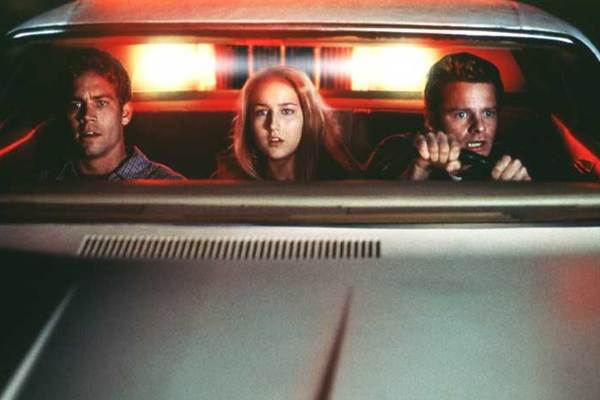
The lesser known of all Bad Robot's movies to date, Joy Ride - released back in 2001 - was also the company's first production. Given that it's a movie with a car-based title and it stars Steve Zahn, Paul Walker and Leelee Sobieski, one would likely assume that this is some awful, straight-to-DVD schlock. Amazingly, that isn't the case: Joy Ride is a bit of an underrated gem, and a way better film than its cliche poster and B-list cast would have you believe. Penned by J.J. Abrams, it was clearly inspired by Steven Spielberg's '70s classic, Duel, which saw Dennis Weaver as a terrified motorist going up against a truck driver intent on running him off the road.; the plot of Joy Ride echoes is about three students who wind up being stalked by a psychopathic truck driver. It's purely an exercise in B-movie aesthetics and it doesn't have much depth to speak of, but it offers a few interesting things nonetheless: the plot keeps you gripped and there's an eerie tension that drives the movie to its final reveal.

8. Super 8 (2011)

J.J. Abrams' love letter to the films of Steven Spielberg isn't perfect, but as an exercise in nostalgia - and as a modern sci-fi thriller - it more than delivers on its premise. Abrams took a purposely vague approach to marketing the film, which made a somewhat tricky sell (at least by modern standards) massively hyped: set at the end of the '70s, the plot hones in on a group of Stand By Me-like kids, who - whilst shooting a home movie - become entangled with a mysterious alien entity after an explosive train crash. Heartfelt and exciting, there's a clear difference between the first half of Super 8 and the second: whilst the first is better paced with a focus on characterisation, the last hour is more conventionally action-orientated. As such, it's easy to understand why some people had a problem with the shift; it occasionally feels like there are two different films on offer. In addition, at time the "Spielberg tribute" approach kills some of the originality. Still, Abrams clearly loves the movies that he's paying homage to here, and it comes through in every frame. It is an ode to imagination... and to the filmmakers in all of us.

7. Star Trek Into Darkness (2013)

Star Trek into Darkness, the follow-up to J.J. Abrams' first - and more successful - foray into the Star Trek franchise, was originally met with positive notices: audiences and critics alike praised the wonderful action scenes, the cast chemistry and the awesome special effects. And then, out of nowhere, it sort of became one of those unlucky films that everyone starts picking apart a few weeks later. Some of the criticisms surrounding the movie are legit, of course, especially those concerning Benedict Cumberbatch's new incarnation of villain Khan, who fans were told time and time was some bloke named "John Harrison." The story is also a plot hole-filled mess, and one that doesn't really hold up under scrutiny. Still, who cares? Star Trek into Darkness is an absolute blast - a relentlessly entertaining thrill ride from start to finish, and one that absolutely guarantees you won't be checking your watch. If more blockbusters had the assured, adventurous mentality of this one, modern cinema would be a far more exciting place.

6. Cloverfield (2008)

The film that made J.J. Abrams a massive name in the filmmaking world, despite the fact that he didn't actually direct the thing, Cloverfield is an immensely original and enjoyable foray into the "found footage" genre that so many of us have since come to despise. Cloverfield was essentially a movie about its marketing campaign, of course; its title gave nothing away, whilst the build-up to the film's release consisted of a series of teases and hints that nobody could make heads or tails of. When the film finally dropped, audiences had no real clue what they were really in store for, save for what Abrams had told them. So how does the film hold up, all these years later, freed from all the mystery that made it a box office smash? Surprisingly well, actually: though it clings to an annoyingly hipster-ish group of protagonists, Cloverfield remains a tight, exciting thrill ride, built from cool set-pieces and unexpected turns. It's a relatively story-free picture, but it actually manages to thrive on its ambiguousness - no easy feat for a found footage flick.

5. 10 Cloverfield Lane (2016)

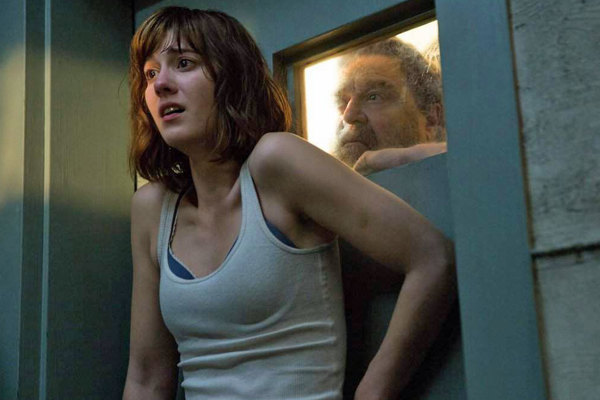
10 Cloverfield Lane started life as a different movie entirely. The premise was essentially the same, but somewhere during produce J.J. Abrams had one of his "big" ideas - what if it was the next Cloverfield movie instead? And what if Bad Robot only revealed that the film existed a few months before its release? Wouldn't that lure more people into theatres? Based on the recent box office gross, the answer to that question is a resounding "yes." Thankfully, though, the film isn't just the sum of a marketing gimmick - it's a nerve-shredding semi-sequel that thrives as its own thing whilst expanding the Cloverfield mythology. Directed efficiently by Dan Trachtenberg, 10 Cloverfield Lane thrives on its claustrophobic story and excellent cast: a truly horrible tension is maintained across the picture, while Mary Elizabeth Winstead, surely one of the most underrated actresses of her generation, is excellent in the lead role as a "prisoner" in John Goodman's ominous fallout shelter. If its links to the original Cloverfield picture are only tenuous, does it matter? If this is what Cloverfield movies are all about - that being loosely linked stories in different genres driven by a central mystery - then bring on the third film.

4. Mission: Impossible - Ghost Protocol (2011)
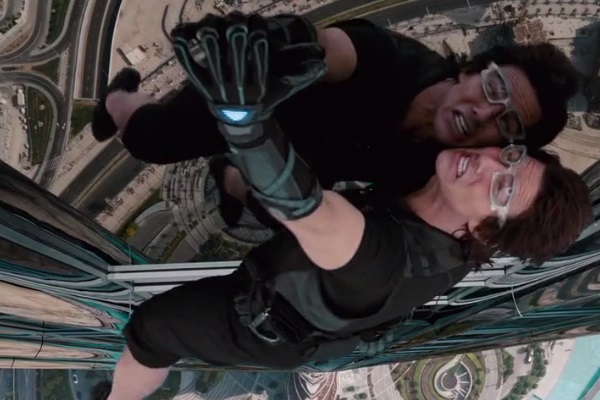
It's weird to think that Mission: Impossible III, the one instalment directed by J.J. Abrams, wasn't produced in any capacity by Bad Robot. Its sequel, however, Mission: Impossible Ghost Protocol, was - and what a doozy of a sequel! Directed by Brad Bird, the guy behind animated classics like The Iron Giant and The Incredibles, Ghost Protocol is a relentlessly entertaining, explosive and funny blockbuster that settles for just being a good time at the movies: it's almost impossible to resist as super agent Ethan Hunt, blamed for an attack on the Kremlin, sets out to clear his name. Essentially a rollercoaster ride of fantastically inventive set-pieces, there's a genuine artistry to the way that the action sequences play here - especially when you consider that Tom Cruise did most of his own stunts (is there a more memorably breathtaking moment in modern action cinema than the one that sees Cruise atop the Burj Khalifa in Dubai?). After Mission: Impossible III, most people probably assumed that this particular franchise could only go downhill, but it didn't happen: at the time of its release, this was the best Mission: Impossible movie to date. That is, until the next one came along...

3. Mission: Impossible - Rogue Nation (2015)
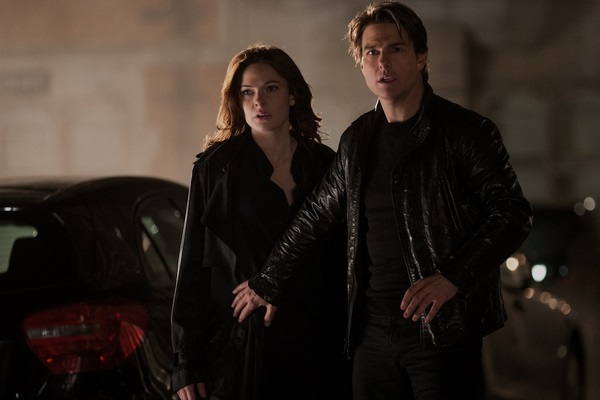
Just when it seemed as though the Mission: Impossible franchise had reached a high watermark that was unlikely to be beaten, along came Rogue Nation, the fifth instalment in the series... and the best of the lot. Director Christopher McQuarrie's approach appears to have involved him taking bits and pieces from previous Mission: Impossible entries, yet that somehow made this the most exciting - and satisfying - with Ethan Hunt and his team embarking on a dangerous mission to destroy a criminal organisation known as the "Syndicate." Not only are the action sequences here dizzyingly entertaining, the movie feels like the sort of old-fashioned fun you just don't get anymore. Cruise is at his most likeable as Hunt, and newcomer Rebecca Ferguson makes for a great romantic rival. At this point, things really should have started feeling stale, but every new chapter in this malleable saga works as an opportunity for a new director to strut their stuff. This one, with its wonderful set-pieces (the best of which takes place during an opera), may borrow a lot, but still manages to make Ethan Hunt's fifth adventure his most delectable yet - and, in the process, very nearly Bad Robot's best film.

2. Star Trek (2009)

What a way to reboot a franchise! There are many Star Trek fans out there who would claim that J.J. Abrams essentially turned their beloved series into Star Wars with his 2009 blockbuster effort, insofar that he made Gene Roddenberry's franchise more accessible to a wider audience. While some would likely cite this as a negative, actually watching Star Trek it's hard to argue with the filmmaker's approach to the material: it's such a brilliantly fun and enjoyable entry in the series, one that manages to co-exist with the other movies and TV shows with such a clever "alternate dimension" plot device, that you can only really admire what Abrams did. It helps, too, that the casting here is near on perfect: Chris Pine and Zachary Quinto make for a perfect modern Kirk and Spock, respectively, whilst the action sequences, pacing and clever plot twists make this super entertaining to sit through whether you're a hardened Trek fan or somebody with no interest in the franchise at all. There's a real effortlessness to Abrams' approach - a breezy confidence that simply makes you want to watch.

1. Star Wars: The Force Awakens (2015)

Given all the obscene hype surrounding the release of Star Wars: The Force Awakens, J.J. Abrams really did the impossible when he actually delivered an experience that not only paid respects to the history and legacy of the franchise, but something that also felt refreshingly progressive - a bridge between the old and the new, if you will. Though its plot does skim somewhat close to that of the original film, The Force Awakens is a near-on miracle: a beautifully-rendered Star Wars sequel made just for the fans - one that, in its tone, aesthetics and characters, understands exactly what a follow-up to 1983's Return Of The Jedi needed to be in the wake of George Lucas' ill-judged prequel trilogy. Yes, there are a few plot holes here and there, but as modern day blockbusters go, The Force Awakens is a truly intoxicating experience - immersive, thrilling, and awesome. All the pieces fit together brilliantly; everyone from veterans like Harrison Ford to newcomers such as Daisy Ridley help to cement Episode VII as the best Star Wars entry since The Empire Strikes Back. And, for all its successes, it's also Bad Robot's best picture to date. It'll be a tough film for the production company to beat - good luck, Episode VIII! Like this article? Like Bad Robot? What do you make of the order of the films as seen here? Agree or disagree? Let us know all your thoughts in the comment section below.

Contributor

Sam Hill is an ardent cinephile and has been writing about film professionally since 2008. He harbours a particular fondness for western and sci-fi movies.