
Roger Ebert, the only film critic with a star on the Hollywood walk of fame, died April 4th after a long battle with cancer. He spent his life in the darkness of a cinema, sweater-vested in a Chicago theater balcony, popcorn in hand, moving images flickering across the lenses of his glasses. And then he wrote about it. Roger Ebert was Americas film critic. No other critic achieved the level of celebrity that Ebert did, with his regular newspaper column, television shows, talk show appearances, and his trademark thumbs up or thumbs down shorthand. As a film critic, he could be tough, biting and caustic. He made no apologies if he disliked a movie. In fact, his most entertaining work is the book I Hated, Hated, Hated This Movie. Ebert didnt hold back or mince words. He spoke his mind. But Ebert could just as easily be generous in his praise. His most positive reviews not only provide a summary and analysis of a film, but they convey his love of and passion for the medium. He could forgive faults in many films in light of their ability to entertain or to provoke thought and reflection. Just because a film is bad, he wrote, doesnt mean I cant enjoy it. His writing style was simple, insightful and often elegant. It was sarcastic, cutting and sometimes darkly funny. But regardless of the tone of the review, his work remained true throughout his career. You may disagree with the content of one of his reviews, but you have to admit that more often than not Ebert made a solid case for his point of view. Compiling a list of his 50 greatest film reviews was no easy task. After all, he reviewed thousands of movies during his 46 year tenure as film critic for the Chicago Sun Times. Sometimes the way you consider a film, Ebert wrote on his blog, depends on when and why you saw it, and what it meant to you at that time. Accordingly, most of the films on this list were given either four stars or one. Great reviews or awful ones. That was when Eberts pen was at its most prolific. It was a very rare occasion on which Ebert withheld a single, meager star. He usually started with one star, perhaps for effort, and worked from there. There are a few scathing reviews here that earned less than a single star, and they make for good reading. Click "next" below to begin...
50. An Alan Smithee Film: Burn Hollywood Burn (1998) - 0 Stars
Director: Alan Smithee 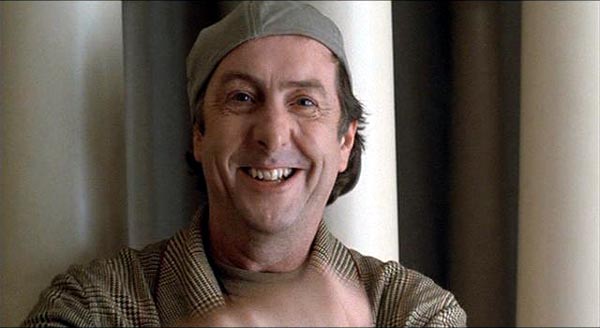
Burn Hollywood Burn: An Alan Smithee Film, a movie about a disastrous film production, was cursed from the beginning. "Alan Smithee" is a director's credit assigned to a film when the film's director pulls his name off the project. Ironically, director Arthur Hiller (Love Story, Plaza Suite) was so displeased with the film that he had his own name withdrawn from the credits, so Burn Hollywood Burn: An Alan Smithee Film has "Alan Smithee" credited as its director. Yes, the film was that bad. Roger Ebert summed it up well in his review: Sophomores in a film class could make a better film than this. Hell, I have a movie here by Les Brown, a kid who looks about 12 and filmed a thriller in his mother's basement, faking a fight scene by wrestling with a dummy. If I locked you in a room with both movies, you'd end up looking at the kid's. 49. Un Chien Andalou (1928) -
Directors: Luis Bunuel and Salvador Dali 
Luis Bunuel is one of the 20th Century's most celebrated directors. Ebert wrote that Bunuels films possessed a quality so distinctive that, like those of Alfred Hitchcock and Federico Fellini, they could be identified almost immediately. Un Chien Andalou (1928) is one of the most famous short films ever made. Bunuel and artist Salvador Dali set out to create a surrealist film that was meaningless and incapable of being understood. "It assaults old and unconscious habits of movie going," Ebert wrote. "It is disturbing, frustrating, maddening. It seems without purpose (and yet how much purpose, really, is there in seeing most of the movies we attend?). There is wry humor in it, and a cheerful willingness to offend. Most members of today's audiences are not offended, and maybe that means the surrealists won their revolution: they demonstrated that art (and life) need not follow obediently within narrow restrictions that have been decreed since time immemorial. And that in a film that is alive and not mummified by convention, you never know what you might see when you look out the window." 48. Belle de Jour (1967) -
Director: Luis Bunuel 
Luis Bunuel's film about a housewife named Severine who works in a brothel part time struck out at most of society's conventions at the time. "Her secret is that she has a wild fantasy life," Ebert wrote, "and Bunuel cuts between her enigmatic smile and what she is thinking. Bunuel celebrated his own fetishes, always reserving a leading role in his films for feet and shoes, and he understood that fetishes have no meaning except that they are fetishes." Ebert praised the film as "elegantly mounted -- costumes, settings, decor, hair, clothes--and languorous in its pacing." When a film struck him as very good, Ebert often dug deep into a film's subtext, thematic structure and details. But quite often, in an effort not to read anything into a film that the filmmakers did not intend, he would refer to a detail and let it lie there, unremarked upon, allowing the reader to draw his own conclusions: "The subtle use of meows on the soundtrack; what do they represent?" Ebert asks. "Only Severine knows." 47. Heavens Gate (1981) -
½
Director: Michael Cimino 
The 1980 film Heavens Gate is legendary for its running time of three hours and thirty-nine minutes. At 152 words, Heavens Gate ranks among Roger Eberts shortest film reviews.
The ridiculous scenes are endless, he wrote. It is the most scandalous cinematic waste I have ever seen, and remember, I've seen Paint Your Wagon.
46. No Country For Old Men (2007) -
Directors: Joel and Ethan Coen 
There are relatively few movies that garnered absolute praise from Roger Ebert, considering he saw and wrote about so many films over the course of his career. Ebert was not a critic to hand out accolades undeserved. But when he admired, truly admired a movie, his exuberance and enthusiasm for the film was present in his review, as in this passage from his review of the Coen brothers' No Country for Old Men. Many of the scenes in No Country for Old Men are so flawlessly constructed that you want them to simply continue, Ebert wrote, and yet they create an emotional suction drawing you to the next scene. Another movie that made me feel that way was Fargo. To make one such film is a miracle. Here is another. 45. Mommie Dearest (1981) -
Director: Frank Perry 
Occasionally the essence of one of Roger Ebert's reviews could be boiled down to a single sentence. Take this one, for example, from his review of Mommie Dearest:
I can't imagine who would want to subject themselves to this movie.
44. My Dinner With Andre (1981) -
Director: Louis Malle 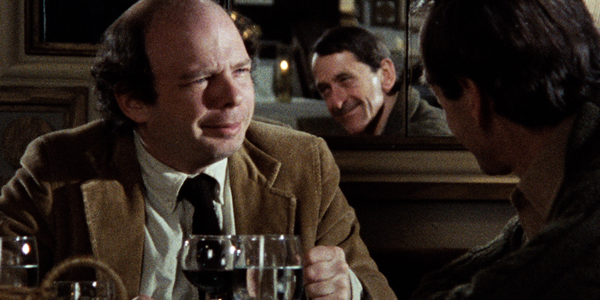
It seems implausible that a filmmaker could create a remarkable movie out of a dinner conversation. But that's just what director Louis Malle did with My Dinner With Andre. Ebert called it a film entirely devoid of clichés. It should be unwatchable, and yet those who love it return time and again, enchanted. Ebert added My Dinner with Andre to his list of great movies. "Like many great movies, My Dinner With Andre is almost impossible to nail down." He credits Malle with an "understated but sophisticated shooting style, in which the distance from the camera to the actors at key moments is calculated to the millimeter, while half-seen reflections in mirrors create the illusion of a real restaurant, and the rhythm of the reaction shots subtly reflects the buried tension between the two men." 43. Touch of Evil (1958) -
Director: Orson Welles 
Set in a seedy Mexican border town, this noir classic stars Charlton Heston, Janet Leigh and Orson Welles as Hank Quinlan. Ebert described the character Welles played in this film, as in all his others, as autobiographical, "giants destroyed by hubris. Now consider Quinlan, who nurses old hurts and tries to orchestrate this scenario like a director, assigning dialogue and roles. There is a sense in which Quinlan wants final cut in the plot of this movie, and doesn't get it. He's running down after years of indulgence and self-abuse, and his ego leads him into trouble. "Is there a resonance between the Welles character here and the man he became? The story of Welles' later career is of projects left uncompleted and films altered after he had left them. To some degree, his characters reflected his feelings about himself and his prospects, and Touch of Evil may be as much about Orson Welles as Hank Quinlan. Welles brought great style to his movies, embracing excess in his life and work as the price (and reward) of his freedom."
42. Superman (1978) -
Director: Richard Donner 
Ebert invoked the name of Cary Grant in his review of Superman. He was perhaps the only critic to do so. He described Richard Donners classic plunge into Americana as surprisingly slow-starting, but ultimately heaped praise on the film, calling it restrained in its telling, but doesn't seem slow, probably because it tells a good story rich in archetypes. As Clark Kent, Ebert wrote, Reeve deliberately channeled a touch of Cary Grant in Bringing Up Baby. As Superman, he goes to some pains to have no personality at all. It would be fatal to play Superman as a hero, and Reeve and Donner understand that. He had no personality in the comic books and has none here. He exists as a fact. 41. Ishtar (1987) - ½
Director: Elaine May 
Ishtar was the first big Hollywood film since 1980's Heaven's Gate to receive such scathing reviews from across the critical landscape. The big budget comedy starring Warren Beatty and Dustin Hoffman was so poorly reviewed that the reviews became a bigger story than the film itself.
Roger Ebert was surprisingly kind in his review: "Ishtar is a truly dreadful film, a lifeless, massive, lumbering exercise in failed comedy. Elaine May, the director, has mounted a multimillion-dollar expedition in search of a plot so thin that it hardly could support a five-minute TV sketch. And Beatty and Hoffman, good soldiers marching along on the trip, look as if they've had all wit and thought beaten out of them. This movie is a long, dry slog. It's not funny, it's not smart and it's interesting only in the way a traffic accident is interesting.
40. Being There (1980) -
Director: Hal Ashby 
Being There is a simple story of a mentally challenged man (Peter Sellers) who spent his entire life watching television and gardening for a wealthy Washington D.C. man. When the old man dies, Sellers is sent out alone to find his way, and absurdly becomes a mentor for great men, including the president of the United States.
Its a one joke premise, but Being There pulls off its long shot and is one of the most confoundingly provocative movies of the year. There's an exhilaration in seeing artists at the very top of their form: It almost doesn't matter what the art form is, if they're pushing their limits and going for broke and it's working. We can sense their joy of achievement - and even more so if the project in question is a risky, off-the-wall idea that could just as easily have ended disastrously. I'm not really inclined to plumb this movie for its message, Ebert continues, although I'm sure that'll be a favorite audience sport. I just admire it for having the guts to take this totally weird conceit and push it to its ultimate comic conclusion. 39. Taxi Driver (1976) -
Director: Martin Scorsese 
In his review of Taxi Driver, starring Robert De Niro, Ebert explored the theme of suffering, a theme he wrote about many times during his career. And he drilled down to some of the more basic elements of this film in order to expose it as an example of remarkable filmmaking. The performances are odd and compelling," Ebert wrote. " goes for moments from his actors, rather than slowly developed characters. "Taxi Driver is a brilliant nightmare and like all nightmares it doesn't tell us half of what we want to know. We're not told where Travis comes from, what his specific problems are, whether his ugly scar came from Vietnam -- because this isn't a case study, but a portrait of some days in his life.
38. Jonathan Livingston Seagull (1973) -
Director: Hall Bartlett 
Ebert called Jonathan Livingston Seagull, a movie about a seagull based on the bestseller by Richard Bach, the biggest pseudocultural, would-be metaphysical ripoff of the year.
I hardly ever walk out of movies, and in fact I sometimes make a point of sitting through bad ones, just to get ammunition for a juicy review. But this one was too much. I left when Jonathan had dragged himself, groggy and bleeding, onto some flotsam. 37. The Empire Strikes Back (1982) -
Director: Irvin Kershner 
Many people consider The Empire Strikes Back as the best of the three original Star Wars movies. Roger Ebert agreed. After the space opera cheerfulness of the original film, this one plunges into darkness and even despair, and surrenders more completely to the underlying mystery of the story. But the most interesting aspect of his review of Empire had to do with his take on the character of Yoda. He wrote that Oz and Lucas were not content to make Yoda realistic. They wanted to make him a good actor, too. And they did; in his range of wisdom and emotion, Yoda may actually give the best performance in the movie. 36. Casablanca (1942) -
Director: Michael Curtiz 
Seeing the film over and over again, year after year, I find it never grows over-familiar, Ebert wrote in his review of the classic film pairing Humphrey Bogart and Ingrid Bergman. It plays like a favorite musical album; the more I know it, the more I like it. The black-and-white cinematography has not aged as color would. The dialogue is so spare and cynical it has not grown old-fashioned. Much of the emotional effect of Casablanca is achieved by indirection; as we leave the theater, we are absolutely convinced that the only thing keeping the world from going crazy is that the problems of three little people do after all amount to more than a hill of beans." 35. Godzilla (1998) -
½
Director: Roland Emmerich 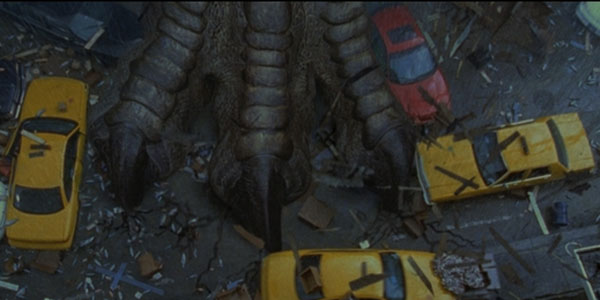
Going to see Godzilla at the Palais of the Cannes Film Festival, Ebert wrote, is like attending a satanic ritual in St. Peter's Basilica. It's a rebuke to the faith that the building represents. Cannes touchingly adheres to a belief that film can be intelligent, moving and grand. Godzilla is a big, ugly, ungainly device to give teenagers the impression they are seeing a movie. It was the festival's closing film, coming at the end like the horses in a parade, perhaps for the same reason. A fun fact that Ebert commented on in his review of Godzilla was that the character of New Yorks mayor in the film was named Ebert and his adviser is named Gene, neither of whom were portrayed flatteringly.
34. Hannah and Her Sisters (1986) -
Director: Woody Allen 
Ebert called Woody Allens Hannah and Her Sisters the best movie he ever made. High praise in light of Allens masterpieces Annie Hall and Manhattan, two films made in his prime, both arguably his best work. Allen's writing and directing style is so strong and assured in this film that the actual filmmaking itself becomes a narrative voice, just as we sense Henry James behind all of his novels, or William Faulkner or Iris Murdoch behind theirs. Hannah was one of Allens more complex films, and Ebert praised its structure and the chapter breaks Allen employed to shift among the films many characters and situations. Ebert continues, It suggests that modern big-city lives are so busy, so distracted, so filled with ambition and complication, that there isn't time to stop and absorb the meaning of things. Neither tragedy nor comedy can find a place to stand; there are too many other guests at the party." 33. Joe Dirt (2001) -
½
Director: Dennie Gordon 
Roger Ebert begins his review of Joe Dirt as such: I wrote the words Joe Dirt at the top of my notepad, and settled back to watch the new David Spade movie. Here is the first note I took: Approx. 6 min. until first cow fart set afire. Joe Dirt doesn't waste any time letting you know where it stands. You get the rest. 32. The Village (2004) -
Director: M. Night Shyamalan 
In lieu of quoting from the review, we present merely a string of descriptive words and phrases Roger Ebert used in describing this film from director M. Night Shyamalan. Remarkably, what we have below, 882 words reduced to 16, is a fairly accurate representation of his entire review.
A colossal miscalculation, transparent, laughable, flimsy, one-dimensional, a shaggy dog story, dreary, shameless melodrama, anticlimax, crummy. 31. The Jazz Singer (1980) -
Director: Richard Fleischer 
Roger Ebert noted that The Jazz Singer, starring Neil Diamond, has so many things wrong with it that a review threatens to become a list.
Let me start with the most obvious: This movie is about a man who is at least 20 years too old for such things to be happening to him. The Jazz Singer looks ridiculous giving us Neil Diamond going through an adolescent crisis. Ebert was not kind to Diamond: It's strange about the Diamond performance: It's not just that he can't act. It's that he sends out creepy vibes. He seems self-absorbed, closed off, grandiose, out of touch with his immediate surroundings. His fans apparently think Neil Diamond songs celebrate worthy human qualities. I think they describe conditions suitable for treatment.
30. Blow-Up (1966) -
Director: Michelangelo Antonioni 
Michelangelo Antonioni's Blow-Up opened in America two months before I became a film critic," Ebert wrote, "and colored my first years on the job with its lingering influence. Blow-Up is a movie about a photographer who, when enlarging a series of photographs taken in a park, discovers be may or may not have photographed a murder. Whether there was a murder isn't the point, Ebert wrote. The film is about a character mired in ennui and distaste, who is roused by his photographs into something approaching passion. Having studied the film shot by shot in 1998, Ebert concluded that Blow-Up emerges as a great film, if not the one we thought we were seeing at the time, concluding that Antonioni uses the materials of a suspense thriller without the payoff. 29. Blow Out (1981) -
Director: Brian De Palma 
John Travolta is a B-movie sound man out recording owls when a passing car suffers a blowout and crashes into the river. When he later listens to the recordings, he believes he hears a gunshot before the blowout. Could it have been murder? After all, the driver of the car was a potential candidate for president. The plot thickens beautifully, Ebert wrote. De Palma doesn't have just a handful of ideas to spin out to feature length. He has an abundance. And Ebert goes on to compare De Palmas work with that of one of his idols, Alfred Hitchcock. In Blow Out there are such Hitchcock hallmarks as a shower scene several grisly murders in unexpected surroundings, violence in public places, and a chase through Philadelphia on the anniversary of the ringing of the Liberty Bell. This last extended chase sequence reminds us of two Hitchcock strategies: his juxtaposition of patriotic images and espionage, as in North by Northwest and Saboteur, and his desperate chases through uncaring crowds, reminders of Foreign Correspondent and Strangers on a Train. But Blow Out stands by itself, Ebert continues. Best of all, this movie is inhabited by a real cinematic intelligence. The audience isn't condescended to. In sequences like the one in which Travolta reconstructs a film and sound record of the accident, we're challenged and stimulated: we share the excitement of figuring out how things develop and unfold, when so often the movies only need us as passive witnesses. 28. Catwoman (2004) -
Director: Pitof 
"Catwoman is a movie about Halle Berry's beauty, sex appeal, figure, eyes, lips and costume design. It gets those right. Everything else is secondary, except for the plot, which is tertiary. What a letdown. The filmmakers have given great thought to photographing Berry, who looks fabulous, and little thought to providing her with a strong character, story, supporting characters or action sequences. To which Ebert adds, The score by Klaus Badelt is particularly annoying. 27. Bonnie and Clyde (1967) -
Director: Arthur Penn 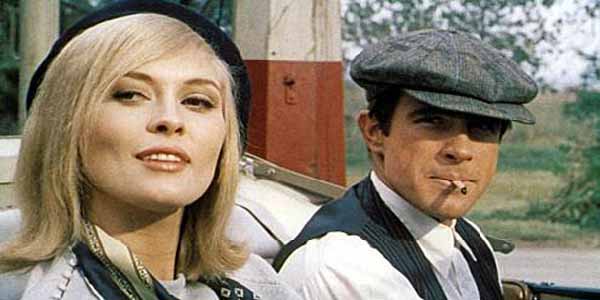
Ebert called the 1967 crime movie a milestone of American cinema, one of the five movies that he described as providing him with an out-of-the-body experience. It is also pitilessly cruel, Ebert wrote, filled with sympathy, nauseating, funny, heartbreaking, and astonishingly beautiful. If it does not seem that those words should be strung together, perhaps that is because movies do not very often reflect the full range of human life. Bonnie and Clyde startled audiences at the time with its graphic depiction of violence. Ebert elaborates on the fact that that, unlike other movies that depict a murder as a bloodless act, Bonnie and Clyde offered up a violent, bloody and realistic depiction of the act. Real people, with dreams and lives, suffering horribly then dying on screen, the violence on film a reflection of the times. Ebert predicted that years from now, it is quite possible that Bonnie and Clyde will be seen as the definitive film of the 1960s, showing with sadness, humor and unforgiving detail what one society had come to. He was right.
26. Raiders Of The Lost Ark (1981) -
Director: Steven Spielberg
Like audiences, many critics were spellbound with the first collaboration between Steven Spielberg and George Lucas. ABCs Joel Siegel: Wow, what a great movie!
Ebert was similarly impressed: Spielberg is not trying here for human insights and emotional complexity; he finds those in other films, but in Raiders he wants to do two things: make a great entertainment, and stick it to the Nazis. Nazis were favorite villains of Saturday serials, prized more for their costumes and accents than for their evil beliefs. Spielberg here makes manifest their values, and then destroys them: Raiders of the Lost Ark has all the qualities of an exuberant serial, plus a religious and political agenda. That Spielberg places his message in the crevices of the action makes it all the more effective. "Raiders may have an impersonal superstructure, but its foundations are personal, and passionate. 25. Star Wars (1977) -
Director: George Lucas 
Ebert opened his review of Star Wars with this sentence: Every once in a while I have what I think of as an out-of-the-body experience at a movie. He was not alone. Millions were awed with the spectacle that was Star Wars. At the time there had been no other film like it, and its impact on the movie-going public in 1977 nearly defies description.
Ebert described Star Wars as entertainment so direct and simple that all of the complications of the modern movie seem to vaporize. Not only was he entertained, but he recognized the power of mythology and simple storytelling that propelled Star Wars to the forefront of public consciousness. The movie relies on the strength of pure narrative, in the most basic storytelling form known to man, the Journey. All of the best tales we remember from our childhoods had to do with heroes setting out to travel down roads filled with danger, and hoping to find treasure or heroism at the journey's end. 24. The Godfather Part II (1974) -
(2008 review
) Director: Francis Ford Coppola  The Godfather and The Godfather Part II are among the hallmarks of American cinema. Both films were rich, well-cast, luxuriously photographed and revered. In his second review of The Godfather Part II Ebert zeroed in on one aspect of filmmaking that few critics spend much time on: the score. Ebert wrote that Nino Rotas music plays an even greater role in The Godfather Part II than it did in the original film. Nostalgic, mournful, evoking lost eras, it stirs emotions we shouldnt really feel for this story, and wouldnt, if the score were more conventional for a crime movie. Why should we regret the passing of a regime built on murder, extortion, bribery, theft and the ruthless will of frightened men? Observe how powerfully Nino Rotas music sways our feelings for the brutal events onscreen. More than ever, I am convinced it is instrumental to the power and emotional effect of the films. I cannot imagine them without their Nino Rota scores. Against all our objective reason, they instruct us how to feel about the films.
23. The Usual Suspects (1995) -
½
Director: Bryan Singer 
The film that launched director Bryan Singer and actor Kevin Spacey into super-stardom received an 89% fresh rating on Rotten Tomatoes. Though popular with audiences and critics, Roger Ebert was no fan. He wrote his review after his second screening of the film: The story builds up to a blinding revelation, which shifts the nature of all that has gone before, and the surprise filled me not with delight but with the feeling that the writer, Christopher McQuarrie, and the director, Bryan Singer, would have been better off unraveling their carefully knit sleeve of fiction and just telling us a story about their characters - those that are real, in any event. I prefer to be amazed by motivation, not manipulation.
22. One Woman or Two (1987) - ½ Director: Daniel Vigne From 
Add it all up, and what you've got here is a waste of good electricity. I'm not talking about the electricity between the actors. I'm talking about the current to the projector. 21. Prison Girls (1973) - 0 Stars
Director: Tom DeSimone 
Roger Eberts review of the 1973 3-D spectacle Prison Girls is possibly the funniest review he ever posted. He weaves into this review comments about The Blind Dead and The Devils Widow, two films he also saw during the same week. His comments on Prison Girls were few because of a difficulty he had during its screening.
Prison Girls was the toughest because the right lens fell out of my 3-D glasses and got lost on the floor. That was the whole ball game right there. Ebert laments the fact that, as far as he could tell with the 3-D effects overlapping his vision, there were no scenes that took place in a prison. I was disappointed, because whenever I go to a prison movie, I always look in the cell next to the cell where the main characters are. Burgess Meredith always used to be the guy in the next cell, and I wanted to see if he ever got out. You can read the full review here. 20. Jaws (1976) -
Director: Steven Spielberg 
Ebert called Jaws a sensationally effective action picture, a scary thriller that works all the better because it's populated with characters that have been developed into human beings we get to know and care about. This is one of those reviews Ebert gets really excited about. His fluid prose underscores how much he really enjoyed this movie. Jaws is a great adventure movie of the kind we don't get very often any more. It's clean-cut adventure, without the gratuitous violence of so many action pictures. It has the necessary amount of blood and guts to work -- but none extra. And it's one hell of a good story, brilliantly told. 19. Jaws: The Revenge (1987) - 0 Stars
Director: Joseph Sargent 
Jaws the Revenge is not simply a bad movie, but also a stupid and incompetent one. When Ebert hated a movie, he didnt hold back. He was always an honest reviewer, true to his sensibilities as both a critic and more importantly a movie fan. This review is littered with nuggets like: a series of meaningless episodes of human behavior, punctuated by shark attacks. The sharks skin looks like canvas with acne. What shark wouldnt want revenge against the survivors of the men who killed it? That the director, Joseph Sargent, would film this final climactic scene so incompetently that there is not even an establishing shot, so we have to figure out what happened on the basis of empirical evidence. Up until the ludicrous final sequence of the movie, the scariest creature in the film is an eel. The oft-repeated story about the making of this movie has little to do with the poor mechanical sharks or the ridiculous story. Its that its star, Michael Caine, was unable to personally accept his Oscar for best actor in Hannah and Her Sisters because he was in the Bahamas shooting Jaws: The Revenge.
18. Battlefield Earth (2000) - ½ Director: Roger Christian 
Next up is a film Ebert described as not merely bad; it's unpleasant in a hostile way. This movie is awful in so many different ways. Their costumes look like they were purchased from the Goodwill store on the planet Tatooine. Battlefield Earth is shapeless and senseless, without a compelling plot or characters we care for in the slightest. Some movies run off the rails. This one is like the train crash in The Fugitive. I watched it in mounting gloom, realizing I was witnessing something historic, a film that for decades to come will be the punch line of jokes about bad movies. There is a moment here when the Psychlos' entire planet (home office and all) is blown to smithereens, without the slightest impact on any member of the audience (or, for that matter, the cast). If the film had been destroyed in a similar cataclysm, there might have been a standing ovation. Battlefield Earth is like taking a bus trip with someone who has needed a bath for a long time. 17. Highlander II: The Quickening (1991) - ½
Director: Russell Mulcahy 
Well let Roger speak for himself: This movie has to be seen to be believed. On the other hand, maybe that's too high a price to pay. Highlander 2: The Quickening is the most hilariously incomprehensible movie I've seen in many a long day - a movie almost awesome in its badness. Wherever science fiction fans gather, in decades and generations to come, this film will be remembered in hushed tones as one of the immortal low points of the genre. If there is a planet somewhere whose civilization is based on the worst movies of all time, Highlander 2: The Quickening deserves a sacred place among their most treasured artifacts. FILM NOTE: Quickening is a process by which two people touch each other and are surrounded by special effects making it look as if one of them is standing in a puddle and the other had just stuck his finger into a light socket. 16. Caligula (1979) - 0 Stars
Director: Tinto Brass 
The soft-porn-masquerading-as-historical-epic didnt receive many good reviews. It didnt sit well with Roger Ebert, either. "Caligula is sickening, utterly worthless, shameful trash. If it is not the worst film I have ever seen, that makes it all the more shameful: people with talent allowed themselves to participate in this travesty. Disgusted and unspeakably depressed, I walked out of the film after two hours of its 170-minute length. 15. In A Lonely Place (1950) -
Director: Nicholas Ray  In a Lonely Place, starring Humphrey Bogart, is considered one of the finest examples of film noir. Ebert called it "a superb example of the mature Hollywood studio system at the top of its form.
Ebert wrote eloquently of the noir genre and of Bogart and his place in it. Bogart is so good at playing vulnerable men. It's strange he has an enduring image as a tough guy. It would be more accurate to say he was tempered by experience. A decade before this film, in Casablanca, he was already the man drinking alone late at night, afraid of hearing an old song. If there is one key element of film noir, it is the flawed hero. Bogart embodies this noir quality flawlessly.
14. A Clockwork Orange (1972) -
Director: Stanley Kubrick 
Stanley Kubrick's A Clockwork Orange, starring Malcolm McDowell, prompted one of Roger Eberts most scathing reviews, and it hardly seems to do it justice to merely quote from it. Its a review you need to read in its entirety, and it can be found here. While a great admirer of director Stanley Kubrick, Roger Ebert was not kind in his review of A Clockwork Orange, which he called an ideological mess, a paranoid right-wing fantasy masquerading as an Orwellian warning. It pretends to oppose the police state and forced mind control, but all it really does is celebrate the nastiness of its hero, Alex." Ebert expresses extreme distaste for the films lead character, Alex, because he is played as a hero instead of a wretch, blaming Kubrick and not Anthony Burgess, the author of the book on which the film was based, for the mishandling of the character. I don't know quite how to explain my disgust, he concludes. What in hell is Kubrick up to here? Does he really want us to identify with the antisocial tilt of Alex's psychopathic little life? "Why he likes Beethoven is never explained, but my notion is that Alex likes Beethoven in the same way that Kubrick likes to load his sound track with familiar classical music -- to add a cute, cheap, dead-end dimension. "We'll probably be debating A Clockwork Orange for a long time -- a long, weary and pointless time. The New York critical establishment has guaranteed that for us. They missed the boat on , so maybe they were trying to catch up with Kubrick on this one. Or maybe the news weeklies just needed a good movie cover story for Christmas. "I don't know. But they've really hyped A Clockwork Orange for more than it's worth, and a lot of people will go if only out of curiosity. Too bad. In addition to the things I've mentioned above -- things I really got mad about -- A Clockwork Orange commits another, perhaps even more unforgivable, artistic sin. It is just plain talky and boring. You know there's something wrong with a movie when the last third feels like the last half." 13. Aguirre, Wrath of God (1973) -
Director: Werner Herzog 
Ebert described the story of Gonzalo Pizzaros search for the Lost City of Gold in the jungles of Peru as one of the great haunting visions of cinema. He describes the effect the film had on him, its haunting score and his admiration of Herzog as a great filmmaker. Herzog was, along with Buster Keaton, Orson Welles, Federico Fellini, Martin Scorsese, Yasujiro Ozu and Alfred Hitchcock, on the short list of Eberts greatest directors. Werner Herzog is the most visionary and the most obsessed with great themes. Little wonder that he has directed many operas. He does not want to tell a plotted story or record amusing dialog; he wants to lift us up into realms of wonder. Only a handful of modern films share the audacity of his vision; I think of 2001: A Space Odyssey and Apocalypse Now. 12. Apocalypse Now (1979) -
Director: Francis Ford Coppola 
Based loosely on the novel Heart of Darkness, Francis Ford Coppolas Apocalypse Now is widely considered one of American cinemas finest achievements. Martin Sheen is dispatched by his Army command deep into the jungles of Vietnam in search of an AWOL colonel named Kurtz (Marlon Brando), and what he finds, in Kurtzs words, is the horror of war. In his second review of the film, Ebert writes, Seen again now at a distance of 20 years, Apocalypse Now is more clearly than ever one of the key films of the century. He praised the film for not just its technical perfection, but for its ability to push beyond story and into thematic abstracts that challenge the viewer. "Apocalypse Now is the best Vietnam film, one of the greatest of all films, because it pushes beyond the others, into the dark places of the soul. It is not about war so much as about how war reveals truths we would be happy never to discover. 11. Citizen Kane (1941) -
Director: Orson Welles 
Roger Ebert called Orson Welles thinly disguised fictional portrait of newspaper mogul William Randolph Hearst one of the miracles of cinema. Though not a hit upon its initial release, Citizen Kane has become one of the most important American films of the 20th century. The film itself could serve as a 500-level course in filmmaking. Its technically brilliant. Its inspired. And its history, aftermath (Hearst did not like the movie) and legacy are a story in and of itself. And Ebert dedicates more than 1,300 words to his review of this American classic. Its surface is as much fun as any movie ever made. Its depths surpass understanding. I have analyzed it a shot at a time with more than 30 groups, and together we have seen, I believe, pretty much everything that is there on the screen. The more clearly I can see its physical manifestation, the more I am stirred by its mystery.
10. La Dolce Vita (1960) -
Director: Federico Fellini 
Ebert was a great admirer of Federico Fellini. The director of 8½ and La Strada was known for his neo-realism and his frequent collaboration with actor Marcello Mastroianni across six films. There are reflections in many of Eberts reviews that communicate the essence of a film simply and elegantly. This is how he closed his review of La Dolce Vita: And when I saw the movie right after Mastroianni died, I thought that Fellini and Marcello had taken a moment of discovery and made it immortal. There may be no such thing as the sweet life. But it is necessary to find that out for yourself. 9. The General (1927) -
Director: Buster Keaton 
Generally acknowledged as one of the great films of the silent era, Buster Keatons the General featured solid storytelling and some inspired bits of daring comedy. Ebert acknowledged Keaton among his favorite directors, and of The General he wrote, Today I look at Keaton's works more often than any other silent films. They have such a graceful perfection, such a meshing of story, character and episode, that they unfold like music. 8. Raging Bull (1980) -
Director: Martin Scorsese 
The black and white biopic of boxer Jake LaMatta was on every critics Top 10 Movies of the 80s list. A singular achievement by director Martin Scorsese Raging Bull is the most painful and heartrending portrait of jealousy in the cinemaan Othello for our times. It's the best film I've seen about the low self-esteem, sexual inadequacy and fear that lead some men to abuse women. 7. 2001: A Space Odyssey (1968) -
Director: Stanley Kubrick 
Ebert compares the film to a prayer, a philosophical construction using cinema. The criticism leveled by many against the film no clear plot, the inexplicable star gate ending, after which astronaut Dave Bowman (Keir Dullea) finds himself in a bedroom growing old, the star child does not hold water with Ebert. The genius is not in how much Stanley Kubrick does in 2001: A Space Odyssey," Ebert writes, but in how little. This is the work of an artist so sublimely confident that he doesn't include a single shot simply to keep our attention. He reduces each scene to its essence, and leaves it on screen long enough for us to contemplate it, to inhabit it in our imaginations. Alone among science-fiction movies, 2001 is not concerned with thrilling us, but with inspiring our awe.
6. Tokyo Story (1959) -
Director: Yasujiro Ozu 
In 2005 Ebert wrote a piece on his blog called Ozu: The Masterpieces Youve Missed. He was a great admirer of the Japanese director, more so that the better-known Kurosawa. Ebert called Tokyo Story one of the greatest films of all time.
Its a simple story of a Japanese family: grandparents visit grandchildren, things go wrong, the grandmother dies and the kids then must make a journey for her. Does anyone go to a movie to watch the style? Well, yes. An elegantly refined style like Ozu's places people in the foreground; he focuses on the nuances of everyday life. His is the most humanistic of styles, removing the machinery of effects and editing and choosing to touch us with human feeling, not workshop storytelling technique. 5. The Tree of Life (2011) -
Director: Terrence Malick

I don't know when a film has connected more immediately with my own personal experience. In uncanny ways, the central events of The Tree of Life reflect a time and place I lived in, and the boys in it are me. 4. Vertigo (1958) -
Director: Alfred Hitchcock 
Vertigo, which is one of the two or three best films Hitchcock ever made, is the most confessional, dealing directly with the themes that controlled his art. It is *about* how Hitchcock used, feared and tried to control women. Ebert replaced Alfred Hitchcocks Notorious on his favorites list with Vertigo after going through both films shot by shot, deciding that the latter was the better of two near perfect films. 3. North (1994) - 0 Stars
Director: Rob Reiner 
I hated this movie. Hated hated hated hated hated this movie. Hated it. Hated every simpering stupid vacant audience-insulting moment of it. Hated the sensibility that thought anyone would like it. Hated the implied insult to the audience by its belief that anyone would be entertained by it.
2. To The Wonder (2013) -
Director: Terrence Malick

This review is included here for two reasons. The first is that it was the last film review Roger Ebert filed with the Chicago Sun Times before his death on April 4th. That in and of itself is important in that it capped the career of one of our best known and most-loved movie critics. It was a final missive, published after his death, to the film lovers who, like Ebert, lived a secret life in the darkness of a movie theater. More importantly, however, in his review of To the Wonder, Ebert asked some very deep questions about film and the film-going experience. Its a beautiful piece of writing. Why must a film explain everything? Why must every motivation be spelled out? Aren't many films fundamentally the same film, with only the specifics changed? Aren't many of them telling the same story? Seeking perfection, we see what our dreams and hopes might look like. We realize they come as a gift through no power of our own, and if we lose them, isn't that almost worse than never having had them in the first place?
1. Gene Siskel (1946-1999)

Roger Eberts rise in popularity relied heavily on his rivalry with Chicago film critic Gene Siskel. Ebert worked for the Sun Times, Siskel the Tribune. When the two were paired on Sneak Previews on PBS, there was immediate chemistry. The two rivals bickered like an old married couple, and audiences loved it. What Sneak Previews (and subsequently At the Movies and Siskel & Ebert) proved to audiences was that film critics could be intelligent, thoughtful and passionate about film and still disagree on a films merits. They played off one another very well, and the result was rule #1 in television: that it entertain. And entertain they did. Siskel helped define Roger Ebert. When they were together they managed to set one another apart. When they agreed angels from heaven played their harps in glorious celebration. When they disagreed, audiences were in for some entertaining television. When Gene Siskel died in 1999, Ebert seemed incomplete. Yes, he was still a fine critic, and continued to write thoughtful commentary on film. But the public, for so many years, knew Roger Ebert as part of a team, and when Siskel was gone, so was half of what made Ebert such an entertaining TV personality. It was ten years later that Ebert eulogized Siskel on his blog. We once spoke with Disney and CBS about a sitcom to be titled, Best Enemies. It would be about two movie critics joined in a love/hate relationship. It never went anywhere, but we both believed it was a good idea. Maybe the problem was that no one else could possibly understand how meaningless was the hate, how deep was the love. The love was deep Roger. You will be sorely missed. The balcony is closed.
James Kirk
Contributor
Not to be confused with the captain of the Enterprise, James Kirk is a writer and film buff who lives in South Carolina.
See more from
James