The Forgotten Action Movie Speed KILLED
Is Blown Away an underrated gem, or simply proof that modern movies don't hit the same?
In 1994, two major action movie blockbusters released in cinemas within a couple of months of each other, both with a similar theme: cops in a race against time to track down a mad bomber terrorising a city. One was Speed, a film about a bus that couldn't slow down starring Keanu Reeves and Sandra Bullock, and the other was Blown Away, which revolved around a vengeful ex-IRA bomber terrorising Boston, and which starred Tommy Lee Jones, Jeff Bridges, and Forest Whitaker in leading roles.
Speed was an instant classic, becoming a hit with critics and grossing over $350 million at the global box office. Today, it's fondly remembered as one of the better Die Hard riffs of the nineties, as well as the moment Reeves formally announced his action movie credentials. Blown Away, conversely, was not so fortunate, premiering just a month after Speed, falling afoul of critics for its similarly minded premise and grossing just $53 million by the time its run in theatres came to a close. As Roger Ebert put it in his review, "Blown Up [sic] is the kind of movie that people should be sentenced to see if they complain that “Speed” is implausible."
Ouch.
Blown Away - like so many other unlucky siblings that are a part of the "twin" movie fraternity - was dismissed pretty immediately for the crime of releasing next to a stronger movie with a similar premise. (And also for coming second.) But even with my bias for undervalued '90s movie comforts, it also feels like a bit of a hidden gem - a reminder of when even supposedly mediocre movies used to go so hard that they'd blow up a ship with enough explosives to shatter the windows of over 8,000 houses located in the wider Boston area. It harkens back to an era of Die Hard-adjacent goodness - of tangible, John McTiernan-inspired action - and when Tommy Lee Jones was allowed to be a freaky lil' guy (which is possibly his strongest form).
It's also just a great piece of action cinema, directed by genre journeyman Stephen Hopkins (Predator 2), shot by Peter Levy (who also collaborated with John Woo for 1996's Broken Arrow), and complemented by a quintessentially nineties soundtrack that features lashings of U2 - and also lots of Tommy Lee Jones swaying menacingly to U2. What may have seemed mediocre in 1994 stands out today as a reinvigorating piece of action cinema, one that quite fittingly blows away the tiles upon tiles of straight-to-streaming slop that meets your gaze the moment you enter the void of Netflix or Amazon Prime.
It's not "Speed" good, but it is a damn fine piece of Dad Movie cinema from a decade that contributed more to that genre than any other.
[Article continues on next page...]
Blown Away, Twin Movies, & The Making Of A Box Office Dud
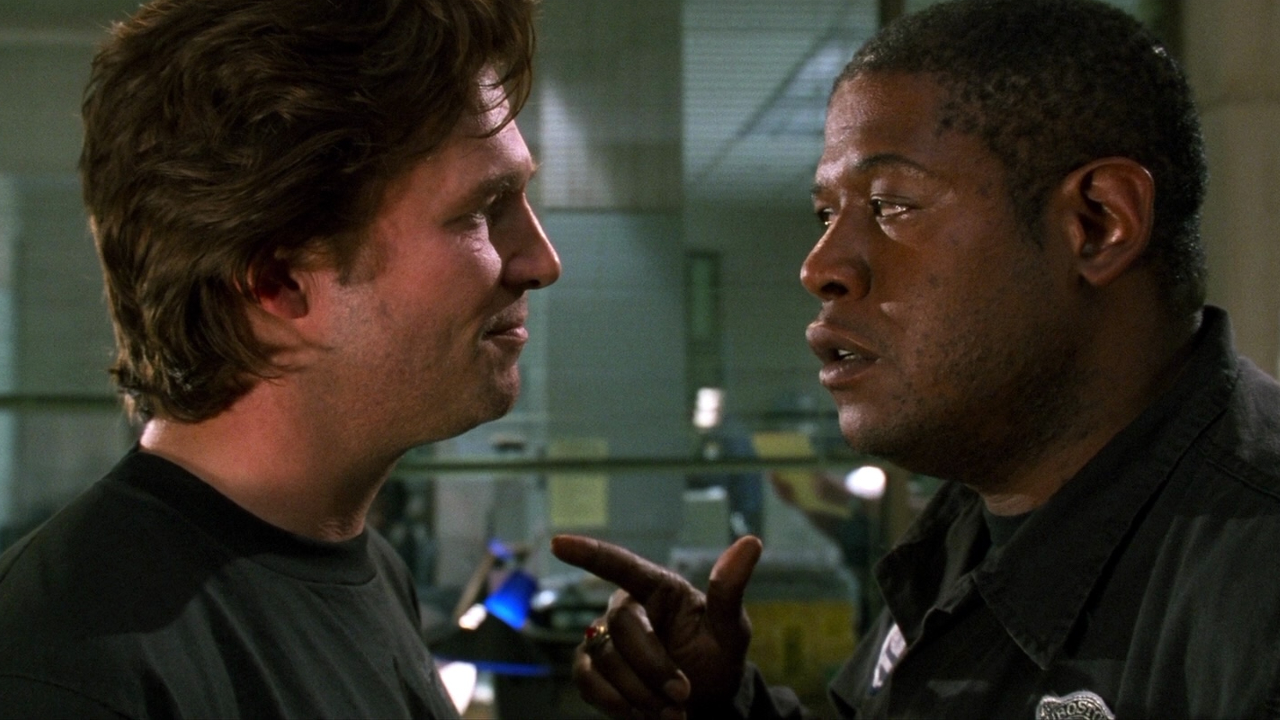
Now, you might be thinking that, if Blown Away isn't as good as Speed, and boasts a similar premise, then surely it's only fair that it's been consigned to that great big bargain bin in the sky? To that end, what would be the point in reappraising or reclaiming the film as a highlight of nineties-era action? It doesn't have the notoriety of a Hudson Hawk or Batman & Robin, and was pretty much instantly forgotten following its premiere. Is it actually possible to "reclaim" a movie no one really cares about?
I'm not going to sit here and clackety-clack on my keyboard and tell you that Blown Away is some unheralded masterpiece denied its time in the sun, but I do think one of the reasons I've found myself so drawn to it is how the film speaks to the lack of tangibility that pervades our current filmmaking context. Blown Away features impressive location work, gorgeous visual effects, and approaches its somewhat bonkers premise with complete sincerity. Compare that to a similarly scaled production from the last five years, like, say, the Russo brothers' The Grey Man - whose title helpfully connoted not just its pallid, digital visuals, but also its profound sense of nothingness - and the difference is stark.
Have the Russos ever blown up a gigantic freight ship in an actual harbour before? At the expense of a whole bunch of innocent, Bostonian windows? No? Stephen Hopkins did, and it was magic.
Ebert was right when he called Blown Away preposterous, but it's a weird metric to measure an action movie by and also diminishes the film's many, many technical merits. The fact it was so quickly dismissed and forgotten, though, made finding Blown Away feel like happening upon an oasis in the desert, all the more so for the fact that it came from the halcyon days of dadcore movie vibes. Just when you thought you'd mined that iceberg for all its worth, having waded through the Striking Distances and Daylights of the world, here comes a diamond with TLJ making his turn in Under Siege seem positively hinged by comparison.
Blown Away, like Speed, was very much cut from the Die Hard mould, albeit with a little sprinkling of Lethal Weapon-esque buddy cop-isms for good measure.
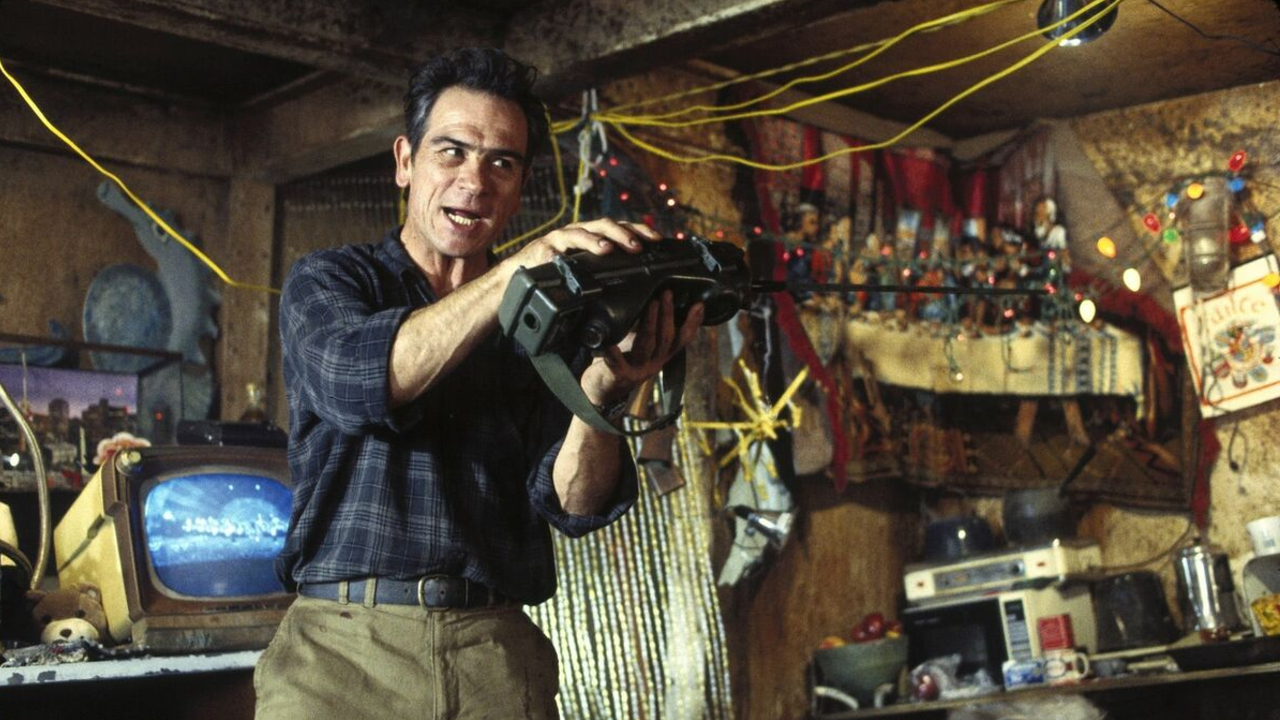
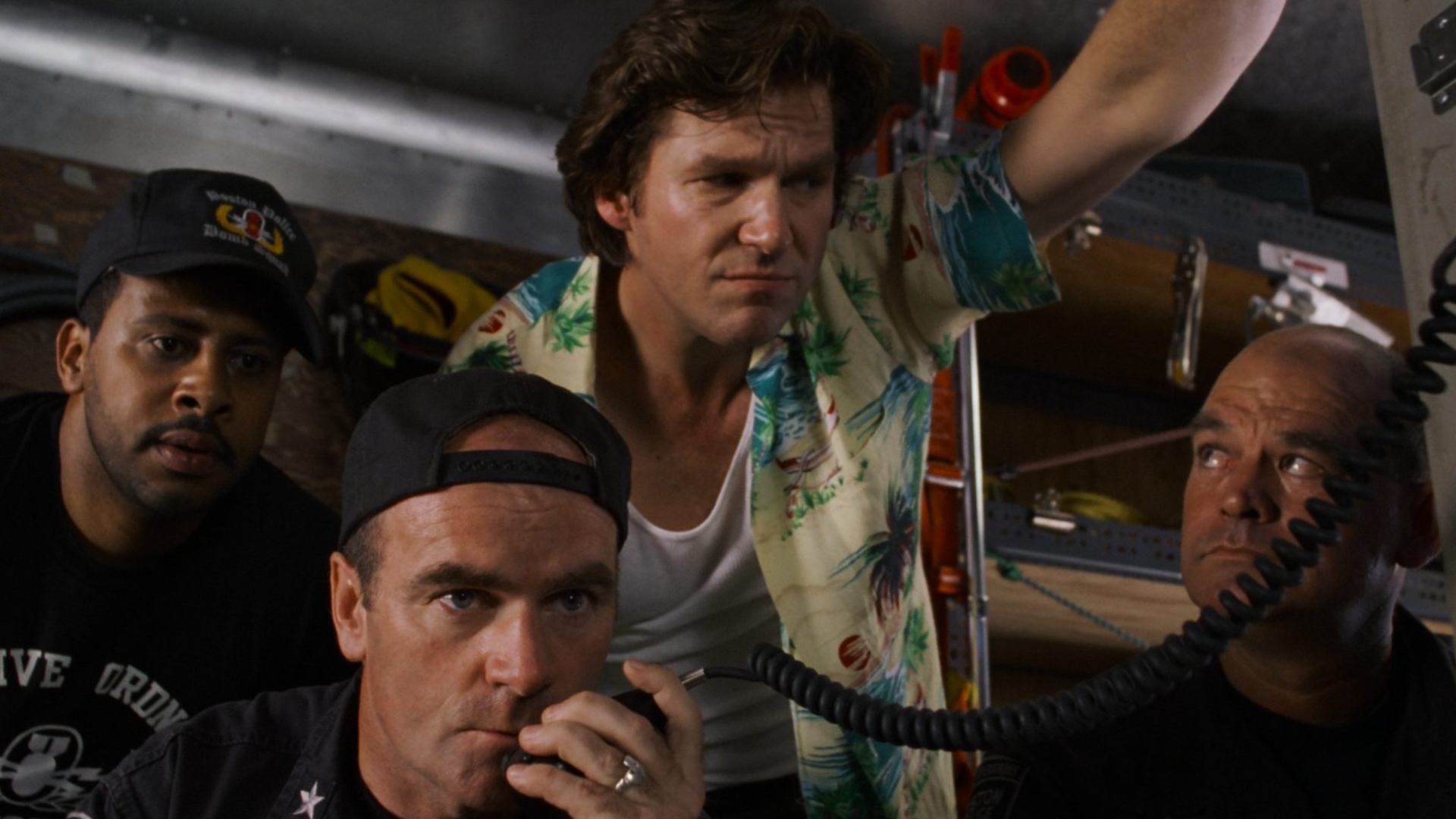
The film follows Boston PD bomb squad member Jimmy Dove (a surname with some obtuse irony, we later learn), who finds himself caught in the sights of fugitive IRA man Ryan Gaerity. The former, played by Jeff Bridges, is living his best life, working hard defusing bombs by day, and letting off steam with his friends and loved ones at night (including a surrogate father played by his real-life dad, Lloyd Bridges). Gaerity comes to Boston on a quest for vengeance, toying with Jimmy with deadly precision and all the eccentricities that accompany a '90s-era Tommy Lee Jones villain performance, as the sins of the past return to wreak havoc on the Boston PD man's peaceful existence.
Like Patriot Games, which released two years prior, Blown Away tackles the context of The Troubles with all the grace of an exploding clown at an outdoor charity event (see: Live Wire), but it's more a foible than an outright failing. It turns out that Dove, whose real name is actually Liam McGivney, was an IRA man himself back in the day and fled Northern Ireland to the US after protesting Gaerity's disregard for civilian casualties. There, he put his guilt to use by disarming bombs rather than making them, taking the name "Dove" because, you know, birds of peace and all that.

Gaerity's return sparks a huge crisis for Jimmy/Liam, as the house of cards he'd carefully assembled comes crashing down, and he's forced once again to reckon with the wounds of his past while mending the fibres of his future.
Lending charisma and weight to the set-up are the father-son Bridges duo and also Forest Whitaker, the latter of whom plays a hot-shot up-and-comer on the Beantown bomb squad who has his own "rival-to-friend" arc with Bridges' Dove.
And despite the theatrics of Blown Away's plot not always cohering (and I would say that doesn't matter too much when you have Tommy Lee Jones being Tommy Lee Jones), the melodrama is compellingly drawn and acted, and Bridges - always a versatile performer, and here just a few years before he Duded himself with The Big Lebowski - carries a real warmth and sincerity in his acting. That may be a given with many of Bridges' movies, but credit must also be given to Hopkins and screenwriters John Rice and Joe Batteer for making the interpersonal aspects of Blown Away so authentic, because those in turn make the suspense so much more palpable.
On paper, all the suspense should be negated by TLJ being his best lil' stinker self, but because Bridges and co. are all so committed, the stakes always feel significant. It's a livewire balancing act Blown Away successfully navigates until its overdrawn finale, which, even then, comes equipped with the Mother Of All Explosions to cap things off with a Rube Goldberg-propelled bang.
[Article continues on next page...]
How Blown Away Became Speed's Unlucky Sibling
When we talk about twin movies, usually it's a story of winners and losers. Everyone remembers Turner & Hooch, the buddy comedy starring Tom Hanks and a slobbery, lovable dog who's also a witness to a crime, but no one remembers K-9, which featured Jim Belushi as a cop marked for death, paired with his lovable canine companion who gets into scrapes trying to help. Robin Hood: Prince of Thieves? Notorious but long-lived, whereas the John Irvin-directed Robin Hood - which starred Patrick Bergin and Uma Thurman as Robin and Maid Marian - may as well not exist.
The list goes on. For every Tombstone, there's a Wyatt Earp. Every rose (A Bug's Life) has its thorn (Antz). Volcano and Dante's Peak, Deep Impact and Armageddon, Olympus Has Fallen and White House Down. Heck, you can go all the way back to the salad days of Hollywood's Golden Age and see that Abe Lincoln in Illinois tried to go toe-to-toe with John Ford's Young Mr. Lincoln just a few months after its 1939 premiere.
So, why do twin films happen so regularly? The short, boring answer is that it's mostly just coincidence, but that also perhaps undermines the influence of contemporary and historical contexts. There may not be a conscious want to emulate the competition with many of these twin productions, but they are each the product of a filmmaking zeitgeist. Is it really so strange that multiple movies about an asteroid collision with Earth were both made and released in 1998 when, in actuality, they're typical of that post-Cold War, existential-disaster vibe that dominated so much of nineties cinema? Is it so preposterous that two buddy-cop-dog movies dropped within shooting distance of each other in the twilight of the 1980s, the decade that gave us New Coke and Alf?
There are occasions when competition is by design - where a studio has been sitting on a script, hears about a similarly premised project making buzz, and tries to beat their rival to the punch - but most of the time, it's a product of cinematic trends and contemporary influence.
Speed and Blown Away are both products of the same era - action movies assembled in the inexorable shadow of Die Hard (the former even being directed by Die Hard's cinematographer, Jan de Bont) and informed by headlines that dwelled on the same themes of violence, militancy, and terrorism. It's the same context that birthed Patriot Games, Executive Decision, and Sudden Death. Blown Away just had the misfortune of hitting without a rest period, and doing so in the wake of one of the more esteemed descendants of John McTiernan's action masterpiece.
[Article concludes on next page...]
Why Blown Away Goes Harder In 2026 Than It Ever Did In 1994
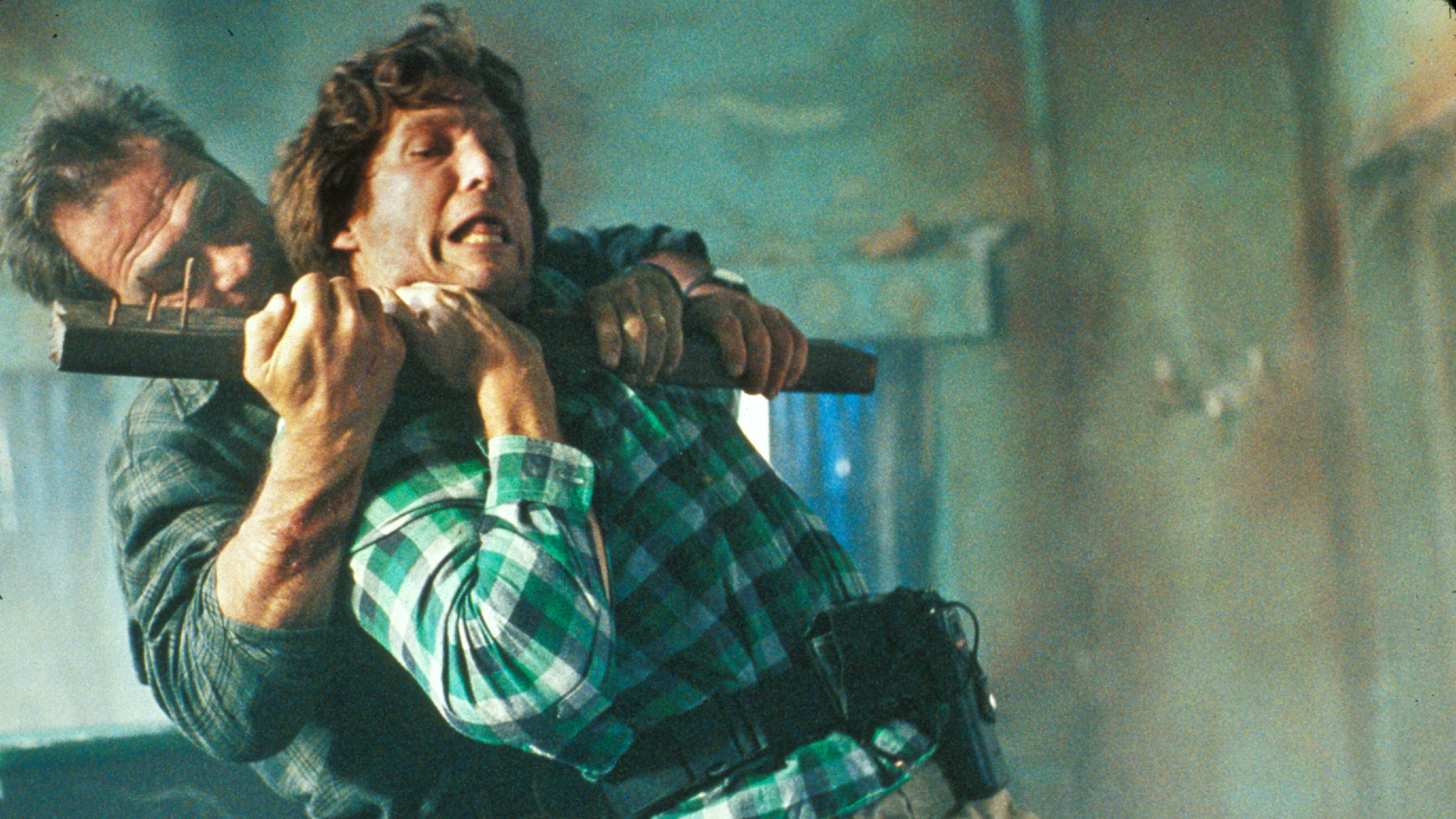
With all that said, the failure of Blown Away and its general inability to assert itself within the canon of nineties action greats does feel somewhat unfair. It isn't just that it succumbed to Speed-mania, or that there's the perception of Speed being so good that Hopkins' film seems somewhat irrelevant. It's the fact that "mediocre" in 1994 feels like gold dust in 2026.
Now, obviously, this isn't to mistake critical consensus as a barometer for objective quality - one man's Yuletide dud in 1946 is a Wonderful Christmas masterpiece years later - and reappraisal is an ever-present in the movie-discourse-sphere. It's rather that it feels as if the technical foundations of filmmaking 30 years ago were taken for granted, that every dismissible action movie would have a depth of sincerity about them, practical set-pieces, and the tangibility of actual location work. These elements all feature in our current cinematic landscape, but for the mid-budget action movie specifically, it can sometimes feel like the exception and not the rule.
Watching Blown Away, I couldn't help but be struck by what a frenetic orchestration it was, bursting at the seams with suspenseful direction, creative blocking, and gnarly visual effects. Ebert was right when he called it preposterous, but it is at least believably preposterous, populated by talented players like Bridges, Jones, and Whitaker, each of whom commits to the conceit without reservation.
If the action is the juice, then compared to Blown Away, a lot of movies today feel somewhat juiceless. Maybe it's the switch to digital photography, the widespread use of technologies like green screen and The Volume, or the over-reliance on over-stretched CGI production houses to achieve ambitious set-pieces, but a lot of Hollywood action films today - many of which head straight to streaming - just do not hit like they used to. There's an air of artifice about them, exacerbated by recycled, globe-trotting premises and irreverent dialogue, and they usually star The Rock and/or Ryan Reynolds, as Patrick H. Willems brilliantly examined in a video essay earlier this year.
Again, this is not to dismiss the oodles of great action cinema there is today. Chad Stahelski set the world alight with John Wick, Michael Bay took drone cinematography to ludicrous heights with the criminally overlooked Ambulance, and Donnie Yen regularly rips and tears across Hong Kong and Hollywood in flicks like Raging Fire and John Wick: Chapter 4. Even so, Tinsel Town seems to have lost some of its Dad Movie sparkle over the last 10 years, which is probably why it's easier to appreciate Blown Away's gifts today than it was in 1994, even beyond the external pressures of the nostalgia pendulum, or the general compulsion a lot of us have to reclaim cinema we felt wasn't given a fair shake in its day.
Revisiting a film can feel like reliving a moment, a memory, but the same is also true of discovery. Watching a movie like Blown Away takes me back to a filmmaking era I didn't live through, but am intimately familiar with - squibs, explosions, and one-liners aplenty. It's my happy place, but Hopkins' film also invokes a jarring kind of nostalgia, because it is flawed, it isn't as good as Speed, and most of you reading this could probably go about the rest of your lives not watching it and you wouldn't be missing anything even remotely essential.
What it did do, though, was provide a reminder of the lack that pervades a lot of modern cinema - the technical hijinks and skill that were part and parcel of many productions but which are today fleeting in that mid-budget genre space. All of this might seem tediously nostalgic and curmudgeonly - and also possibly unfair to Blown Away, which I do think is a good film on its own merits and simply suffered the misfortune of death via Twin Film - but it does feel like an indictment of the genre landscape that what passed for bad or "mid" in 1994 feels so invigorating here and now.
Granted, it does feel a bit silly to make that point specifically in 2026, a year which has given us a practical effects showcase like no other with Christopher Nolan's The Odyssey and also a future action movie all-timer in Kenji Tanigaki's The Furious, but for all the wins we've gotten this year, the well-made, mid-budget Hollywood action movie feels increasingly like a dying breed.
10 years ago, Shane Black got a star-studded, buddy-cop movie to the big screen with The Nice Guys. Less than a decade later, he musters Play Dirty, a straight-to-streaming riff on the hardboiled works of Donald Westlake with digital photography so clean it could easily be mistaken for a car advert. Blown Away smokes it and then some, and there's something distinctly not great about that, regardless of whether the blame lies with declining budgets, digital photography, or just general streamer apathy.
There are a few holdouts out there, such as Antoine Fuqua's Denzel Washington-starring Equalizer series, and there are also times where it feels like Jason Statham is a movie industry unto himself, but I don't know. It's very "old man yells at cloud" to say that Hollywood action ain't what it used to be - times change, trends come and go - but if I'm watching something new, there's a good chance I'm going to be thinking, "man, this won't ever go as hard as Blown Away."