Star Trek: 9 Reasons Why Wrath Of Khan Is Still The Best
 Wrath of Khan is probably the best Star Trek film ever made. Its certainly not the best film ever made, but it is an excellent example within the Sci-fi movie genre of how to meld Space Opera style (emotions and story as the focus, not technology) and hard SF (technology as the crux of the plot). The recent movie Star Trek Into Darkness was probably seen by more people than have ever watched Khan. Its not directly based on Khan, although anyone whos seen Khan will notice quite a few similarities. But having watched Khan for the first time just before seeing Into Darkness (yes, Im a terrible nerd: somehow I managed to watch every single Star Trek movie except Khan), I feel justified in calling Into Darkness a poor mans Khan, with nowhere near the sophistication and resonance of the original film. Khan is a piece of classic science fiction, and one of the few films which, in spite of spotty acting and often clunky writing, moved me to tears by the end of my first watch. What follows are 9 reasons Wrath of Khan is still the best.
9. Honest Terribleness
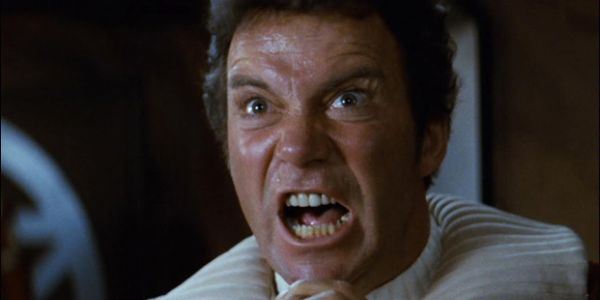 Look, Wrath of Khan doesnt feature any Oscar-winning performances. Its not a political allegory. Its not written with an eye towards a wider mythology because the mythology of Star Trek was at the time quite limited. And the writing is not lyrical or sophisticated. Its a science fiction adventure film about growing older, but the film is self-conscious enough not to demand the audience take everything seriously. The proof of this attitude is in Kirks infamously hammy KHANNN line. The line is triggered by Khan explaining that hes marooned Kirk, helpless, in the core of a giant space rock, for the rest of time. Khan thinks hes won (although Kirk has a backup plan) so Kirk just screams helplessly KHANNN. Its impossible to take seriously, and given its placement thats really okay. But compare that to Into Darkness, where the line is delivered by Spock and is expected to be taken seriously by the audience as an emotional breaking point for Spock. But the line remains super hammy. Its still rather ridiculous. Its just not honestly ridiculous anymore.
8. Relatable Family Drama
 There are two layers of family drama in Khan: Kirks reunification with an old girlfriend/his first meeting with his son, and the weathered brotherhood uniting the older crewmen Kirk, Spock, Scotty, and McCoy. Kirk experiences on screen the emotions that an estranged father would have upon meeting his adult son for the first time, and these emotions are so simple and relatable that the audience has no difficult understanding them and sympathizing with the characters. The four men have been through so much in their long lives that they are brothers, and every conversation between them has the weight of history and the ease of familiarity. Its natural to watch them on screen together, because they clearly have a level of understanding and love that unites them. Thats why the films end, when the four men are united at Spocks death, carries so much emotional resonance. Their grief, and especially Kirks, has been earned by their interactions over the course of the film. The emotional conflicts in Into Darkness, however, involve Kirk being pissed that no one will let him do the things his gut tells him are right, and Uhura being pissed that Spock doesnt care enough about dying. If they had been written better, maybe these would have been relatable. But neither of these conflicts make much logical sense. Add to that the fact that there is nothing but conflict among the Enterprise crew, meaning that there are no comfortable relationships, no meaty history, and no real basis against which to cast these conflicts and give them emotional weight. The resolution of these conflicts was based around the death and resurrection of Kirk, but the sudden melting away of all those conflicts into something the audience had no basis to understand meant that the emotions surrounding Kirks death werent earned by the movie.
7. The Legitimate Threat Of Death In The Enterprise
 A lot of people die in Khan. The captain and crew of a hijacked Starship are all killed (except for Chekov). The scientists who ran the Genesis project are all tortured to death. Random people die all through the Enterprise, including Scottys protégée. And finally, at the end of the film, Spock dies and is buried in an emotional funeral sequence that brings the weight of loss home to the characters and the audience. A lot of people die in Into Darkness too. The Dad suicide bomber (hell always be Mickey the Idiot to me), the evil general, and most dramatically Christopher Pike. Pike is supposed to be the person who forces Kirk to deal with loss (although how a character shaped by his fathers death hasnt been forced to go through counseling to learn how to deal with loss is beyond me), but nobody with a name dies on the Enterprise. Pikes death occurs quite early in the movie, and the movie moves so quickly that its emotional import is overwhelmed by the plot. The fact that Spock died at the end of Khan gave the audience and characters the space to deal seriously with grief. And, of course, I cant go through the article without pointing out that switching Kirk for Spock as the dead person, and then bringing Kirk back, completely undercuts the entire point of the dealing with loss theme. The character whose death is most affecting is brought back to life inside of 20 minutes, and apparently thats not supposed to reinforce the idea that death can be avoided if youre clever enough. Which is Kirks misguided belief for the whole movie. And which is proved correct by the plot, but somehow Kirk learns his lesson anyway.
6. Understandable Motivations
 In Khan, the title character is driven by the need for revenge. He give long speeches about how hes been wronged, he sets traps using Kirks friends, he subsumes logic in the face of his overwhelming need for vengeance. Khan is the driving actor of the film: his wrath and his motivations trigger all the other events. That may not be the most original plot, but it still makes sense. Into Darkness is this crazy hodgepodge of modern commentary (drones are bad), political allegory (secret organizations and conspiracies within Starfleet), fear of loss whose contradictions I talked about above, and Khans desire to get his friends back and to be a terrorist at the Federation. The intersection of these themes made for a crazy clusterf**k where individual motivations and characteristics changed based on the needs of the plot. Thats just bad writing.
5. The Khan-Kirk Relationship
Its been said many times before, and its worth saying again here: Khan and Kirk are never on screen together in Wrath of Khan. The entire movie is built around their conflict, around Khans need for revenge on Kirk and Kirks responses to Khan, but they never actually meet in person. We hear all their history secondhand, and they have only a handful of conversations. And that works. Its written well enough that the conflict is believable, that the plot makes sense, and the emotions seem genuine. But in Into Darkness, the meeting between Khan and Kirk and the things they do together are the centerpiece of the film. The relationship has a healthy dose of suspicion and standard Hollywood unwilling partnership, and thats it. Its nothing special. Khan doesnt even kill Kirk: its a complete accident that Kirk dies as a result of Khans actions, and Khan wasnt even aiming for that.4. Consistent Bad Science
 The scientific MacGuffin of Khan is that some Federation-funded scientists have developed a missile that could create life from death. Its got an old-school scifi theme of men usurping the godly powers of creation, and its just dangerous enough that getting ones hands on it is something people would die for. The way it works is that you fire it at a planet and it erases all the life on that planet and re-starts the evolution of life. Im not saying that makes sense. It doesnt make sense at all. Its a bit clunky on the godly powers theme, and the science is pure technobabble. But its a relatively simple concept that an audience can digest quickly enough to watch and believe the unfolding drama. Into Darkness is just all over the place with magic new technologies. Theres the statis pods that Khan and his friends were frozen into, that were then made to look like torpedoes. Theres the thinly veiled drones. Theres the new super-powered starship. Theres Khans blood that can magically bring people back from the dead, or from the brink of death. ITS TOO MUCH. The technologies trip over each other, the plots run into each other headlong, and the drama is undermined by an overabundance of MacGuffins.
3. Limited Set Budgets
 When given a limited budget, many people are more creative. Look at Star Wars: when George Lucas was a struggling amateur with a limited budget making special effects from scratch, he made great movies. When you gave him all the money in the universe, he made absolute crap. Im not sure if JJ Abrams is the same way; I havent seen enough of his stuff. But Into Darkness definitely suffers from too much money. Theyve got great actors who have great chemistry if you put them in a room together, but there are long scenes full of way too many special effects, theres practically a new location for every scene, and there are so many technologies you lose track. Khan was working on far more primitive effects, and had far fewer sets. The result was a movie with a lot more drama, and a far more digestible and ultimately moving plot. When you cant deck the movie out in tons of eye candy, you have to rely on the drama and on the power of individual interactions. When you dont have that much money, you have to be smart about how you use it, and that works wonderfully in Khan.
2. No Forced Romance
 Yep, Im climbing on this fanwagon: the Spock and Uhura relationship is terrible. I know they needed to give Uhura some kind of plot, but why did it have to be romantic? Girls can do things besides be love interests, you know. Or they could have just genderswapped a character: imagine a booze swigging potty-mouthed lady McCoy! Or a dirt-encrusted hyperbolic lady Scotty! More importantly, the focus of Star Trek characterization has always been on brotherhood, and the addition of a romance to the main crew undermines that. Theres relationship drama that people are afraid of being sucked into, so they cant bond. Brotherhood and comradeship were the emotional heart of every good iteration of Star Trek, and the romance just takes up too much attention and screen time. Khan didnt force a romance. They could have. The reunification and rekindled flame of Kirk and his doctor friend could have been a big deal in the film. Instead, theres no romance at all in Khan, and other fascinating relationships are the films emotional center.
1. Big Concepts
 Wrath of Khan is science fiction about big ideas. The movie is about dealing with death, with the inevitability of age and decay, with the brutal fact that we will lose everyone we love and everything we care about. Kirk is getting old, hes lost his edge, and he loses his greatest friend. But its also a hopeful movie. Its a movie about the fact that death may be final, but it isnt the end. Life continues, growing from death (thats the point where the space opera drama perfectly intersects with the hard science of Genesis). Kirks final line is I feel young, because hes learned how to deal with death, how to deal with his friends loss, and how in a godless humanist universe there is still hope. Into Darkness is about being a summer blockbuster. In that its about dealing with loss (which frankly doesnt make sense because thats something the ridiculously young crew of the Enterprise should be dealing with down the road, once theyve got some experience under their belt), it contradicts itself by demonstrating how fleeting and impermanent loss really is. The closest it comes to being about big ideas is its criticism of how America is becoming that which it once hated. Khan the man is resurrected because bad guys in the Federation think its necessary to think like bad guys in order to deal with bad guys. This, the movie tells us with all the subtlety of a brick, is BAD. Khan didnt have to say its themes and conclusion out loud like that, it could leave something to be implied and understood. Khan is EVIL, and thats his motivation by the end of Into Darkness. Before that, he just wants to protect his crew, although maybe if someone had said something about that earlier he would have been more relatable. Kirk gets upset and beats Khan up, and thats bad. But then Spock does the same thing later in the film, and hes getting in touch with his feelings so thats good. Notice how that all contradicted itself. Wrath of Khan is about big ideas, big concepts, and serious evaluations of life and its continuation. Into Darkness is a clunky and self-contradictory political commentary, with character drama that doesnt make sense and a plot that drives the whole movie without making any sense. Thats the most basic problem with Into Darkness: the plot drives the drama, rather than in Khan, where the drama drives the plot.