Star Wars: Why Solo FAILED At The Box Office
We've got a bad feeling about this...
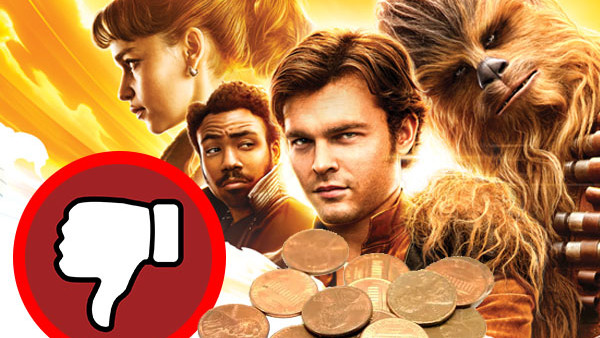
There are some who will say that Solo wasn't even supposed to have the same sort of impact that the mainline Star Wars movies did. It's a Star Wars Story film - an offshoot that was supposed to sit alongside the Skywalker Saga but not compete in terms of heft or scale or financial draw - so it was always to be considered a bit of a free shot for LucasFilm.
But then Rogue One happened and changed all expectations by making a fortune. And though it's wrong to consider that some sort of benchmark, it's going to hang in the air rather unfortunately when it comes to the final reckoning for Solo. But even without Rogue One's performance, the opening weekend figures for Solo have been... underwhelming, to say the least.
Whisper it, but the film is being called a failure - a "disaster" even - whose stuttering launch COULD impact how Star Wars launches are strategised (though, in reality, Disney can swallow up these comparative missteps).
It might not be the most disastrous blockbuster movie performance ever (and it may change somewhat over the next two weeks with limited competition), but in terms of a Star Wars film's usual performance, it looks disastrous. And even more importantly, against EXPECTATIONS and projections (which Ron Howard himself admitted weren't met), it did not get to where it should have.
But the question right now is WHY it failed as it has and it's possible to map out exactly some of the contributing factors...
8. The Under-Cooked Marketing
Hyping a blockbuster is not as easy as it might look: even with a brand as established as the MCU, Disney ploughed hundreds of millions into making sure Infinity War's marketing campaign dominated. In the final weeks before release, you couldn't get moved for TV spots and new interviews, in fact.
Even The Last Jedi was aggressively marketed and that had the added draw of already being the second part in a trilogy. But captive audience counts for nothing in marketing terms and Disney once again made sure it was the most talked about movie of its release season.
In stark contrast, Solo's first trailer landed in February, merely 3 months before release (The Last Jedi's was revealed EIGHT months ahead) and it felt very much like the release date crept up. Midnight screenings that had been packed to bursting for Disney's last two big tentpoles were malnourished by comparison and there was not the same aggressive publicity trail at all.
Just as studios know that splashing the cash on marketing works, they have to acknowledge that skimping will compromise on a film's drawing power.
7. The Release Date (And Competition)
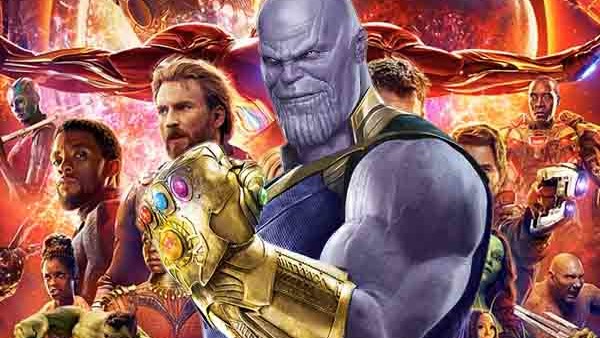
People now seem to think that there's a good chance that LucasFilm (or Disney, more aptly) will move to a strategy of only ever releasing Star Wars movies in December after Solo's performance, but it isn't just the month that matters.
Star Wars "fatigue" might not be entirely responsible, but the fact that The Last Jedi came out just five months ago has to have had some impact (more on less enthusiastic "mainstream" fans rather than the core fandom). That's where the box office analysts seem to be laying the blame, at least.
And more importantly, putting Solo in direct competition with Avengers: Infinity War - which basically hoovered up the box office market - was a terrible idea. Disney have effectively cannibalised their own properties and there was only going to be one loser there.
6. It Missed The New Generation Appeal

For all of the hand-wringing about the Sequel Trilogy "killing the past," those films knew to channel something that had ensured that the Prequel Trilogy had still made a lot of money despite the criticisms that came out of Episode One. They knew to consciously target a new generation and reinvent their product for them.
In the 70s and 80s, Luke Skywalker, Princess Leia and Han Solo became the heroes of an entire generation. In the 2000s, Anakin and Obi-Wan followed suit and then with the new trilogy, fans were given Rey, Finn and Poe (to a lesser extent) to idolise, which was a VERY conscious decision.
LucasFilm could have simply continued the Skywalker story for another three films and brought no new heroes in and the series would have made more money, but it wouldn't have made the kind of money that The Force Awakens and The Last Jedi did, because the appeal to younger audiences wouldn't have been quite there.
And so to Solo, which is the absolute antithesis of appealing to a new generation: it's more about retelling for the core audience who were the new generation in the 80s. Sure, Han will still be classed as a truly great character, but that reinvention matters when it comes to making big money, even in something as nostalgic as Star Wars. Just look at Jurassic World's success, if you want further evidence.
5. A Lack Of Confidence

Whether you're as obsessed with reshoots and production changes as the Internet will have us all believe every fanbase is (and there's certainly a lot more interest than there ever was) remains to be seen, but it was hard not to notice Solo's early troubles.
After issues with other directors over almost the entire history of Star Wars, LucasFilm were forced to fire Phil Lord and Christopher Miller when their vision didn't gel with what the studio wanted. Putting aside questions of why they were hired in the first place if the studio wanted patsies, it's never a good look, particularly when they've already started turning material in.
Even bringing in a veteran like Ron Howard doesn't gloss over those sorts of concerns and the fact that reshoots ended up costing the studio twice what was budgeted for Solo made it look like Howard was having to fix a disaster. Add in rumours of Alden Ehrenreich needing an acting coach and it's all a recipe to kill confidence. It's hard to come back from those setbacks.
And there's definitely something to be said of how safe replacing Lord and Miller (who would have had something new to say) with Ron Howard was. That can't have gone unnoticed either.
4. The Boycott
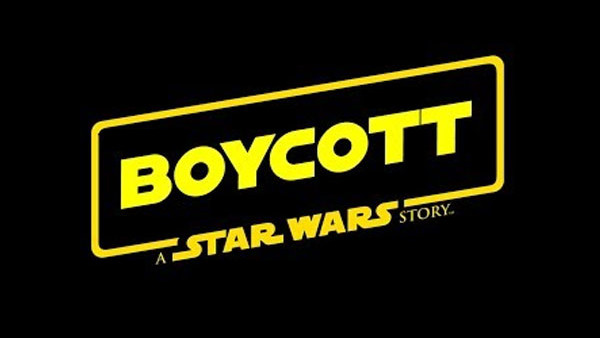
It may not have been one of the biggest factors in destabilising Solo's hype, but the fact that the Boycott Solo movement was even a story is an indication of something in itself. It indicated just how uninspired a portion (how much is up for debate, of course) of the Star Wars fandom were coming out of The Last Jedi.
That film may have made a fortune for LucasFilm, but it was divisive for fans (hence the - probably manipulated - Rotten Tomatoes audience score of just 46%) and it left a bad taste for those who cared enough to start the Boycott movement. And the very idea that Star Wars fans didn't like the way "their" franchise was being handled is the kind of PR nightmare studios don't want more casual mainstream audiences to even notice.
Fundamentally, that reflects terribly, no matter what portion of the fanbase were even involved in actively boycotting the movie. They had power - which was amplified by the media even in cynical reporting - to impact perception and it definitely worked partly.
That's probably also why there are now accusations of Audience Score tampering on Rotten Tomatoes, which has increasingly become an important marketing tool for studios. In line with the boycott, the idea of the fan score being lower than the critical response is a terrible look for LucasFilm, because those who use it won't know the possible context of the score. They'll work in very binary terms, of Rotten and Fresh, of "worth it" and "not worth it."
3. It's Not An Event Movie

The other problem with dropping Solo into the summer blockbuster movie window is that it's simply not an event movie any more. In a marketplace already full of Star Wars-sized movies like Infinity War, Jurassic World, Deadpool 2, Mission Impossible, Incredibles 2 and even Skyscraper (to name but a few), it's wrong to simply suggest that the Star Wars label will be enough to guarantee box office domination.
It's a sorry fact, but there's a good chance that Origin Fatique is a genuine thing. Because superhero movies inevitably have to have origin stories, there's been a bit of a penchant for origin stories apeing that outside of the "genre." And when films like Pan and King Arthur failed so badly and the new Robin Hood has been so unenthusiastically received, there's definitely something to be said of the possible negative impact.
Star Wars used to be about huge scale and expanding new stories, but by doing an origin (and not a prequel like Rogue One), they've but Solo into the packed recent and future marketplace of The First Purge, Ouija: Origin Of Evil, Robin Hood, King Arthur, Pan, Black Widow (when it comes), 2019's The Voyage of Doctor Dolittle, Tomb Raider, The Nun, Bumblebee and Venom...
It's just a little too conventional and a little too similar (in spirit if not actual content) to what's already out there. In other words, it simply didn't do anything brave enough to really grip and there's no way it could call itself an event movie. And event movies are the only ones that pull in event movie money.
2. The Critical Reactions

You could look at Solo's Rotten Tomatoes score (currently 70%) and think that it's not THAT bad. It's still fresh, after all. But it's all about context.
Not only are there some very visible reviews using language that qualifies Solo's quality with caveates or damns it with faint praise (like saying it's good, not great or that it's "fine"), but 70% is a dangerous number because of the precedent. After all, Attack Of The Clones, which was memorably panned (and still continues to be) scored 66%. Even The Phantom Menace scored 55%. It's all a little too close for comfort and fans notice these things.
That's probably why there are currently so many influencers in Hollywood congratulating Ron Howard on Solo's quality and why there's so much mention of the Twitter fan reactions. It's about moving away from those "official" critical responses and letting the "true fan" voices be amplified. Well, the right ones anyway.
1. It's Still Not A Story That Needed To Be Told
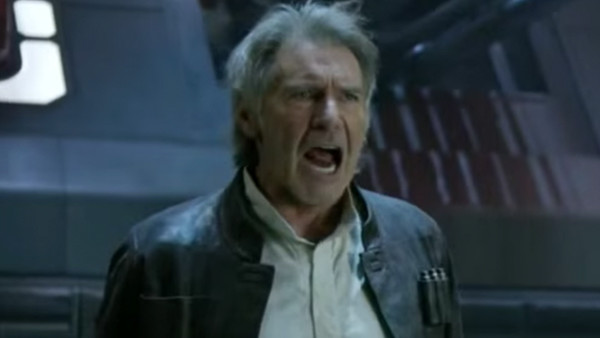
When Han Solo first appeared in the Original Trilogy, he came wrapped up in an air of mystique that made his cheeky anti-hero charm all the more appealing. He was a swash-buckling ball of bravado and even machismo, bristling with attitude and the demeanour of a hero permanently shocked that nobody knows of his previous exploits (or those of his ship).
In that context, the idea of him claiming to have done the Kessel Run in a stunning record time was better as precisely that: just a claim. Not knowing if he was actually being truthful fit his character, particularly as him being even slightly untrustworthy made his heroic about-turn at the end all the more satisfying. Even after that, we didn't need to know the truth.
Sadly, Solo demystifies Han way too much - as those concerned about it ahead of release all suspected it would - and it answers that mystery, among others. It doesn't need to be told and neither does the explanation of his surname either. Sure, they needed some story in there, but the fact they had to plum those depths suggests that they genuinely didn't really have a story to tell in the first place. Not one compelling enough to warrant its own film, anyway.
And on top of all of this, there's the indefatigable truth that Harrison Ford IS Han Solo for most film fans. There is no separation of the two and it almost didn't matter how good Alden Ehrenreich was going to be... crucially, he wasn't ever going to be Ford.
What did you think of Solo? Share your reactions below in the comments thread.