Suicide Squad: Hell To Pay Review - 7 Ups & 3 Downs
Better than the live-action film.
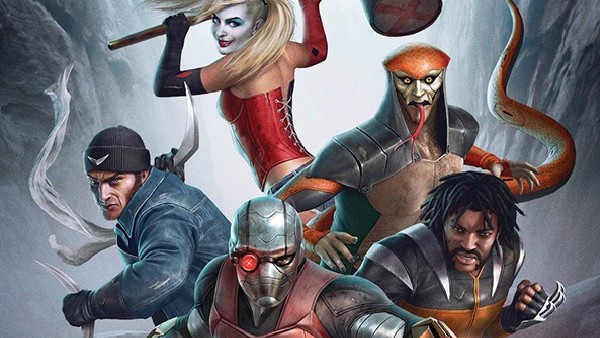
The latest DC animated film from the Warner Bros. Animation stable is out now on VOD, and though the brand has been incredibly hit-and-miss in recent times, it's a pleasure to report that Suicide Squad: Hell to Pay is in fact one of the stronger efforts of the last few years.
Lacking the cringe-worthy humour and dated sexual politics of some recent DC films, this is a gritty yet occasionally hilarious romp that knows its characters inside and out, and delivers an entertainingly twisted R-rated adventure for the majority.
Is it perfect? Absolutely not. The script could've certainly used another pass and it still falls victim to some of the typical problems that these movies can't seem to shake, but if you're fed up of DC animated films falling short of their potential, here's one that hits the mark far more often than it doesn't.
And above all else, it puts the 2016 live-action equivalent to easy shame...
Downs
3. The Totally Pointless Subplots

Though it's a frequent complaint that Warner Bros' DC animated films are too short and insubstantial, Hell to Pay's bloated narrative, clocking in at around 10 minutes longer than a typical Warner Bros. Animation movie, is a testament to the virtue of restraint.
While the core plot, of Amanda Waller (Vanessa Williams) forcing the Suicide Squad to hunt down a Get Out Of Hell Card (yes, really) probably should've been substantial enough to see the movie through, it's instead padded out with numerous subplots that just weigh down an otherwise rock solid film.
The most egregious divergence sees the Squad visit Maxum Steel (Greg Grunberg), a metahuman-turned-stripper who gives the Squad another breadcrumb to follow on their mission, but eats up almost 15 minutes of screen time with his backstory before being suddenly kicked to the curb.
There are also a few scenes devoted to Deadshot (Christian Slater) trying to track down his estranged daughter, but they mostly feel like an arbitrary addition rather than a sincere attempt to flesh his character out.
2. The Hit-And-Miss Voice Acting
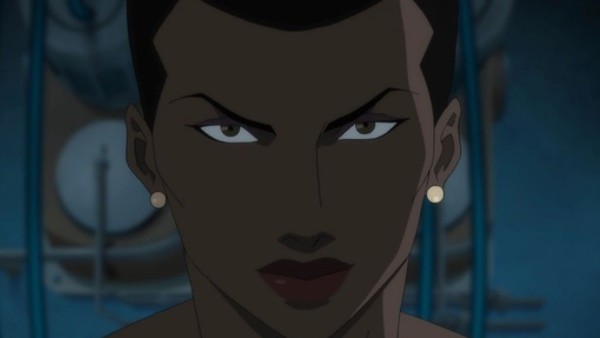
As is the case with almost every DC animated film, the voice acting here is an incredibly mixed bag. The easy highlights are Christian Slater as Deadshot and Liam McIntyre as Captain Boomerang, while Vanessa Williams is surprisingly effective as Amanda Waller even if she's basically just impersonating CCH Pounder's acclaimed vocal rendition.
Not-so-convincing is Tara Strong as Harley Quinn, who while leagues ahead of other recent animated Harleys, just doesn't bring much new or interesting to the part. As for everyone else? They're neither terrible nor especially good: just perfectly middle-of-the-road and totally forgettable.
You'll probably be left wishing that characters such as Killer Frost (Kristin Bauer van Straten), Bronze Tiger (Billy Brown) and Vandal Savage (Jim Pirri) had a little more weight and vocal presence, for instance.
1. The Action Is Pretty Unremarkable

There's a ton of action in this movie, but sadly most of it is pretty forgettable, for as many different match-ups as the film serves up, the core action generally devolves into typical shoot-outs and punch-fests.
There are a few inspired moments where the superheroes and villains make clever uses of their powers, but more often than not the set-pieces just feel like arbitrary additions to break up the plot every 10-or-so minutes.
Though it doesn't look as cheap as other recent DC animated films, it's abundantly clear that the set-pieces are desperately lacking many fresh new ideas.
These criticisms accepted, though, Hell to Pay is one of the better recent DC animations, so here's everything it nailed...
Ups
7. The Surprisingly Solid Animation
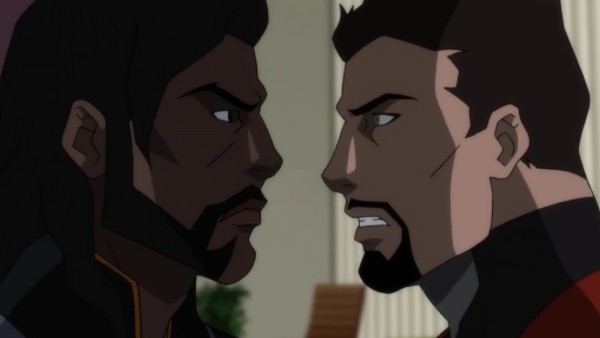
If there's typically a noticeable drop in the animation quality of the R-rated DC movies, presumably in order to cut costs, it's a pleasant surprise to report that Hell to Pay actually doesn't appear to have suffered much at all.
The shading of the characters and environments have more depth and texture to them than most recent DC animations, and blatant keyframe animation - typically used to cut corners and save money on rendering more frames - is scarcely apparent.
Is it the most visually impressive animated superhero film? Certainly not, but it has a professional sheen to it and doesn't just feel like it's been cranked out at the most minimal cost for an easy buck.
6. The Kitschy, B-Movie Tone

Tonally, this film is totally aware of the fact it's nothing more than a fun slice of gonzo trash, and it agreeably embraces that fact.
From the goofy, B-movie-esque opening title sequence to the ridiculous quips and litany of blood-letting throughout, the tone is perhaps akin to some of John Carpenter's lighter genre efforts, and makes no apologies for that.
In terms of mood and atmosphere, this is probably closer to what the 2016 live-action film should've been, because there's no sense of tonal whiplash here as it fleets between light and dark elements. Even with its flaws, this never feels less than a smoothly controlled experience.
5. It's Brutally Violent
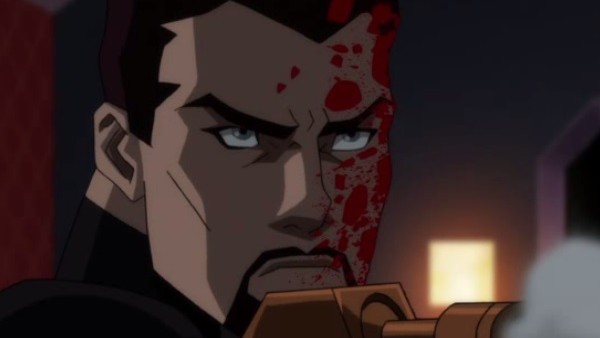
No question, this is easily one of the goriest DC animated films to date, and though it's a shame the accompanying action isn't more interesting, the frequent blood-letting does at least give fans their well-deserved R-rated thrills.
In the first five minutes alone, several people are sliced in half, and that's just the beginning. A memorably brutal sequence later on sees Zoom (C. Thomas Howell) using his super-speed powers to perform the Death of a Thousand Cuts on an adversary. It's rough.
There are some genuinely wince-inducing moments here combined with sheer, furious bada**ery, ensuring this is at least an almost peerlessly visceral superhero animation.
4. There Are Tons Of Cameos
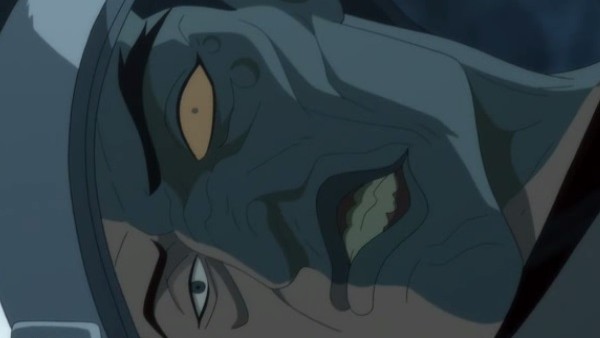
Fans will have plenty of fun keeping their eyes peeled for the numerous heroes and villains that cameo throughout the film, from early appearances by the likes of Black Manta and Two-Face (Dave Boat), to an unconventional, blink-and-you'll-miss-it cameo by the Caped Crusader himself.
Thankfully, these brief appearances are fun nods without feeling overly fan-servicey or distracting from the overall narrative. They hint at the wider, exterior universe but aren't excessively pandering to the fanbase or drawing the focus away from the titular characters.
There's clearly a ton of extra detail hidden in the background of scenes throughout the movie, so on repeat viewings you may want to make liberal use of the pause button to make sure you don't miss anything.
3. It's Genuinely Funny
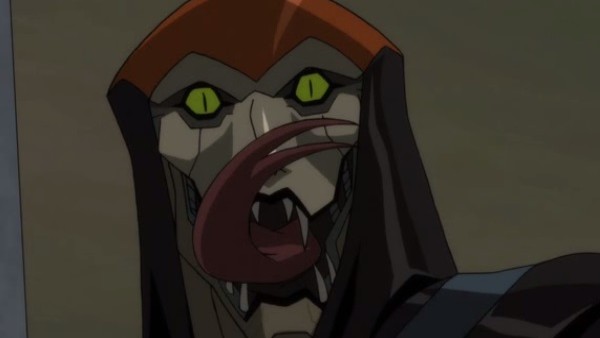
Recent DC animated films don't exactly have a strong reputation for clever, effective comedy, what with last year's Batman and Harley Quinn doubling down on cringe-worthy fart jokes, making one feel legitimately embarrassed to be watching it.
Hell to Pay thankfully has a far stronger handle on its tone and how to make its audience laugh, with a deference towards gallows humour - given how easily any of the Squad could die - and some unexpectedly hilarious physical comedy from Copperhead (Gideon Emery), using his freakishly long tongue to scare a child and steal some ice cream from an old man.
Harley Quinn also gets one hilariously demented moment late in the film that shouldn't be spoiled, but it involves excessive use of her baseball bat and is almost great enough to compensate for her farting episode last summer.
It's not a chuckle-a-minute gag-fest, but it knows when to be funny and when to get serious. Speaking of which...
2. There Are Some Surprising Deaths
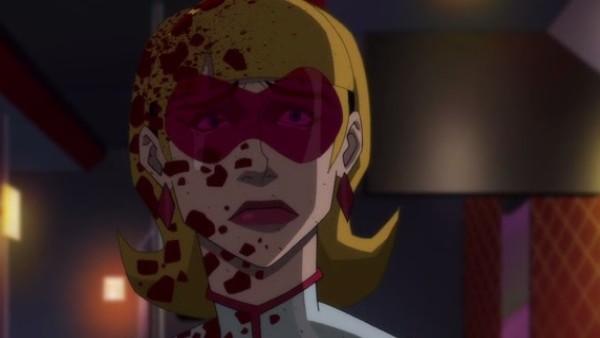
Right from its opening scene, the film isn't afraid to gets its hands dirty, liberally killing off superheroes and villains alike in the blink of an eye, helping create an unpredictable tone that pervades through its remainder.
It's no spoiler to say that not all of the Suicide Squad makes it through the film in tact, and even accompanied by a narrative which literally admits the apparent existence of Heaven and Hell, these deaths still have a real weight to them.
Given how frequently these films treat death as merely a flippant inconvenience, here there's a real, refreshing gravity to existence.
1. The Lack Of Casual Sexism

The DC animated movies continue to have an ugly, pervasive problem with sexism, where the female characters are so often reduced to sex objects rather than, you know, human beings.
Thankfully, that's absolutely not the case here, and of all Warner Bros' recent superhero animations, this surely has the least amount of objectionable, sexist material.
There's a fleeting scene early on featuring female strippers, but it's contextually appropriate and doesn't deign to become shameless, gratuitous fan-service.
The female supervillains, meanwhile, are treated respectfully and little reference is even made to their physical attributes.
Hell, the balance is arguably even tipped the other way, with the most overt skin display being that of Maxum Steel during a strip show sequence.
Simply, if you've been turned off by the regressive gender politics in recent DC animated films, there's nothing to fear in this case.
What did you think of Suicide Squad: Hell to Pay? Shout it out in the comments!