The A-Z of Quentin Tarantino
 January will finally see the UK release of Quentin Tarantinos latest film, Django Unchained. After the success of 2009s Inglourios Basterds, Django will continue Tarantinos recent trend of revisiting history while adding his own unique take on events. The film is a tale of a freed slave (Jamie Foxx) on a mission to rescue his wife (Kerry Washington) from a cruel plantation owner (Leonardo DiCaprio) with the help of a German bounty hunter (Christoph Waltz). The film has been a huge critical success State-side for Tarantino, receiving five Academy Award nominations as well as five BAFTA and four Golden Globe nominations. Tarantino himself has been nominated for Best Original Screenplay in all three. So what better time to revisit the career of one of the most adored and revered film-makers in the world. Over the past two decades, Tarantino has become one of the most popular and innovative writer/directors around after making classics such as Reservoir Dogs and Pulp Fiction. He has written and directed seven feature films and has written screenplays for several other films including True Romance and Natural Born Killers (which was heavily changed). He has had several acting roles and has made various cameo appearances. In 1995, he won an Academy Award for the screenplay of Pulp Fiction, as well as a BAFTA and Golden Globe award. Here is our A-Z of all things Tarantino...
A is for A Band Apart
 A Band Apart is Tarantino and Lawrence Benders production company and is the familiar name/logo that has been seen at the opening of every Tarantino film since Pulp Fiction. Formed in 1991, the company takes its name from Jean Luc-Godards French new-wave film Bande à part, which in English means Band of Outsiders. Other than producing Tarantinos films and his collaborations with Robert Rodriquez, credits for the company include 1995s John Travolta film White Mans Burden, 1996 black comedy Curdled (produced by Tarantino) and the two From Dusk Till Dawn sequels that were released direct-to-video.
B is for Bruce Willis
 While igniting the career of one Samuel L. Jackson and saving the career of John Travolta, Pulp Fiction also resurrected the career of Bruce Willis who since the release of Die Hard 2: Die Harder in 1990 had struggled with a series of forgettable thrillers or downright flops like Striking Distance, The Bonfire of the Vanities and Hudson Hawk. Willis performance as aging boxer Butch Coolidge, a man who is offered a large sum of money by crime figure Marsellus Wallace (Ving Rhames) to throw a fight brought Willis back to prominence and earned him strong critical acclaim for his performance. Since his role in Pulp, he has remained one of the most consistent and reliable box-office performers in Hollywood starring in films like Die Hard With a Vengeance, The Sixth Sense, Armageddon, Sin City and Planet Terror.
C is for Collaborations
 Taranatinos career has been built on forging successful collaborations with both actors and people behind the scenes. Harvey Keitel was integral to Tarantino getting his big break with Reservoir Dogs and has since worked with Tarantino on three occasions. Samuel L. Jackson has perhaps been Tarantinos most frequent on-screen collaborator, appearing in five Tarantino films. Robert Rodriguez has been a frequent collaborator behind the camera (Four Rooms, Sin City and Grindhouse) and on-screen too with Tarantino providing a cameo in 1995 Rodriquez thriller Desperado and by starring in the Rodriquez directed (Tarantino written) From Dusk Till Dawn in 1996. Tarantino collaborated with editor Sally Menke on every one of his films until her death in 2010. She was nominated for two-Academy Awards for her work with Tarantino.
D is for Django Unchained
 Tarantinos latest is set to be released in the United Kingdom on January 18th. Django Unchained is the tale of a freed slave named Django (Jamie Foxx) in the American Deep South who is out for revenge and to free his wife (Kerry Washington) from the grasps of an evil plantation owner, Calvin Candie (Leonardo DiCaprio) all with the help of a German bounty hunter Dr. King Schultz (Christoph Waltz). Like all things Tarantino, expect a crazy, offbeat thriller with plenty of style and unique Tarantino humour, dialogue and blood-letting. Boasting a supporting cast that includes Samuel L. Jackson, Walton Goggins, Don Johnson and James Remar and a running time of 165 minutes, the film has been a huge success, scoring five-Academy Award nominations and has a current score of 89% at Rotten Tomatoes.
E is for Early Years
 Tarantinos much publicised early days before his film-making success should be a source of inspiration to any young writers out there. While he took some acting classes, Tarantino never attended film school. Speaking about how he learned about film, he said; "When people ask me if I went to film school I tell them 'no, I went to films". He worked in a video store called Video Archives where he met Roger Avary, who would become a regular collaborator in his early work, contributing to Reservoir Dogs and Pulp Fiction. It was at this video store where Tarantino did most of his study and gained a wide appreciation of various genres and styles, many of which he would eventually incorporate and pay homage to in his own films.
F is for From Dusk Till Dawn
 Written by Tarantino and directed by regular collaborator Robert Rodriquez, From Dusk Till Dawn is a crime-horror-thriller released in 1996. Unlike Tarantinos previous works, From Dusk Till Dawn contains horror elements and despite starting off like a Tarantino-like crime thriller, it veers off into a crazy gory horror thriller once the Gecko brothers and their hostages reach Mexico. Featuring Tarantino in a rare lead-acting role as well as George Clooney, Harvey Keitel and Juliette Lewis as well as an iconic dance scene featuring Salma Hayek, From Dusk Till Dawn has spawned two direct-to-video sequels as well as a video game and remains popular to this day.
G is for Grindhouse
On paper, Grindhouse should have been an easy success. Having both Tarantino and Robert Rodriquez make a film each and package it as one grindhouse feature should have equalled the easiest sell in recent film history. However, the film underperformed upon its released in the States in 2007 and both segments (Tarantinos Death Proof and Rodriquezs Planet Terror) were released separately as extended editions in Europe where they fared better. Despite the poor box-office, the films both received critical acclaim and are generally held in high regard for the use of the grindhouse concept and the duo's attempts to try something different to appeal to audiences. However, looking back on the experience, Tarantino has ranked his section of Grindhouse as being one of his lesser efforts and describes it as being his worst film.H is for Homage
 Tarantino has always sought to pay homage with his films, be it the odes to the blaxploitation genre of the 1970s in Jackie Brown or Kill Bills tribute to Hong Kong martial arts films, Samurai cinema as well as the numerous other styles and genres he takes influence from in that film alone. Even in perhaps his finest film, Pulp Fiction, homage is a central aspect of the tone and design of the film, even with the title offering reference to pulp magazines that were popular up until the 1960s. What allows Tarantino to remain such a powerful presence in modern film is his ability to pay homage (without coming across as a rip-off or exploiter) while remaining one of the most unique and original writer/directors around.
I is for Inglourious Basterds
 Tarantino does WWII. Tarantinos 2009 alternative take on the events of World War II was an enormous success upon its release and after the underperformance of Death Proof was seen as a return to form for the director. Featuring an Academy Award winning performance from Christoph Waltz as the Jew Hunter Hans Landa, Basterds is a bizarre mix of dark humour, gratuitous violence and rewriting history at will for a very Tarantino take on war. Also featuring over-the-top shenanigans from Brad Pitt as Lt. Aldo Raine and his crew of Basterds, the film grossed $300 million at the box-office and currently holds a 88% Fresh rating from Rotten Tomatoes.
J is for Jackie Brown
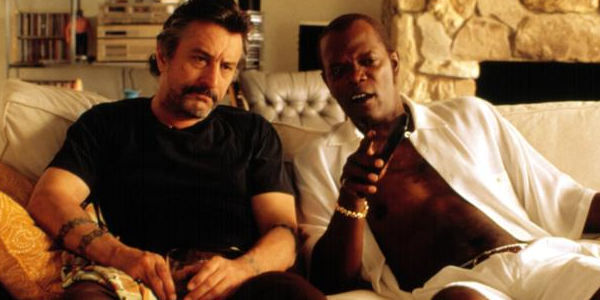 Released in 1997, Jackie Brown was Tarantinos third feature length film. Starring Pam Grier, Samuel L. Jackson, Robert Forster, Bridget Fonda, Michael Keaton and Robert De Niro, the film pays homage to the classic blaxploitation films of the 1970s while incorporating Tarantinos trademark dialogue and pacing. The screenplay was written by Tarantino based on the novel Rum Punch by Elmore Leonard. While Jackie Brown was not as iconic or fondly remembered as Reservoir Dogs or Pulp Fiction, it was still a commercial success and currently holds an 86% rating at Rotten Tomatoes.
K is for Kill Bill
 Tarantinos big return after six years away saw a complete change in direction for a man whose previous films were genre crime thrillers. Kill Bill allowed Tarantino to go in a completely new direction and present his unique take on the Samurai/Hong Kong action genres. Starring Uma Thurman in the lead role as The Bride, the film was in essence a revenge thriller, but as we have now come accustomed to from Tarantino, the film features many odes to genre classics. The eventual film was split into two volumes given the length of the final cut (over four hours) and were released in 2003 and 2004 to critical acclaim and good box-office receipts. Since its release, there have been rumours of a third instalment but in a December 2012 interview, Tarantino all-but ruled out any further adventures with The Bride.
L is for Lawrence Bender
 Lawrence Bender has been involved in producing all Tarantinos films (with the exception of Death Proof and Django Unchained). Like Tarantino, he rose to prominence with his involvement in Tarantinos debut Reservoir Dogs and gained worldwide recognition for his work on 1994s Pulp Fiction. While he has remained a frequent collaborator of Tarantino, he has taken up several projects without Tarantino. He has produced films like Academy Award-winning Good Will Hunting, Brad Pitt and Julia Robertss caper The Mexican, Tarantino knock-off Knockaround Guys, Al Pacino clunker 88 Minutes and most recently 2012s Safe, an underrated thriller starring Jason Statham.
M is for Music
 From the opening credits of Reservoir Dogs as the song Little Green Bag by the George Baker Selection plays, it becomes quite clear that music is an important part of Tarantinos story-telling technique. It provides a background and adds depth to the action taking place. Also, it brings back into fashion songs that have all but forgotten over time. Songs like Stuck in the Middle With You by Stealers Wheel, Misirlou by Dick Dale and Bang Bang (My Baby Shot Me Down) by Nancy Sinatra and many more have been re-evaluated since their release on Tarantino soundtracks and remain popular since Tarantino's use of them and have gone on to become associated primarily with Tarantinos work.
N is for Narrative Structure
 We all know that Tarantino is fond of following a non-linear storytelling technique. He has become the master of creating free-flowing non-linear tales. It has worked incredibly well for him and has become a trademark of his work to date. Reservoir Dogs use of flashbacks enhanced what was an already engaging premise and added that extra element of building up suspense and intrigue at each character's background story while never becoming confusing or taking away from the pacing of the film. His most famous use of this technique is in Pulp Fiction where segments overlap and are all interconnected, but from different point of views and won Tarantino an Academy Award (with Roger Avary) for the screenplay.
O is for Orange
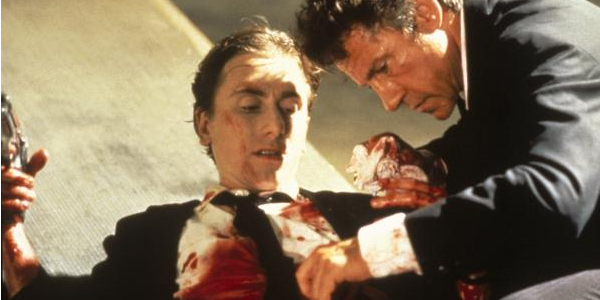 Tim Roths performance as Mr. Orange in Reservoir Dogs is one of the many joys to be found in Tarantinos debut. In a film full of shady and mysterious characters, Roths Orange is exposed as the one true good guy along with anti-hero lead Mr. White (Harvey Keitel). Roth would go on to star in Tarantinos Pulp Fiction as Pumpkin, a role Tarantino wrote specifically for him. Roth also starred in Four Rooms, a film in which Tarantino directed a section of titled The Man from Hollywood. Roth has remained a popular actor since his work with Tarantino, earning an Academy Award nomination for his performance in 1995s Rob Roy and starring in films like The Incredible Hulk, Planet of the Apes, Funny Games, Arbitrage and television show Lie to Me.
P is for Pulp Fiction
 Pulp Fiction is the film that propelled Tarantino into superstardom. One of the most important films of the 90s, Pulp Fiction won the Palme Dor, was norminated for seven Academy Awards (winning for Best Original Screenplay) and has since become one of the most iconic and frequently quoted films of all time. Written by Tarantino and Roger Avery, Pulp Fiction tells multiple interconnecting stories and features a rich mix of humour, violence and memorable performances. Featuring Samuel L. Jackson, John Travolta, Bruce Willis, Ving Rhames, Tim Roth, Uma Thurman and Harvey Keitel, Pulp Fiction was a resounding box-office hit making over 200 million dollars and was a massive critical success (it holds a 95% rating at Rotten Tomatoes and is ranked #4 on IMDbs Top 250 films).
Q is for Quentin Tarantino Presents
 Tarantinos love of foreign film has always been evident and in the early 2000s, he used his reputation to promote relatively unseen older foreign films and new releases. The most popular of these was 2004s Hero starring Jet Li, which grossed over 50 million dollars in the United States alone. Other films released under the Quentin Tarantino Presents banner include Eli Roths gruesome horror thriller Hostel and produced its sequel Hostel: Part II as well as promoting Iron Monkey, The Protector and 2008s Hell Ride. The most recent film to be released under the banner was 2012's martial arts film The Man with the Iron Fists, directed by RZA and written by RZA and Eli Roth. The film received mixed reviews.
R is for Reservoir Dogs
 Reservoir Dogs was released in 1992 and was Tarantinos debut as a director. The film achieved more success in the United Kingdom upon release than it did in the States. Since its release, Reservoir Dogs has gone on to become one of the most admired crime thrillers of the 1990s as well as one of the most important independent films ever made. Featuring an ensemble cast that included Harvey Keitel, Tim Roth, Michael Madsen, Steve Buscemi, Chris Penn and Lawrence Tierney, Reservoir Dogs tells the complex tale of six criminals who agree to do a heist without knowing who each other are. The films deals with the fallout of the botched job and each other suspicions as each characters identity is revealed and expanded on over flashbacks. This use of flashbacks and non-linear storytelling would become a major ploy in subsequent Tarantino films.
S is for Sally Menke
 Sally Menke was an Academy Award nominated film editor (for her work on Pulp Fiction and Inglourious Basterds) and worked as an editor on all of Tarantinos films up until her untimely death in 2010 at the age of 56. Tarantinos close relationship with Menke led him to name her as his only, truly genuine collaborator. In addition to her work with Tarantino, other credits include Oliver Stones Heaven & Earth, the neo-noir crime drama Mulholland Falls, the criminally under-seen 1997 horror film Nightwatch and Billy Bob Thorntons All the Pretty Horses. Her final credit was for the 2010 film Peacock, directed by Michael Lander.
T is for True Romance
 Released in 1993, True Romance was written by Quentin Tarantino and directed by Tony Scott. Starring Christian Slater, Patricia Arquette, Dennis Hopper, Val Kilmer, Gary Oldman, Brad Pitt and Christopher Walken, True Romance tells the story of the love affair between Clarence (Slater) and Alabama (Arquette) and the violent criminals they encounter on their journey. Despite boasting a starry cast and sparkling reviews, True Romance failed to do well at the box office, but in the years since its release has become a cult classic and has been re-evaluated in the wake of Tarantinos own successes as a filmmaker. Like many of Tarantinos films, it was written originally to be told in a non-linear structure.
U is for Uma Thurman
 Thurman has collaborated with Tarantino on two occasions in Pulp Fiction and Kill Bill. Her performance as Mia Wallace in Pulp Fiction led to her receiving an Academy Award nomination (as well as BAFTA and Golden Globe nominations). Her work with Tarantino remains her most critically well received work. Her second collaboration with Tarantino in Kill Bill again led her to multiple award nominations including winning a Saturn award, Empire award and a MTV award for her performance in Volume 1. Besides her work with Tarantino, she has starred in films like Gattaca, The Avengers, the television movie Hysterical Blindness, Be Cool and recently in Bel Ami.
V is for Vega
 The Vega Brothers (Michael Madsen and John Travolta) are two of Tarantinos most iconic characters. Madsens Mr. Blonde (from Reservoir Dogs) has over time become recognized as one of the greatest film psychopaths of the 90s with his ice cold charm and panache for slicing ears off. John Travoltas career saving turn as Vincent Vega (which also earned him an Academy Award nomination) brought him back into the Hollywood A-list. There was talk of a Vega brothers film with both Madsen and Travolta tipped to revise their roles but would only work as a prequel (for obvious reasons). However, as time has gone on, the possibility of seeing Vic and Vincent on-screen together has all but gone and Tarantino has moved on to other projects.
W is for Weinstein
 Bob and Harvey Weinstein are the founders of Miramax Films (which they left in 2005) and who now run The Weinstein Company. Under Miramax Films, the brothers have been responsible for the release of films such as Pulp Fiction, Good Will Hunting, Sex, Lies, and Videotape, Clerks, Shakespeare in Love, Jackie Brown and Kill Bill Volume 1 and 2. Since Pulp Fiction, the Weinstein brothers have been involved in the release all of Tarantinos directorial efforts. They won an Academy Award for their producing work on Shakespeare in Love. Upcoming projects from The Weinstein Company include the sequels to Sin City and Bad Santa as well as Tarantinos eventual next film.
X is 10 in Roman Numerals
 In a recent interview, Tarantino stated that he sees ten as being the ideal number of movies to direct over his career. While this may just be a throwaway remark, but considering that Tarantino has made seven films in twenty years and turns fifty in March, maybe he might want to settle back and enjoy his later years. I just dont want to be an old-man film-maker, he stated in a December interview with The Hollywood Reporter. He does not want to be seen as a directors past his best who still thinks its twenty years ago. Despite his doubts, Tarantino in his two decade career remains one of the most popular and adored film-makers around and is unlikely to change anytime soon (even after Death Proof).
Y is for Youthful Enthusiasm
A central aspect of what makes Tarantino such a adored presence in the film-making world is his seemingly unending enthusiasm for everything film. His career has seen him reinvent himself by tackling different genres, trying different styles and taking inspiration from a multitude of different sources. Take for example his last two films, Inglourious Basterds and Django Unchained, Tarantino has visited two well chronicled genres, the war film and the Western (or Southern as Tarantino himself calls it), two films that tackle serious issues in different ways with Basterds literally rewriting the events of World War II to suit the films tone while Django's more realistic representation of slavery in America is watered down by elements of gun-toting action and wise-cracking dialogue added for a typical Tarantino style production, but never in a exploitive or disrespectful manner. His enthusiasm for taking on so many different genres and having his own unique say on events can only inspire wonder at which genre he will immerse himself in next. Z is for Zed
 Zed (Peter Greene) is a rapist and a character in The Gold Watch segment of Pulp Fiction. In perhaps one of the movies most iconic and disturbing scenes, Butch Coolidge (Bruce Willis) and Marsellus Wallace (Ving Rhames) fight themselves into the wrong party at a pawn store owned by Maynard (Duane Whitaker) who points a gun at the duo and ties them up in the basement. What follows is amusing, hilarious, shocking and downright crazy. A series of events that include the Gimp, rape, a katana sword, Marsellus going medieval and ends with Butch and Marsellus coming to a mutual understanding that Butch should leave for good on Zeds chopper. When Butchs girl Fabienne (Maria de Medeiros) asks who is Zed, Butch replies the iconic line; Zeds dead baby, Zeds dead.