What Does The End Of Personal Shopper Really Mean?
An infuriating, intoxicating mystery.
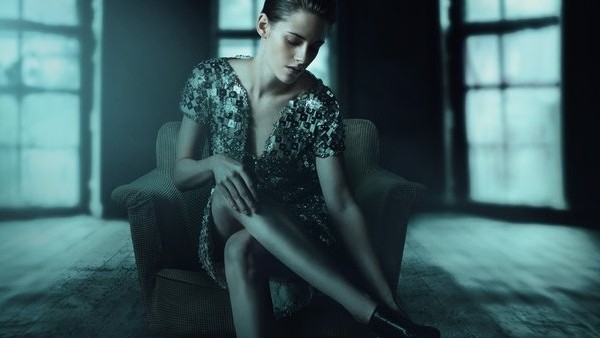
Kristen Stewart is fast emerging as one of the most talented and under-appreciated actresses of her generation, reinforced by her riveting performance in Olivier Assayas' recent psychological thriller Personal Shopper.
The film takes the typical ghost story formula and gladly hurls it out the window, resulting in a heady, deeply challenging film that makes few concessions to the viewer and begs them to fully engage their brains.
It may not have lit up the box office upon release, but the film has sparked a fervent discussion online among fans, who have posited theories ranging from the plausible to the crackpot, with particular regard to the film's infuriatingly ambiguous ending.
Considering these theories while accepting the film's loose supernatural logic and wealth of narrative contradictions, here's a considered stab at just exactly what the end of this utterly beguiling movie actually means...
9. The Plot

First off, let's recount the plot, which follows Maureen (Kristen Stewart), a personal shopper for high-profile fashion model Kyra (Nora von Waldstätten).
Maureen has recently suffered through the death of her twin brother, Lewis, from a congenital heart defect which she was also born with, meaning she lives every day under the very real possibility the same thing could happen to her (even as her doctor insists otherwise).
Like her departed brother, Maureen believes herself to be a spiritual medium, and desperately hopes that Lewis might give her a sign that the afterlife does indeed exist. Soon enough, she begins encountering seemingly otherworldly visions, and receives taunting texts from an unknown party.
Is this all part of her brother's plan to reach out to her, or is there another explanation?
8. The Ending
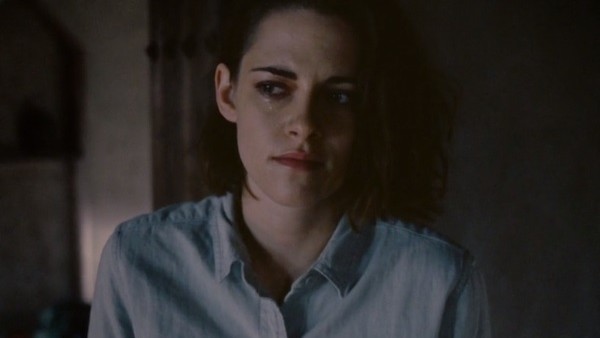
The movie ends by revealing that Maureen's boss Kyra was murdered by her lover Ingo (Lars Eidinger) after she attempted to break up with him, and he subsequently confesses to everything.
Maureen is then shown heading to Oman to spend time with her computer technician boyfriend, and ends up making one final attempt to contact her brother.
Maureen asks questions while her apparent brother responds with knocks, one for yes and two for no. The exchange concludes with her asking him, "Is it you, or is it just me?". Though Lewis gives an ambiguous one-knock answer, Maureen appears to express some relief as the film fades to white.
So, it's time to pick that ending apart and untangle the tricky details of Assayas' provocative thriller.
7. Was Maureen Imagining The Ghosts?
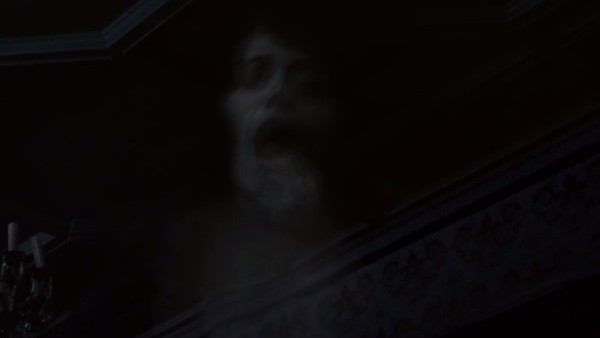
Perhaps the movie's most obvious theory is that Maureen was imagining the spirits the entire time, her subconscious simply creating these images in order to help her deal with her own grief.
The most compelling evidence to this effect is the fact that "Lewis" partook in the knocking game that Maureen learned about earlier from the Victor Hugo movie, and some viewers even believe that the vomiting female phantasm may be unconsciously lifted from the picture of Hilma af Klint Maureen looked at in her abstract art book earlier in the film. She is putting her own experiences into the paranormal activity.
There's an easy rebuke to this theory, though, that the ghosts leave crosses scratched on several surfaces, in one case high up on a wall that Maureen wouldn't be able to reach. Also, Lewis' former girlfriend Lara (Sigrid Bouaziz) witnesses both the cross and a glass smashing, so it doesn't really wash that these phenomena are contrived in Maureen's mind.
Plus, the movie's perspective doesn't seem especially intended to be solely Maureen's: take the chilling climactic image of a ghostly male figure, possibly Lewis, appearing at the window behind Maureen as she sits in Lara's garden. Maureen doesn't see this, which suggests it's an "objective" moment for the audience beyond any doubt.
6. Was She Dead The Entire Time?

Another popular theory is that Maureen was actually dead for the entirety of the movie, and her journey throughout represents her own path towards the afterlife.
Some viewers have noted that Maureen doesn't seem to eat throughout the film, which reflects the classic trope of "the ghost at the feast".
We do, however, see her drink several times, but the easiest way to refute this theory is that Maureen interacts with many, many people throughout the film, and so short of the film's world being some sort of purgatory, this doesn't seem especially plausible either.
5. But Did Ingo Kill Her In The Hotel Room?
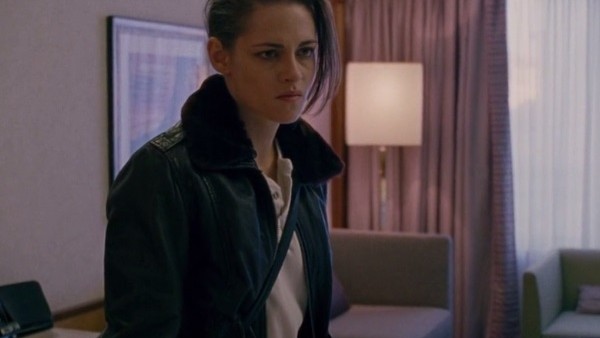
Probably the most compelling major theory rustled up by fans is that Maureen was murdered by Ingo in the hotel room near the end of the film, as we see the door open and simply fade to black. We never see Maureen leave the room, but Assayas intentionally lingers on what appears to be a spirit leaving the hotel, before Ingo follows moments later.
Though initially it seems like the spirit is Lewis, what if it's actually the ghost of the just-murdered Maureen? As for the final scene, this theory dictates that it simply depicts a spectral Maureen coming to terms with her own demise, and when she asks Lewis, "Is it you or is it just me?", the single knock actually confirms that the spirit is not Lewis, but actually an echo of her own dead self.
The fade to white, after the rest of the movie featured so many incongruous fades to black, may visualise Maureen accepting her death and passing on to the afterlife.
On the other hand, though, it's somewhat implied that Maureen may have tipped off the police before heading to the hotel room, considering they were waiting for Ingo, so why would they not burst into the room if he attempted to kill her?
Also, the closing line is open to many interpretations, especially as Lewis' knock response could be an answer to either "is it you" or "is it just me?", which Maureen asks in the same sentence string. It's entirely valid that Maureen simply comes to an epiphany, either happy that it is Lewis' ghost appearing before her, or accepting that he isn't there and gone forever.
Also, if Maureen died in the hotel room, how is she able to interact with Lara, Lara's new boyfriend Erwin (Anders Danielsen Lie) and her own boyfriend over Skype? Unless they're all conveniently hyper-sensitive mediums (unlikely considering her boyfriend flat-out says he doesn't believe in spirits), it's ultimately not that convincing she died in the hotel room.
Plus, if she really was killed by Ingo, wouldn't she stick around in the hotel room to terrorise him rather than quickly whoosh out the hotel doors?
4. But What About That Final Scene?
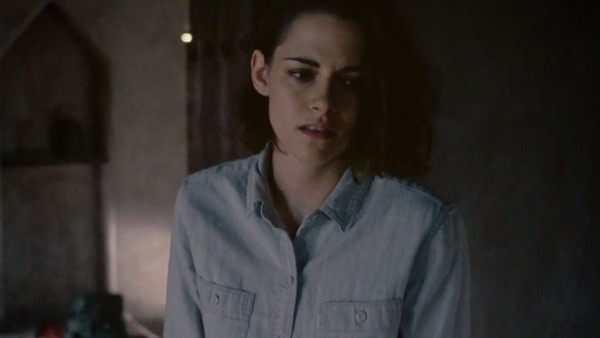
The final scene is the most crucial in tying the movie's themes together and unraveling the true nature of the mystery. If we accept that Maureen is still alive at the end of the film and the spirits she's encountered are real, then it seems that while her grief hasn't caused her to invent these ghosts merely in her own mind, the pain of her loss is nevertheless the reason why she's seeing them.
Her brother's death, the murder of her boss and the texting business with Ingo all amounts to a massive amount of personal suffering, which makes her both extremely sensitive to otherworldy forces and allows her to externalise her emotional torment in these restless spectral forms.
So, when considering whether the movie is in fact a psychological thriller or a ghost story, it actually turns out to be both. That's sure to be frustrating to those who would prefer a tidier answer regarding the nature of the movie's supernatural elements, but for open-minded audiences, Assayas' desire to radically defy conventions is enormously satisfying in its own way.
3. Was The Spirit Really Lewis?
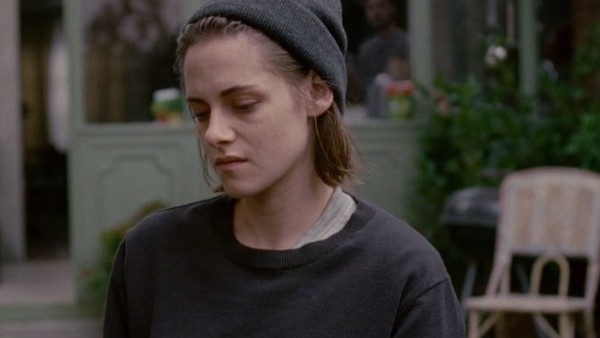
So, was the spirit really Lewis all along? This is another tough call, because one of the first apparitions we see in the movie is clearly female and therefore not Lewis, and even the male figure who drops the glass near the end could be anyone, because Maureen doesn't see him, the audience never sees a picture of Lewis, and nobody is listed as Lewis in the credits.
Accepting the idea that Maureen's suffering made her more in-touch with the spirit realm, it's entirely possible that a malevolent spirit felt her grief and decided to spend the movie messing with her, because that's what evil forces do.
After all, if you're a bitter spirit, what could be more fun than trolling a vulnerable human who isn't even sure if the afterlife exists?
2. Lewis May Be Hinting At Maureen's Impending Death
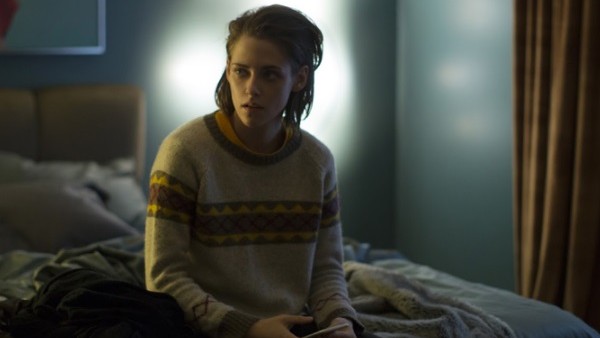
If the spirit is indeed Lewis, though, it's been suggested that he may be hinting at Maureen's own impending demise, and that it is her and Lewis' heart condition which made them able to see ghosts in the first place, as death lingers close to them at all times.
Early on, Maureen states that Lewis was very "full on" with his activities as a medium before his death, so the growing intensity of his work with spirits may well have foreshadowed his demise, and with Maureen now experiencing a great deal of paranormal phenomena herself, she may be next, ironically beckoned into the afterlife by her brother.
1. It's Ultimately All About Closure
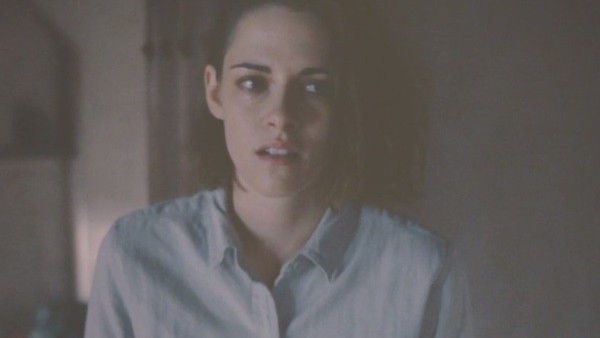
Whatever theory you end up subscribing to, Personal Shopper is not merely an indie ghost story about a woman wanting to prove the existence of ghosts and an afterlife.
She sees a ghost spew ectoplasm pretty early on, so there's not much doubt about those things. Rather, Maureen's journey is all about gaining closure on her brother's demise one way or another. She needs to let go of him, especially after clinging to Ingo's mysterious text messages for so long.
Maureen's final half-smile can mean an acceptance that she hasn't been receiving messages from her brother and the knocks were merely a coincidence, or that she appreciates his presence and is happy that he exists somewhere in some form.
In a film wholly concerned with the difficulties of maintaining faith and belief, the fact that Maureen clearly settles on a single idea by film's end is all that really matters, reflected in that relieved facial expression.
What's your own theory on the ending of Personal Shopper? Shout it out in the comments!