What Does The Ending Of The Martian Really Mean?

Here's the rub...
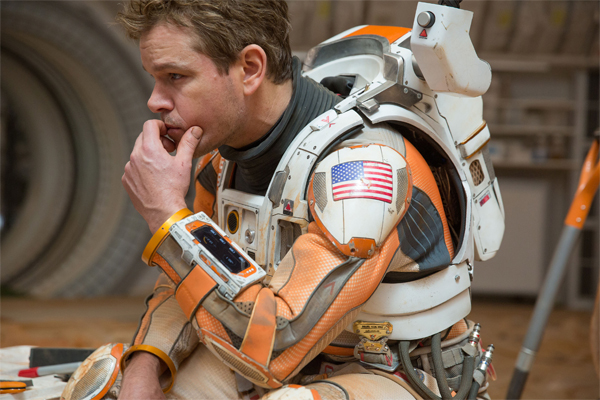
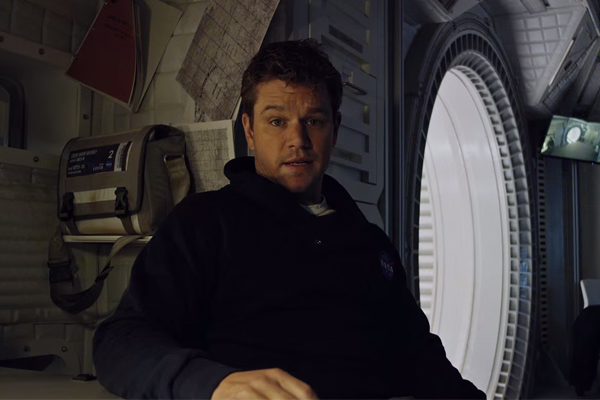
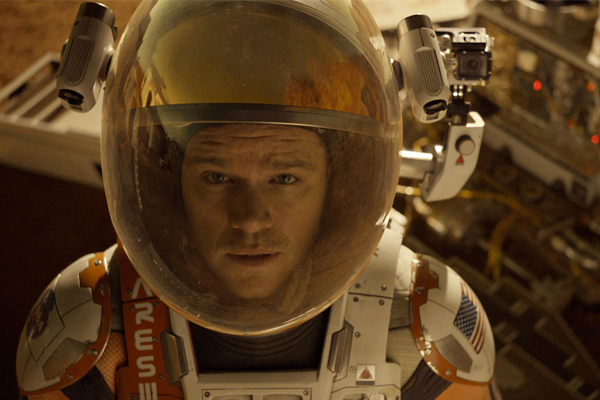
If you're looking for a exhilarating time at the cinema, you can't go wrong with The Martian. Ridey Scott's big screen adaptation of Andy Weir's unbelievably successful novel, the film is an expertly-told story, threading three interlinked narrative together to provide a smart, rewarding experience (and Scott's best film in well over a decade). But, of course, this is sci-fi, and you can't make a movie in the genre without having some high-flying ideas working away just underneath the visually resplendent imagery (and because this is a Ridley Scott film it really is beautiful). The Martian's key focus may be more on adventure, excitement and tension than some recent deep space flicks, but it's still brimming with themes and philosophical musings. Today I'm going to take a look at film's ending and try and crack just what Scott's trying to say. Spoilers, obviously. Why was there nothing but disco music on the soundtrack? What's the point of that epilogue? What happens to Mark after the end? And what does it all really mean? Well, let's find all that out and more. For more The Martian goodness (and an answer to the big question of when the movie's set), check out the companion easter egg guide.

What's The Story?

Before diving into readings of the film, let's first get up to speed on the plot. Astronaut Mark Watney is left stranded on Mars by his crew, presumed dead, when an evacuation of the Ares III mission during a dangerous dust storm goes wrong. The rest of the team begin the long journey home aboard their ship, the Hermes, and NASA announce Mark's death to world. However, Mark's actually alive, saved by a broken antenna. He sets about finding a way to survive on the inhospitable planet, including growing food, producing water and, biggest of all, finding a way home. From satellite imagery of the site, NASA realise their astronaut survived and begin trying to make contact with Mark. Over a year-long period various attempts are made by both the space agency and Mark to advance his return home, but the dangers of the hostile planet mean they all result in failure. As time begins to run out, it becomes clear there are only two options - send a supply package to Mark and hope he can survive until a new mission can reach him, or slingshot the Hermes around Earth on a risky rescue mission. The crew of the ship force NASA's hand and the whole world watches as they attempt to save their friend.

And What Actually Happens At The End?

Short answer: Mark gets home. The ending itself is actually presented rather naturally. The Ares IV shuttle, which was sent to Mars ahead of Mark's mission mission, is gutted and used to fire him into the upper atmosphere of Mars and intercept with the Hermes. Things don't go quite according to the math and the crew have to blow open the ship's airlock to adjust course while Mark punctures his spacesuit to make the final leap, but eventually the Martian gets back among the company of other humans. At the very end, Mark goes home and becomes a lecturer for new young astronauts and, in an extended scene over the credits, we see the future of the rest of the cast as the Ares V mission is launched. That's what happens, but what does it mean? And what about those niggling questions?

Why Does Mark Constantly Make Fun Of The Situation?

I already talked about this at length in my review of the film, but it's such a potent and unique part of The Martian, and so dominant right through to the end, that it needs further discussion. The Martian is a funny movie. Like, an unexpectedly funny movie. We open with banter between the Ares III crew, which is by-the-by in films about a close-knit group, but as things get more life-threatening it only becomes sharper and sharper, leading to some incredibly memorable scenes, both on Mars as Mark cracks wise about his impending doom and down on Earth where NASA deals with the most unique of situations. Obviously all the laughs make for a more engaging watch and allows for a more fully-rounded exploration of the characters, but what's the real purpose of this? Well, the reason for such prevalent humour is two-fold. The first is to keep Mark Watney sane. Being isolated from any form of human connection for such an extended period of time is crushing, and talking to himself is a great way to keep himself alert and his spirits up (imagine being home alone times 225.3 million km). He falls back on humour because, well, it's the only way to keep going. But that doesn't account for NASA. Yes, that joke about Project Elrond is clearly made funnier by having Sean Bean involved, but throughout those scenes characters, particularly Chitwel Ejiofor's Vincent Kapoor, are throwing out gags about this high-profile, life-or-death situation. It's done out of a sheer inability to fully comprehend the enormity of this massive problem, releasing tension and stopping the team back on Earth getting overwhelmed, just like Mark.

And Why Is The Music All Disco?

One of the most unexpected questions to come from The Martian is in regard to the soundtrack - in amongst the classical score you'd expect from an epic sci-fi, the film is punctuated by a bunch of seventies-era music (although I wouldn't call Starman disco). It's certainly fun, but why that genre? The simple purpose of this is to provide a bit humour and less-fantastical grounding to Watney's adventures (and allow for more banter between the crew), but the internal logic of it doesn't quite hold up. Assuming Commander Lewis, owner of said music, is the same age as Jessica Chastain and that the film is set in the same year as the book (2035), the character was born in 1997 (feel old?) and thus her being obsessed with ABBA is the same as Chastain in real life only listening to Elvis and Nat King Cole. It's by all means possible, but clearly there's another purpose to using these songs (aside from ABBA being great travelling music). The key is timing. All the music in the film comes from the original space race era (or just a little after), audibly taking the audience back to a time of wide-eyed, scientific advancement where exploration of the stars was a gleeful, publicly adored idea. It's a wistful reminder of an ethos gone by, but, as we'll later see, something the film promotes a return to.

Don't The Needs Of The Many Outweigh The Needs Of The Few?
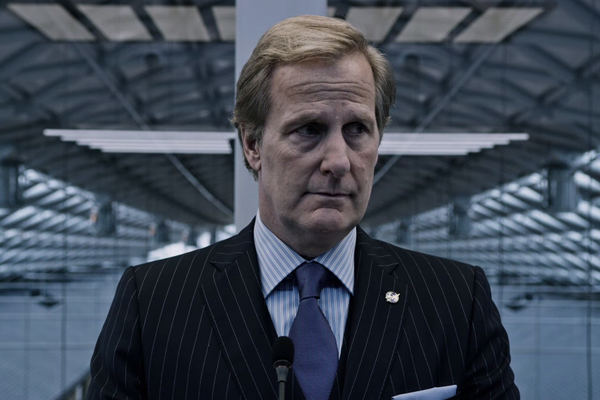
A central debate for NASA in The Martian once things go tits up (as they are wont to do in space) is, quite simply, whether or not to save Mark at all. The problem is this; as the only way to efficiently save him is by sending the Hermes back to Mars, you're adding five more people into the mix; definitely kill one man or risk the lives of six. It's Star Trek's "the needs of the many outweigh the needs of the few" on a highly personal level and NASA, a big organisation who by their very nature must think about events very plainly, chooses to go along with Spock. They only reverse that decision when the Hermes crew mutiny and reallign the ship's path, leaving the agency no choice. The key here though is that, ultimately, this gamble was the right thing to do - humanity rallies behind the Hermes as they go to rescue Mark and the public mood would assumedly have been positive towards the decision even if the mission had been a failure. When you humanise the person behind the statistic they go from being a single number to a fully fleshed-out human being; Mark may be only one man, but he is still a man. This shouldn't be too surprising. The "outweigh" line was, of course, first spoken by a being who was a half-human, coldly-logical tactician. So The Martian, in contrasting to this thinking with one man alone on an entire planet (who has, pun incoming, gone where no man has gone before), shows the power of human connection and the strength of the individual.

What Comes Of The Mutiny And Breaking The Rules?
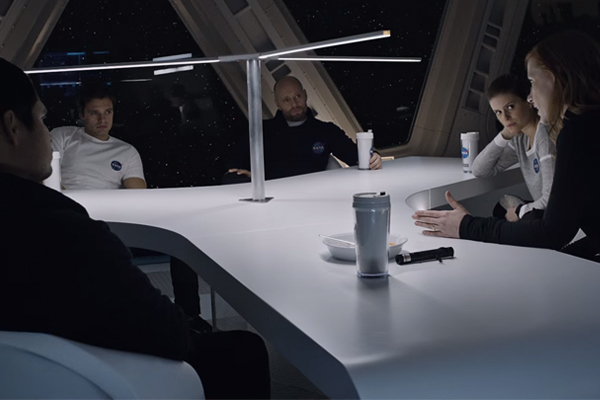
To override Spock's logic requires some serious rule breaking. Sean Bean's Mitch Hendersen has to release confidential files to the Hermes crew, who in turn must mutiny to execute the plan, two acts that it's made very clear will have serious repercussions; Hendersen must resign when it's all over (that is in three year's time, but whatever) and some of the crew stand ready to be court marshalled. And yet none of that comes to pass. Heck, Jeff Daniels' Teddy Sanders manages to get away with not doing any inspections on a crucial launch scott free (not a pun this time, I assure you). How are such strict rules broken without any punishments at all? The simple answer to how they got away with this is an extension of the "needs of the many" argument - the mission was pulled off; after that, to point the finger of guilt would be an admittance of NASA's own original misjudgement and ultimately do more harm than good. But, befitting of the film's factual backdrop, it also highlights a key part of scientific advancement. The Martian is showing that the ends can justify the means, while also raising the fear such recklessness can create. The debate over correct method - scientific, political or otherwise - runs through the film, from choosing to not inform the Hermes of Mark's survival through to the final decision to blow the airlock in the climax. And while a case leaning towards one side is made, the sheer danger of failure involved leaves the topic open for further discussion.

What's The Future Of Space Travel?

Over the end credits an epilogue plays that picks up with the characters several years after the events of the film as the Ares V mission prepares to launch. This immediately tells us a very important thing (which is one of the more subtle Apollo 13 parallels) - this disaster didn't stop the space program. In fact, it actually advanced it, turning exploration into an international effort. Earlier on in the film, the Chinese space agency wrestles with whether to reveal their secret jet propulsion system to NASA, knowing that it would allow them to save Mark Watney, but at the cost of their scientific advantage. They eventually offer their help (Starman FTW) because Mark's predicament is something bigger than one nation, similar to how the Moon Landings were far from just an American achievement. Far from a one-time deal, this leads to the Ares V mission being a joint effort, with an international crew and mission command. The conflict that has dominated galactic exploration since the Cold War is alluded to throughout The Martian, most pointedly (and, yes, humorously) in Mark's discussion of maritime law and how Mars is essentially international waters. The ending, however, suggests such archaic ideals should be put aside; in having the world's two biggest superpowers working together, we're seeing a future where Earth is functioning as one on the path to its future in the stars. Given the scientific accuracy throughout the film, this is clearly Scott pointing towards what he (and Weir) view as a realistic future.

What's The Actual Point Of The Epilogue?

Although the scene over the credits is ostensibly showing the future of space travel (and providing a roll call for all the film's key actors), it's actually doing something much more human; showing how every character moves on from the high-pressure rescue. Lewis lives at home with her husband (probably listening to ABBA). Johanssen and Beck are now an item and have (conveniently) had a child during the launch. Martinez is heading back into space. Montrose is the key spokesperson of NASA. Mindy Park has gone from rookie satellite operator to a key part of Mission Control. What the film aims to highlight, over the simple fact of the character's moving on, is that they've started entirely new, often opposite chapters in their life. Martinez struggled with the decision to mutiny for family reasons, yet is now jetting back off on another several-hundred-Sol mission. The relationship between Beth and Chris was downplayed, presumably out of a mutual desire to remain professional, but has now come to fruition. We don't know much about Lewis' past, but her military history suggests a very active life, making her settling down a major change. It's a small, but rather beautiful end-note. Just as the rules of space travel has changed, so too have the goals and meanings of the character's lives. The point is that while the whole Watney rescue had a profound impact on all involved, it was just part of their bigger picture. Nowhere is this better shown than with the one key character missing from the epilogue...

What Happens To Mark Afterwards?

After the heart-pounding rescue, we jump forward the entire journey home and join Mark sat drinking a coffee (is there anything more emblematic of being on modern Earth?). As you'd expect, the whole "man alone on an entirely different planet saved by insurmountable odds" thing has made him a celebrity, with NASA cadets slowing their training jog to meet him. The film does make a point of him starting a new life, just like the rest of the crew; what's labelled as Day 1 isn't actually his first day back on Earth, but his first day on his new "mission" - in this case lecturing. What makes him a bit different is that he's got to live forever being a Neil Armstrong-level hero/celebrity. As he opens his lecture acknowledging, he will always be known as "The Martian", but by starting with "any questions", he's making clear an intent to move beyond that. Even the man at the centre of this epic story views it as only a part of his life. The Neil Armstrong comparison couldn't be more apt. As for why Mark isn't in the epilogue? Well, we know what he's doing, so it's not exactly like he needed to appear, but his absence is in its own way showing his new life, and highlights the bigger world that was always operating around him...

But What Does It All Really Mean?

Humanity's Perseverance
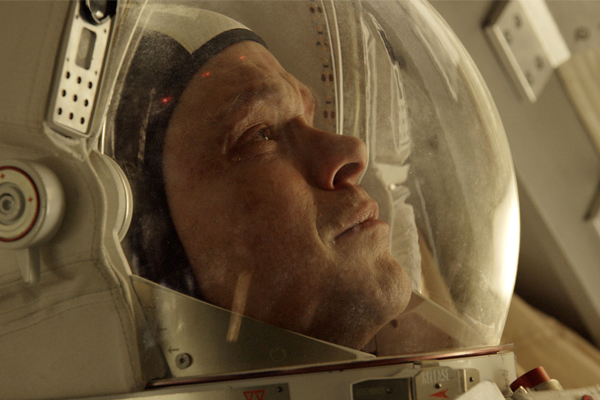
As we've seen, there's a lot of astute understanding of human behaviour running through The Martian, but what does it all really mean? Well, suitable for a film that mixes epic scope and human drama, it ultimately comes down to two key parts of being human; one personal, one much bigger. The first is the power of human perseverance; that drive to survive in the face of insurmountable odds. This is a key throughline to the film, with Mark constantly adapting to any and all of the pitfalls that come his way, while those helping him rally together and persevere in the face of all external pressures. It's a simple, wholesome message and not all that hidden, but lends the tense story an underlying sense of purpose. What's very clear is that all of this isn't born of a personal, self-serving desire. The Ares crew work against such insular desires to make the sacrifice (of either two years or of their lives) to go and save Mark, and the Martian himself is acceptant of his likely fate while trying to survive, which brings us to the broader message.

We're Part Of Something Bigger

In one of the film's most touching scenes, Mark asks Commander Lewis to deliver a message to his parents where he states he will die knowing he did so in service of something greater. They're obviously the words of a scared man whose jubilance is waning, but are also the most oblique presentation of The Martian's conclusive theme. The film may deal with the future of space exploration, the weight of a life and human perseverance, but it's ultimately about something bigger. Literally - it's a movie about understanding where we all fit in the grand scheme of things, and how our lives matter within that. There's no attempts to verbalise what that scheme is - such ideas defy comprehension - but the important thing is accepting the base idea. Like NASA teaming up with CNSA, or Martinez's family accepting him jetting off into space, or the crew getting away with mutiny, or Mindy acting as a metaphor for the rise of a younger generation, or Mark being absent from the final scene, everything in The Martian comes down to expanding humanity's place in space. That grasping of the wider picture alongside the personal story presents a microcosm of galactic self-awareness; understanding that for all our strifes we are just a small part of the wider universe. This is a theme we've seen a lot in sci-fi (most recently in last year's Interstellar), but what makes The Martian's exploration so potent is that through all of this it never loses focus the individuals. Personal and expansive; down-to-Earth and intergalactic; it's a film about the individuals who make the whole. What do you think the ending of The Martian means? Share your thoughts down in the comments.

Contributor
Contributor

Film Editor (2014-2016). Loves The Usual Suspects. Hates Transformers 2. Everything else lies somewhere in the middle. Once met the Chuckle Brothers.