X-Men: 10 Biggest Missed Opportunities

One gene short of a mutation.

In July 2000, Bryan Singer's X-Men changed the fate of comic book movies forever and in the fifteen years since its release the franchise has become one of the most solidly bankable series' in Hollywood. This past summer's instalment, Days Of Future Past, was the biggest X-hit thus far, notching up $748 million worldwide and generating almost universally positive reviews. However, even though the franchise has always made good money and the X-Men are firmly entrenched in the public consciousness, the critical and fan reaction to the films hasn't always been so favourable. For every well-received entry like X2 or First Class, there have been a few sub-par movies like The Last Stand and Origins: Wolverine. There has always also been some sort of disconnect between the studio heads at Fox and the creative talent working on the films, with numerous reports of backstage strife and rushed schedules explaining the weaker entries. This has meant that while it has enjoyed a great deal of successes over the years, the franchise has missed quite a few golden opportunities too. Whether it be beloved characters not being given due care and respect, or iconic storylines in the comic books being adapted poorly, Fox has made their fair share of errors. These are the ten most notable times they dropped the ball...

10. Quicksilver Needed More Screentime In Days Of Future Past
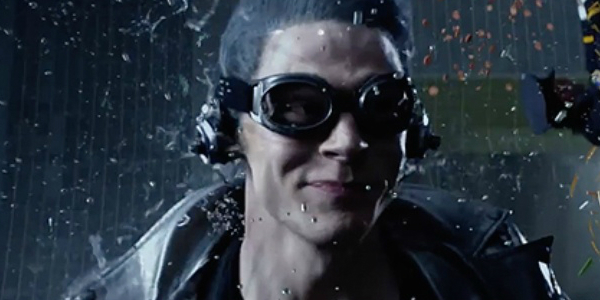
One of the most highly praised elements of Days Of Future Past was Evan Peters as Quicksilver, with his quick wit and visually stunning powers bringing a breezy sense of fun to the mid-portion of an otherwise fairly earnest film. The heist scene in which Wolverine, Xavier and Quicksilver break Magneto out of his prison beneath the Pentagon is arguably the high-point of the film; a wonderful combination of humour, action and state of the art special effects work. But after this scene, Quicksilver departs the movie almost completely, and his absence is felt. Aside from a purely story-based standpoint (he would be extremely useful in the battle with the Sentinels), he was such an entertaining addition that the audience feels his absence. Perhaps this will be rectified in X-Men: Apocalypse in 2016 and the character, who is known to comic book fans as Magneto's son, will get more face time. The movie cleverly hinted at this familial bond in the Pentagon scene in an off-hand manner, but it would certainly be an intriguing way to take the story and would give Peters and Michael Fassbender some dynamic scenes to sink their teeth into.

9. The Third Act Of The Wolverine Nearly Derailed The Whole Film
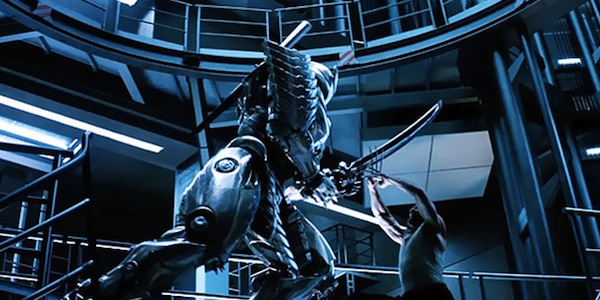
The Wolverine is an intriguing curiosity in the X-Men franchise: an attempt at a smaller scale, more intimate character piece that truly aims to tell a compelling and emotional story with the tortured Logan. For the most part the film succeeds, with Hugh Jackman (who had lobbied to do the 'Wolverine in Japan' plot for the first solo film) delivering his best work in the series. The film has a very distinct feel, with the Japanese setting and cast making it less of a superhero blockbuster and more of a ninja/crime movie. For the upcoming third Wolverine film, Fox and returning director James Mangold (Walk The Line) should trust their instincts with the smaller story they are telling and avoid the temptation to add some flashy pyrotechnics in the third act like they did in The Wolverine when Logan faces down a ridiculously oversized Silver Samurai robot. This finale is so incongruous to the rest of the film that it definitely leaves a bad taste in the audience's mouth. Up until this point, it had been believable (or, as believable as a comic book movie can be) and this onslaught of poorly rendered CGI and bizarre storytelling choices stretched that credibility to breaking point. Hopefully Fox will have recognised their error and will keep things more consistent for the sequel.

8. Rogue Never Gained Her Superpowers
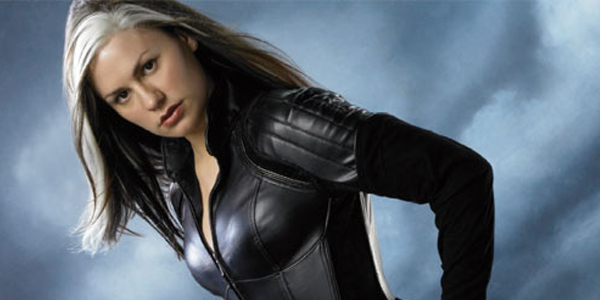
Before Anna Paquin became a TV icon as the preposterously named Sookie Stackhouse in FX's True Blood, she portrayed one of the most beloved X-Men, Rogue, in the first three films. As one of the leads of the first film, she stands as a highly recognisable element of the series to casual fans, even if her role in the second and third movies was diminished. Rogue's powers, the ability to absorb the life force and mutant powers of anyone she touches with her bare skin, were perfectly suited to the first X-Men film. It nicely showed that not every mutant power gave you super agility or telekinesis; sometimes the power was more of a curse than a blessing. She was an audience identification character for every awkward teen that didn't know their place in the world and was scared of being intimate with another person. However, in the comics things are even more interesting; Rogue has super-strength and can fly, having absorbed Ms Marvel's powers permanently early in her career as a member of the Brotherhood of Evil Mutants (yes, she started as a villain). Clearly, these abilities make her a valuable member of the team; abilities that Rogue certainly could have used in further X-films. Instead, she was relegated to a bit part and really served no discernible purpose in any of the later adventures. She is mostly used as a love interest for Iceman and then as part of a triangle along with Kitty Pryde. This is a huge missed opportunity for such a strong, important character in the comics.

7. The Juggernaut, Bitch

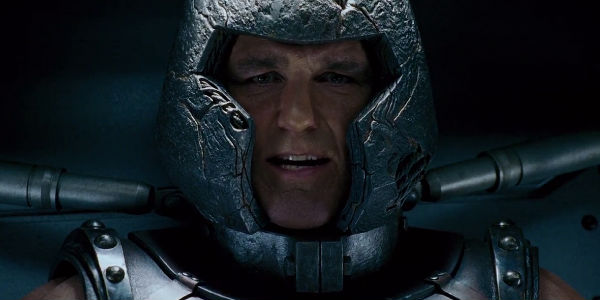
Perhaps, in some zany alternate universe, there is a version of X-Men: The Last Stand that was directed by Matthew Vaughn (Kick-Ass), featured Vinnie Jones as Juggernaut and was a top notch film... or perhaps not. Cain Marko is one of the X-Men's most enduring villains, but you wouldn't guess it from this atrocious interpretation. Vaughn's history with the X-franchise is a checkered one. After departing The Last Stand a mere two weeks before filming commenced, he returned in 2011 to helm the excellent First Class. He was then attached to continue on and direct Days Of Future Past, but dropped out once more in favour of Kingsman: The Secret Service, leaving Bryan Singer free to take the reins back. His decision to abandon The Last Stand so late in the day obviously meant that replacement director Brett Ratner was behind the eight ball right from the get-go, so to speak. He clearly had no real idea what direction Vaughn had intended to go with Jones as Juggernaut, and the final version is simply dreadful. His costume, if it could even be called that, looks silly and his characterisation is no better. Most people remember the "I'm the Juggernaut, bitch!" line, which is probably best forgotten.

6. The Films Are Chock Full Of Continuity Errors
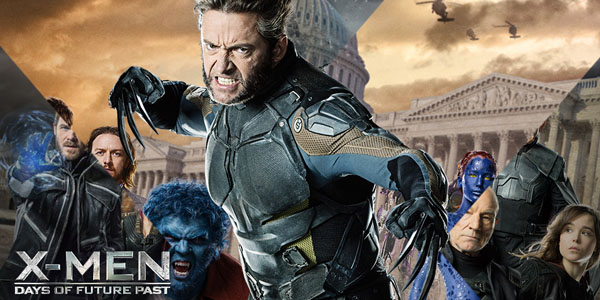
X-Men: Days Of Future Past functioned, in part, as an attempt to clear up, fix or otherwise get rid of the pesky continuity errors that have popped up throughout the franchise's history. The only problem was that, while it did reset the timeline of the series, resurrecting Cyclops and leaving the 'original' X-team in one piece to fight another day in a potential future movie, it also created a few more continuity gaffs along the way. For example, William Stryker (the military man responsible for lacing Wolverine's skeleton with adamantium) appears in the film as a man who looks to be in his mid-30's in the 1970's. This makes sense when you consider that Stryker, as played by the wonderful Brian Cox in X2, is in at least his 60's in the 2000's, right? Well, yes, but what does that mean for the Danny Huston version of Stryker that appeared in X-Men Origins: Wolverine, also set in the 70's, who looked at least a decade older than the DOFP version? There are many other errors throughout the series, like how Emma Frost appears in X-Men: First Class (set in the 1960's) in her 30's, but also appears in Wolverine (set in the 70's) as a teenage girl. This poor handle on continuity could be examined further, but there's just not enough space in this article. Fox clearly never had an overarching plan for the X-Men series and that led to them throwing out characters and situations in one movie that directly contradicted the next. Oh dear.

5. Nightcrawler Was Only In X2

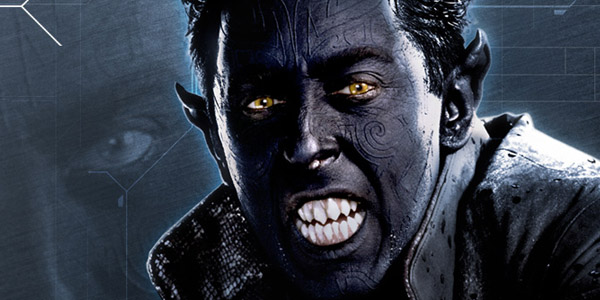
X2: X-Men United is still arguably the best film in the series. Bryan Singer had delivered a solid first movie that established a brilliant tone, but for the follow up he improved upon that film in every way. X2 is a thrilling ride, an emotional and exciting story punctuated with superb action, a brilliant villain and great performances. It is also the only movie to feature Kurt Wagner aka Nightcrawler, a perennially popular X-Man. Scottish actor Alan Cumming's performance as Kurt is easily one of the best interpretations of a comic character on film. From his perfectly pitched German accent, to his heart and gentle nature, all contrasting with his demonic appearance (achieved through a laborious-but-superb make-up and prosthetic process), Nightcrawler is a dynamic character to watch on-screen, with his opening attack on the White House still being one of the greatest action set-pieces of the 2000's. Unfortunately, whether it was because of rumoured conflicts with Bryan Singer or Cumming's hatred of the lengthy make-up process, Nightcrawler didn't return for any future movies. Kelsey Grammar's Beast took up the role of 'animalistic blue-skinned mutant' for The Last Stand, and while he was one of the few bright spots of that movie, he was no Kurt Wagner. Shame.

4. Cyclops Was Mishandled Across The Franchise
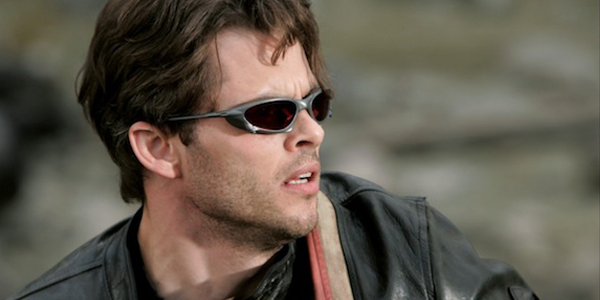
For many die-hard fans, no character was given shorter shrift across the X-Men films as badly as Scott Summers aka Cyclops. Played by the likeable and talented James Marsden, he had a decent-sized role in the first film, but unfortunately didn't register much beyond the persona of the stoic Boy Scout who was at Professor Xavier's beck and call. Some of his banter with Wolverine held promise for the future, though, so maybe there were a few more shades of Cyclops that audiences would be treated to? Sadly, his role in X2 was, suffice to say, limited. Again cast as the boringly safe boyfriend to Jean Grey, he seemingly spent the whole film being beaten up and pining after Jean. The film played up to the idea of Wolverine as the sexy loner who Jean really desired, which is not how the relationship should play out. Alas, even worse was yet to come when Cyclops was killed (off-screen) in The Last Stand, a mere 30 minutes or so into the movie. This shoddy and borderline insulting treatment of a comic book mainstay was a huge missed opportunity. All Fox had to do was look to the comics for inspiration, as Cyclops has undergone a huge evolution and drastic character shifts since Grant Morrison took over New X-Men in 2003. In fact, Cyclops is now considered more militant and dangerous than Wolverine, a role reversal that would play out interestingly on-screen if Fox wanted to bring Marsden back for a future movie.

3. The Last Stand Botched The Mutant Cure Story

X-Men: The Last Stand has already been mentioned several times in the course of this article and it's no surprise. Spoiler alert: it's not very good. One of the myriad of issues with the film is the handling of the 'mutant cure' storyline. The script takes it's cues very loosely from the acclaimed Gifted arc, published in Astonishing X-Men in 2004 and written by future Avengers director Joss Whedon. The comic features a cure, designed by Dr. Kavita Rao, that was created using illegal human experimentation. It is revealed that Rao is sponsored by an alien warlord named Ord, so it's understandable that the filmmakers adapted the story somewhat for film, but they ended up only paying lip service to the potentially fascinating ethical and moral debate that a 'cure' brings up. There is a scene in which young Warren Worthington III, who will become known as Angel due to the wings that sprout from his back, is found by his father while trying to cut them off. This is tragic and interesting; it plays into the idea that a lot of mutants would want to be 'normal' as they feel their powers make them freaks. Sadly the film chooses to focus more on large-scale action and crams far too many mutants into the story. The mutant cure should have had a whole film devoted to it, but instead the makers decided to include another celebrated X-epic as well...

2. The Last Stand Also Botched The Dark Phoenix Saga

As well as the mutant cure story, The Last Stand made an equally bungled attempt to give audience's a version of The Dark Phoenix Saga, probably the single most iconic X-Men story in history. Would it be surprising to anyone that the film's iteration bears little resemblance to the comic? Nope? Thought not. To be fair to the filmmakers, making a slavishly faithful version of The Phoenix Saga would have been at the very least monumentally difficult, if not nigh on impossible. Chris Claremont, Dave Cockrum and John Byrne's story is a full-on intergalactic epic, featuring The Hellfire Club plus alien races named the Shi'ar, the Kree and the Skrulls. Ideally the filmmakers would have crafted a tale that respected the Saga in spirit and scale, but that could only have been accomplished by devoting an entire film (possibly two) to it. Disappointingly, Jean Grey's resurrection by the mysterious Phoenix Force and subsequent descent into evil is relegated to a B or C level story in the film. Why would audience's pay too much attention to it whenever they've got the mutant cure to follow and a metric tonne of new mutants with 'cool' powers to get excited over? By the time the story concludes with Wolverine being forced to kill Jean, it's just another moment in a barrage of special effects and has little emotional impact. Oh well.

1. All Of X-Men Origins: Wolverine

X-Men Origins: Wolverine is a mess of a film. From it's sub-par script to it's poor quality CGI, this one was a disaster from start to finish and is undoubtedly the biggest missed opportunity in the X-Men franchise. Released in 2009 in the wake of a vociferous fan backlash to 2006's The Last Stand, Fox would have been wise to scale back, tighten the focus and deliver a strong and meaningful Wolverine origin story. Instead, fans were given an incoherent vision that created a host of problems with the franchise's continuity while in an effort to (again) throw as many mutants at the screen as possible. Liev Schreiber did his best with his undercooked role as Victor Creed aka Sabretooth (who bore no resemblance at all to the same character played by Tyler Mane in the first X-Men), but he was hamstrung with a diabolical script and a truly lame visual interpretation. Gambit, another massively popular X-Man is in the film, although he might as well not be, as he brings nothing to the table. But perhaps the worst treatment was reserved for Deadpool, one of Marvel's most enduringly popular characters. Fans had wanted Ryan Reynolds to be cast for years and were overjoyed when he was. The Merc With A Mouth seemed to perfectly suit Reynolds' on-screen persona. He could portray the sarcastic wit and deadly killing skills with a devilish verve, but what did Fox do? They gave him one scene at the beginning, then brought him back at the end with his mouth sealed shut. Um, what? Why? The upcoming Deadpool reboot and Channing Tatum iteration of Gambit have a lot of work cut out for them to regain the goodwill of fans, that's for sure. What say you? Are there any other missed opportunities in the X-Men films that warrant mention? Sound off in the comments below.

Contributor
Contributor

Comics. Movies. TV. Wrestling. Video Games. Husband. Father. Geek.