X-Men: Days Of Future Past - 25 Easter Eggs & References You Must See

15. JFK's Bendy Bullet

It is revealed at the start of the past timeline sequences that Magneto is indisposed having been arrested and imprisoned in a concrete only prison under the pentagon for life. His crime - as revealed in the viral marketing campaign ahead of the film's release - was assassinating JFK, which was apparently proven by the Magic Bullet theory that instantly implicated him. It turns out that Magneto was actually attempting to save JFK, who was assassinated for being a mutant (as Magneto says "he was one of us") and the bullet's strange trajectory was evidence of his attempt, which was foiled by his captors. Initially it was believed that it would be Mystique pulling the trigger as Lee Harvey Oswald, but it is revealed that until 1972 she hasn't killed a single person.

14. Quicksilver's Basement

When Professor X, Hank and Wolverine visit Peter Maximoff - better known as Quicksilver - they are welcomed into his basement, which is a treasure trove of contemporary pop culture references, from Pringles cans (with the wrong label) to a Pong machine. Clearly referencing Quicksilver's moral ambiguity and his tendency to swap sides, there's also a hint at his criminal leanings to supplement his obvious anti-hero alignment, since his basement is full of clearly stolen goods. And among the trinkets and paraphernalia, there's also a famous National Lampoon cover showing President Nixon as Pinocchio, depicting not only the contextual political climate and Nixon's public persona, but also somewhat fore-shadowing how close he comes to making another catastrophic mistake in green-lighting Bolivar Trask's Sentinel programme.

13. Quicksilver's Daddy Issues

Though the presence of Quicksilver in the Avengers movie universe complicates matters for who the real character is and whether he's a mutant or otherwise, it's very obvious that Singer's X-Men world is sticking to the more traditional origin, albeit slightly changed. And that includes his parentage - and presumably that of his sister Wanda, who actually appears in the film, and is recognisable for her red hair, though not named - as is confirmed with a simple quip when Magneto shows off his powers after Quicksilver helps him escape his prison, along the lines of:
"You can control metal? My mom knew someone who could do that"

12. Azazel, Angel, Emma Frost, Banshee All KIA

Though Azazel, Angel and Emma Frost were due to return to the sequel when it was designed as a straight follow-up to First Class with Matthew Vaughn still in charge, all three, along with Banshee are missing from the final cast. We get confirmation that Emma Frost and Banshee have been killed when Magneto explodes at Professor X for not fulfilling his duties to mutantkind, while there are actually pictorial references to Azazel and Angel's deaths when Mystique breaks into Trask's lab and finds their autopsy photos following the scientist's experimentation on them. Azazel and Angel's deaths were confirmed by the BentBullet viral site ahead of the film's release, as the result of Project WideAwake, the government campaign set up after the Cuban Missile Crisis to investigate mutants...

11. Liberty Leading The People

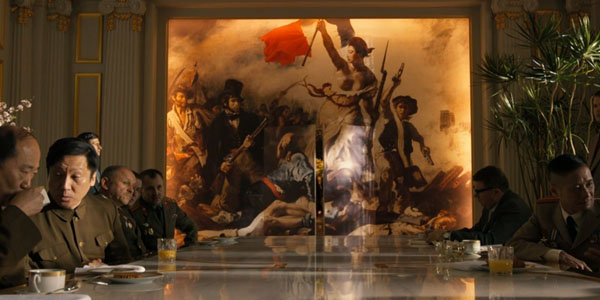
When Mystique infiltrates Trask's meeting with the leaders of the Vietnamese army to sell the Sentinel Programme, the meeting takes place in an opulent board room with a mural on the far wall that forms the backdrop to Trask's entrance. The chosen picture is the iconic French Revolution painting "Liberty Leading The People" by Eugène Delacroix, which was created to commemorate the successful July Revolution of 1830 French Revolution, and which remains an enduring symbol of revolution. The symbolism of the picture is particularly pertinent in that it portrays Liberty as a rebellious woman of the people - almost goddess-like. It's clear we're supposed to draw the parallel between Liberty and Mystique, the other bare-footed symbol of singular rebellion, standing metaphorically on a pile of corpses to topple her people's oppressors.

10. The Creator Cameos

Claremont Typically, the film includes two creator cameos: the first is for Len Wein, the creator of Wolverine, who appears as a member of the Vietnamese government committee that Trask attempts to sell the Sentinel programme to. There's also an appearance for Chris Claremont, the writer of Days Of Future Past, who also had a cameo in X-Men: The Last Stand. Claremont's cameo is not surprising given that he has now been responsible for four comic book stories that the films were based on - X2 was based on his 'God Loves, Man Kills', The Last Stand on 'The Dark Phoenix Saga' and The Wolverine on his comic of the same title. There's no cameo for artist and co-writer of Days Of Future Past John Byrne though, as he turned down the opportunity as he hated what the movies have done with the X-Men, by his own admission. And finally, there's also a cameo for cinematographer Newton Thomas Sigel, who has worked on all of Singer's X-Men movies, who appears as a disguise Mystique takes on to escape Magneto.

9. The Lost Artefacts

After Magneto reveals his own plot to deal with the trigger for future events he breaks into a secret government unit to retrieve his helmet, and stop Professor X from being able to affect him. After taking out the three guards using a pair of large metal balls in typically cool fashion, he enters the chamber where his helmet is locked behind glass on display. When the camera pans wide on the scene it is revealed that the cases next to Magneto's helmet, which was presumably taken off him when he was imprisoned, house Havoc's damaged suit from First Class, and one of Angel's wings. The wing could have been recovered from the beach battle at the end of First Class, but Havoc's suit is more difficult to explain, since he's not dead, but it's obviously just a nod to the events of that movie.

8. Star Trek "We're Going Backwards In Time"

In a sequence in which we are given a look inside Hank McCoy's lab, he has a TV on, which features the unmistakable face of William Shatner, in character as James Kirk, delivering the line "we're going backwards in time." It's not just a fitting quote taken at random from Star Trek - of which Bryan Singer is a known mega-fan - as it's taken from The Naked Time, a fan favourite episode of the Original Series, which focuses on a mysterious affliction that causes irrational behaviour, and ultimately almost causes the destruction of the Enterprise. To save his crew, Kirk orders a manoeuvre that leads to the ship being sent back three days, and effectively retconning the silly behaviour of beloved characters. Or in other words, exactly what Singer is doing with Days Of Future Past.

7. The Oppenheimer Quote

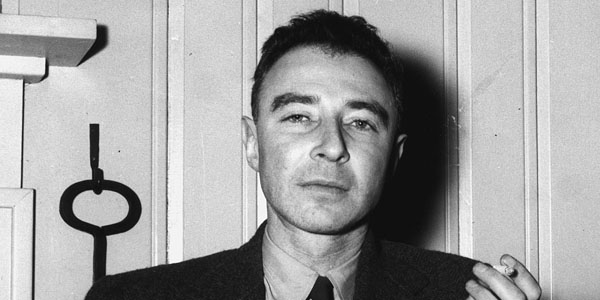
Following on from his sort-of cameo in Godzilla, J. Robert Oppenheimer gets his second Easter Egg appearance of 2014 in X-Men: Days Of Future Past for the same reason. The film is presented as a cautionary tale against the dangers of scientific over-reaching, and the cost to humanity, and Trask's Sentinel programme is very much presented as a parallel of the nuclear weapons programme. It is the product of morbid curiosity and a misplaced quest for peace that backfired spectacularly just as the nuclear programme did and it is perversely fitting that the scientist uses a quote from Oppenheimer at the unveiling ceremony of the Sentinels.

6. Daken

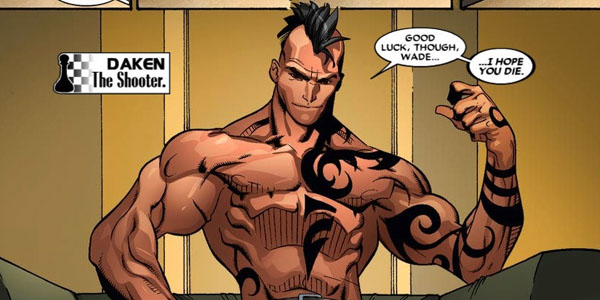
Following on from Quicksilver's hinted throw-away revelation that Magneto could well be his father, there's another thickly-veiled allusion to another X-Men progeny in the film. In the sequence in which Beast asks Wolverine if he's a parent, he sneers and replies "Sure as hell hope not", which on the surface seems like a reference to his promiscuity (he's had more girlfriends than James Bond in the comics) but it's the distaste and the phrasing that should prick up Wolverine fans' ears, since he has had two children, both of whom have tried to kill him in the comics. There's also a cameo appearance for Bryan Cox when Wolverine comes into contact with young William Stryker and suffers flashbacks to his Weapon X treatment, which all but removes Danny Huston's presence from the Wolverine timeline completely, since it was he who oversaw the experimentation in X-Men Origins: Wolverine.

Contributor
Contributor

WhatCulture's former COO, veteran writer and editor.