10 Shockingly Easy Final Bosses In Iconic Video Games
... that was IT?!
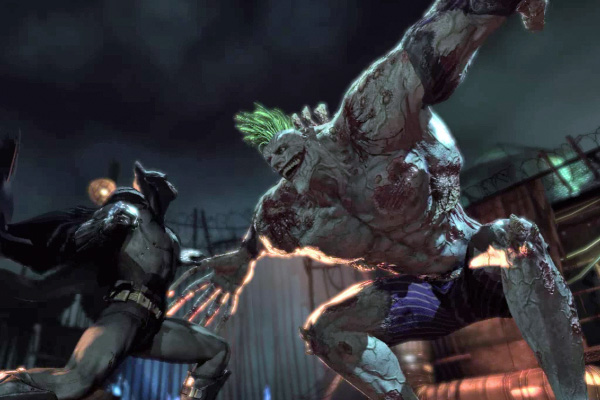
A final boss always has a big effect on your feelings about a game once you've finished it.
Despite the fact it usually takes a relatively short amount of time to complete, this ultimate encounter is one of the most precious parts of the game; an intense amalgamation of everything you've experienced up to that point, but with more explosions, more emotions, more challenge and more frustration.
Unless you're an obsessive completionist, then the fact that you even made it to that final showdown means you're invested in seeing it through to the end. As such, finally landing that finishing blow should trigger the most positive of feelings, alongside a certain sadness that your adventure has come to an end.
But, if a final boss fails to live up to the challenge that you expect from it - if it doesn't do justice to all the time, skill and dedication required for you to reach that point - then it's always a case of any previous goodwill being replaced by a blank look and a bemused "Is that it?" response.
While this rarely ruins an otherwise great game, it can definitely taint it. There have been plenty of brilliant games over the years that failed to end on a high note due to bosses that just weren't worthy of their assumedly prestigious status, so let us know which you thought almost tanked their respective games in the comments below.
10. Nashandra - Dark Souls 2
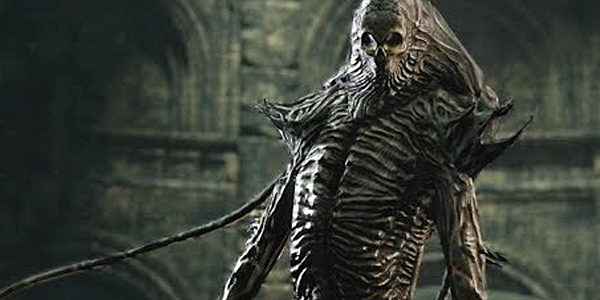
When most players reach Nashandra, the encounter will be made more challenging by the fact that they'll have just come out of a gruelling battle with the Throne Watcher and Throne Defender. This is the first of many problems with Nashandra - she has to rely on her lackies to soften you up. When you finally fight the Grim Reaper's wife, you can see why she needed some backup.
Nashandra is slow and predictable, swinging her scythe like a sclerotic farmer, and firing an easily-avoidable laser beam. In a move that you'd expect from a game's first boss rather than its last one, the hapless old wench also tends to get her scythe stuck in the ground.
As you look at her - all decrepit, bony and struggling to wrench her scythe out of the ground - you almost feel like you should help her like you would any old lady carrying her groceries. The insufficiency of the Nashandra fight was not lost on From Software, who in an unprecedented move, patched the game and - along with many other changes - thankfully added in another boss fight after just to keep gamers on their toes.
9. Eredin - The Witcher 3: Wild Hunt

The Witcher 3 is no cakewalk. Particularly in the early stages of the game, there are plenty of encounters during which you'll have to swallow your pride in and run away, making the Continent feel like a hostile and dangerous place. The bosses too are reasonably challenging encounters, requiring you to sit down beforehand and concoct some potions before you leap into the fray.
The final fight in Witcher 3 sees you take on Eredin, the King of the Wild Hunt. This guy's title is basically in the name of the game, so you'd expect him to put up one hell of a fight to justify his prestigious status. The fight looks spectacular, taking place across several different areas with fires, storms, and intense operatic music heightening the sense of everything converging to one momentous showdown for the ages. The fight itself, however, just doesn't cut it. Sure, he takes a while to go down and has a neat teleporting trick that may throw you off at first, but it's always a bit of an embarrassment when the preceding boss presents a tougher challenge. Eredin can be beaten using a pretty simple pattern, and while he's not a total cakewalk, it's fair to say the encounter stands out as being particularly unchallenging.
Dark Souls proves that unpredictable difficulty tangents in a game can make boss fights more intriguing, but The Witcher 3 seems to get easier as you level up. By the end of the game, it feels like you've far outraced the game's difficulty, leaving poor Eredin pretty helpless by comparison.
8. Frank Fontaine - BioShock

Bioshock is best known for its thoughtful story and stunning design, with Rapture being a location that every gamer should visit before they die. But it's also a solid challenge, forcing you to use an array of powers, traps, and hacking to survive encounters with splicers and Big Daddies. In the final fight with Fontaine, you simply need to employ the 'Matador' strategy, side-stepping whenever he throws fire, lightning or himself at you.
Before long, you realise that you don't even need to do anything as dexterous as side-stepping, and that running around in a constant circle will suffice to avoid his attacks. At one point, Fontaine even calls on the support of some splicers to try and make things tougher, but this feels like a cheap way to bolster the difficulty in an uninspired boss fight. With so much creativity oozing through the rest of the game, you do wonder how the conclusion came to be so generic.
A possible explanation is that the last part of the game was allegedly rushed due to it running over-budget. With this in mind, and the game's short but sweet ending, we're prepared to forgive this one-dimensional finale against an over-'roided Dr. Manhattan.
7. Mother Brain - Super Metroid

The recurrent boss of the Metroid series comes in many guises, but none are more deceptive than the Brainosaurus Rex (not the official name) that you fight at the end of Super Metroid. Even though she could easily stomp Samus into the ground, Mother Brain can't even be bothered to take more than one step in from the left of the screen, turning her formidable size into a liability as you're free to embed multiple rockets into her brain from a safe distance.
Some way into the battle, it looks like stuff gets serious though, as Samus gets caught in an unavoidable rainbow death beam that leaves her paralysed. On the verge of death, you're bracing yourself for a tough second stage to the fight, when suddenly Metroid itself comes out of nowhere to suck all the life force out of Mother Brain and back into you.
Revived and endowed with a Hyper Beam, you proceed to obliterate the already crippled boss. Satisfying? Sure, but unbelievably simple all the same.
6. Bowser - Super Mario Galaxy 2
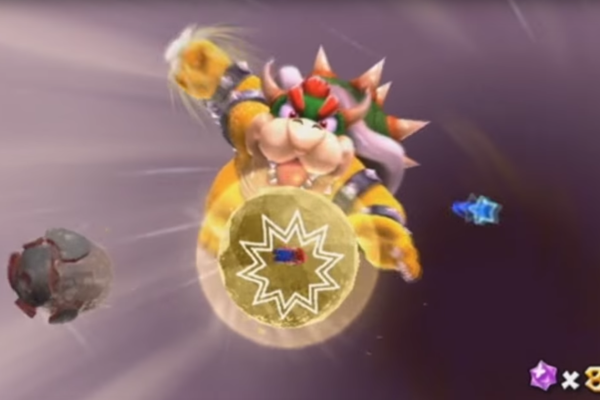
This is one of those bosses where you wish that the game had ended just a little bit sooner. The first part of the final battle in Mario Galaxy 2 is tense, explosive and exciting, as Mario is stuck on a small asteroid while a giant cosmic Bowser floats around the rock attempting to burn, crush and blow Mario up.
After several minutes of high-octane fun, you defeat the King of Koopas, only to find that he's not done yet. Double-tiered final boss fight? We're down with that. It starts off promisingly, with Bowser flying through space at warp-speed and Mario hot in his tail, accompanied by a majestic orchestral score. It's all a bit 'Starfox', which would be fine except it's so long since Nintendo made a good Starfox game that they've seemingly forgotten that what made those games fun were the barrel-rolls, eclectic firing modes, and last-second evasions of space rocks.
This boss fight has none of that. It's just Mario zooming through space, receiving a succession of giant boulders to hurl at poor Bowser, who spends most of the embarrassingly encounter floating around as uselessly as a sack of space turds (which I wouldn't have mentioned, if they didn't actually exist).
5. The Black Hand - Middle-Earth: Shadow of Mordor
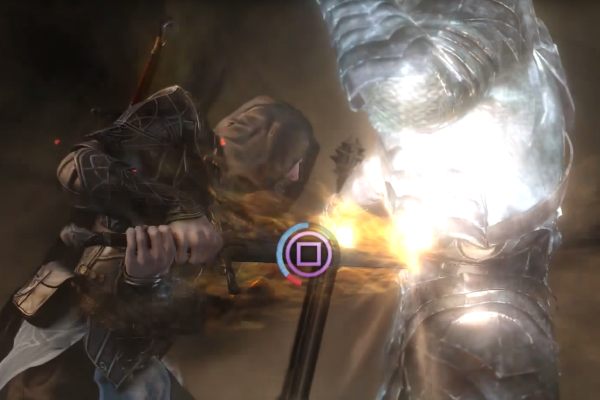
Most people don't play Shadow of Mordor for its gruelling difficulty or gripping storyline (mainly because its difficulty isn't gruelling nor its storyling gripping).
No, the greatest fun here is found in stringing together long balletic combos while fighting 20 orcs at once, then pausing to go into that awesome free-camera mode to capture you decapitating, impaling and otherwise butchering your foes. In short, Mordor works best as an all-out, sword-swinging power fantasy in which you face purportedly insurmountable odds.
The game's mechanics just aren't cut out for one-on-one duels, and at no point is this more glaringly obvious than the 30-second quick-time event that constitutes the final boss fight against the Black Hand. No one really cares for the Black Hand as a villain, the game tries to spice things up by suddenly turning him into the Dark Lord Sauron in time for your QTE showdown.
This, of course, fails, because you'd much rather be testing out that chained teleportation-assassination move or executing two orcs at once, than following a few on-screen commands like a lab monkey. Given how quickly the battle is over, you get the impression that Sauron didn't really want to be there either - embarrassed that his star image had been reduced to a QTE, and just wanting to get the hell out of there.
4. Storming The Enclave - Fallout 3
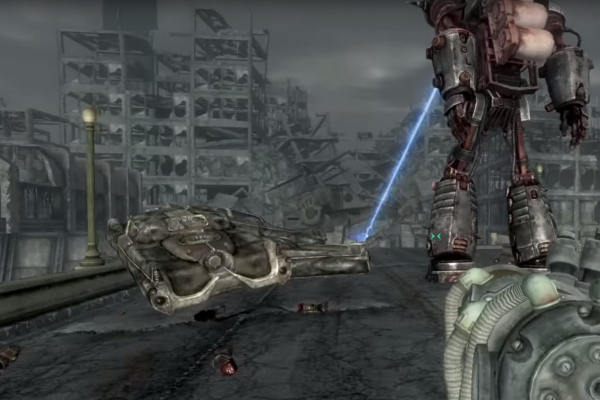
We can save the discussion of whether a final grand encounter with tons of enemies technically counts as a boss fight. The fact is that storming the Enclave base is the final major set-piece of Fallout 3; a moment you've been grinding and levelling towards for tens (if not hundreds) of hours. With a giant death robot by your side, you brace yourself for breaching the base of the shadowy Enclave organisation.
As you storm it, your giant companion stomps on ahead, incinerating anything that stands in its way with lasers. "This is going brilliantly", you think, as you move in behind the robot to give it some much-needed backup. But as the unstoppable machine powers on, you realise that it doesn't actually need you. You pull out your trusty plasma gun, fire a few shots here and there, but feel completely impotent next to the destructive force fighting on your side. Bereft of any power, you resort to scavenging loot from the dismembered bodies and giblets left behind by the robot.
As you pull Bottle Caps from the squelchy entrails of obliterated enemies, you wonder how you came to be left out of an epic final battle that was supposed to be your hour of glory. Once you're inside the base, at least you get to perform the coup de gras on main antagonist Colonel Autumn, but it only takes a couple of point-blank VATS shots to send his head bouncing across the room. The triviality of the fight is summed up when Sentinel Lyons casually says "Well, that takes care of that", as if you've just finished washing the dishes after having a couple of friends over for dinner, rather than taken out an organisation intent on committing genocide.
3. Ganondorf - The Legend Of Zelda: Twilight Princess
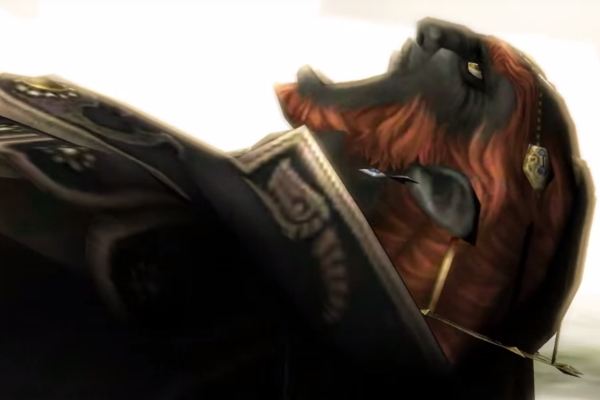
Nintendo is one of the few developers in the world that can get away with pitting us against the same villains time and time again without anyone batting an eyelid. No one ever complains that Nintendo's being unimaginative when Bowser or Ganondorf turn up and ruin for yet another Mario or Zelda game, but I bet that if Kevin Spacey was the bad guy in all Call of Duty games for eternity, you'd be a bit miffed, wouldn't you? That's because Ganondorf and his Mr Hyde alter-ego, Ganon is a great supervillain.
He's big, troll-like and ginger, and Nintendo is creative enough to keep encounters with him varied and interesting. But even Ganondorf has his bad days, as we saw in Twilight Princess. The fight is a no-nonsense duel in the middle of Hyrule Field, which is a fitting setting. But after a tense clash-of-swords quick-time event to start the fight, you realise that the ginger troll suffers from that all-too-common inability to deal with constantly being circled. Isn't Ganondorf supposed to be some kind of magician? Can't he throw a few bolts of death your way just to throw you off course a bit?
Nope, he just ambles towards you and swings his sword like an ordinary medieval grunt. Time also been kind to this encounter. While the rest of Twilight Princess - like most Zelda games - is timeless, the final battle feels very tame by today's standards, for whom the great Ganondorf will feel like little more than an average encounter.
2. The Joker - Batman: Arkham Asylum
Mark Hamill's Arkham Asylum Joker is up there with Heath Ledger as one of the best depictions of the legendary super-villain (Mr Leto, you have your work cut out for you). He's flawless all the way throughout; dark, funny, and menacing for his unpredictability and scheming rather than his physical presence. Just as Joker should be.
This leaves you wondering why the developers felt the need to turn him into a jacked-up, mohican'ed ogre for the ultimate encounter. It seems like another one of those cases where the creative juice tank - running on full power through the entire game - just ran empty for the final battle. But, you think to yourself, the ingenuity of the Joker combined with the brute strength of Hulk must make for a tough scenario. A logical conjecture, but sadly mistaken.
Joker spends most of his time standing on a platform and watching you take out his goons, then, when you pull him down from his ledge does little more than swipe at you with his sloth-like claws before you pound him to paste. At least Joker's role as a giant, grinning punchbag is kind of gratifying, letting you unleash your rage about what an anti-climactic boss he is all over his stupid face.
1. GLaDOS - Portal

One of the best-written video game villains of all time is also one of the easiest final bosses. This is a bit of a disappointment considering that you need to overcome some ingeniously designed and challenging puzzles to get to GLaDOS - the wry AI who runs the show.
On the other hand, the surprisingly calm nature of the encounter means that you get to spend some quality time with GLaDOS before decommissioning her for good.
This battle - if you can call it that - requires you to pluck power cores off GLaDOS, then chuck them into an incinerator that conveniently exists just for that very purpose. The only way you can die is if the six-minute timer runs out, but you'll sooner find yourself trying to prolong the battle just to listen to her quips than find yourself under any sort of pressure to finish.
Not that your valedictory encounter with GLaDOS is unenjoyable. As you remove her cores, you'll chuckle at her increasingly nonsensical dialogue, and at the strange utterances coming from the cores themselves.
The problem with this whole sequence is that it lacks the puzzle-solving brilliance that defines the rest of the game. Valve made amends in the sequel, where the final fight utilised plenty more of the game's mechanics, and culminated in an ending that was truly out of this world (Portal 2 fans know what I'm talking about)...