10 Simple Things That Ruined Major Video Games
One flaw undid everything else.

There are plenty of video games that have become infamous for their flaws. Although it's easy to emphasise one fault, an inadequate title usually has a multitude of problems. Suicide Squad: Kill the Justice League was criticised for its repetitive gameplay, even though that barely scratches the surface of that dud's drawbacks. Basically, the game still wouldn't be up to standard if this particular issue was fixed.
But sometimes, a single slip-up can make or break a platformer, shoot 'em up, or RPG. Even if the game in question is 99% perfect, that 1% can nullify almost all of its positive qualities. If the developers picked up on these problems sooner, they could've been remedied or removed entirely, avoiding a ton of embarrassment.
What's worse is that it's obvious several entries on this list could've been something truly special. Though these ten titles could've been associated with greatness, their names have been sullied because of a single glitch or oversight. The developers may have put their heart and soul in every other aspect but dropped the ball in one department, costing them dearly.
10. The Counter-Intuitive Combat - Too Human

Even though Too Human was hyped as the next big thing, Silicon Knight's sci-fi action title was anything but. To be fair, the game has a lot going for it, since it offers a clever reimagining of Norse mythology, a fascinating storyline, a surprisingly balanced loot system, and a variety of abilities and playstyles.
Unfortunately, Too Human was let down by its bewildering control scheme. Instead of using standard buttons for melee attacks, players have to flick the right analog stick to trigger combos. Although it's refreshing when gaming developers mix it up with the control scheme, this idea was counterintuitive and imprecise.
This decision had a knock-on effect, since the right stick is used in similar games to control the camera. Rather than repurposing the camera to another button, players can't use it at all. Instead, the camera is fixed or automated, making it difficult to track enemies, navigate the environment, or see what you're doing in the midst of battle.
Too Human had its fair share of problems, but the misplacement of a single button is directly responsible for torpedoing its reputation.
9. The Flashlight - Doom 3

Doom 3 downplayed the bombastic acton that id Software's devilish shooter is renowned for and instead, put a bigger push on claustrophobic environments, jump-scares, and atmospheric tension.
Since the threequel is often dubbed the black sheep of Doom, it's easy to assume these drastic changes are to blame. Although there are Doom purists who didn't like the alterations, there are just as many who loved how the game took the series in a bold new direction.
With that said, there's one component in Doom 3 that's almost universally reviled. While navigating through abandoned facilities and tunnels, you should have your flashlight by your side to see where to go. Since there are Imps, Cacodemons, and Pinkies lurking around every corner, you'll also need your whole arsenal at the ready.
Unfortunately, you can't wield a flashlight and a gun at the same time. Despite the fact this decision was intended to amplify the tension, players found themselves stumbling around in the dark or fighting blindly, which is more annoying than scary. Even though Doom is known for being tough, this was a lazy way to artificially increase the difficulty level.
This decision received so much flack, the devs tweaked things in Doom 3: The BFG Edition, so you could hold a weapon and a flashlight simultaneously.
8. Momentum Mechanics - NBA 2K16
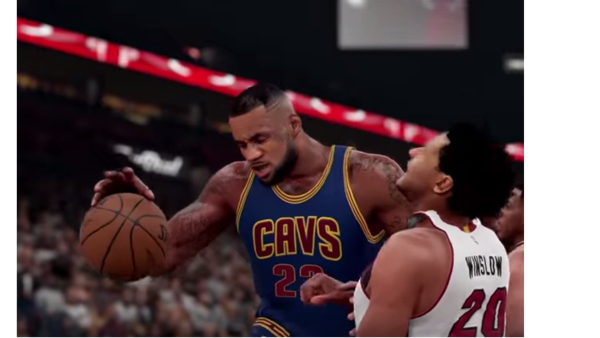
NBA 2K16 is arguably the most ambitious entry in the basketball series. With its the impressive attention to detail, deep but accessible gameplay, and immersive presentation, it's obvious the creators put their all into it.
However, 2K16's standout feature is the momentum physics, which takes acceleration, fatigue, and even the basketball players' weight into account during each match. This mechanic is fascinating, since it realistically demonstrates how the athletes experience hot streaks and team collapses during a game. Players are prone to missing shots when they get tired while others tighten up their defences when they're "hot".
Though the momentum mechanics presented a new layer of immersive gameplay, it's noticeably imbalanced. Momentum shifts at random intervals, so players can become sluggish for no real reason.
If you get a dunk or a big three-pointer, the other team may receive an artificial boost, rubber-banding to victory. Although this is to stop one team from dominating, it feels like the opposing team are cheating.
Even though the momentum mechanics should've offered more tactical gameplay, there are times where it stops an otherwise intense and dynamic basketball match from feeling fun.
7. The Sword Mechanics - The Legend Of Zelda: Skyward Sword

The biggest selling point of The Legend of Zelda: Skyward Sword was the Wii MotionPlus add-on, which fine-tuned the motion-sensors during gameplay. Rather than using button presses or generic gestures, the accessory allows Link to mirror the movements of the player, offering more diverse gameplay, especially when it comes to sword-fighting.
Sure, Skyward Sword's technology screamed "game-changer," but the concept was more fascinating in theory than in practise. Rather than relying on dynamic swordplay, players have to work out the exact spot or angle to strike enemies, turning every fight into a tedious puzzle-solving exercise.
Worse still, this needless gimmick is crowbarred into almost every aspect of the gameplay, no matter how minor. Basic actions like cutting ropes or inserting keys into doors requires slow, deliberate gestures, ruining the flow of gameplay.
Just to add salt to the wounds, the motion tracking is far from perfect. Skyward Sword regularly suffers drift and misalignment, compelling players to recalibrate the controls (often while facing a myriad of enemies or a screen-filling boss).
Even though Nintendo should be commended for pushing the envelope, The Legend of Zelda: Skyward Sword would've benefitted by being less innovative.
6. Lootcrates & Microtransactions - Middle-Earth: Shadow Of War

Even if you're not a Lord of the Rings devotee, it's hard not to be impressed by Middle-earth: Shadow of Mordor. Monolith's Tolkien adaptation offers versatile combat, rich lore, fleshed-out characters, and a unique Nemesis system that enables recurring enemies to return stronger and smarter.
Due to Shadow of Mordor's success, Monolith got to work on a sequel. Rather than churning out more of the same, Middle-earth: Shadow of War allowed players take control of a customisable army. By recruiting orcs, upgrading their gear, and giving them specific tasks, Shadow of War places a bigger focus on tactics.
At least, it would've if the gameplay wasn't tethered to loot boxes and micro-transactions. Also, Shadow of War is so grind-heavy, players are encouraged to pay their way to victory, bypassing central aspects of the game. After all, why waste time training orcs and prepping an army when there's an option to upgrade soldiers with real cash?
Annoyingly, players got screwed whether they embraced micro-transactions or not, since they'd be overpowered early or underpowered late, undermining the gaming experience.
Considering greed plays a recurring theme in Tolkien's work, it's fitting that Monolith cared about having more money than Smaug than crafting a quality product.
5. Critical Finish - Soul Calibur IV
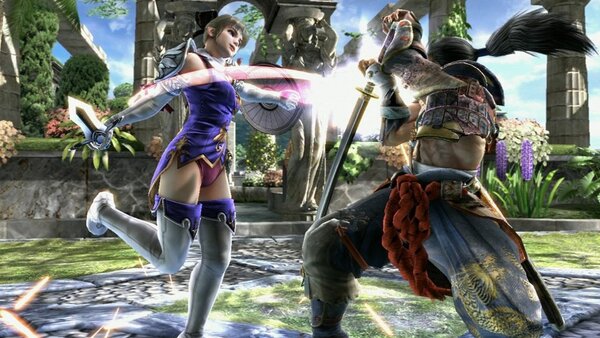
Soul Calibur IV contains a vast roster, an expanded customisation creation system, and an online mode, which was a first in the series. With Darth Vader and Yoda serving as playable combatants, it was almost impossible for veterans not to get hyped.
Soul Calibur IV also incorporated a new mechanic to make battles more balanced when facing an overly defensive opponent. Every time a character blocks an attack, it lowers their Soul Gauge. Once depleted, they'll be stunned, allowing their rival to unleash a devastating attack called Critical Finish.
Super Moves like this are commonplace in fighting franchises, usually serving as a simple method to give weakened fighters an opportunity to turn the tide of battle.
However, the Critical Finish doesn't just hurt the opponent - it kills them instantly. Even though it should be satisfying to vanquish an enemy with one hit, taking advantage of this system allows players to cheese their way through brawls. Countering and deflecting have been fundamental to Soul Calibur since its inception, so it's non-sensical to punish people for relying on these legitimate tactics.
Critical Finish was so cheap, the developers wisely replaced it with a more balanced system in the follow-up.
4. No Gore - Mortal Kombat Vs. DC Universe

Even though Mortal Kombat always had solid fighting mechanics, the franchise has been defined by its excessive violence since Day 1. Gamers expect each instalment to contain bone-shattering attacks and vomit-inducing finishing moves. For this reason, it'd be ludicrous for Mortal Kombat not to deliver what it's renowned for (especially after the watered down SNES port of the original game was universally hated).
So, when Mortal Kombat Vs. DC Universe was announced, there were concerns the bloodshed would be compromised. After all, the crossover can't really depict Batman pulling out spines or Wonder Woman being decapitated.
Although NetherRealm Studios insisted the fatalities would be intact, MKVSDCU wasn't the gorefest we were hoping for. Instead of performing killer finishers, the DC heroes perform Heroic Brutalities, which immobilise their opponent. Although the kombatants and DC villains could perform fatalities, they're insultingly toned down.
The weird thing is every other aspect of the gameplay is top-notch. The simplified mechanics and smooth combos are accessible for newcomers, and the game introduced a few cool new features, like close-quarters brawling and free-fall kombat.
But at the end of the day, Mortal Kombat Vs. DC Universe is branded as a failure since it didn't offer the one thing we wanted the most.
3. The Season 2 Patch Was Diabolical - Tekken 8

A gaming patch is an update designed to make a game better, as the name suggests.
But as Tekken 8 proves, patches can make games drastically worse. Even though Bandai Namco and Arika's fighting sequel received universal acclaim, a recent patch almost single-handedly destroyed the fighting title's reputation.
Though the roster was incredibly balanced from the get-go, the developers ensured the Season 2 update enhance the defensive mechanics.
Instead, the patch did the opposite, introducing aggressive playstyles that rendered defensive options almost useless. The implementation of chip damage during throwbreaks was such a pointless addition, the developers wisely reversed this alteration soon after.
But it didn't stop there. Certain characters like Jack-8 and Paul were given buffs that exacerbated balance issues. Adjustments to these fighters resulted in overpowered combos and unblockable attacks, making battles ludicrously unfair. The situation got so out of hand, Bandai Namco replaced the studio, Arika, with developers from previous Tekken instalments.
What makes this patch so appalling is the fact nobody demanded these changes in the first place. Based on how badly the Season 2 patch turned out, it would've been more sensible if the developers didn't release it at all.
2. No Crossplay - Elden Ring Nightreign
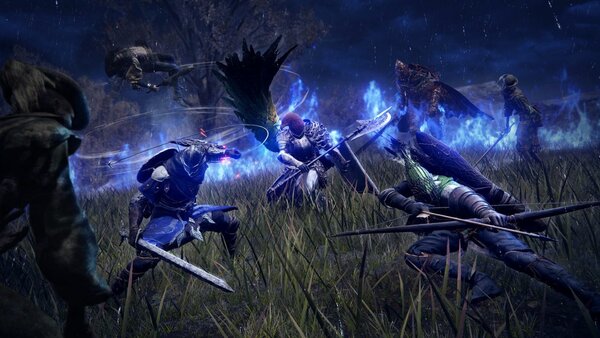
Due to Elden Ring's staggering success, FromSoftware knew there was still money to be made, inspiring them to release a roguelike spin-off. Although Elden Ring and its DLC received knocked it out of the park, Nightreign rubbed a lot Soulsborne fans the wrong way.
Though there is a single-player, Nightreign is heavily geared towards cooperative multiplayer, with three-player teams taking part in lengthy expeditions lasting between 30 minutes to an hour. Your trio must complete all the challenges within three in-game days before facing the final boss.
Unsurprisingly, this set-up requires a lot of strategy and preparation if the team expects to emerge victorious. This shouldn't be a problem in itself but the lack of crossplay restricts matchmaking options. The matchmaking can get so bad, players may have to resort to solo play, making the gameplay brutally difficult, even by Elden Ring standards.
Based on Elden Ring's success and the company's resources, it's bewildering FromSoftware didn't have crossplay figured out at Nightreign's launch, especially when they knew how it would impact the core gameplay.
Elden Ring Nightreign has already sold two million units, but frustrated consumers may turn on the title if this issue isn't remedied in the near future.
1. Always Online Mode - SimCity (2013)

For the longest time, SimCity was the gold standard for city-building games. But after the success of The Sims, Maxis put more focus on the lucrative spin-offs, causing SimCity to go dormant.
But after a decade-long hiatus, a MMO Sim City entry was announced. With a sleek new aesthetic, an updated engine, and a bigger focus on interconnecting cities, expectations were sky-high. 2013's SimCity also highlighted collaborations, encouraging players to trade and share resources.
But in order for this mechanic to work, it was stated the game needed persistent internet connection, even for single-player mode. Not only was this frustrating in its own right, Maxis underestimated demand, leading to massive server queues and crashes.
Even when players got online, it wasn't a particularly fun experience. Due to server performance restraints, cities were petit and glitches were abundant and tricky to fix. Disconnections were common, which regularly led to progress loss.
Although it was initially claimed the online mode was necessary for SimCity to operate, modders were able to run it off-line, tarnishing the company's reputation.
Though there are plenty of titles that received criticism for relying on a permanent online connection, it's hard to think of a game that bungled it worse than SimCity.