10 Times Developers Admitted Their Game SUCKED
Sometimes fans and critics aren't the only ones to lash out at a crappy game.
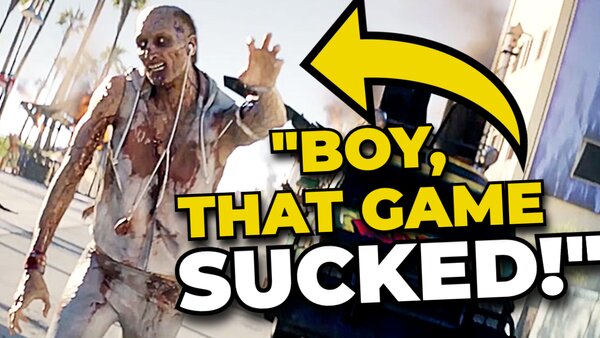
You know how it goes: you wait months, years, sometimes even decades for a video game to arrive, it finally comes out, and then it's just kind of... shiitake mushrooms on toast. Well, just think of how the developers feel.
Sure, we can go ahead and blame it all on them - they did make the game after all - but sometimes they’re just as crestfallen and pissed off as the rest of us. Because sometimes developers don’t get their own way, due to publisher interference, time constraints, bad ideas and a lack of good ol’ due diligence.
Some games are cancelled outright, some changed before they ever see more than the first few glimpses of the light of day, some altered or withdrawn after the fact, and some left to fester on our hard drives and the shelves of Cex forevermore. But for each and every one of these 10 games, the developers involved, or at least the people behind the big studio names, came out and admitted the games weren't what they wanted, what fans were looking for and, well, that they just kinda sucked.
10. Last Oasis (2020)

Nomadic survival game Last Oasis puts us on an Earth that has stopped rotating, where the remains of humanity must remain continuously in motion to survive in the habitable zones between the planet’s scorching sun-face and icy cold darkness. A neat concept, but one developer-publisher Donkey Crew struggled with from day one.
Appropriately, it was neither especially hot nor cold on Steam when it dropped in 2020, selling in decent numbers, but gradually succumbing to negative reviews and issues. Racked by server issues, Donkey Crew had to take the game offline for a week to work on it, and notwithstanding persistent issues thereafter, the developer ploughed on with another survival game, Bellwright.
Despite being Last Oasis’ project lead, and recognising the declining sales of his own product, Florian "Chadz" Hofreither was one of the contributing voices of negative sentiment on Steam. He wrote an article entitled Last Oasis Sucks, in which he expounds on how he doesn’t enjoy playing the game for long and that it pales in comparison to other survival games. It certainly showed Chadz understood what was wrong with Last Oasis from a gamer’s perspective, but to come out so strongly against his own game was a slap in the face for those who actually bought it - even if he was working on a fix.
9. Shadows of the Damned (2011)

A collaboration between Massimo Guarini, Shinji Mikami (of Resident Evil fame) and Suda51 (Goichi Suda, owner of developer Grasshopper Manufacture), action-adventure game Shadows of the Damned had all the makings of a classic. There was just one problem: it was being overseen by Electronic Arts.
The game follows Garcia Hotspur, a Mexican demon hunter who must journey to the City of the Damned in order to face its evils and save his girlfriend Paula, captee of the Lord of Demons. With plenty of weapons, a punk rock, satanic style and the right blend of cool and scary, it ought to have been a stone cold success, but instead it was DOA.
The game sold very poorly, something Suda attributed to publisher EA’s unwillingness to make a large enough cash investment on this new IP. But that wasn’t the origin of the project’s issues: Suda in particular struggled to work productively with EA throughout the process, and was forced to rewrite his story over and over again, with the final product being something that he and Mikami, who served as Executive Director, were both disappointed in.
8. Devil May Cry 2 (2003)

It’s never easy following up a smash hit game, with many devs coasting along on the same lines (looking at you, entire Call of Duty series) or, in some cases, not being able to handle the pressure, soiling the bed and releasing something considerably inferior.
Such is the case for Capcom’s hellish action-adventurer Devil May Cry 2, which continues the story of demon hunter Dante as he embarks on a mission to stop shady international businessman and head of the Uroboros Corporation Arius from raising the demon Argosax and becoming nigh unstoppable. Sounds fair enough.
Unfortunately, it was helmed by a different Capcom team than had worked on the previous game, one lacking the experience to bring a sequel like this to fruition in the way fans expected. The game had a troubled production throughout, and though Hideaki Itsuno (who wound up directing 2, 3, 4 and 5) was brought onboard in the middle of development, he couldn’t save it. Upon release, DMC2 was criticized by gamers and critics for, amongst many other things, its lowered difficulty, character changes to Dante's personality and a less refined and strategic combat system.
Itsuno later admitted the game’s development time was way too short, that chunks of the game had been left un- or at least under-done, and that he had not been satisfied with it. This was why he asked to stay for the third game, to make up for the failure.
7. Payday 3 (2023)

Taking place after the conclusion of Payday 2, where the gang (Joy, Houston, Clover and Jacket), went their separate ways and left the life of crime behind, Payday 3 brings them right back into the fray again, as they're double-crossed, lose their cash, and have to build it all back up again taking banks by force around New York City.
This strong and simple premise carried the IP across several releases, expansions and consoles, and Payday 3 should have been something of an easy win, if developer Starbreeze Studios could keep up with the times in all the right ways. Spoiler: they couldn’t.
The game was faced with severe criticism from most quarters on its release, due to a rather hollow and unfinished experience overall, sever issues and its new online-only model, the latter two complaints of which conspired to make the game unplayable during outages. Far from immune to criticism, the Starbreeze crew were right there in the thick of it, taking it on the chin and admitting their game was just not it.
Community head Almir Listo conceded that the game should have had more development time, remarking that the game felt unfinished and was a bad experience for players. Similarly, lead producer Andreas Penniger admitted to a lack of due diligence and rash decision-making, resulting in a disappointing performance all round.
6. Postal III (2011)

Grand Theft Auto’s ugly cousin, the Postal franchise has always been more than a bit rough around the edges - but that’s part of the charm. Developed by Running With Scissors, the first-person shooter games allow players to embark upon a murder rampage, slaughtering and brutalising as many people as possible and not giving two flips, it’s crude, it’s lewd and the devs really don’t care.
What RWS have historically cared about is the fun quotient of their games, driving quality through exciting, moreish gameplay, understanding that they’re never going to be leaders in graphics or mechanics. Unfortunately, even by their own fairly low standards, they well and truly failed when it came to the third game in the series.
Pressed for cash, RWS partnered with Russian studio Akella and the whole thing went downhill from there. Postal III introduced too much fluff delaying players from the carnage they came for, it crashed all the time and its graphics were a new, unacceptable kind of shoddy - as RWS’ Jon Merchant and Vince Desi were all too aware.
They described the game as “a broken mess” that they didn’t even want to get paid for, saying they don't regard it as a Postal game at all, but a spin-off that shouldn’t have happened. And they stood by these words, removing the game from their store and encouraging fans to try their other games instead.
5. Dead Island 2 (2014)

Few players got to see Dead Island 2 as it was originally conceived, because the game we all played in 2023 was not the sequel originally put together for the 2011 zombie RPG. The original game saw players stranded on a zombie-infested island that tested survival skills in the most dire of times, and was a wild success for a new IP.
Fans of the franchise then were right to wonder what had happened to the second game as, after some months and years of publisher Deep Silver assuring everyone it was on the way, it just kind of fell off the map. The version that did finally appear in 2023 was, by all accounts, an entirely different game from the one that was originally tested by players back in 2015 - and there’s good reason why.
Yager Development was first in line for developing the sequel back in 2012, but was removed from the project sometime after the game’s 2014 announcement thanks to terrible tester feedback. Yager was replaced by Sumo Digital, but this partnership went a similar way and Deep Silver wound up putting their own internal studio Dambuster on the game in 2019, who dragged it to completion some four years later.
And former Deep Silver Head of Comms Martin Wein went on record saying that each iteration had produced “a sh*t game” that was "not fun, not engaging” and didn’t feel like the Dead Island he knew and loved. Yeesh.
4. The Lord of the Rings: Gollum (2023)

The Lord of the Rings: Gollum promised to return eager players to Middle Earth, seeing it through the eyes of Gollum, one of its most well-travelled yet underexplored (at least in terms of gaming) characters. Yet, progress was slow on any official announcement of when it might appear, and the game's future looked less and less promising, until developer Daedalic Entertainment finally announced its official release - and that's only where the problems began.
A gameplay trailer released in 2022, with Daedalic signalling a release date later that year, but fan backlash was instantaneous. The game was criticised for resembling a previous generation console game, with dodgy graphics, ropey character design, indistinct scenery and atrocious colouring. Nobody wanted to believe that this would be the next chapter of LOTR gaming, and the backlash was so severe, the developers pulled it back in to see what could be fixed.
After several pushbacks and delays, the game was eventually released in 2023, but by then the damage was done, and damning reviews came in thick and fast, confirming every criticism it had faced pre-release. This led to Daedalic actually coming out and admitting the game was not what they wanted it to be and apologising to the fanbase for it not meeting anyone's expectations, thereby officially consigning it to the bin of video game history.
3. Dying Light 2 (2022)

Techland’s Dying Light was designed with gamers in mind, delivering an action adventure survival game that really forced players to do everything they could to survive in a ridiculously exciting, enemy-infested open-world environment where slow zombies roam the streets during the day, and go all-out psycho at night. An instant hit with gamers, if a little repetitive, it was easy to see what the studio should retain and what it should jettison for the sequel.
Unfortunately Techland got it backwards, serving up a sequel in Dying Light 2 that went heavy on the parkour element but packed basically no grit or serious scares - the elements that made the first game the best. And franchise director Tymon Smektała agreed, acknowledging that 2 forgot about the first game’s fanbase and lost the edge, the threat, the horror and the tension.
Smektała and Techland have ultimately gone on to pretend like the second game didn’t really happen, returning to the template of the first game while making the third and (if rumour is to be believed) infinitely better sequel The Beast, which is due out later this year.
2. E.T.: the Extra-Terrestrial (1982)

One of the defining films of the 1980s, Steven Spielberg's E.T.: the Extra-Terrestrial both captured and created the zeitgeist with the story of a cute little alien guy who just wants to get home. And with the film's instant success, there had to be brand synergy and as many tie-ins as possible. Stat!
This meant, amongst other things, Atari rushing a video game into production, with Howard Scott Warshaw at the helm. Hand-picked by the company and tasked with developing a finished game in five weeks, Warshaw worked non-stop to give Atari what they wanted, but of course it didn't pan out.
Things went topsy turvy pretty soon after the game's December release and the Christmas rush was over. Critics tore the game apart, and bemused consumers returned the game to shops en masse, plunging Atari - who had spent an unconscionable $5 million on advertising - into the red. And, thanks to the subsequent video game crash of 1983, Warshaw was credited with bringing down the industry.
Warshaw himself openly admitted the game was not good, that there were too many opportunities where players could suddenly wind up in odd situations and suffer literal pitfalls. But he has never taken ownership of single-handedly, if temporarily, destroying the games industry - that one's on Atari.
1. Doom 4 (2008-2011)/ Doom (2016)

2016’s sublime Doom reboot almost never was - or at least it was almost something rather different. Conceived of, and announced, as Doom 4 in 2008, the game underwent an extensive development cycle with a variety of different designs before time was called in 2011 and the game re-started.
According to id Software Executive Producer Marty Stratton, the Doom 4 project was cancelled and reworked into 2016’s Doom because it just didn’t fit with the franchise, and threatened to take the IP off in a totally different direction - possibly for good. Loaded with more cinematics and story, less action, and a totally different game-feel, Doom 4 was attempting to match and compete with what the studio saw as its biggest competitor at the time: Call of Duty.
It abandoned the core elements of the Doom brand, and despite three years being spent on the game, id Software had to do the one thing every developer never wants: to pull the plug. It was doubly risky for id, who in the 12-year stretch leading up to Doom 2016, only put out one other major system release (Rage), but players the world over are thankful they took responsibility for their sucky game and spent the time necessary to give us what we wanted.