10 Times Video Games Didn't Care What You Think
Sometimes huge creative risks, sometimes just bullheaded marketing.
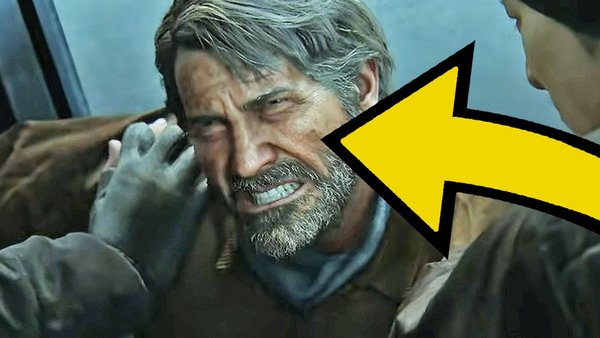
We do a lot of lists covering all the times developers and publishers packed in extra treats, secrets, and nods for fans of their games.
More often than not, creators want to make players happy.
Then again, games are a product of a whole team of people with a specific vision, so sometimes that’s completely at odds with what gamers wanted to see. Or sometimes the vision is the same, but the execution is a mess and said game creators don’t or can’t fix it in a reasonable length of time.
That about sums up our list today which runs through all the times it felt like games were basically giving us the middle finger.
Whether by including a controversial plot device, misleading advertising, or insidious business practices.
10. Halo: The Master Chief Collection Stayed Broken For Four Years
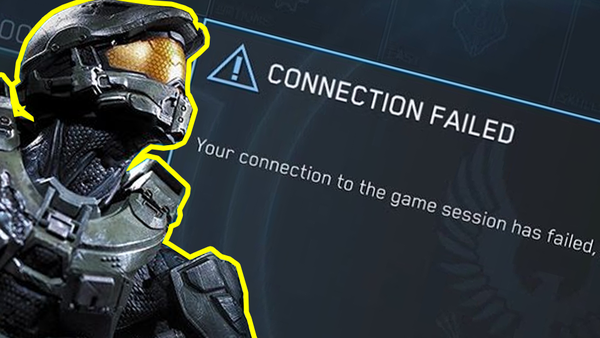
Halo Master Chief Collection is in great shape right now but it wasn’t always that way.
When the compilation package launched in 2014, what was billed as the ultimate collection of Master Chief’s greatest hits turned out to be nothing short of a disaster. Players struggled to find matches as the servers melted. Many may recall waiting and waiting and waiting to find a match, only to get booted out and forced to try all over again.
What should have been Chief’s big day turned into a nightmare. While MCC was largely broken, developer 343 Industries pledged they were scrambling to fix it, all the while pushing ahead with Halo 5, which launched in 2015 to greater success than MCC out of the gate.
MCC was updated and improved over the years, but fans still felt incredibly burned by the launch state of the hotly anticipated compilation. Particularly since it took so long for the game to get its sorely needed fixes.
We expected better from the ‘Halo’ name and while it’s totally delivering now, MCC absolutely let fans down and plenty felt abandoned by 343.
9. The Last of Us: Part Two Dropped Joel As A Playable Character

The Last of Us is probably one of the biggest and most popular games of all time, particularly in the linear narrative adventure space.
So what do you do when you make a game that popular? Take out the chance to play the sequel as the character that players fell in love with in the first game? Apparently.
It was extraordinarily bold of Naughty Dog to follow up their critically-acclaimed emotionally-charged journey through the apocalypse by taking out one of the main characters almost immediately but that’s what they went for. This isn’t to say the sequel is a bad game by any means, or even that the decision to leave Joel behind in the sequel was necessarily a bad one. But it did absolutely show that the developers were not making choices based on what players wanted and they absolutely didn’t care what you thought. Some players celebrated them for that while others felt wildly betrayed. This spawned the growing hatred for Abbie among some fans, as she was a playable character in the second game and a large component in replacing Joel.
This is a perfect example of developers deciding they know what’s best for their game. Whether you’re on board or not is totally up to you but I think we can all agree this move was the opposite of fan service.
8. Cyberpunk 2077 Is Not The Game You Were Looking For

When an open world game launches we expect a few certainties. There will probably be bugs, sections we wish were a little more fleshed out, and plenty of exciting surprises that just couldn’t be packed into pre-release trailers. Unfortunately, in the case of Cyberpunk 2077 there were a few more surprises than players bargained for or wanted.
All that to say, plenty of people reported the marketing for the game just did not represent the game they ended up playing.
Over a year in and many fixes later, the game is still riddled with little bugs and glitches that undermine the beautiful and rich cityscape we’d been promised. Most disturbingly to fans, is that if the gorgeous game we’d been pitched doesn’t exist now then it certainly didn’t exist in any way shape or form when we got those awesome pre-release trailers. These trailers promised features that never eventuated, a sprawling lifepath system that was ultimately pretty insubstantial, and a whole bevvy of things that had people lay down their pre orders for a version of a game that didn’t and may never exist.
Once again, that doesn’t mean Cyberpunk 2077 is a bad game, but it’s not the one players thought they were buying, leaving plenty of people feeling duped.
7. The Elder Scrolls IV: Oblivion Charged $2.50 For Horse Armour

I could fill this whole list with entries about games with insidious microtransactions but why not loop them all in under one of the earliest and most infamous DLC packs; Oblivion’s Horse Armour.
To be fair, Oblivion has some excellent DLCs including the Shivering Isles which is a very substantial expansion pack. But before we got that, we got Horse Armour which actually almost predated the entire concept of microtransactions.
Since microtransactions weren’t really a thing, the fact that players were being charged a couple bucks for a cosmetic item in a single player game raised more than a few eyebrows.
Elder Scrolls director Todd Howard said that Bethesda wanted to price the pack lower but Microsoft insisted on the $2.50 price point. Whether you want to place the blame on Bethesda or Microsoft, one thing is for sure, somebody in the creation of this golden abomination did not give a crap what you thought about it.
That began the trend, which hasn’t slowed down in the 15 years since, of anti-consumerist microtransactions that continue to not care what we think about them.
6: The Mighty Let Down Of Mighty No. 9

Crowdfunding is a tricky business with mixed results at the best of times but things seemed pretty special when it was announced a group of veteran Mega Man developers would be working with Capcom legend Keiji Inafune to create the title. The Kickstarter campaign did extraordinarily well, amassing almost 4 million in the initial fundraising effort, smashing several stretch goals and that’s not including the other $186,000 raised on PayPal or the fact that Deep Silver came on as publisher.
To fans' great disappointment, though, the game was an absolute flop.
Some players went as far as to claim they felt scammed given games that raised much less and with far inferior pedigree managed to create better game experiences. Mighty No. 9 failed players with its multiple delays, lackluster story, average graphics, and unusually poor technical performance. It was critically panned, quite apart from seemingly like a product that had no idea what its audience wanted or how to give it to them. Once the game was out there was this real sentiment of “Okay, there it is, it’s out” that seemed to completely ignore how displeased its entire audience was with the quality. This extended to the weird-ass pre-launch trailer that included the line, “Make the bad guys cry like an anime fan on prom night.”
You… you know you are probably marketing to anime fans, right? No? Well, the player reaction is exemplified pretty well by this comment on that very trailer which reads, “I didn't fund this game or buy it and I still want my money back.”
5. Returnal Intentionally Didn't Let You Save

Ah, the eternal argument of games respecting your time or whether you should just git gud. Personally, I like a game that encourages both so that probably explains why I didn’t get to the end of Returnal.
To be fair, the 2021 shooter is a roguelike which is designed to be played in multiple runs. To be mildly less fair, the game is designed in such a way that you had to finish your whole run, which in Returnal is a not insignificant time sink. We’re talking over an hour in some cases. So you better hope that phone doesn’t ring or your family doesn’t need to pull you away from the screen otherwise your only choice was to put the PS5 in standby mode until you could return.
You have to be very careful not to turn it off though, as you will lose that progress. Yes, I do know this from experience, and no, it was not a good day for me.
As of November Returnal has finally added a method that allows players to suspend the game and safely turn off or unplug their PS5s in the middle of a run without ruining their evening. For the 7 months prior to that, though, it did feel very much like Housemarque was telling us, “Too bad, better luck next time” without much consideration into what players thought about it.
4. Fallout 76 Forgot Its Audience

You’d think that five main entry games and four spin-offs would be enough for Bethesda to be very concretely aware of what it is their audience loves about Fallout games.
For those playing at home, it’s largely the varied opportunities to roleplay effectively, the sprawling lived-in game world, and the curious characters that influence our protagonist’s motivations and progress through their central journey. To be a fly on the wall, then, for the conversation that began with the suggestion to create a Fallout game that would feature no human NPCs in the entire wasteland, would be fascinating. But this suggestion was made material in the final product. But with no other characters to help, hurt, or otherwise address, left our post-apocalyptic journey feeling soulless and joyless.
The fact that our friends could now join us given Fallout 76 was the first online multiplayer title in the series was kind of cool, but it was no longer the world we wanted to share.
Disappointment isn’t a term that carries enough weight for how poorly Fallout 76 went down with fans and critics alike, and it was only because of the irate reaction that it finally seemed like Bethesda cared about their missteps in their vision of the game. Players have since been gifted the Fallout Classic Collection by way of an apology and the game is certainly better than it was. It even has NPCs now, but you’d be forgiven for leaving it behind long ago assuming Bethesda just willingly lost touch with their fans, perhaps assuming 76 could paint a pathway to a longer monetisation model.
Either way, players felt wildly ignored and undervalued, but I’ve still got hope for the next one.
3: Star Citizen Still Isn’t Out Of Alpha & Sparked Pay-To-Win Controversy

You wouldn’t expect we’d be talking about controversy over pay-to-win mechanics regarding a game that has raised no less than $400 million in crowdfunding over the last nine years. This began with a Kickstarter in 2012 wherein director Chris Roberts outlined his vision for a multiplayer space trading and combat sim. Said vision continued to expand and it had the money to do so but plenty now worry the game has become so ambitious, we may still be half a decade off seeing the final product.
Star Citizen is currently in Alpha so it is technically playable, though as you’d expect that comes with significant technical and balancing issues, and the game is clearly unfinished.
Plenty of players are hanging onto hope and enjoying the Alpha for what it is, but it seems more are realising the game they were promised simply isn’t going to come to fruition. Though there are hundreds of features being added, most aren’t helping flesh out the multiplayer core space combat loop which many bought in for. If this all sounds very No Man’s Sky to you, you’re right on the money as that’s commonly what Star Citizen has been compared to.
To add insult to injury and despite the general unhappiness of current players, developer Cloud Imperium are still selling ships and trying to implement pay-to-win systems.
Two controversial moves involved removing the in-game currency cap and letting players purchase virtual land claims for real world dollars, a feature that had no been implemented in the game yet. This is especially problematic as the initial Kickstarter promised there would be no pay-to-win mechanics included in the game.
In essence, this one is a bit of a mess, and has left plenty of players unhappy and feeling like their gripes are going unheard.
2. Metal Gear Solid 2 Didn’t Let You Play As Solid Snake

The original Metal Gear Solid let you play at Solid Snake and fans were stoked. Solid Snake is a legend, he’s cool under pressure, tough as nails, and an almost indisputably legendary protagonist across the board.
Raiden is not an indisputably legendary protagonist across the board. He has his fans, sure, but he’s not Snake, and fans tucking into the second game were about to be livid.
Despite cementing Snake as one of the best protagonists to date, game creator Hideo Kojima decided to pull a switcheroo for Metal Gear Solid 2: Sons of Liberty. The massively popular E3 trailer that debuted in 2000 had fans totally amped for more Snake-led shenanigans, especially since the almost ten minute reveal focussed only on Snake infiltrating a ship. Turns out, this is just the intro of the game and you’d be playing the rest of it as Raiden, a controversial figure in Metal Gear for being, well, kind of lame. At the time Kojima said they cast Raiden as the protagonist in order to appeal to women and because the plot called for a talker which Snake is not.
The Raiden hate has massively died down now that the full series is out, but when it looked like he might be taking over for a minute there, gamers were not happy.
Not that Kojima cared, of course, he said himself ‘In a sequel you have to meet people’s expectations, but you also sort of have to go against them and deceive them I think. This is my Metal Gear, and I can destroy it if I want to.’”
So if that doesn’t fit this list, I don’t know what does.
1. Evolve Tried To Pinch Every Possible Penny

I’m going to say it, for the week I played it Evolve was actually really fun. It’s asymmetrical multiplayer was really novel and the hunters versus a huge monster dynamic was genuinely fun and well-executed. Unfortunately, the huge controversy surrounding its anti-consumer practices and insane DLC pricing meant that most people wouldn’t find that out until the game went free to play in 2016 as Evolve Stage 2.
Well, that is, until creator Turtle Rock shut down the dedicated servers in 2018 and reverted Stage 2 back to Legacy Evolve.
So, what went so wrong for a game that played pretty damn well? Paid DLC of course. Not just paid DLC but paid DLC at launch leading gamers to ask themselves why they were being asked to pay for something which should have just been included in the base game from the outset. Players could either drop anm extra $25 on the season pass, or lump it in with the base game which already cost $60, for a mildly better deal that came to $80. Alternatively, each of the 44 DLC items were available to buy with your real world dollars. Individually, obtaining new skins would cost you $2 a pop, while new Hunters cost $7.49. The whole thing sat very poorly with gamers and Turtle Rock assuring gamers these were just options did little to quiet the opinion that this was a wildly consumer-unfriendly move.
In this case, gamers did vote with their wallets and that was it for Evolve.