20 Best Indie Games Of The Decade
12. SUPERHOT & SUPERHOT VR

Few games inspire the cult-like following of SUPERHOT, and it comes from the devs coding one of the most original FPS of all time, with a killer hook you never get sick of.
Centred on the mechanic of "time only moving when you do", lay off the sticks and time will barely crawl forward. Bullets hang in the air, enemies freeze and you can plan accordingly.
From here you essentially remix time on the fly, based on how much you push the sticks, jump, duck etc. It's a whole new way to play an FPS, and SUPERHOT's story is a meta-narrative where you play a hacker, jacking into the game's sugar rush gunplay, becoming increasingly addicted over time.
I'm rolling SUPERHOT VR into here too, as factoring your own body movements into firefights feels great - and where both games' stories go in regards to "your mind being software" is pure hacker culture gold.
11. Celeste
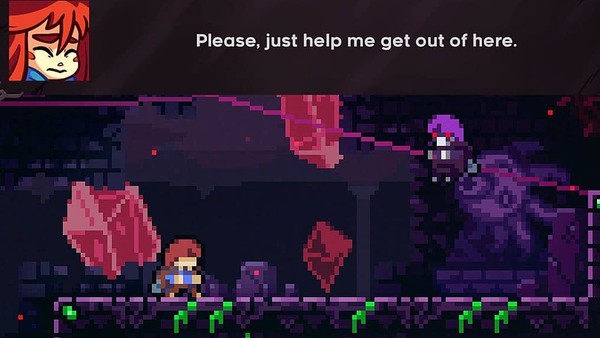
Celeste provided the answer to something we didn't necessarily realise the industry was missing: How to tackle depression, anxiety and negative headspaces directly through in-game mechanics.
While you can totally enjoy the game as a stellar platformer with incredibly tight physics and a jump-boost ability, the messaging revolves around protagonist Madeleine climbing a mountain, whilst being tormented by her "shadow self". She challenges Madeleine's confidence, berates her, and even forms a boss battle at one point.
The twist though? Celeste isn't about "defeating" this being, but learning how to understand and work with it.
A wider metaphor for embracing and understanding wayward thoughts that result in worry and doubt, this only reinforces how intuitive Matt Makes Games' level design is.
Because make no mistake: Celeste is a brutally hard platformer. It borrows Super Meat Boy's notion of an instant restart and expertly places you on the jump you just failed, but you'll have to steel yourself just like Madeleine, to reach the mountaintop.
10. Papers, Please

Something the indie space really brought to life this gen, was introducing a range of emotions and thought processes the studio system would've never gone anywhere near.
Namely, the idea of crippling guilt, brutal repercussions and an atmosphere inspired by real-world immigration problems. Lucas Pope's Papers, Please is set in the fictional land of Arstotzka, a communist state only allowing people in, if their documents are in order.
You play an immigration officer already walking the breadline and struggling to feed your family. Basically, it's "do your job and admit people green-lit by the state, or you won't make enough money for your family to survive".
Naturally, the way Pope has coded Papers, Please plays directly into this, and events escalate to the point where you're brandishing a firearm, to prevent people from getting in.
Could you split up a husband and wife? Allow someone who desperately needs medication, but doesn't have their papers in order?
Papers, Please pulls no punches, and should be played by as many people as possible.
9. Gone Home

The game that gave us the "walking genre" in the first place, Gone Home is a masterclass in building tension for an audience the devs knew would be looking out for triggers or "tells" in the environment.
Set up as a corridor-crawling horror, you play Kaitlyn Greenbriar, a gap year student who returns to find her home abandoned, with a note from her sister apologising for what's happened, and not to come looking.
Naturally it's an intriguing setup, but the best part of Gone Home comes from subversion.
We naturally frame these events in a harrowing way, because why wouldn't we? It's human nature to protect ourselves and those closest to us, but developers Fullbright play this assumption masterfully, inverting expectations in the finale to provide a notably heartwarming conclusion to all your worries.
8. To The Moon

Speaking of worries, how about a game that will absolutely wreck you?
Developed by Ken Gao, To The Moon tells the story of two doctors, Eva and Neil, who've developed a machine that allows them to grant terminally ill peoples' dying wish. By learning about their subject and planting memories, Inception-style, the person drifts off in complete contentment, rather than any negative, painful alternative.
Immediately you know you're in for an emotional journey, and the story centres on an elderly man named Johnny, who wants to go to the moon, although he can't remember why.
From here you delve into his life; his touching, strained relationship with wife River - who suffers from an Aspergers-adjacent illness and struggles to communicate with him for many years - and everything in between.
Sans spoilers, the way this goes is written with such care, attention and beautifully subtle animations, it tells a story that's stayed with me for years.
7. Hotline Miami 1 & 2

From narratives to lightning-quick game mechanics, Hotline Miami helped usher in the synthwave music revolution - a retro 80s-inspired electronic genre that's now doing festival circuits around the world.
Back to Hotline itself, as two-person dev team Dennaton coded a top-down puzzle blaster that's as rewarding and satisfying as it is to slice you in half.
Set up as a comment on how appealing video game violence can be, you play Jacket, a character that can wield scores of melee weapons, firearms and even human shields to block bullets, should the need arise.
The game is backed by this pulse-pounding, supremely infectious soundtrack comprising artists that are some of the best in the business. Carpenter Brut, Jasper Byrne, Perturbator and Scattle - both Hotline Miami 1 and 2 redefine the power of game mechanics twinned with great music.
Things like this and SUPERHOT are such viscerally cerebral experiences, they let you get in a headspace of pure responsiveness, reacting and experimenting with methods of killing as fast as you can think them up.
6. Cuphead

The Xbox One might have had a hard time turning heads this generation, but one look at Cuphead and you'll be in love.
From Studio MDHR, this "rubber hose" animation has long only been associated with old-school Disney cartoons, but applying it to a side-scrolling shooter worked wonders. The devs even delayed the game after initial response was so overwhelmingly positive, just to add a string of run n' gun levels to break up the show-stealing boss fights.
One thing that's also laboriously tested for Cuphead is difficulty. This is a very hard game, requiring not only precise timing and hand-eye coordination to stay on top of entire screen's worth of projectiles, but memorisation, too.
You'll likely spend 30-45 minutes getting everything locked down; suffering who-knows-how-many losses learning a boss' patterns and attacks, then obliterate them in one glorious run where you avoid everything and decimate in return.
Cuphead will push your 2D game-playing abilities to the absolute limit, but it looks stunning and feels INCREDIBLE every time you turn the tables.
5. Stardew Valley

Ever been fed up with the way a game studio is handling your favourite IP?
Eric Barone sure did with the terrible recent Harvest Moon/Story of Seasons games, and set about laboriously crafting a farming sim for likeminded fans.
Obviously the term "farming sim" might make you want to run for the hills, but trust me, Stardew Valley is worth your time, and has way more under the hood.
Besides the fact that looking after your own farm - replete with animals, crops to maintain and product to shift - is satisfying in a wholesome, homegrown, doing-it-for-myself kinda way, Stardew also lets you get lost in a massive dungeon, fighting enemies and returning with gems and ore to craft better gear or sell down the shop.
All the trimmings of a Harvest Moon are here, from giving gifts and dating villagers to various fares and in-game year that rotates through all four seasons, changing the environment and what you'll need to harvest to stay on top.
Don't skimp on Stardew Valley because of its often phoned-in genre. The game's sales speak for itself, and you too could be a diehard fam sim lover just waiting to plant their first pack of strawberry seeds.
4. Rocket League

I've said so many times, but Rocket League is a a Pong, a Tetris, a Space Invaders. It's a perfect set of game mechanics, time-tested and quality controlled until every button press feels just right.
Coming from Psyonix in the midst of contract work for other studios, they first had the idea for Rocket League back in 2008, with Supersonic Acrobatic Rocket-Powered Battle Cars, though it failed to catch on for obvious reasons.
Come 2015 and Rocket League being given away for free as part of the PS Plus games for July instantly gave the game an audience of millions.
That was all it took to strike gold, as Psyonix' fantastically simple game premise would take on a life of its own. "Football with cars" was a hit, eSports leagues were formed, and professional leagues learned how to dribble and shoot off the walls, establishing Rocket League as one of those games literally everybody had to play.
I'm still getting a match in every day, to this day.
3. The Witness

The sheer scope of what Jonathan Blow achieved with his followup to Braid is just as mind-melting, but in an entirely fresh, spiritually uplifting way.
See, you're playing a lost soul awakening on an island of puzzles. The island is luscious, overflowing in vegetation and old European architecture, but gameplay boils down to connecting two dots on a grid.
These grids are scattered across the whole island, and you can tackle them in any order. There's no real "difficulty curve", and each player will "see" different patterns, based on how your own mind works.
The Witness is geared to dissect the very way we take in information, language and how to process the world around us.
The rule for a given section of the island can range from realising it's based on colour, to denoting pitch from surroundings, to all sorts of different symbols and icons that won't "click" until things mentally slot into place.
It's hard to adequately convey the genius of how The Witness reveals itself without playing, but rest assured, it's an experience you couldn't do anywhere other than video games.