20 Best Indie Games Of The Decade
Between 2010 and 2019, what blew you away?

This decade has been outstanding for video games.
Despite the array of hardware we've had access to - from 3DS to Switch, PS4 to Xbox One X - the games themselves only got more experimental and confident when it came to what a "game" even is.
The early 2010s encapsulated this best, and birthed the indie scene as we know it today. The trio of Limbo, Fez and Super Meat Boy all landed on Microsoft's fantastic Live Arcade service, ushering in years of smaller, homegrown projects with purely creative souls at the core.
Since then, the term "indie game" has changed and grown considerably. Today it can be applied to the likes of Rocket League and A Plague Tale: Innocence, where for a time it only brought about connotations of side-scrolling pixel platformers and "walking simulators."
Overall though, the indie scene has become the beating heart of gaming; the place so many of us go to see where real originality lies, when so many larger teams have become increasingly corporate and risk-adverse.
With so many games to choose from between 2010 and 2019, let's try and put them in a definitive order.
- Honourable Mentions -
Downwell

Axiom Verge
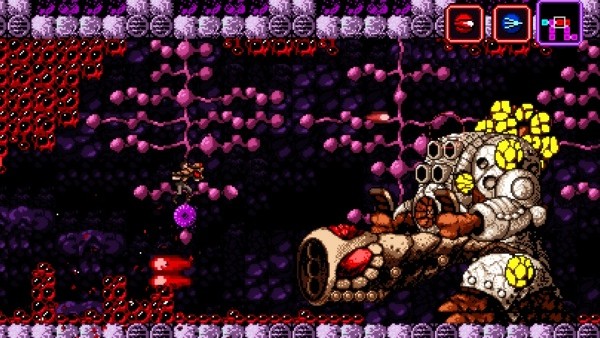
Furi

A Plague Tale: Innocence

Katana Zero

Limbo

Bastion

Night In The Woods

Rogue Legacy

Pyre

Nidhogg
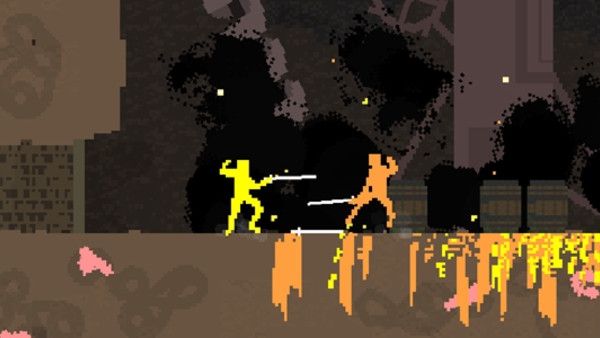
Thumper

Yoku's Island Express
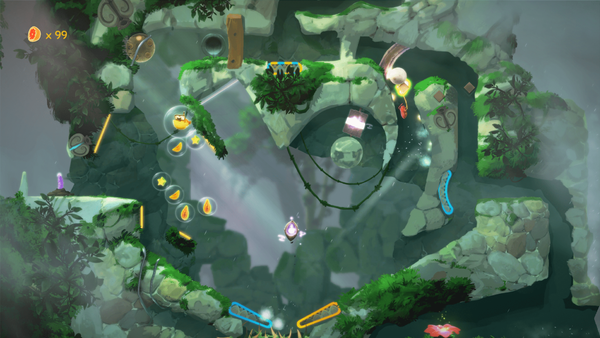
Everybody's Gone To The Rapture

Hellblade

This War Of Mine

And now, on with the full list...
20. Fez

Phil Fish's one and only game, Fez was a major runaway success back in 2012.
Whilst I'll stay away from the fact Fish had some beef with game fans and certain press outlets (leading to him quitting the industry altogether), Fez remains an incredibly innovative platformer with a killer hook: Rendering 2D landscapes in 3D.
Besides weighty movement and a general sense of momentum that means exploring the luscious environments is a blast, at any time you can rotate the entire world on a central axis, opening up scores of possibilities in terms of how to progress.
Mantling around "corners", unearthing secrets formerly stuck on "walls" - Fez fundamentally demands you think about game spaces differently, and uses this to pivot into a whole other mind-breaking twist involving various glyphs you've could've totally missed.
From top to bottom, Fez is one hell of a package.
19. The Stanley Parable

Easily the funniest game of the decade if were were championing hilarious scripts, The Stanley Parable exists to weaponise the fourth wall, working in a uniquely rewarding way if you already know how most video games function.
Centred on the titular Stanley at his desk in a nondescript factory, the whole thing is brought to life by a plucky, English narrator. It's here where developers Galactic Cafe play their hand, as you're free to make various choices in the moment on your escape path, that can completely contradict what you're being "told" or intoned to do.
Before long you'll realise the devs have accounted for your every move - from loitering in a closet for too long, to taking pathways the narrator gets increasingly annoyed by.
A ton of endings come from the game tracking everything along the way, and even replayability gets acknowledged when you go back through for a handful more tries.
Genius.
18. Journey
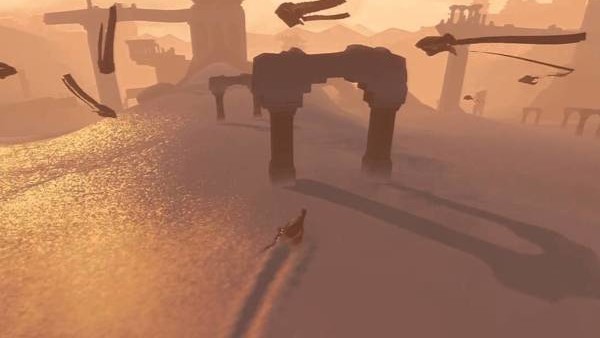
Another early decade title that showed things were going to change in regards to what video games could even "be", Journey's gorgeous graphics mask the fact it's more about going on a shared experience with a completely random individual.
Controlled by another player in real time, the only interaction the two of you can have is by tapping a button, that results in a handful of simple chime sound effects.
That's it.
From here, knowing you're in this together, you'll surf down sand dunes in the blazing sun, stealthily sneak past gargantuan cave-dwelling horrors, and climb a final mountain together, with only one person making it to the top.
What happens next encapsulates everything thatgamecompany were going for, and the literal journey you've been on, as this random person gets immortalised in the credits, and you finally get to know the name of your partner.
A brilliant idea for a video game, wrapped in an ethereal blanket that's a joy to get lost in.
17. INSIDE

Flipping things completely from the last game, INSIDE has similar themes as Stanley Parable in terms of conveying a workforce shackled to an industrious backdrop, but focuses much more on the power of individuals coming together for change.
While the majority of INSIDE has you play an anonymous small boy, venturing forever right, down into the depths of this mysterious facility, INSIDE's final moments are incredibly powerful, visceral and violent.
Feeling like a metaphor for any group of oppressed people breaking free and causing carnage, this closing run has become one of the finest moments of the decade all its own, rounding off a physics-based platformer that - thanks to being in development for 6 years - is genuinely flawless.
16. Mark Of The Ninja

Playing like a dream and looking like your favourite Saturday morning cartoon show thanks to being developed by the incredible Klei Entertainment, MotN is a fully-fledged ninja stealth game, routed to a 2D plane.
There are scores of gadgets, light/dark mechanics to know when you're safe, a brilliant sense of empowerment that turns into fragility if you mistime a kill, and that sublime art style from artist Jeff Agala that makes Klei's stuff really pop.
Alongside Metal Gear Solid V and the Hitman reboots, Mark of the Ninja came out of nowhere to be a notably stellar stealth title all who like the genre should try.
15. Super Meat Boy

Remember that run of pixel-based platformers that felt as though they made up the entire indie space in the mid-2010s?
That was all from the immaculate Super Meat Boy - a game that takes Super Mario 3's sensibilities and difficulty, and cranks those dials even more.
Known today as one of the hardest titles in all of gaming, the phrase "pixel perfect" doesn't even cut it. SMB is a lesson taught in a painstakingly obvious way: Either you learn the levels, jumps and gaps like the back of your hand, or you perish a few thousand times.
An instant-restart puts you back to try again, and you're always greeted by the brilliant idea of showing every failed attempt at once, at the close of a run.
Super Meat Boy is a delight, all told, but it's also a pure distillation of late 80s platformers, done in a way that makes you fall in love or flip a middle finger.
14. Shovel Knight

Is there any new-age game mascot as damn-near loveable as Shovel Knight?
Conceptualised through a Kickstarter campaign from developers Yacht Club, Shovel Knight has become a staple of modern gaming, appearing everywhere from Yooka-Laylee to Super Smash Bros., to even his own amiibo.
Thankfully , it's all off the back of an immaculate video game. The cerulean hero bursts onto each level with a forward flip, shovel held aloft, as a fantastically chirpy, hummable soundtrack powers you through every level. Yacht Club's environments are colourful, pacy experiences with a rewarding difficulty curve and expert writing.
Seriously, by the time you get to the final fight and see how this ends, it's a surprisingly emotional turn that cements just how much Yacht Club know exactly what they're doing. Even better, all profits have resulted in a TON of free updates, comprising additional story campaigns with different characters, a Smash Bros-style battle mode and a co-op story.
Shovel Knight is just one hell of an achievement, and props to Yacht Club for doing right by their backers, and all of us that jumped on board after.
13. Firewatch

This decade birthed the "walking sim" genre - a label initially created to spread derision and insult, but it gave us a whole new way to play, elevating the medium tenfold when it came to direct storytelling.
By removing overt game mechanics like shooting or platforming; instead focusing on conversations, environment-scanning or interaction, the genre became immediately immersive, putting you in the shoes of various characters with problems unrelated to combat or engagement.
In Firewatch's case, developers Campo Santo (formed from ex-Telltale staffers after season 1 of The Walking Dead), dove into a far more individualistic tale. One Henry takes a job watching over the forestation of Wyoming after tragic circumstances befall his relationship back home, and it's up to you just how much he then chooses to confide in fellow "firewatcher" Delilah, or simply enjoys the scenery.
Far more things happen that frame a wider narrative around the importance of taking time away from the stresses of life, and where your priorities lie when things get tough. All told though, Firewatch is a purposeful, powerful story it might take you a handful of playthroughs to fully explore.