20 Most Under-Appreciated Video Games Of The Decade (So Far)
11. Darksiders 2

Darksiders has always had a bit of trouble catching on - assumedly because its almost 'grimdark' art direction belies the beating heart of a more passionate project within. Still, where that first game featured a Zelda-like item-based progression and a TON of Z-targeting, Darksiders II saw Vigil Games take a few pages from Diablo's book, introducing a sizeable look component to proceedings.
This turned out to the missing ingredient we never knew we wanted, as on top of an almost Legacy of Kain-esque tone where Death himself is carving a path through the local populace and landscape, is a system of weapons and armour constantly being refreshed.
It means at any given time you'll be engaging in solid-feeling combat, lightning-fast platforming sections, loot-grinds or nicely-detailed story quests. Indeed, Darksiders III might still be a ways off, but with such a talented developer at the helm it's sure to be a solid continuation of quite the underrated franchise.
10. Pyre
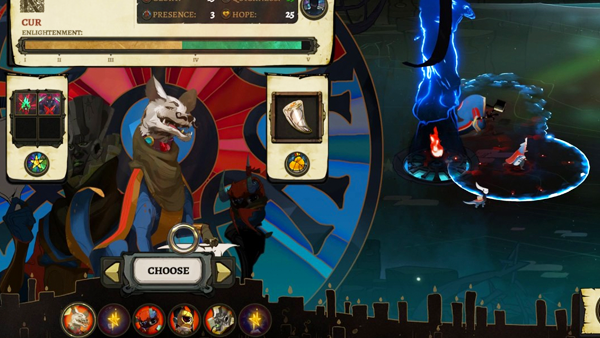
SuperGiant Games might be the best indie dev studio on the planet, crafting games that 1. Aren't released until they're polished to a mirror sheen, and 2. See a team of genuine artists (both scriptwriters and in a visual sense) make some of the most intricately designed worlds in the medium.
Pyre is nothing short of the best game they've ever made; something that blends choose-your-own-adventure plot decisions with an almost NBA Jam-like game where three-character teams have to dunk an orb in their enemies' goal to win.
Together this gives the matches an unprecedented sense of weight as each potential winner and loser really matters. Like literal life or death-type stuff.
Essentially The Banner Saga meets Final Fantasy X's Blitzball with a gorgeous presentation, Pyre will be right up there vying for the top spot of the year come Christmas time.
It's that good.
9. The Last Guardian

Arriving right at the tail-end of the best year this generation had seen so far, many just didn't have time for The Last Guardian's more 'experimental' animal A.I.
Literally meaning that the cat/dog/bird... thing Trico wouldn't immediately respond to your commands right away - or would go off and do something else, requiring repeated berating to get back in line - this was supposed to represent the idea of training a creature in semi-real time, the result being that when Trico did do what you wanted, it felt amazing.
Obviously not for everyone, but The Last Guardian remains the perfect accompaniment to Fumito Ueda's other works ICO and Shadow of the Colossus; a lovely addendum to a generation otherwise spearheaded by cinematic blockbusters and copious amounts of explosions.
8. Monster Hunter: Generations
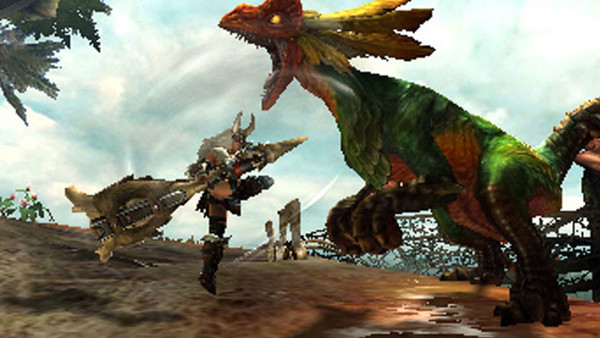
Until Monster Hunter: World comes out and shakes up the Western gaming scene like it has done for years in Japan, Generations is the most refined of the bunch. Not to be assumed with Monster Hunter: Stories (a more turn-based affair with a Dragon Quest aesthetic), this 'full on' Monster Hunter is the perfect example of why the franchise is so beloved.
Tasking you with being yet another hunter looking to journey from village to village, there is something of a story mode when it comes to hunting down a handful of specific gargantuan beasts, but Generations' various gameplay loops all involve bringing down the biggest monsters you can, to then skin and turn into loot.
The larger the foe, the better the gear you can make, and that in itself forms a solid sense of motivation to take increasingly riskier contracts. Everything can be played with a handful of friends too, being one of the best multiplayer experiences you can have when - as a team - you skewer some Smaug-sized dragon to the ground and take its hide.
7. Splinter Cell Blacklist

Just where the HELL has Splinter Cell gone? Once one of the shiniest jewels in Ubisoft's already shiny crown, after the original Watch Dogs fell on its backside we assumed they'd throw some more coals on the Third Echelon fire.
Alas, the last instalment remains Blacklist; the almost soft reboot-feeling instalment that replaced Michael Ironside's iconic vocals with one Eric Johnson, who needless to say, didn't leave a good impression.
Thankfully gameplay was spot-on, as this was a return to the Chaos Theory-esque espionage-first action, doing away with the forced story beats of Splinter Cell Double Agent and Conviction to focus on popping headshots and slinking through levels, leaving only a pile of knifed bodies in your wake.
Mostly a victim to marketing that focused on gun battles and the lack of Ironside, this is right up there with the immortal Chaos Theory as a phenomenal instalment in a franchise that needs to return like yesterday.
6. Stardew Valley

It might be critically-revered and beloved by quite a sizeable fanbase, but has Stardew risen to the ranks of Harvest Moon or had the cultural pull of Farmville? Hell no, and that's a shame, because one man coding powerhouse Eric Barone's little farm simulator has far more going on than just growing crops and wooing the local populace.
It certainly does have all that too, but Stardew introduces a multi-levelled dungeon you can rank up and investigate, one floor at a time. Items and ore from within can be factored into your daily life, creating this constantly expanding loop of seeing just how much you can get done with a given day.
Before long you'll be totally hooked on gathering your bees' overnight honey, snatching up some fruit to create a high-value jam and completing quests for the village, together warding off the advances of the megalomaniacal JojaMart.
This is a tale from the back country with heart, and though it might sound mundane as hell, there's a profound sense of satisfaction within that Harvest Moon hasn't been able to tap back into for years.
5. Batman: Arkham Origins

The Arkham game even Rocksteady forgot when Arkham Knight's credits started paying tribute to everything that went before, Warner Bros. Montreal's crack of the whip has become a success in retrospect.
Where at launch, Origins represented the publisher cranking out another instalment despite Rocksteady not being at the helm, writers Dooma Wendschuh, Ryan Galletta and Corey May frame a brilliant take on the character that shows Bruce getting used to being the Dark Knight in the first place.
We see him discussing various facets of the Batman persona with Alfred, being introduced to Joker and subsequently saving Gotham, one face-smashed goon at a time. Origins certainly fell by the wayside when word of its crowbarred-in multiplayer surfaced, but this tale of the Bat has a ton to offer.
4. Until Dawn

One of the most impressively-written games you'll ever play, Until Dawn starts as a fairly simplistic teen horror slasher where you're the victim and evolves into an overlapping, consequence-tracking story of various characters and their motivations.
Motion-captured to perfection by a solid cast including Mr. Robot's Rami Malek and Heroes' Hayden Panettiere, you get to play as each one in turn, uncovering the mystery behind what goes bump in the night as the crew are attempting to eulogise their former friends who perished one year before.
It's the sort of story that would translate perfectly to the big screen, but with you're making key 50/50 decisions every few moments (and the game is asking what you're afraid of, which then affects some jump scares - don't choose spiders!), there's an extra level of proficiency to one of the finest horrors in gaming.
3. Titanfall 2

If the first Titanfall wasn't marred by such a disastrous exclusivity association with the Xbox One, it would've taken off like nobody's business. Sadly even the sequel never got off the starting blocks thanks to releasing in the week between Call of Duty and Battlefield, though that hasn't stopped a diehard community logging in to play every month.
That said, Titanfall 2 deserves nothing but the highest of praise and the biggest player base around.
Right next to Destiny 2 when it comes to best first-person shooter combat on the planet, at any given time you'll be knee-sliding, summoning a huge Titan mech, delivering thunderous melee attacks, wall-running or using a grapple hook to fly across the map, coming crashing down on an unsuspecting foe.
There's a level of kineticism and relentless energy to Titanfall that makes it immediately playable, but once you get your head around its various systems and how to truly master them, there's nothing like it.
2. Fallout: New Vegas

Included not because Fallout: New Vegas isn't a well-known entry in the series, but because Obsidian never get the credit they deserve when it comes to developing an outstanding entry in the series.
Yes, it's incredibly buggy and yes, there's a lack of polish, but dammit if New Vegas isn't arguably a much more immersive and better RPG experience than Fallout 3 and 4. From the protagonist being a better fit for the post-apocalypse thanks to their job as a courier (thereby getting around the notion of questioning all they see) to having NPCs and quest chains comment on the bigger decisions you make, there's a much better sense of let's say, 'quality control', as oppose to the pure anarchy of Bethesda's entrants.
Even Bethesda acquired Fallout from the cult-beloved studio Black Isle in the first place, though a number of ex-Black Isle staffers actually make up Obsidian, letting New Vegas be something of a 'spiritual sequel', providing you know where to look.