8 Video Games That Changed Due To Fan Feedback
Sometimes developers respond to good ideas as much as they do to controversy.
Video games are an inherently collaborative art form. While there might be a director overseeing the whole project who gets final say on the major decisions, there are hundreds of people across different departments all putting their own stamp on things, offering feedback, and helping shape the project in both big and small ways.
That creative process often leads to suggestions and advice that make good games even better. After all, a second opinion is always essential, as any creative can become attached to an idea that everyone thinks is bad, but they're certain is genius.
Collaboration is key, but it doesn't always come from inside the companies making these major releases. Sometimes, it's the fans who directly influence how a game is made.
Whether it's because the developers sought advice from die-hards before committing to an idea or backlash forced their hand to change a controversial feature, fan feedback has been integral in shaping some of the biggest games ever.
8. Star Wars Battlefront 2 Rips Out Its Entire Progression System

Star Wars Battlefront 2 is the game on this list that caused the biggest fan backlash. Hell, the sequel caused such a stink it resulted in the most downvoted comment in Reddit history, and allegedly even reached Disney head honcho Bob Iger.
The biggest problem was the microtransaction system EA and DICE implemented in the multiplayer. It certainly wasn't the first game to feature loot boxes and in-game currency, but it was the one that pushed these systems to breaking point. Before release, fans worked out that unlocking heroes (which were available from the start in the previous game) would take tens - if not hundreds - of hours of grinding, essentially forcing players to pony up money to bypass the time-sink.
Throw on top of that a pay-to-win loot box system that gave bigger spenders better weapons and abilities, and it was a complete mess. EA were forced to respond, and they tore out the progression system, and over the next couple of months reshaped it entirely.
The launch version of Star Wars Battlefront 2 was poison, but it might never have become the genuinely stellar shooter it is today without this controversy.
7. Destiny Replaces Peter Dinklage With Nolan North

Considering it was the first of its kind, it probably shouldn't have been surprising that Destiny's launch was as rough as it was. Blending MMO sensibilities with regular first-person shooting, Bungie's new IP was an ambitious game that buckled under its own weight. The one part of the title fans didn't expect to be so rough, however, was everything surrounding the script, story and performances.
Sadly, what transformed Destiny from being a bit disappointing into a bona-fide meme was Peter Dinklage's role as A.I. companion Ghost. His bored, monotonous performance was made worse by the lines he was forced to spout. Everyone singled out the dreadful (but hilarious) "That wizard came from the moon!" quote, but that was just the tip of the iceberg.
Instead of living with the mess they'd made, over a year later they actually drafted in industry veteran Nolan North to re-record all of Dinklage's work to give the character a bit more, well, character.
The end result was a marked improvement, but there was still some nostalgia for Dinklage's crappy original.
6. Assassin's Creed: Syndicate Adds Female Playable Characters

A few years and a total overhaul later, it might be easy to forget just how much of a disaster Assassin's Creed: Unity was. The game came at the apex of Ubisoft's mishandling of the franchise, with a sequel coming out every year that always had bigger ambitions than it could possibly ever achieve.
However, while Unity is now remembered for its glitches and horror-show faces, another controversy dogged it before release. Previous AC games had featured female playable characters - usually only in the multiplayer - but the option for co-op players to choose a different gender was removed from the game prior to its launch.
That's questionable as is, but the devs put their feet in it completely when they attempted to justify the decision. They mentioned how it was originally planned, but was cut because it was "a lot of extra production work." Fans and journalists called BS, saying the excuse that it would double the workload was overblown.
There was nothing the studio could do for Unity in response (especially after the mess at launch), but the desire to see playable female characters didn't fall on deaf ears. The next game, Syndicate, featured the option to play as a female protagonist, and it's become a staple of the series ever since.
5. Days Gone Makes Deacon Saint John Likeable

Days Gone turned out to be way better than a lot of people expected, but for a long time it looked as though it was going to be a total disaster. The early trailers were rough, while all of the pre-release previews reiterated the same criticism: lead character Deacon Saint John wasn't compelling enough.
Though performer Sam Witwer was giving it his all, the material itself just wasn't up to snuff. The biker was essentially nothing more than a dime-a-dozen post-apocalyptic anti-hero with a heart of gold. Fine, but boring.
His character arc didn't help either. Deacon was initially constructed to be an unlikeable ass who'd redeem himself over the course of the story. While that's something that can work in a movie or TV show, it's harder to pull off in a game. Here, the player would spend every waking minute in the mind of this one guy, and if he was unlikable and irredeemable for the first 10 hours or so, there'd be no connection between him and the person controlling him.
The devs took this feedback, smoothed out some of his rougher edges, changed some of the lines that took particular flack, and morphed him into a character players could relate to.
4. Gears Of War 3 Let You Decide Carmine's Fate

One of the most beloved running jokes throughout Epic's original Gears of War trilogy had to do with the Carmine brothers.
In the first game players were introduced to Anthony Carmine, who lasted all of about five minutes before being shot in the noggin. In the second, Ben Carmine joined Delta squad as a rookie, and for a while looked like he might avenge his brother. Sadly, he ended up in the belly of a giant worm, torn to pieces by a bunch of critters.
Fans knew that Epic were going to continue the trend and have another Carmine sibling in the third game - this time, Clayton - and the big question was whether or not he too was going to succumb to a tragic (and kinda hilarious) death.
However, the devs decided to let fans in on the fun, and left it up to them to decide whether the next Carmine would make it through unscathed. The Fate of Carmine promo was launched, where Xbox players could buy either a 'Save Carmine' or 'Carmine Must Die' t-shirt for their online avatars, and whichever side sold the most would influence the story.
All proceeds went to charity (which came to around $150,000), and in the end, Clayton ended up making it out alive.
3. Far Cry 5's DLC Was Shaped By A Fan Survey
Back at the start of the generation, Far Cry was going through a bit of a moody teenager phase. Ubisoft didn't quite know what it wanted the franchise to be, and tried a bunch of different styles to figure out what suited it best. The 80s action movie pastiche, Blood Dragon, released as DLC for the third game and everyone loved it, with many fans and critics even saying they preferred it over the base experience, which was much more rooted in realism.
Far Cry 4 continued what 3 started, but spin-off Primal again flirted with a more imaginative setting, going back in time to 10,000 B.C. After this in 2015, Ubisoft released a poll to fans, asking them what kinds of worlds they'd want to see from future games.
There were a bunch of things they could vote on - including a Spaghetti Western pastiche, an island of dinosaurs, vampires, and a sequel to Blood Dragon - all suggesting the franchise was again going down a wackier route.
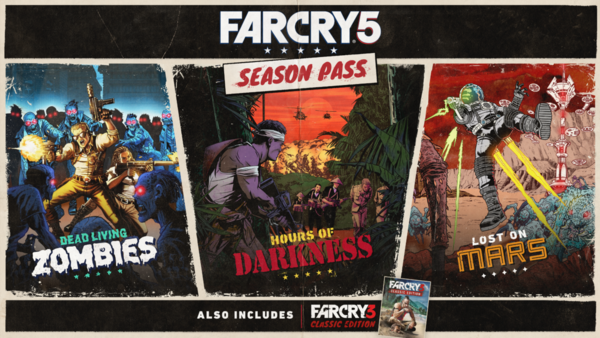
Though these ideas didn't make it into the next numbered release, they did act as the base for its DLC. All of the expansion packs come from ideas included in this poll - a zombie outbreak, a trip to another planet, the Vietnam War - so it can be assumed they were the ones that received the most votes.
2. Mass Effect: Andromeda's Direction Was Decided Over Twitter

The poll sent out to fans while Ubisoft was hard at work on Far Cry 5 had plenty of different scenarios that the company wanted fans' opinions on, but when it came to continuing the Mass Effect franchise, Bioware had a much more straightforward choice they needed to make.
The third game had resolutely rounded off the trilogy. The choice made by players at the end of that sequel changed the very fabric of the universe, and there was no way for the devs to follow up on it without picking one ending as canon (which would disregard the choices of so, so many players), while accounting for each one would be impossible.
Most fans assumed that a continuation would happen via a prequel, chronicling the first-contact war and the humans discovering the Mass Effect relays. That would have been limiting though, as it would have to tie directly into what we knew from the trilogy about that period, which was quite a lot.
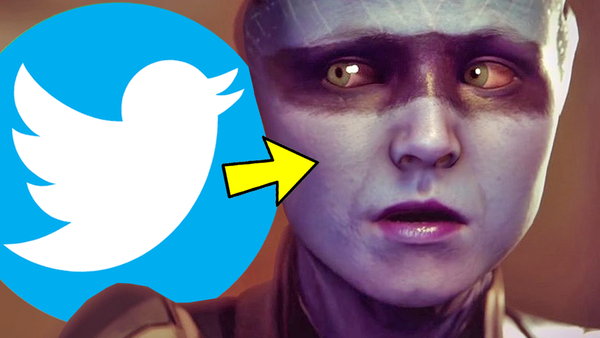
Because this is the modern age, ME director Casey Hudson simply took to Twitter and asked the fans what they wanted. Though this wouldn't have been the sole reason Mass Effect: Andromeda opted to venture to a new galaxy, it certainly influenced the decision.
1. Metal Gear Solid 4 Is An Entire Game Of Fan Service

Every sequel following the first PS1 game was supposed to be the last Metal Gear Solid director Hideo Kojima ever made. MGS 2 ended Snake's journey on an ambiguous note, putting the focus on the player and their own meta journey rather than the in-game conflict between heroes and villains. After that, he jumped into the past with MGS 3 to focus on Big Boss' early years as a war hero, rounding off his series in a satisfying way.
Or so he thought, because even though years had passed, fans still demanded to know what happened to Snake, Raiden and everyone else following the events of the second game. Consequently, Kojima felt obliged to return to answer all of the lingering questions, as well as make good on some of the concepts that fans didn't gel with.
There's a reason, then, why MGS 4 is referred to as 'Fan Service: The Video Game'. It bent over backwards to explain everything about its convoluted plot, while at the same time turning the despised Raiden into a total badass ninja.
That doesn't mean it's bad - and this fourth title actually boasts some of the best moments in the entire franchise - but it's undeniably a game made for fans first and foremost.