Shenmue III Review: 10 Ups & 6 Downs
A lucky hit or a forklift accident?

After waiting for what seemed like an eternity, with only the slightest inkling of precisely how it was going to play - if indeed, it really could be called a game at all - the latest masterwork from one of the games industry's most esteemed and influential figures finally released this month.
No, we're not talking about Death Stranding - though the plodding pace and dodgy dialogue might easily confuse it with Hideo Kojima's Jeff Bezos sim - but Shenmue III.
In 1999, the original Shenmue gave us a glimpse of the future of video games. Twenty years on, Yu Suzuki's most unlikely of sequels, crowdfunded by fans who simply refused to let the dream die, transports us firmly to the past.
Shenmue III doesn't pave the business' future path in the way the original, at massive expense, did, but nor does it try to. It is, contrarily, a time-capsule - albeit with some decorative bells and whistles.
But crucially, is it any good? Does a slightly modernised Shenmue still hold up, 18 years after Ryo got stuck down a cave? Or is it simply a sobering reminder that, just perhaps, the series was never much actual cop to begin with?
That really depends on who you ask...
Downs...
6. Quite Tiring Events

Shenmue brought an absolute truckload of brand new inventions to the gaming industry, but rather crashed into a bollard when delivering quick time events.
The QTE, a once interesting and exciting way of making cutscenes interactive at a time when major, Uncharted-style set-pieces were simply not possible, has since became one of those inutterable terms amongst gamers. Ironically, it has become synonymous with a lack of player agency during a game's big moments.
Sadly, QTEs return in their most inimical form in Shenmue III, exhibiting all the hallmarks that have latterly earned derision. There wasn't one single sequence I passed on the first run through; the time allotted for recognition and input is simply too short, and more often than not, a correct button-stroke comes a fraction of a second too late.
As a consequence, a feature ostensibly designed to increase the game's narrative fluidity obstructs it; failure merely results in a restart, devolving into a process of memorised Simon Says.
5. Recycled Music
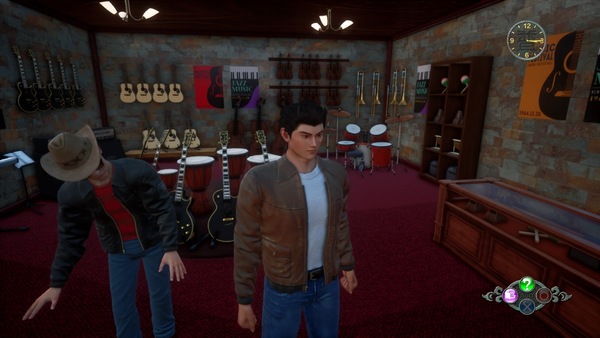
Although nothing quite matches the emotional tug of Shenmue II's soaring Morning Fog's Wave, or the sheer majesty of Takenobu Mitsuyoshi's main theme - beautifully rearranged numerous times throughout this game - Shenmue III's original music is nevertheless an aural treat. Unfortunately, it's in desperately short supply.
Expanse means expense, and with the game's second area, Niaowu, flourishing much further than the original plans - and budget - anticipated, a few corners have been filed down. That means that virtually every establishment along the bustling littoral and beyond is soundtracked by music recycled from Shenmue II's various outlets. Whilst the tracks are rarely inappropriate, they're too familiar to work in a game with such a discrete focus on sense of place.
For the most part, Shenmue III escapes the pitfalls of so many retro revivals, in forging original content without resorting to repetition. The rehashed audio is one area where it stumbles.
4. A Surprisingly Static World

Superficially, Shenmue III's twin settings of Bailu and Niaowu follow in the great tradition of previous locations Yokosuka and Hong Kong, presenting worlds which seem to breathe whether Ryo's asking inane questions within them or not. Life goes on around our Lucky Hit hawking hero, with the vast majority of denizens more concerned with their own business than where one can find an ancient martial arts scroll.
Peer closer though, and whilst Shenmue III's time marches on, the world is disappointingly static. In Shenmue and its sequel, every NPC had their own routine. Shops would close at a certain time, shutters would come down, and nightlife would begin. There was a touch of Groundhog Day about it, but it was something hitherto unseen in 1999.
Such routines are, well, routine in many open world games of 2019, but Shenmue III - a 2019 game building on the legacy of its predecessor's innovation - is actually a step back.
Stop and drink in the majesty of Niaowu, and something strange hits you. With the exception of a certain gambling parlour, shops are open round the clock. Their shopkeepers stand in the same spot all day. Even in the aforementioned casino, the croupiers are rooted to the spot beyond the gates, which dramatically fling open at noon. Ryo will systematically fail to remember people he's spoken to previously - even when they become crucial to the plot. Any dynamism in the world is disappointingly scarce.
Again: it's understandable. The world is populated with several hundred NPCs, all of whom already have reams of unique dialogue. At some stage, a line had to be drawn, and it ended on the opposite side of giving them anything beyond the veneer of life.
3. Technical Grievances
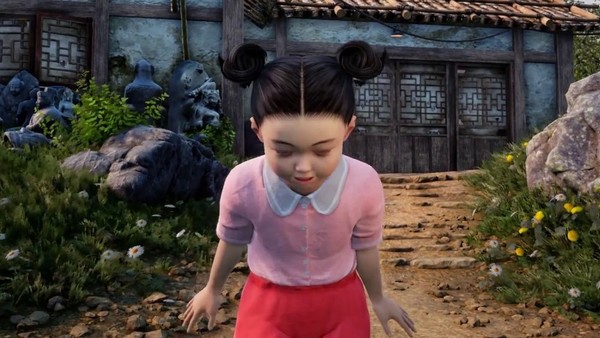
Ironically, in spite of the fact the original Shenmue was an absolute technical marvel many years ahead of its time, nobody was expecting - or demanding - that a sequel released two decades later would be too.
Which is just as well, because it isn't. The Unreal Engine 4 is growing long in the tooth now, and its various warts are frequently inflamed throughout. Whilst on the one hand it's an achievement that Shenmue III's environment is almost entirely concatenated, sans loading times, this often means staring at an empty street - and in some glaring instances, an empty shop counter - as you wait for details and NPCs to load in.
The game's framerate chops like a nervous chef, and there are other bizarre visual glitches which defy explanation. Rain in Bailu only falls during cutscenes; it's merely suggested otherwise. Lip-synching exists neither for the English nor Japanese dub - which, at least, is equitable. The notebook's map will sometimes fail to appear, as though your mate Shenhua has went mad with an eraser while you were sleeping.
Do any of these issues break the game? No. And do any of them ultimately matter? Again, not really. There's never a point when Shenmue III isn't playable. But they are a little odd - if not inexcusable.
2. Exhausting Stamina

Shenmue fans will tolerate an awful lot - they're Shenmue fans, after all - but the all-new Stamina system is an innovation not just ill-advised. It's actively discouraging.
In Shenmue III, Ryo Hazuki has developed some sort of wasting disease, possibly from lightly brushing against a poisonous weed whilst hiking through Guilin. This means that, no matter what he's doing - even if he's just standing in one spot, rocking from one foot to the other - his HP will continuously drain. Running - and you'll want to do a lot of running - accelerates the process of decay, until it reaches a point when Ryo has to eat something or else, in his words, he'll "fall over".
A stamina system which limits you from legging it at full pelt continuously is not uncommon in many modern games, and it's actually a perfect fit for a series which began life with a sharp focus on realism. Unfortunately, the execution in Shenmue III makes an already slow game a painful trudge. The point is to force players to restore health by stockpiling food, making use of the game's excellent economy. More often than not though, it's just a frustrating impediment. Need to fight someone to continue the story? Too bad: your HP has dropped too low getting there. Failed said fight? Wait till tomorrow, or eat five bulbs of raw garlic.
That's not realism: it's just a chore.
1. I See...

For a game whose primary focus is narrative, it really should go without saying that the script, plotting, and dialogue are of the absolute utmost importance. Unfortunately, it seems it really did go without saying amongst Shenmue III's writers, when they didn't know better.
Particularly in the first part of the game, there is a frequent discordance muddling Ryo's conversations. Very basic questions are met with nonsensical, sometimes gibberish responses. Maybe it's supposed to represent the language barrier in the heart of rural China, but that was never an issue when Ryo learned Cantonese on a boat between Shenmue I and II. It often feels as though the script never passed the eyes of a native English speaker before going gold, which considering the game's global development, is inexplicable.
The narrative beats are somewhat erratic. A popular character from a previous game is reunited with Ryo with nothing more than a cursory greeting; they've only been separated a matter of weeks in game terms, but one showing up in an entirely different city is a coincidence worth comment. The resolution to an 18 year cliffhanger is brushed under the carpet in all of thirty seconds, as if to draw a line under it - despite all the obviously-quite-profound mystical nonsense. Ryo, despite almost never having a dialogue option in the game, can for no reason at all refer to an old lady as 'gorgeous', in a complete betrayal of his character. The compassionate but naive Shenhua is similarly, albeit briefly, bastardised in an even more galling manner.
Shenmue was never especially known for its strong dialogue; this was, after all, the game which gave us the immortal, "years ago, I was Chinese." But shoddy translation in a less globalised world could be blamed for those endearing slips. Are Shenmue III's script shortcomings an attempt to recapture that? It just doesn't make sense. Literally.
Ups...
10. The Wealth Of Activities
In a world before mainstream gaming became a beach of sandboxes, one of the defining features of the original Shenmue was the incredible breadth of pastimes open to the player outside the main plot.
Unlike modern playgrounds, which boast optional activities for the sake of packing their otherwise empty open worlds with content, Shenmue's intimate distractions were designed with wasting time in mind. Even when Ryo's quest ground to a halt, time didn't bend for it - and something to fill those hours was not just welcome, but outright necessary.
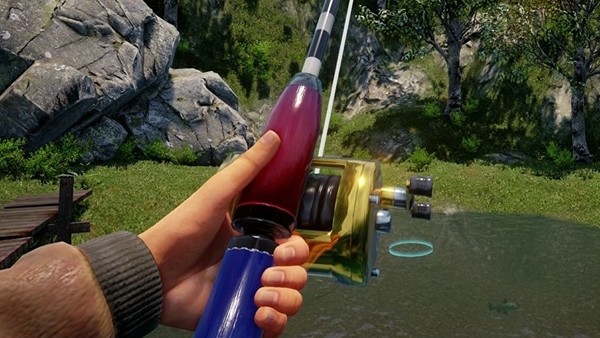
Frittering the hours away is far less of an issue in Shenmue III, especially thanks to a time-skip feature (albeit one mostly restricted to the first area), yet the game offers a cornucopia of extraneous activities both larger and more enjoyable than previous servings. Hunting for fishing spots is diverting; fishing itself is a tangible pleasure, thanks to Far Cry 5-esque right-analogue reeling. The game arcades, whilst sadly and understandably devoid of SEGA hits, are bursting with original penny-pinchers hearking to both the timeframe and Suzuki's ludographic education (and there are still a few Virtua Fighter nods here and there).
The real highlight is Niaowu's Chobu hunt. By far the most 'gamelike' element of any Shenmue so far, every single one of the second area's shops hides a tiny figurine of the town's mascot, Chobu Chan. Find him, and you earn a little redeemable card. It's difficult to explain the sheer pleasure of the hunt, but it's arguably the most pure fun to be had in the game.
(We searched high and low, and we think we found all of them - if you're interested.)
9. Corey Marshall's Unwavering Performance

Though his flat entreaties as to the whereabouts of sailors and speakers of the ancient language of Chinese have been meme-ified to high heaven, the suggestion that Corey Marshall's monotone rendition of Ryo Hazuki is an example of terrible video game voicework sort of misses the point.
The truth is, whilst objectively a bit naff, Marshall's Ryo is absolutely perfect. The Hazuki sprog's almost unflinching stoicism and inability to understand human emotion (see how many female flirtations he entirely fails to register) practically demands his robotic, scarcely human delivery. Would he sound right any other way?
Absolutely not, and Marshall, an endearingly self-deprecating friend of the fandom, knows it. It may not have been the intention of the inexperienced actor in 1999, but bringing his A-Game - ie, his F-game - absolutely was in 2019. If Ryo had suddenly started thesping like Simon Callow, just for being stuck in a cave for ten game minutes, the illusion would have shattered. Marshall's faithful voice is just another part of the game's incredible transportative charm.
8. It's The Economy, Stupid
In the first Shenmue, Ryo had it easy. Though obviously grieving over the murder of his father, to the extent he put his entire life on hold to embark upon a folly of vengeance, the blow is softened somewhat by his housekeeper providing him with a bequeathed per diem each morning. Eventually, he's forced to get a real job, but is sacked after a week for being such a trouble causer.
In Shenmue II, Hong Kong dollars aren't handed to you every day, and the player must work for a living. So tedious are the jobs on offer - one of them is literally standing still and shouting 'Lucky Hit?' at passersby - that the best option, always, is to bet the house in a high-stakes gambling den, save-scrubbing until the favourable dice roll up.
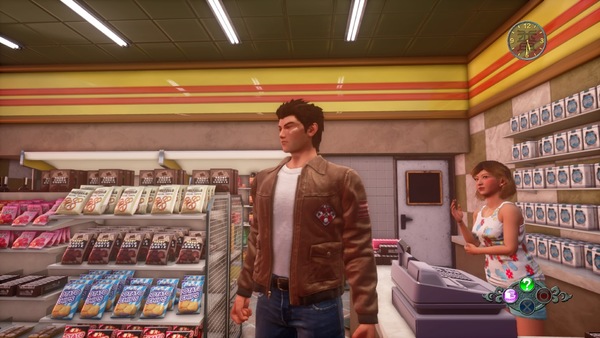
It works, but it is ultimately, like this writer, an inelegant hack. Shenmue III manages to fix this, with an economy which rewardingly ties everything in the game together. Yes, the jobs are still tedious (and for some reason, Ryo stands on a turntable to chop wood), but any earnings can be converted to gambling tokens, which themselves can be redeemed for prizes. Those prizes? They're sold for big profit in pawn shops.
Every item, then - and there are a lot, all meticulously realised and carrying faintly ridiculous descriptions - has value. Money is crucial not just for daily expenses, but buying Kung Fu moves. Herbs gathered around the game's green belts can be traded for huge profit, and those capsule toys - once just for novelty - are good for free scrolls, provided you've a full set. Sure, there's something a little odd about lugging five Buddha statues and a painting of a boy holding a bottle of vinegar around, but in a game where narrative is key, it's good to know Ryo's distractions now serve a purpose.
7. It's Secretly Beautiful
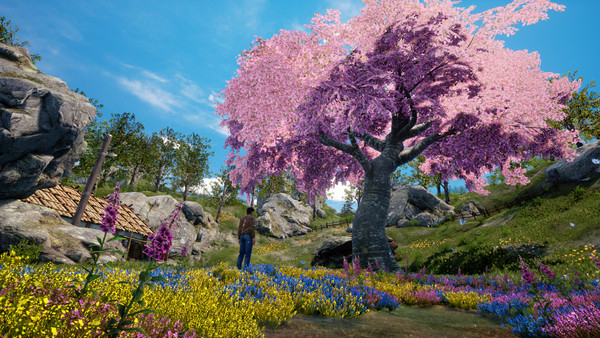
Early shots of Shenmue III rather worryingly depicted a plastic Ryo Hazuki, stiffly engaging with an anthropomorphised orange like something out of Toy Story. Though the fears over the game's visual competence were hugely exaggerated and unfairly reiterated on the basis of these very early teasers, no-one but the most ardent Shenmue adherent could deny that the animation and faces were just a little... shoddy. These were slightly unnerving signs.
Admittedly, the finished product's faces and animation are still a little janky by unrealistic 2019 standards, but outside a few overly exaggerated examples (who for some reason, mostly populate the opening area), everything looks just about right.
The environments are another story entirely. Squint a little, turn down the dimmer switch just a bit, and then, like one of those Magic Eye images, everything suddenly pops spectacularly. Both the verdant, pastoral plains of Bailu, delicately illuminated by flickering torches, and the bustling, electronic streetscapes of Niaowu look downright stunning.
Yes, the magic fades if you get too close, but a setting's beauty is defined by the bigger picture - not the individual bricks or blades of grass.
6. If It Ain't Broke, Improve It Anyway
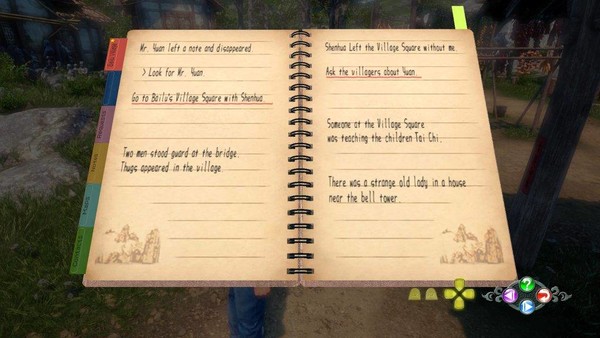
Although Shenmue III remains utterly faithful to the conventions and systems of the series, it isn't entirely to a fault. Indeed, any actual faults within those old systems have been ameliorated, but crucially, not overhauled.
Take the notebook as an example. Ryo's jotter was perfectly functional in the first two games, and would have pleased fans no end if reproduced as was. Shenmue III's notebook, however, introduces a superb tab system, and is used as a scrapbook of sorts for maps, photos, and other little crucial doodles. They are subtle, smart changes which in no way spoil the charm or flavour of the feature.
The same applies to the RPG elements bolted onto the fighting system. It's nothing special - either build your attack by sparring or boost your endurance practicing stances - but it's a very natural evolution that gives the game just that little more depth compared to either of its predecessors.
5. Niaowu
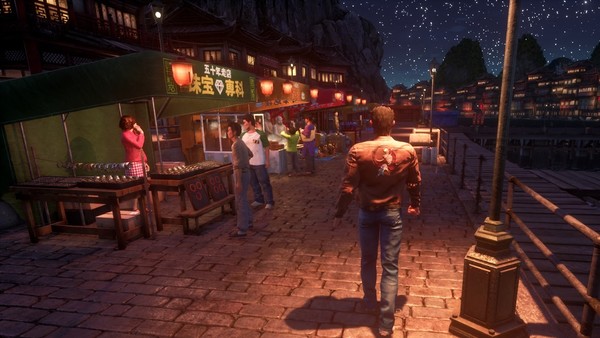
Shenmue III, as a whole, is structured something like a soft-reset of the first two games combined.
The opening section in the mountainside village of Bailu works perfectly fine in steadily re-introducing the foibles of Shenmue, as Ryo settles into a low-key, quotidian pattern of familiarity and friendliness reminiscent in spirit if not setting of Dobuita. It's serviceable stuff, but systems aside, the rural life doesn't quite have the same feel of Shenmue.
And then, about halfway through the game, you're whisked off up the river to Niaowu, a vague proxy of China's Fenghuang. The change is astonishing. Just like that, you're right back in the thick of city life, surrounded by shops and street hawkers. You have to pay for your room each day, and hardly anyone around town could give two figs about you - unless you're opening your wallet.
In other words, it's a pared down re-imagining of Shenmue II's Hong Kong.
This is where Shenmue III comes alive. Niaowu is positively huge, and the range of options are almost overwhelming. The expanded activities and Chobu hunt mentioned previously give you plenty of reason to comb the place over from top to bottom, but you hardly need one: just soaking in its incredible atmosphere is a pleasure in its own right.
4. An Incredible Sense Of Place

The one thing Shenmue does better than any other franchise, and the aspect most fans point to as the reason they fell in love with it, is not the plot, nor the forklift simulation, but an unparalleled sense of place.
In the way lazy reviewers like to say any AAA comic book game makes you feel like men spider, bat, and super in nature, Shenmue makes you feel like Ryo Hazuki. Which is to say, all the tiny details combine to entire submerge you within what is, ostensibly, an entirely ordinary world. The slice of life is strangely hypnotic, and gradually you become needled into this richly formed tapestry.
It's arguably the closest games have ever come to presenting a virtual holiday. Shenmue III adds two new destinations to the list. But again, it's those little touches, not the broad strokes, which make it. It's saying good morning to Shenhua at the start of each day, before later retiring to exchange stories round her hearth. It's this homliness contrasted by the austere sterility of Hotel Niaowu, which itself grows comforting as you get, little by little, to know the ferocious-looking woman behind the desk. It's making a long distance call to your housekeeper, or de facto girlfriend, not because there's an achievement or loot tied to it, but because you get the impelling feeling that Ryo really should.
You don't get to spin webs, or drive Batmobiles. But you get to see the world in the well-worn leather jacket of another. This is living.
3. To Be This Good Took Ages

The more you play Shenmue III, the more you realise that the game is far, far bigger - and better - than it has any right to be.
Yes, a lot of time has passed, and what was once trailblazing has become blasé, but it's nevertheless worth noting the sizeable and significant difference between Shenmue's SEGA-busting $70 million budget and Shenmue III's crowdfunded kitty a tenth that size. That the game has managed to deliver not just a mere echo of its big money forebears, but a booming reverberation in equal scope and with arguably greater depth - and one not totally out of place on this generation's hardware - is a towering accomplishment.
For the sake of context, consider that the average AAA title developed in 2019 costs somewhere in the region of $50 million to produce - and that's without considering marketing and promotion. Shenmue III whipped up around $7 million - just $2 million more than fellow Kickstarter campaign Mighty Number 9, a project which took half the time to realise. Yes, there were handouts from Sony, and a dodgy under-the-table deal with Epic, but for the most part, Shenmue III is a glowing exemplar that motivation means just as much as money. There are plenty of big budget console games out there which might have greater technical mastery, but struggle to promote even half the soul of Yu Suzuki's passion project.
2. The Story Continues...

It's hard to say whether this is a positive or a negative at this stage - another 18 years on tenterhooks waiting for something approximating an ending will ensure it's the latter - but *SPOILER ALERT* Shenmue ends, like James Bond, promising that Ryo Hazuki will return.
Unbelievably, after all this time, we're still no closer to a resolution on this epic revenge saga. A heartfelt message from Yu Suzuki after the credits reveals that, not only did the game quite obviously outstrip its original ambitions, but that the veteran designer, now in his 60s, will do everything in his power to see the series through.
The prospect of Shenmue III was, for the longest time, beyond reasonable hope. That the words 'Shenmue IV' are now being uttered with a degree of legitimacy stretches the credibility of the entire universe. Given the manner in which this project not only met but in many ways surpassed its stated goals - and all on a shoestring - Shenmue fans should be very excited indeed about what a fourth - yes, fourth - game in Ryo's journey can accomplish.
Of course, another sequel is far from guaranteed. But that's OK too: there's something strangely reassuring about yearning for more Shenmue.
1. It's Shenmue

Ultimately, whatever flaws Shenmue III has - and to anyone unfamiliar with the series, it's frothing with them - they don't really matter.
Yu Suzuki wasn't aiming to make a big budget, triple-A game to rival Death Stranding, in spite of the similarities, but a love letter to fans of his defining work. The same fans who, after tirelessly keeping the word 'Shenmue' in the conversation for nearly 20 years, made the dream a reality, funding and effectively producing Shenmue III via its astonishing Kickstarter campaign.
Yes, it doesn't get everything right. The combat, whilst functional, is no better than the Dreamcast's Virtua Fighter 3. The pacing, even for Shenmue, would embarrass most tortoises. The stamina system is, frankly, abysmal. But it is, as with this a review in this limiting format, so much more than the sum of its parts.
For better or - for many uninitiated - worse, Shenmue III steadfastly, wholly and unashamedly Shenmue. It's pretty much everything it ever wanted to be - and therefore, everything we ever wanted it to be.
-
The game was reviewed using a retail PS4 copy provided by Deep Silver.