The Legend of Zelda: Ranking Every Game From Worst To Best
 There are few names in the gaming world that demand the level of respect that The Legend of Zelda does. It may not be the highest selling video game series in the world (its never even had its own Mountain Dew flavour), but anyone who seriously calls themselves a gamer could never deny the importance of this franchise. With a perfect blend of action, adventure, puzzle-solving, and RPG elements, the games are truly unique and have spawned countless imitators, none of which have been able to capture the magic of Zelda. To call the series legendary has become a cliché, but its only a cliché because its been said over and over again by millions of different people. At 27-years-old, which in game years is like 92, Zelda is still looking great. And 2013 is shaping up to be the biggest year for the series since 2011; both a remake of The Wind Waker, and A Link Between Worlds (a sequel to A Link to the Past ), are being released in the coming months. In honor of these upcoming releases, Ive decided to examine the history of Links adventures to rank the games from worst to best. Im going to do my best to rank these objectively, but I realise that some guy is going to complain and say I cant believe you ranked so low!!!!1 So maybe I cant please everyone, but hopefully Ill p*ss off as few people as possible. Note: I didnt include Links Crossbow Training for the Wii, or the Phillips CD-i games. If you dont understand this exclusion, then you dont know enough about Zelda to be reading this list.
14. Four Swords / Four Sword Adventures
 Yes, these are technically two different games, I get that. However, I feel they have enough in common to warrant my combining them into a single entry for this list. And frankly, I dont have enough to say about these games to justify giving them individual spots on this countdown, so theres that. Because Im a Zelda fanboy who is too blinded by my allegiance to the company to be truly critical of the series, Im of the opinion that there are no bad Zelda games, merely ones that arent all that good. These games definitely fall in that category. I remember having a lot of fun with these games with friends back in the day, and the fact that they brought multiplayer to the world of Hyrule was a novel innovation, but even as a youngster I knew they didnt live up to the lofty standards of this franchise. They may have had some nifty puzzles thanks to the addition of multiplayer, but that Zelda magic just wasnt there. Were they good games? Sure, but that only carries you so far when dealing with a series of this caliber.
13. Phantom Hourglass
 When Nintendo announced a Zelda game for their insanely popular DS handheld, fans worldwide pondered how the game would utilise the systems unique dual touch-screen features. Maybe they would use the top screen for gameplay and the touch-screen for maps and inventory? That would be logical. But since when has Nintendo ever done whats logical? Never, thats when! Not only did Nintendo decide to take a page from Apple and release Phantom Hourglass with all-touch controls, they even pulled a George Lucas and didnt give fans the option to enjoy the game the old-fashioned way. You know, with buttons and stuff. The outcome? Honestly, I really enjoyed the touch controls. The gameplay wasnt always 100% accurate, but it was a refreshing change that had many surprising benefits, such as the ability to draw on maps. Despite its many good qualities, this game has one horrendous, repetitive, boring flaw that has forced it so far down this list, and anyone who has played it knows what Im talking about: The Temple of the Ocean King. Not only is it one of the least interesting dungeons in a series that prides itself on interesting dungeons, the player is forced to revisit this place and replay the same sections like TWELVE TIMES. I might be exaggerating. I dont think Ive played the game since its release, and the Temple of the Ocean King is the reason why.
12. Zelda II: The Adventure of Link
 Even when dealing with such a highly regarded series, youre bound to come across a few haters every now and then. One of the most common criticisms of Zelda is that every game in the franchise is the same because they all follow the same tired formula. This is my response to those people: They did try a different formula once. It was a bold new direction that changed everything you thought you knew about Zelda. And it was only the second game in the series. And you know what? Everyone hated it! Okay, not everyone hates Zelda II, but there arent a whole lotta people who would claim it as their favorite game either. Its become universally known as the black sheep of the Zelda family, and that reputation isnt undeserved; it really doesnt fit in with the other games in the series. Theres an RPG-style overworld, strange side-scrolling combat, and its much more difficult than any of its brothers or sisters. The results werent terrible by any means, but the game was far less beloved than the original LoZ, so Nintendo decided it would be best to stick with the originals formula from that point on. So the next time you complain about the Zelda series being stale, just remember this one entry that dared to be different, for better or worse.
11. Oracle of Seasons / Oracle of Ages
 Hes combining two different games into the same entry AGAIN? I know, I know, Im cutting corners. As with #14, I understand that these are two different games. But they were both released at the same time, have nearly identical names, and are meant to be two games that form a single experience. Nintendo realized that Pokemons dual-game formula was making them money, so they decided to apply it to other franchises. Im surprised they didnt do the same thing to Mario. Anyway, the Oracle games were developed by Capcom, which was a big deal because they were the first Zelda games developed by an outside company that didnt totally suck. In fact, they were actually pretty good. Each game had a unique focus, with Seasons paying more attention to combat and Ages being more puzzle-oriented. This made sense in theory, since the series has always been renowned for its perfect mixture of combat and puzzles, but when playing these games individually, that perfect mixture is missing and the overall experience suffers for it. Had Nintendo and Capcom not opted for the Pokemon model and instead created one focused, balanced game, they could have had another Zelda classic on their hands. What we got was certainly no dud, but it makes you wonder what could have been.
10. The Legend of Zelda
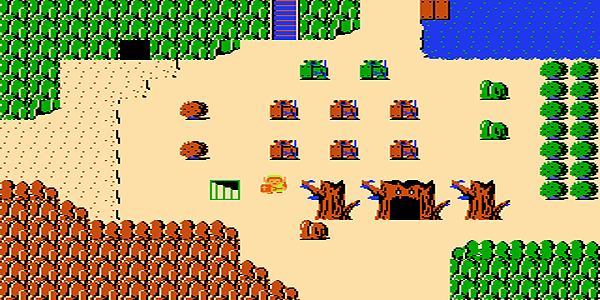 Here it is, the one that started it all. Without question, its the most important game on this list, and an argument could be made that its the most important game of all time. 15 years before Grand Theft Auto III supposedly invented the sandbox genre, LoZ was giving gamers a wide-open world to explore. Also, you know that ability to save your progress? LoZ was the first console game to have that feature, and its societal impact is undeniable. The OG Zelda game was so influential, that F. Scott Fitzgerald named his wife after it. All that said, I would never recommend this game to anyone who has never played Zelda before. Despite it being the first in the series, its not the best entry point for first-timers due to its old-school sensibilities. Hardcore gamers constantly complain that games today hold our hands too much, and I agree with that to an extent, but this game is the other extreme. It just throws you in the middle of a field and gives you absolutely no hints as to where you should go or what you should do. Furthermore, the gameplay itself hasnt aged all that well, even when compared to contemporaries like the Super Mario Bros. or Mega Man 2. These gripes aside, the game is still a lot of fun, and its great to see how the series got started. Just warm yourself up with some of the more recent titles before playing it, especially if you grew up with Nintendo games that remind you to take a break every ten minutes.
9. Twilight Princess
 Before I discuss the quality of the game itself, allow me to brief you a little on the history of Twilight Princess, perhaps the most reviled entry in this beloved series. Nintendo had received a lot of negative feedback for the unorthodox approach they took with The Wind Waker. Sure it was critically acclaimed and had plenty of fans, but there were many who were vocally displeased with its kiddie art-style, its short playtime, all the sailing, etc. When Twilight Princess was announced, the Wind Waker haters jumped for joy because it appeared to be more in line with the Nintendo 64 Zelda games. Upon its release, the game seemed destined to become a classic, with many critics calling it the best Zelda ever. Traditionalists were especially happy that it was nothing like Wind Waker. It had a dark and realistic tone, (it was the mid 2000s afterall) it was lengthy, and it had absolutely no sailing whatsoever. Everything was coming up Twilight Princess. So, what the hell happened? Fast forward to 2013 and everything has been reversed. Wind Waker is now universally adored, and poor Twilight Princess, once praised for being the second coming of Ocarina of Time, is now panned for being the second coming of Ocarina of Time. Without question, Twilight Princess is most derivative entry in a franchise that is regularly criticised for being derivative. It tries so desperately to be Zelda-esque that it fails to bring anything new to table. Not only that, but its dark and realistic tone hasnt aged nearly as well as Wind Wakers lighthearted, cartoonish whimsy. And sure, its a long game, but so many of its hours are unnecessary padding that could have been trimmed to make a more concise experience. Oh, and dont get me started on those boring-as-hell wolf sections. Id choose sailing over that any day of the week. Now, it may be an overblown, overly-serious, overly-nostalgic game, but it certainly doesnt deserve the amount of hate it gets. Too many seem to forget the things this game did exceptionally well. The level designs, especially the dungeons, were extraordinary, even when they were obviously ripping off Ocarina of Time. There was also a memorable cast featuring two of the series best characters with Midna and Zant, the former being Links most well-rounded sidekick and the latter being an antagonist that was as frightening as he was sympathetic. So while it may not be the best Zelda ever, as some initially claimed, its far from an abomination, as so many claim now.
8. Spirit Tracks
 As I said before, Im a Zelda fanboy to my very core, and damn proud of it, but even I had a hard time getting excited for Spirit Tracks. Zelda on a Train was a concept that was somehow both oddly unique and incredibly boring, but worst of all, it felt restrictive, a stark contrast to the freedom the series is famous for. Of course, I still bought it (my fanboyism is pretty extreme), but I had no desire to play it. In fact, it sat on my shelf for over two years before I finally gave the wretched game a chance. And I absolutely loved it. The sheer amount of surprising fun that is packed into this game is staggering. What shocked me the most was how enjoyable traversing the train track overworld was. Whether youre avoiding evil bomb-trains or using the cannon to discover new secrets, its a blast just getting from point A to point B, and once youre at point B, it gets even better. The dungeons are all expertly designed, and the addition of Ghost Zelda adds an extra layer of strategy to puzzle-solving. Its true that much of the exploration that makes Zelda great has been lost, and its a very short game; purists may scoff these deviations, but for those of us with a busy schedule, Zelda streamlined is a beautiful thing.
7. The Minish Cap
 If theres one thing Ive discovered while doing research for this list, its that theres a disturbing amount of erotic Goron fan fiction on the internet, but if there are two things Ive discovered while doing research for this list, the second thing is that Zelda fans hate an awful lot of Zelda games. Whether Ocarina of Time is being called an overrated hack, or Twilight Princess is being dubbed the worst thing since Hitler, it seems like no game in this series is safe from scorn. No game except The Minish Cap. Ive never come across anyone who hates this game; only a bully would pick on this adorable little guy. Developed by Capcom for the Game Boy Advance, The Minish Cap is one of the most immediately charming games in the franchise. When Zelda is turned to stone by the evil Vaati, its up to Link and Ezlo, the titular talking hat, to re-forge the Picori Blade and un-stone the princess. To do so, our heroes must use magical stumps around Hyrule to shrink in size and explore the microscopic land of the Minish. The Normal World / Other World trope has been a staple of Zelda games since A Link to the Past, but Minish Cap makes it feel fresh and organic, and collecting kinstones is easily one of the most addictive sidequests in the series to date. Its a shame this irresistible game is so unappreciated, always being overshadowed by its more famous (and infamous) siblings, but somehow, that only strengthens its appeal. This is the hidden gem of the Zelda series, and though it may be small, it can still hang with the big boys.
6. Skyward Sword
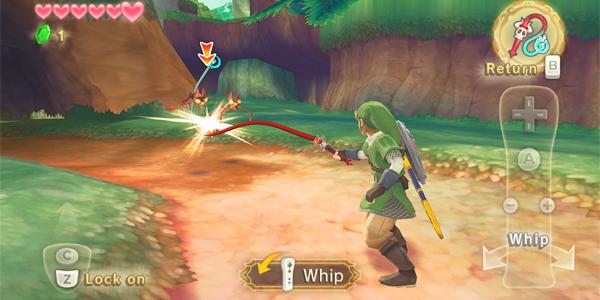 You know how movies sometimes get converted to 3D in postproduction because the studios want more money? And how it always ends up looking like ass? Well, thats pretty much what happened to Twilight Princess. It was developed for the GameCube, but then Nintendo decided they should also port it over to the Wii. The results were definitely mixed; the Wiis motion controls were great for aiming projectiles weapons, but sword combat was pretty weak. To swing Links blade, the player had to awkwardly wiggle the Wii-mote and hope that no one walked in the room to see it. Needless to say, the Gamecube original is the preferred version. Many fans were understandably skeptical when another Wii Zelda adventure was announced. Even when Nintendo told us there would be accurate 1:1 motion controls for swordplay, we still had our doubts, but the finished product is arguably the finest example of video game motion controls, featuring sword combat that actually required strategy and precision. Of course, there were occasional hiccups, and using that harp was a pain in the ass, but my experiences with the games motion controls were quite positive. Technical innovations aside, the game itself is absolutely wonderful. The classic formula is still there, but there are a few tweaks that made it seem fresh (the overworld plays more like a dungeon than an area between dungeons). Couple that with an interesting origin story, likeable characters, a beautiful orchestrated soundtrack, and visuals that harken back to The Wind Waker, and you have yourself the best Zelda in years.
5. Links Awakening
 The first portable Zelda game could have been simple. Nintendo could have easily pumped out a lazy, half-hearted adventure, or ported a shoddy version of an existing console game over to the Gameboy, and it still probably wouldve sold well, but the Big N wanted to release a game that would live up to the Zelda name, and with Links Awakening, they didnt let us down. From the opening minutes, this game sets itself apart from the others in the series. Theres no princess to save, no threat of Ganon in sight, no Hyrule to explore. Instead, this quest takes place on a trippy tropical island, where Link is tasked with finding eight magical instruments to wake the Wind Fish. Admittedly, the stakes arent that high, but thats a part of the games appeal; the laid back approach makes the game all the more endearing. But what really makes this game unique is its off-beat tone. Zelda games can get pretty weird, but Links Awakening might just be the weirdest of them all, featuring cameos from Mario and Chain-Chomp, bizarre talking bosses, and a mischievous raccoon that needs to be knocked out with sleeping powder. Is it silly? Most definitely, but in a series that often takes itself a bit too seriously, its refreshing to find a game so willing to turn and face the strange.
4. Ocarina of Time
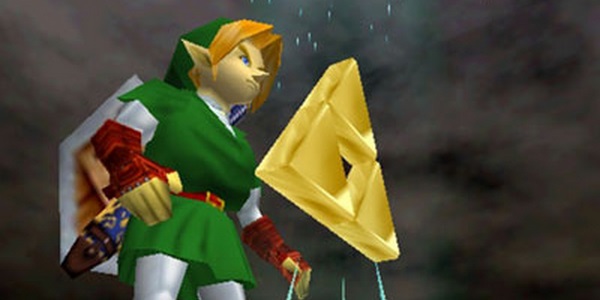 Theres no turning back now. I dont have much time left. The Internet knows that Ive placed Ocarina of Time in a position that isnt number 1. By the time you read this, Ill be dead. Any justification for this unforgivable sin will most definitely fall on the deafest ears, but Im still going to try to explain myself. Please understand that Ocarina of Time is my favourite game ever. Not just my favorite Zelda game, my favourite game period. It was the first game in the series I played, the one that got me hooked for life. So many of my childhood memories are tied to playing this wonderful game, and to this day I can still play it blindfolded until I get to the Water Temple (then I go to GameFAQs, blindfolded). Im sure the angry mob outside my home feels the same way about this game, but we need to look at this objectively and realise the hard truth: Ocarina isnt the best Zelda game, and that isnt a bad thing. To grasp this concept, first you must remove those nostalgia glasse; they cloud your judgment and make you look ridiculous. Now, consider that the number 4 is pretty darned close to the number 1, so this position really isnt all that insulting. A low ranking on a list isnt going to diminish Ocarinas reputation, nor its many accomplishments (It invented lock-on targeting! Show some damn respect, man!), and why must this always be the be-all, end-all Zelda? Is it so bad knowing there are games out there that are even better than this one? Isnt that actually kind of great? I certainly think so. Not so sure about that angry mob, though
3. Majoras Mask
 For a game rated E for everyone, Majoras Mask is a hell of a lot more mature than most M-rated games out there. Few games before it, if any, were as thematically complex or emotionally resonant. Links surreal adventure through the strange land of Termina was packed with melancholy and heartbreak. The villain wasn't some megalomaniac seeking world domination; he was a lonely, deformed child, corrupted by evil when he felt abandoned. The menacing moon descending on Clock Town provided a constant sense of doom, reminding players of their own mortality, and that no matter how hard you try, not everyone can be saved. If I were to base my rankings solely on storytelling sophistication, Majoras Mask would most definitely come out on top. However, it is still a video game, and as a game, it can be very frustrating. Majoras Mask features two gimmicks: 1) Magical masks that can alter your powers and appearance, and 2) a Groundhog Day-style time travel mechanic that makes you relive the same three day cycle, and it's the latter that can be rage-inducing. While its interesting and provides some powerful moments in the narrative, the problem is that if you screw up or take too long complete a task, you have to relive the whole cycle. I enjoy a good challenge as much as the next guy, but in my opinion, the threat of losing hours of your life for nothing isnt challenging, its wasteful. With that said, the mask gimmick actually improves the gameplay experience infinitely. The masks all have unique abilities, ranging from transforming Link into an all-powerful warrior God, to blowing up Links face. Each one alters the way the game plays, providing enough variety to ensure the player never gets easily bored. Without a doubt, Majoras Mask is the definitive flawed masterpiece of the Zelda series, a true cult classic. It may not have the most replay value, but honestly, one play-through is all you need for it to stay with you forever. Dont meet with a terrible fate and miss out on this amazing game.
2. The Wind Waker
 Remember those people who ripped on this game, with its silly cel-shaded graphics and timeless art-style? Those guys were douchebags. Some of them are still around, but theyre just an attention-starved minority. These days, The Wind Waker is considered a modern classic, a game as pleasing to the eye as it is to the thumbs. The HD remake is coming soon, but honestly, its not all that necessary; its visuals hold up better than any realistic game of its era. Hell, I bet it will hold up better than most games of this era. Of course, the Wind Haters out there complain about more than just the graphics. "Its too easy, bro," they say. As someone who plays video games for pleasure and not for some masochistic desire to be punished, Ive never understood this argument, especially when it comes to Wind Waker. The difficulty is lower than previous games, but I attribute that more to the polished-to-perfection combat than to shoddy game design. "Too much sailing, dude." Admittedly, the sailing does get a little bit tiresome after a while, but theres no denying the majestic feeling you get the first time you set sail and ocean theme kicks in. "The Triforce fetch quest was the most tediously awful seven hours ever." Well yeah, but actually Im not even going to try to defend that. It was pretty bad. These gripes may keep WW from claiming the top spot, but the bad is definitely drowned out by the good. The gameplay, music, the surprisingly well-paced story, and (of course) the visuals are all stellar. And maybe once the HD remake is released, this kids game could be bumped up to number 1. You know, as long as Nintendo replaces that fetch quest with a proper dungeon.
1. A Link to the Past
 Im a strong believer that video games are art; the detail and creativity that go into their creation should be enough to convince dissenters. However, the one problem games face is that they age more rapidly than any other art form. The industry is constantly evolving, and games that are mind-blowing one year become archaic the next, but there are a handful of games out there that have not only passed the test of time; theyve set the curve impossibly high for their inferior classmates. A Link to the Past is one of those games. More than two decades after its release, ALttP is still a superior product in every way. Like many games of the SNES era, its visuals and gameplay hold up amazingly well. While it may no longer be state-of-the-art, it has a retro charm that only gets stronger with each passing year. When describing most older games, people often say it plays really well for an older game", but ALttP actually plays better than most modern games, and it will probably play better than most games released ten years from now. If youre new to the series, I cant think of a better place to start than here. Every subsequent Zelda game owes its existence to this legendary title. This is where the classic Zelda formula was concocted, and Nintendo has yet to stray too far from it. And why should they? Why mess with perfection? What do you think of our rankings? Let us know in the comments below.