20 TERRIBLE Horror Movies That Were Huge Hits
These woeful horror flicks made INSANE amounts of money.

Two things are indisputably true about the box office: quality has never been a reliable indicator of a film's commercial performance, and horror remains perhaps the single most reliable of all genres where grosses are concerned.
Horror fans are a curious, enthusiastic bunch who will keenly throw down their cash for a movie that looks fun, regardless of how the reviews shake out. And that's thoroughly evidenced by the following 20 horror films, which, despite being mostly panned by critics and receiving wildly mixed notices from general audiences, still danced their way to massive box office success.
Sometimes, a film is simply able to coast on brand recognition or survive on the virtue of a few entertaining kills, no matter that the bones of its script and wider filmmaking are, well, actually terrible. This is all a further testament to horror's enduring popularity with audiences, that as the decades pass, there's still something elemental about the genre that strikes a chord with viewers of all persuasions.
So, no matter how bad a new horror movie might look, don't discount its potential to absolutely clean up at the box office...
20. Scream 7
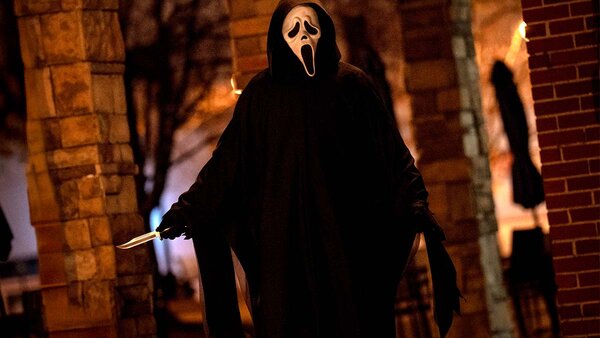
In the wake of hefty pre-release controversy after original star Melissa Barrera was fired from this slasher sequel, Scream 7 went on to receive the worst reviews of the series to date.
Ultimately, many felt that the end product obviously reflected the fact that the filmmakers were forced into a creative pivot following Barrera's dismissal, and what writer-director Kevin Williamson cooked up felt more like a Stab movie than another reliably solid Scream film.
But Scream 7 also proved the series to be totally critic-proof, given that it recently crossed the $190 million mark worldwide, leaving it the highest-grossing entry in the franchise.
The sequel's success proved beyond any doubt that Scream can survive without Barrera or previous co-star Jenna Ortega, that audiences would still turn up for Neve Campbell, and bad reviews don't even matter.
One can only hope that the already-in-the-works Scream 8 benefits from a less-messy development, and that this sloppy, tedious sequel was a mere unfortunate blip.
19. Resident Evil: The Final Chapter

Though Paul W.S. Anderson's Resident Evil movies never won much favour with critics and received mixed notices from the video game series' fans, they nevertheless performed reliably at the box office, seemingly peaking with the fourth film, Resident Evil: Afterlife, which grossed over $300 million globally on a $60 million budget.
At this point, the law of diminishing returns began to kick in, with fifth film Resident Evil: Retribution scoring a still-great $240 million, and it was therefore assumed that the franchise-concluding Resident Evil: The Final Chapter would continue the downward trend.
But The Final Chapter ended up shocking everyone, as despite taking a pummelling from most critics and fans, it raked in an astonishing $312.2 million, making it the series' highest-grossing entry.
This was largely thanks to the film's ludicrous over-performance in China, where it made $160 million alone. For context, that's almost $40 million more than Star Wars: The Force Awakens made in the country the previous year.
18. Annabelle
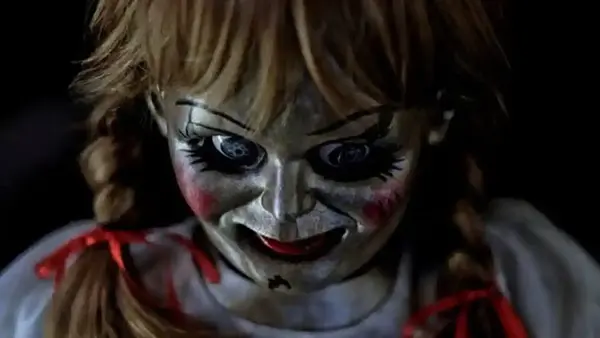
The success of The Conjuring led Warner Bros. to fast-track development of spin-off Annabelle, a prequel centered around the creepy possessed doll introduced in the original film.
Annabelle ended up releasing in October 2014, barely a year after the release of the first Conjuring, and was widely panned for its generic story and characters, over-reliance on jump scares, and generally sauceless filmmaking approach compared to James Wan's stellar work on The Conjuring.
But on a budget of just $6.5 million, Annabelle nevertheless made an incredible $257.6 million, making it clear early on that this IP was going to be an absolute goliath. And that's been supported ever since by the several other indifferently received Conjuring-verse movies, each of which made hundreds of millions of dollars at the box office regardless of negative critical reception.
Barely a decade on, the nine Conjuring pictures have collectively grossed almost $2.8 billion worldwide on a combined budget of just $263 million.
17. Ouija

Horror movies based on specific, easily understood concepts tend to be catnip for audiences, but even so, a film based on Hasbro's Ouija board game seemed like a bit of a stretch.
Indeed, Ouija was utterly savaged by critics and general moviegoers alike for its soul-sappingly bland, generic treatment of the familiar "cursed object" horror movie, unaided by forgettable characters, predictable scares, and a sterile PG-13 content rating.
Above all else, what a criminal waste of the great Olivia Cooke it was.
Even so, Ouija nabbed $103.6 million globally on a tiny budget of $8 million, and even opened ahead of a little-known action film called John Wick.
This surely speaks to the broad, international brand recognition of the Ouija board itself, which is probably more ubiquitous in pop culture than most actual horror franchises.
Somewhat ironically, though the Mike Flanagan-directed prequel Ouija: Origin of Evil was vastly superior in every way, it wasn't nearly as commercially successful, barely cracking $80 million on a $12 million budget.
16. Saw 3D
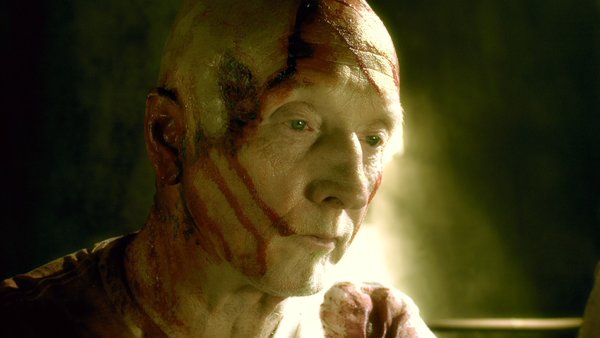
Saw 3D was hastily decided to be the final entry into the horror franchise following the commercial under-performance of Saw VI, which, despite scoring franchise-best reviews at the time, grossed a disappointing series-low of $68.2 million amid stiff competition from the burgeoning Paranormal Activity.
And though Saw 3D was widely panned by critics and fans as a lackluster conclusion to the mainline series, unaided by a visually hideous 3D gimmick, the combination of dubious "The Final Chapter" branding and a 3D uplift allowed Saw 3D to become a genuine financial juggernaut.
On a budget of $17 million, Saw 3D made $136.2 million, almost doubling Saw VI's gross and ultimately making it the highest-grossing of the Saw movies since Saw IV.
Considering how many past-their-prime horror franchises end up sputtering to a lackluster commercial finish, it's truly impressive that Saw managed to put out such strong numbers in its seventh - yet ultimately not final - installment.
15. The Haunting in Connecticut
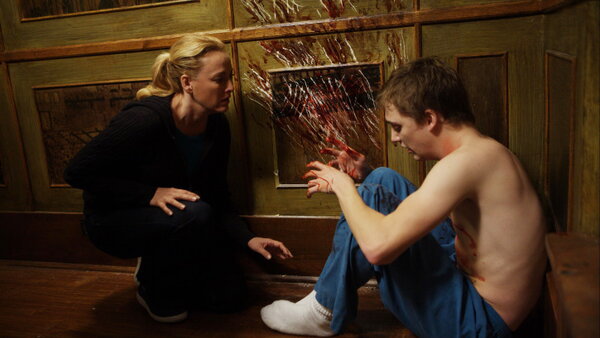
Hands up if you remember anything about The Haunting in Connecticut, a thunderously generic supernatural horror film which, despite solid performances from Virginia Madsen and Kyle Gallner, painted firmly within the lines of the cliched, jump scare-packed supernatural horror flick.
But none of this stopped the film from making away with $78.8 million - a sizable return on its $10 million budget.
This can be attributed to a few factors, first and foremost that supernatural horror enjoyed a resurgence in popularity around the 2010s, with movies centered around possession proving particularly successful. Elsewhere, the "based on a true story" framing is pretty much a cheat code for adding interest to a horror film, and with its permissive PG-13 rating, it evidently lured in teenagers likely to be less fatigued by its overfamiliarity.
Despite the picture's success, standalone sequel The Haunting in Connecticut 2: Ghosts of Georgia received only a paltry theatrical release, where it failed to recoup even its low $8 million budget.
14. Five Nights at Freddy's

There's perhaps no better recent example of a truly critic-proof horror movie than Five Nights at Freddy's, the long-awaited adaptation of the hit video game franchise which was largely rubbished by critics for its moldy "scares," near-incoherent approach to lore, and excessive runtime.
But that didn't stop it scoring a strong "A-" CinemaScore with its teenage target audience, who turned up in numbers that drove its box office to an outrageous $297.2 million - almost 15-times its $20 million budget.
It's an even more mind-bogglingly impressive result when you consider that Five Nights at Freddy's was released on streaming service Peacock in the U.S. the very same day it landed in cinemas. Its success was nothing if not a testament to the strength of the IP, and that its millions of teen fans wanted to experience it on the big screen with their friends.
Recent sequel Five Nights at Freddy's 2 was similarly panned by critics but also performed well, scoring $239.6 million on an admittedly bigger budget of around $50 million, ensuring that a threequel is already in the works.
13. I Still Know What You Did Last Summer

Though I Know What You Did Last Summer was hardly a critical smash, it sure seemed like it compared to sequel I Still Know What You Did Last Summer, which was rushed into production following the original film's success and released barely a year later.
I Still Know What You Did Last Summer was near-universally slammed by critics for being a blatant rush-job repeat of the first movie and serving up one of the most unintentionally hilarious killer reveals, well, ever. But the sequel still grossed a tidy $84 million, which, while down on the first film's $125.3 million, still marked a hefty return on its $24 million budget.
The sequel's success in spite of its woeful reception underlines the late-'90s slasher revival ushered in by Scream two years prior.
A planned direct sequel to I Still Know wasn't immediately produced, however, possibly due to that second picture performing significantly worse domestically than its predecessor, eventually leading to a straight-to-video sequel, I'll Always Know What You Did Last Summer, being instead released in 2006.
More recently, we finally got a belated "legacy sequel" to I Still Know What You Did Last Summer, which once again succeeded at the box office despite terrible reviews.
12. Meg 2: The Trench

Jason Statham-starring shark thriller The Meg was by no means a good film, but it was a mildly amusing slice of trashy fun, and even with a massive $180 million budget, it managed to gross an incredible $529 million globally, almost one-third of which came from China alone.
2023's Meg 2: The Trench received considerably worse reviews than its predecessor, as even with horror auteur Ben Wheatley directing, it was a too-often dull slog that mostly failed to deliver the bonkers thrills anyone who enjoyed the first reasonably expected.
And while Meg 2 didn't get close to the first film's gross, it still made a respectable $398.5 million - an especially solid figure as this sequel was produced for a smaller $140 million.
The combination of its tighter budget, the reliable box office might of Statham, its genre-crossing action-horror blockbuster appeal, and once again huge success in China added up to ensure that Meg 2 effortlessly weathered the storm of bad reviews.
11. Paranormal Activity 4
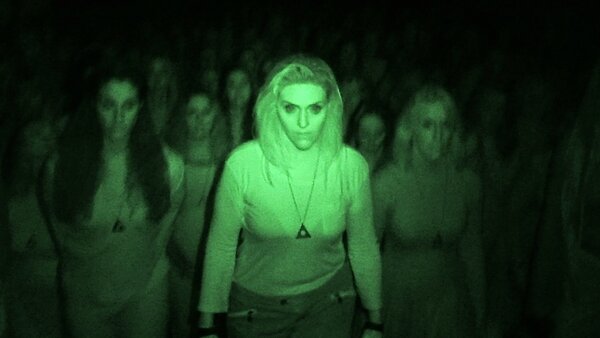
Paranormal Activity is one of the great horror success stories of the last 20 years, given that Oren Peli's micro-budget $15,000 original grossed $194.2 million worldwide and in turn launched a still-ongoing franchise.
The original trilogy of films were all decently received by critics and fans alike, with the second and third movies basically replicating the box office success of the original on still-modest budgets of just a few million dollars. But the wheels finally came off the enterprise, at least where quality is concerned, with 2012's Paranormal Activity 4, which was rightly panned for largely rehashing the series' prior successes while failing to bring much fresh or original to the table.
Yet that didn't stop Paranormal Activity 4 from grossing $142.8 million, which, while a notable drop from the three previous films, was still a massive return on a mere $5 million price tag.
This did appear to mark the point at which the law of diminishing returns began to kick in, though, as the two Paranormal Activity movies released theatrically since - 2014's The Marked Ones and 2015's The Ghost Dimension - grossed "just" $90.9 million and $78.9 million each.
It'll certainly be interesting to see if the upcoming eighth PA picture, which is being designed as a theatrical relaunch for the franchise, restores its former commercial glory.
10. The Devil Inside

The Devil Inside is one of the most infamous horror films of the last 20 years; a possession-themed found footage romp which was raked over the coals by basically everyone who watched it for, above all else, its atrocious non-ending.
The film courted controversy on release weekend for abruptly cutting to black mid-chaos and pointing viewers to a website to find out more information about the ongoing mystery. This caused the film to score an uncommon "F" CinemaScore, which is typically the kiss of death where box office is concerned.
And yet, despite so much vitriol pointed its way, The Devil Inside still grossed an unfathomable $101.8 million before the end of its run - an even more impressive result considering the movie's mere $1 million budget.
The Devil Inside remains the highest-grossing film to ever receive an F CinemaScore, a result which can only be partially explained by the combined popularity of exorcism features and found footage at the time.
It pissed enough people off, though, that Paramount didn't bother with a sequel despite the obvious financial incentive.
9. A Nightmare on Elm Street (2010)

Horror fans' hackles were raised when Warner Bros. announced a remake of Wes Craven's legendary A Nightmare on Elm Street, especially once it transpired that neither Craven nor original Freddy Krueger actor Robert Englund had any involvement in the project.
So, few were shocked when Elm Street 2010 was deemed a woefully inferior reimagining whose only saving grace was Jackie Earle Haley, who delivered a solid-if-squandered performance as Freddy.
Despite the utter drubbing it took from both critics and horror fans in general, the $35 million project grossed a sturdy $117.7 million globally, putting it ahead of other big-budget horror remakes produced by Platinum Dunes - namely The Texas Chainsaw Massacre, The Amityville Horror, and Friday the 13th.
Despite this remake seemingly resurrecting Freddy with a high degree of commercial success, a sequel never materialised, possibly due to how overwhelmingly hostile the wider response was to the film.
A second remake was subsequently announced by Warner Bros. and New Line Cinema in 2015, but more than a decade later, it still hasn't materialised.
8. The Gallows
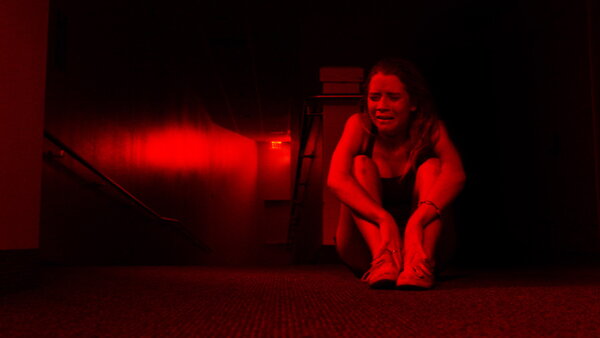
Horror has historically been a haven where extremely low-budget fare can still make stupid amounts of money regardless of their actual quality, and there are few better examples of this than The Gallows.
This 2015 supernatural found footage film was criticised for its low-effort script, underwhelming scares, failure to do anything interesting with the found footage format, and its visual garishness.
The utter disdain that followed its release didn't stop The Gallows from grossing $43 million, and considering it was produced for a ridiculously small $100,000, that means it made 430-times its budget back.
Despite this, 2019 sequel The Gallows Act II was given a tiny theatrical release the very same day it hit streaming, small enough in fact that its box office grosses were never even reported. And it impressively received even worse reviews than its predecessor, sitting at a disastrous 0% on the Tomatometer.
7. Halloween Kills

Halloween Kills was largely deemed a wildly disappointing follow-up to 2018's surprisingly successful franchise course-correction, with many expressing disappointment in both its deeply idiotic storytelling and the decision to sideline Jamie Lee Curtis' Laurie Strode in hospital for most of the runtime.
Though it grossed barely half of 2018's $259.9 million, Halloween Kills' $133.4 million total was still a massive return on its $20 million budget, all the more so considering that Universal released it on streaming service Peacock the very same day in an attempt to bolster subscriptions during the pandemic.
Threequel Halloween Ends similarly followed suit, because despite drawing sharply divided reactions, it grossed $105.4 million globally, which, while another steep drop from its predecessors, was still a solid return on its $33 million budget, again with it releasing day-and-date on Peacock.
If nothing else, David Gordon Green's Halloween trilogy reaffirmed the cultural staying power of Michael Myers even when most of the movies just weren't very good.
6. Fantasy Island

A horror-themed reimagining of the hit '70s TV series Fantasy Island certainly wasn't what anyone had on their bingo card, but the potential was absolutely there.
But as this was an offering from schlock maestro Jeff Wadlow - who we'll soon be mentioning again - it wasn't remotely surprising that it was panned for its tin-eared dialogue, messy plot, and lack of scares.
However, Fantasy Island still managed to be a sizable box office success because it was a Blumhouse-produced movie, meaning its production budget was tiny and even modest returns would allow it to recoup its costs.
On a budget of just $7 million, it ultimately grossed $49 million. While hardly among Blumhouse's biggest success stories, that's nevertheless a hefty return-on-investment, especially once ancillary streaming sales are factored in.
And yet, have you heard a single, solitary soul talk about Fantasy Island since it hit cinemas back in February 2020?
5. The Strangers: Chapter 1

2008's home invasion horror The Strangers was a massive commercial success, ensuring that this blatant one-off project was going to be franchised out until audiences got tired of it.
2018's belated, mostly standalone sequel The Strangers: Prey at Night fared less well but still turned an easy profit on its low budget, and in 2024 the series was resurrected yet again for a new trilogy of films kicking off with The Strangers: Chapter 1.
More-or-less a tepid rehash of the original 2008 film, Chapter 1 lacked the gut-wrenching suspense and unease of its inspiration, delivering a thoroughly naff, warmed-over retread with no compelling ideas of its own. But it still managed to gross $48.2 million, which, with the film's silly-low $8.5 million budget, made it an easy hit.
Moreover, the entire new trilogy of Strangers films was shot consecutively in Slovakia in 2022 for a total budget of around $25 million, and though each installment was less successful than the one before, they still grossed a total of almost $80 million, ensuring a firm return for Lionsgate.
4. Chernobyl Diaries

A found footage film set in the shadow of the Chernobyl disaster is a pretty damn promising setup, but Chernobyl Diaries ultimately had little more going for it than its awesome setting, given the paper-thin characters, cliched scares, and terrible VFX on offer otherwise.
That said, Chernobyl Diaries still pulled in $37.2 million worldwide - a stellar return on its mere $1 million production budget, achieved by shooting in the budget-friendly Serbia and Hungary with a cast who were largely little-known.
In addition to releasing at a time when found footage was hugely popular, the marketing smartly focused on the eeriness of its Pripyat setting and the involvement of Paranormal Activity filmmaker Oren Peli, while paying little attention to the characters and story.
Despite the obvious potential for the movie's success to spawn several similarly low-budget sequels, whether theatrically released or sent straight to streaming, Chernobyl Diaries surprisingly remained a one-off.
3. The Nun

Back to the Conjuring-verse we go now, for the second spin-off from the mainline franchise with The Nun, a 2018 prequel centered around the demonic nun Valak (Bonnie Aarons), who was so memorably introduced in The Conjuring 2.
Though The Nun offered a potential-rich premise and eerie Romanian setting, it ultimately failed to do much with it or its solid visuals and talented ensemble cast, squandering all of this amid a snoozy series of been-there, done-that set-pieces.
Yet it's a testament to how thoroughly Nun-pilled the world was after The Conjuring 2 that the film still pulled in audiences, going on to gross an outrageous $366 million globally on a mere $22 million budget.
At the time of its release, this actually made The Nun the highest-grossing movie in the entire Conjuring series, a record it held until last year when it was eclipsed by The Conjuring: Last Rites.
Though neither of the Nun movies have offered much beyond their vibes-heavy visuals, together they've grossed over $630 million worldwide on a combined budget of just $60 million.
2. Truth or Dare

Nothing says creative bankruptcy quite like trying to spin a Final Destination-esque horror riff out of a party game like Truth or Dare, and true to form for Blumhouse and director Jeff Wadlow, this was a laughably awful, so-bad-it's-bad outing that lacked the courtesy to even deliver some creative death scenes.
Disastrous reviews made seemingly little impact on its commercial performance, as Truth or Dare grossed $95.3 million - a brain-breaking return on its mere $3.5 million budget.
It's likely that one of the film's most complained-about elements - its tame PG-13 rating - also contributed to its commercial success, allowing younger viewers to throw their considerable disposable income at it. What's even more baffling than Truth or Dare's success, though, is the fact that we never got a hastily produced sequel out of it.
Even with the dire reception, a tossed-off Truth or Dare 2 produced for roughly the same budget would've had virtually no chance of failing at the box office.
1. Glass

There was a considerable amount of goodwill going into M. Night Shyamalan's Glass, considering that it was a sequel to Shyamalan's acclaimed comeback Split, which was itself a secret follow-up to his 2000 superhero film Unbreakable.
Despite being hyped up as an epic conclusion to Shyamalan's genre-bending superhero horror-thriller franchise, Glass was a colossal disappointment, with particular regard to its frustratingly expectation-defying third act, despite committed performances from James McAvoy, Bruce Willis, and Samuel L. Jackson.
But Glass still absolutely cleaned up at the box office, where it grossed $247 million on an incredibly tight $20 million budget.
Collectively, Shyamalan's Unbreakable trilogy has grossed over $770 million on a combined budget of barely $100 million, and had the filmmaker not decided to close the franchise off with Glass' concrete, audience-alienating ending, he probably could've kept it going for another installment or two.
As Shyamalan's third straight box office success after the failure of 2013's After Earth, though, Glass confirmed that his name still carried weight with general audiences, no matter the wildly mixed quality of his filmography.