10 Landmark Albums That Defined Britpop

One of the most identifiable and influential movements in music history, it was very short lived yet the albums that were left behind are completely timeless.
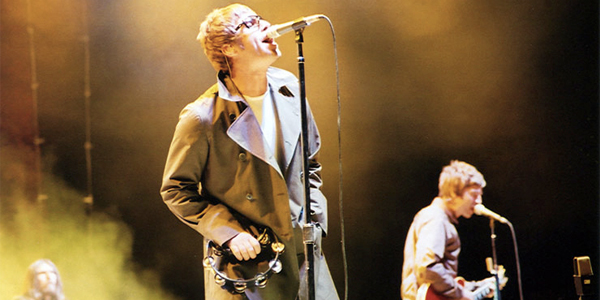
Twenty years on the question "what exactly was Britpop?" remains surprisingly difficult to answer, even if it did act as a forerunner for everything from Cool Britannia to modern indie rock. Filling the void in British music left behind by "Madchester" bands The Stone Roses and The Happy Mondays, from 1993 to 1997 the movement transformed an industry dominated by shoegaze and grunge into a smorgasbord of punk rock, glam, new wave, and traditional 60s guitar pop. During that time, Britpop albums regularly reached platinum status and shattered sales records with songs that had the capacity to be relentlessly optimistic or as comically cynical as this line from Blur's chart-topping 'Country House': "He's reading Balzac, knocking back Prozac / It's a helping hand that makes you feel wonderfully bland." The result was a genre that combined fervent innovation with influences from the country's vast musical heritage such as The Beatles and The Smiths, and in the process instilled so much confidence in the British guitar scene that when Oasis guitarist Noel Gallagher said "We're the best band in the world" it was hard to disagree. The ten albums in this list each played a part in securing Britpop's status as one of the most diverse and exciting music scenes in recent memory. For variety's sake, bands are limited to one album each, while the genre's huge scope means that a number of worthy acts inevitably miss out €“ Kula Shaker, Sleeper, and The Boo Radleys, to name a few. In each case, these albums are the best examples of why Britpop remains a genre that fans and critics can't help but revisit time and again.

10. Suede €“ Suede (1993)

https://www.youtube.com/watch?v=i7mEB2wnDLQ Standout track: 'Animal Nitrate' Such was the hype surrounding Suede's beginnings that they were gracing magazine covers before they had even released a song. Hailed by many as one of Britain's brightest new prospects when they first hit the scene in the early 90s, the London quartet emerged as oddities in an industry dominated by American grunge. Next to the sullen-faced, flannel-toting bands that had arrived from across the Atlantic, they blazed a trail for other British acts to follow. Suede were far from a mere warm-up before the main event, though. They quickly lived up to their lofty billing with their self-titled debut album €“ a record that became the fastest-selling debut in British music history before winning the 1993 Mercury Music Prize. The album combined bleak nihilism with razor-sharp delivery, and nowhere was this mixture more potent than on the excellent 'Animal Nitrate'. A play on the inhalant drug amyl nitrate, the song covered dark themes of sex and violence set to irresistible pop melodies and an unforgettable chorus. Brett Anderson's piercing vocals ensured that the rest of the album not only set the tone for the crushing onslaught of Britpop acts that would follow, but became a compelling record in its own right. Honourable mention: Coming Up

9. Ocean Colour Scene €“ Mosely Shoals (1996)

https://www.youtube.com/watch?v=1rr4tXN2eJM Standout track: 'The Day We Caught The Train' Not only did Oasis record some of Britpop's finest music (we'll get to that later), but they also had a hand in the rise of some of the movement's other protagonists: Ocean Colour Scene had already released a relatively unsuccessful debut when Noel Gallagher invited them to join his band on their 1995 tour. It's a good thing he did; the new-found exposure offered Simon Fowler's group an outlet for the songs they had been crafting in the years since their previous release. Named after the Birmingham suburb that acted as a hometown for three of the band's members, Mosely Shoals enhanced Ocean Colour Scene's traditional rock-pop with echoes of The Rolling Stones and Sgt. Pepper-era Beatles. The choice for standout track here is a close-run contest between two songs; there are few guitar riffs as exciting as the opening of 'The Riverboat Song', but the steely nostalgia of 'The Day We Caught The Train' is arguably even more memorable. The band's follow-up Marchin' Already may have had the distinction of knocking Oasis' Be Here Now off its perch at the top of the UK albums chart, but Mosely Shoals helped weave blues and funk inflections into Britpop's ever-growing list of influences. Honourable mention: Marchin' Already

8. The Verve €“ A Northern Soul (1995)

https://www.youtube.com/watch?v=2jmf9UQ3YIs Standout track: 'History' This might seem like an odd choice. In fact, some would argue that The Verve were never truly involved in the Britpop scene at all. That's certainly true in the case of 1997's hugely successful Urban Hymns, which came at a time when Britpop seemed to have run its course. But while that album began to stray towards the cleaner guitar style of the new millennium, the band's second release A Northern Soul carried a more distinct Britpop edge that arguably defined them as part of the movement. Marking a move away from the band's psychedelia and shoegaze roots towards an alternative rock sound, the album was unique in that it endowed familiar rock structures with a sombre elegance. 'This Is Music', with its crunching riffs and heavy percussion, was perhaps most reminiscent of Oasis and co. at the time. But it's the lush orchestral arrangements of 'History' that stand out here, conjuring up a sweeping soundscape that ranks among the period's more tender moments. The result is an album that's powerful, deep, and almost unimaginably dark. The debate about The Verve's place in the industry goes on to this day, but A Northern Soul was an essential addition to the Britpop scene that just seems to get better with every listen. Honourable mention: Urban Hymns

7. The Auteurs €“ Now I'm a Cowboy (1994)

https://www.youtube.com/watch?v=gruPFrbP0MA Standout track: 'Lenny Valentino' It's safe to say that The Auteurs never managed to reach the same level of recognition as the other bands on this list. While the likes of Blur and Oasis were dominating the charts and hitting the headlines, songwriter Luke Haines went quietly about his business in creating some of the era's most enduring music. Despite their relative obscurity, The Auteurs' beginnings actually coincided with the moment Britpop first skyrocketed into the public eye. They released their debut album New Wave around the same time as Suede in 1993, unwittingly becoming part of the burgeoning scene of guitar bands that would soon follow. If you ignore their comparative lack of commercial success, Haines' band were producing some of the most stylish music around, combining chamber pop sounds with the heavier glam revivalism of their contemporaries. Back in 1994, the sharp lyricism and dense guitars of Now I'm a Cowboy sounded way ahead of their time, and Haines' tortured snarl on 'Lenny Valentino' is a small reminder of why the band amassed such a dedicated cult following during their heyday. This album was a stunning portrayal the darker, cynical side of Britpop that continues to be held in high regard among critics today. Honourable mention: New Wave

6. Cast €“ All Change (1995)

https://www.youtube.com/watch?v=P5ka5FmODRA Standout track: 'Sandstorm' This album probably wouldn't be on this list had it not been for the short-lived peak of another band. In 1990, The La's released a self-titled album which featured the iconic 'There She Goes'. The Liverpudlians disbanded before the Britpop phenomenon really took off, but bass player John Power went on to front one of the movement's leading lights in the form of Cast. Fortunately, Power's new band retained all of his previous group's sparkling melodies and infectious energy. All Change was a debut album whose title alone summed up the simultaneously nostalgic and forward-looking sentiment of the time. The bright vocal harmonies and upbeat guitar lines of opener 'Alright' immediately set Cast up as major players in the British music scene, while the trippy distortion of 'Sandstorm' called upon the era's more gritty, psychedelic influences. Stuffed with irresistible hits, All Change was well-received by critics and reached double platinum status in the UK. The La's may have laid the groundwork for their characteristically sunny sound at the start of the decade, but it was Cast who carried it forward into the height of the Britpop era. Honourable mention: Mother Nature Calls

5. Elastica - Elastica (1995)

https://www.youtube.com/watch?v=ilKcXIFi-Rc Standout track: 'Connection' One reason so many bands were initially reluctant to embrace the "Britpop" tag is because of its sheer variety. Styles could range from Pulp's colourful disco beats to the excitable piano-pop of Supergrass. Meanwhile, Elastica hitched their wagon firmly to the punk side of the Britpop spectrum. At the same time, they also served as an indicator of just how insular the movement could be. Founders Justine Frischmann and Justin Welch were both former members of Suede, and Frischmann was famously in a relationship with Blur's Damon Albarn during their early years. Controversially, Elastica also began to get a reputation for stealing melodies after being hit with charges of plagiarism from other bands. Legal disputes aside, the band's eponymous debut was a worthy addition to the Britpop canon. It rushes headlong into 40 minutes of flawless post-punk, with 'Connection' acting as a fine example of Frischmann's ability to steep every vocal phrase in buckets of personality. Don't be fooled by the power chords and snappy song structure, either; this is a Britpop album that's executed with flair, sophistication, and dentist-drill precision. Honourable mention: N/A (Elastica wouldn't release a follow-up until 2000's The Menace)

4. Supergrass €“ I Should Coco (1995)

https://www.youtube.com/watch?v=qUE4oDunYkc Standout track: 'Alright' Compared to the long gestation period of some other bands, Oxford's Supergrass bubbled to the surface of Britpop at a frightening pace. Shuffling between three-chord punk progressions and frenetic keyboard jams, I Should Coco €“ Cockney rhyming slang for "I should think so" €“ was an eclectic introduction for the trio that sold over a million copies worldwide and earned endorsements from the likes of Radio One's John Peel. While singles 'Caught By The Fuzz' and 'Mansize Rooster' had already garnered warm reviews and commercial success before the album's release, it was another track that cemented the band's position in the Britpop spotlight. Kooky, gleeful, and supremely catchy, 'Alright' stood out on this album as a lovable embodiment of teenage optimism. Such was the success of the track and its accompanying music video that Steven Spielberg reportedly wanted to make the band the stars of their own Monkees-style TV show. Whether you consider it or a serious rally cry for a generation of 19-year-olds or a simple ode to being young €“ the band themselves seem to fall into the latter category €“ I Should Coco is a collection of songs that ranks among Britpop's most thrilling and diverse. Honourable mention: In It for the Money

3. Blur €“ Parklife (1994)

https://www.youtube.com/watch?v=WDswiT87oo8 Standout track: 'Girls & Boys' Like the mods and rockers of the 60s, Oasis and Blur formed one of music's great rivalries. Their ongoing battle for songwriting supremacy culminated in the "Battle of Britpop" in 1995, which saw Blur's 'Country House' beat the Oasis single 'Roll With It' to number one spot in the UK charts. That song was the first of Blur's singles to accomplish such a feat (the second being 'Beetlebum' in 1996), but the Essex band's breakthrough Britpop moment had already come the previous year in the form of their third album Parklife. Above all, it was an album that showcased Blur's vast depth and intelligence. 'End of a Century' and 'This Is A Low' saw the band at their most beautifully forlorn, Phil Daniels' sardonic spoken-word narration helped the title track become a sing-along classic, and the pulsing synth riff of opening track 'Girls & Boys' radiated the kind of vibrancy and daring that made the genre such a breath of fresh air to begin with. Since his Blur days, vocalist Damon Albarn has gone on to earn further success with Gorillaz and as a solo artist. It's telling that Parklife is still considered one of his most inventive pieces of work. Honourable mention: The Great Escape

2. Oasis €“ Definitely Maybe (1994)

https://www.youtube.com/watch?v=i_2mWhfOhGU Standout track: 'Live Forever' If you ask somebody to name a Britpop band, it's likely they'll say Oasis. Whether they were starting feuds with other bands or comparing themselves to the Beatles, they were never far from the public eye. They even played a part in Britpop's eventual demise when the lukewarm critical reception of their indulgent third record Be Here Now signalled the end of the movement in 1997. Three years earlier, the Mancunians' debut saw Noel Gallagher's songwriting speak to a generation of fans, while his brother Liam's sneering vocals made up for a lack in technical sheen with a charisma that many others have tried €“ and failed €“ to imitate. The no-nonsense, high-gain riffs of 'Supersonic' and 'Shakermaker' are exciting in their own right, but it's the soaring, aspirational 'Live Forever' that stands out as an album highlight to this day. In short, Definitely Maybe is an album that has it all: stadium-filling anthems, woozy guitar fills, and even a subdued acoustic finale in the form of 'Married With Children'. And while their follow-up earned transatlantic success with singles such as 'Wonderwall' and 'Don't Look Back In Anger', their debut oozes a brash energy and hopeful confidence that first made the world sit up and take notice. Honourable mention: (What's the Story) Morning Glory?

1. Pulp €“ Different Class (1995)

https://www.youtube.com/watch?v=yuTMWgOduFM Standout track: 'Common People' The remarkable thing about Pulp is that it took them over a decade to hit their stride before the Britpop craze took hold. Formed in 1978, they trundled through the eighties with comparatively little success, all the while replacing band members at an alarming rate. That is, until the release of His 'n' Hers and Different Class. Both albums were stellar, with the latter landing them the 1996 Mercury Prize and serving as the best example of Jarvis Cocker's wry brand of social commentary. As the title suggests, Different Class is brimming with observations about British society; the album's real asset is the wit with which they're delivered. Recently voted Britpop's best anthem, 'Common People' tackled class divisions with astonishing nuance. As for 'Disco 2000', few other acts could pull off a line that's so simultaneously hilarious and heart-wrenching as "Would you like to come and meet me maybe / You can even bring your baby." Even now, the record retains a sense of unpredictability, as Cocker relates his meandering narratives with a weary murmur that swells into an anguished plea almost without warning. Quite simply, this album saw Pulp hit upon a delicate balance between irony and earnestness that has withstood the test of time ever since. Honourable mention: His 'N' Hers

In this post: 
video Oasis
 
Posted On: 
Contributor
Contributor

History graduate, writer, and long-suffering Spurs fan interested in all things music and sports-related. Once briefly held the title of world's youngest person. You can follow me on Twitter here: https://twitter.com/sgfcarter