Coldplay: Ranking Every Album From Worst To Best

Who else failed to realize Coldplay is often a legitimately great band?

With the release of Coldplay's most recent album, A Head Full of Dreams, Chris Martin and his merry band of light-alt rockers have suggested that they may be done making music. And for a lot of people, that's a bummer. But for possibly even more, it's somewhat of a relief. "Finally, we can stop hating/pretending to hate Coldplay," they say. A good majority of the population doesn't know if they actually detest this band or if they just think they do, or if they once did but haven't listened to much of anything post-2004 to be able to say for sure. Perhaps no band has earned the contempt of modern music fans like Coldplay. (No, not even Nickelback.) "Coldplay sucks" was a rallying cry that many clung to, despite the band's best intentions of making respectable music and their numerous, admirable attempts to change the narrative. And, sure, there has been a lot to dislike about Coldplay. They were disproportionately angsty, their singles were formulaic, and their core sound always felt like it was less about passion and honesty than it was about getting played in waiting rooms and coffee shops for all of eternity. But too many of us may have been put off by what was on the surface to ever dig deep enough to find that, by gum, there was some genuine talent and craftsmanship underneath that lame exterior. So now, let's all come together and admit to ourselves that Coldplay, at the very least, isn't as bad as we all made them out to be for so many years. They're not the worst thing to happen to music. They're not even the fourth worse thing to happen to music. (That would be "My Humps.") Let's celebrate them for just a little while. Before they're gone entirely and we start to feel that tiny twinge of regret for being too harsh on a band that's supplied us with some pretty solid music over the last 15 years.

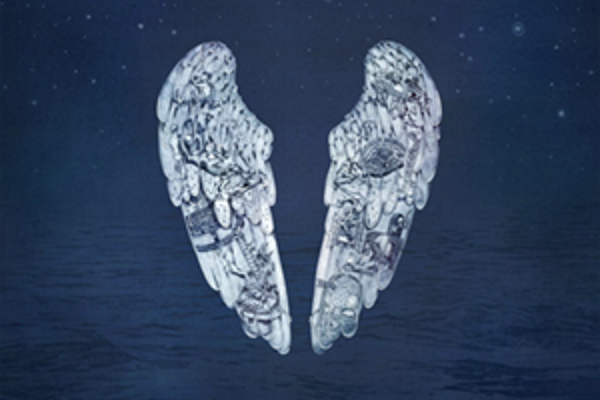
7. Ghost Stories (2014)

Wouldn't you know it, Chris Martin is still human after all. After getting more and more bombastic with their efforts, Coldplay went back to its small-scale, sentimental roots with what turned out to be a pretty in-depth examination of his breakup with Gwyneth Paltrow. Though they had to put at least one arena-ready epic on the album (in this case the Aviici-assisted "Sky Full of Stars"), the rest of Ghost Stories is stripped of the grandiosity that Coldplay has become known for. And it sounds...disingenuous. Unlike the quieter moments of Parachutes, the songs on Ghost Stories never sound all that natural. They sound like Martin doing his best impersonation of Bon Iver over electronic soundscapes. In breaking away from the anthemic sound that has kept them in business for the better part of a decade, they forced themselves to play outside of their comfort zone. It's an admirable goal, but they rarely sound up to the task. So instead of getting wrapped up in the soft introspection, we're left wondering when the big piano chorus is going to come busting in. (It never does.) Sure, Martin digs a little deeper in the lyrical department, but that's not enough to carry all the dead weight that drags this album down.

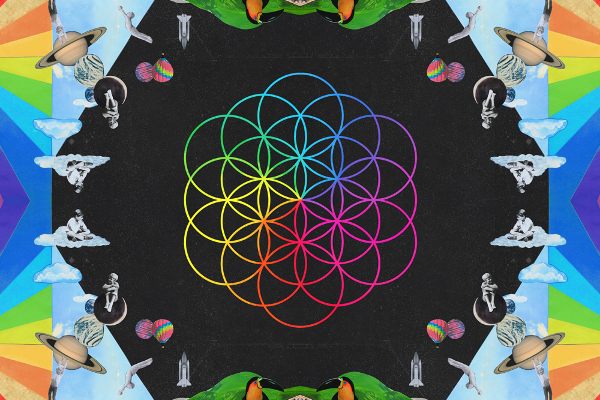
6. A Head Full Of Dreams (2015)

"It's our seventh thing, and the way we look at it, it's like the last Harry Potter book or something like that." - Chris Martin
Except that the last Harry Potter book was a fitting finale to the series. A Head Full of Dreams, on the other hand... When a band announces their final album, expectations are always going to be set unreasonably high. We have this misguided notion that everyone wants to go out with a bang when, quite frankly, some bands just want to go out. Period. That may not actually be the case with Coldplay, but the resulting album certainly sounds that way at times. For much of its duration, specifically album highlights "Kaleidoscope" and "Birds," Martin sounds jubilant and optimistic, and it's hard not to think he's simply celebrating the fact that he's about to cross the finish line. It's not that he's commemorating Coldplay's career so much as he's relieved to just be done with it. Victory laps aside, this unflinchingly danceable album is a welcome reprieve from the overly sorrowful weep-fest that constituted their previous album, Ghost Stories. Here, everybody wants to have fun, even if it has to force that fun out of themselves from time to time. It's a graceful exit, if that proclamation indeed holds true, but not one that should muster much fanfare.

5. X&Y (2005)

This is possibly the finest collection of elevator music ever assembled onto one compact disc. After being pushed back by repeated delays in production, Coldplay finally delivered their long-awaited follow-up to A Rush of Blood to the Head. It's fairly obvious by the time "What If" wraps up that there's this album is lacking the passion of their previous two albums. And although they're able to catch little bits of momentum here and there--the one-two punch of "White Shadows" and "Fix You" try to get something going early on, but are overridden my mediocre melodies soon after. The problem with X&Y might have been something as simple high expectations from the public. They had reached a major high with their previous album, but rather than strive for something bigger and different, Coldplay instead takes one song and tries to stretch it out across an entire album. That song was "Clocks," the gigantic hit from their previous album. The "influence" of their best-selling adult contemporary hit is felt all over X&Y, with varying degrees of obviousness. The result is a whole slew of inoffensive, listenable, derivative songs that all bleed into each other like an amateur watercolor portrait. Only a couple of songs ever really take off, leaving the rest in a puddle of lush, mid-tempo ballads that are devoid of even the slightest risk. ...Still, when an album features a song as undeniably gut-punching as "Fix You," it's impossible to call that album terrible.

4. Mylo Xyloto (2011)

Probably the most underrated album in the band's oeuvre, Mylo Xyloto finds Coldplay firmly entrenched in a race to distance themselves from the soupy, atmospheric balladry that is undoubtedly their bread and butter (and jam and Nutella and...you get it). They'd started this path with Viva La Vida, but while that venture into arty weirdness seemed forcibly lofty and overly fabricated, they were able to incorporate some of that odd sparkle more seamlessly this time around. Now that doesn't necessarily add up to a "better" album, per se, but it certainly feels more comfortable. There are bits of daring sprinkled throughout Mylo Xyloto--such as the dark and fuzzy electronica of "Princess of China" and the spazzy effervescence of "Hurts Like Heaven"--but they appear to have made a conscientious decision not to make things too weird. It's "Coldplay weird," which is to say that their cheesy, soaring melodies are dipped into a big vat of Day-Glo vibrance while Brian Eno turns the knob way up on the guitar effects. And that actually works pretty well on the majority of the tracks. "Paradise" features a typically cascading chorus that is dutifully embellished with a grand beat and muscular instrumentation that was nowhere to be found on all those "classic" Coldplay tracks. It's underrated, for sure, but it's but it's still not an album designed to progress the band's musical identity very far.

3. Viva La Vida (2008)

Viva La Vida is not an experimental album. It's the Coldplay version of an experimental album. And while that might sound like a slight against them, it's important to note that Coldplay does one style very, very well. They don't often color outside the lines, and when they do they use a highlighter, tracing an extra halo around their perfectionism. So don't be fooled by their thrift store Sgt. Pepper costumes, Viva La Vida is nowhere near as unorthodox as they'd have you believe. Still, that doesn't mean it's not a stellar album. And as long as you don't expect to be blown away by the unexpected, then it remains one of Coldplay's most consistently enjoyable albums to date. The grandeur fits these songs better than it did those on X&Y, simply because the subject matter being tackled deserves it a little more. But it's not all pomp and circumstance, either. Tucked away in the splendor of it all are a couple of smaller moments that often go overlooked: "Strawberry Swing" is a simple little folk song gussied up with slick production, and the first couple minutes of "42" wouldn't sound out of place on Parachutes. And if nothing else, Coldplay proved they could still write a great, straightforward rock song with "Violet Hill."

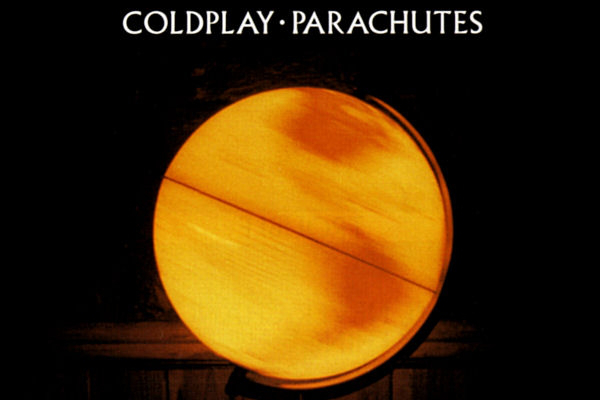
2. Parachutes (2000)

If we're to praise anything from Zach Braff's directorial output, it should probably be his soundtrack curating. He was so good at picking music to accompany his film that he was awarded a Grammy Award for Best Compilation Soundtrack Album for Motion Pictures, Television or Other Visual Media. (Which is apparently a real award.) And the dude knew exactly how to use earnest, sentimental, mostly-acoustic ballads to create a lasting tone for his movie. Enter Coldplay. The Garden State soundtrack kicks off the same way Coldplay's debut album does, with the delicate, dreamy "Don't Panic." It's a simple tune, one that fully prepares the listener for what the other 9 songs will offer. It's a little schmaltzy and occasionally too melancholy for its own good, but Chris Martin largely makes up for it with his vocal purity and tender honesty. The band's influences are laid bare over the span of 10 tracks, channeling Jeff Buckley, Travis, and yes, Radiohead, with surprising grace and aptitude. This is a simple album, one unconcerned with reaching for the stars or making a big statement. And considering Coldplay's history of trying too hard to consistently do both of those things, that makes re-listening to Parachutes a refreshing, cleansing experience. The standout track is "Shiver," a rare, uncomplicated guitar-centered bit of U2 worship that really pays off, breaking up the slow-motion daydream that cascades over the majority of Parachutes.

1. A Rush Of Blood To The Head (2002)

When you're trying to weigh the overall merits of an album, there are two simple categories you have to consider: 1) How many tracks that are single-worthy, and 2) How it feels listening to the whole thing straight through. A Rush of Blood to the Head is an album chock full of singles material that plays just as well today as it did when it was first released. Despite the band's reticence to embrace critic's comparisons to Radiohead, there's little doubt that they followed similar paths in their discography. The Bends was made to prove that Radiohead was capable of more than "Creep," while A Rush of Blood to the Head triumphantly cast aside notions that Coldplay would be eternally be merely "that 'Yellow' band." Indeed, "Yellow" feels like the distant past after this album wraps up. In the course of 11 enlivened, confident songs, Coldplay forged a new identity. It would be one that set a high bar for the rest of their career, for better or for worse. How do you top the slinky, sexual "God Put A Smile Upon Your Face"? Certainly not with "Paradise." How do you make fans move beyond the pure, stadium-ready heartbreak contained in "The Scientist"? You can give them "Fix You," but that won't be enough. And how the hell do you make guitar-driven, psychedelic rock that's better than "A Whisper"? You don't. You simply have to deal with peaking early in your career and hope the good will you've earned from that album will be enough to carry you for another decade-plus. Luckily for Coldplay, it did.

In this post: 
coldplay
 
Posted On: 
Contributor

Jacob is a part-time contributor for WhatCulture, specializing in music, movies, and really, really dumb humor.