10 Crazy Fashion Trends From History

Dangerous, deadly and deranged. Was it ever worth it to look this good?
In the modern world we frequently encounter celebrities wearing an array of peculiar outfits online and in magazines. Lady Gaga's meat dress, Pharrell Williams' oversize hat, Madonna's bullet bras and Miley Cyrus' scary mouse leotard are just a handful that spring to mind. However, for the most part these fashion statements have thankfully been one-offs that haven't turned into trends. In general, our day-to-day fashion tends to be simple and comfortable. Few people stray far from the casual jeans and t-shirt look when they pop out to the shops. High heels aside, people these days tend not to inflict pain on themselves, risk injury or go out of their way to be impractical every day in the pursuit of fashion. In centuries past, this often wasn't the case. It seems that people put great effort into looking ridiculous for the sake of attention, not just at parties or on special occasions, but all the time. Wealthy men and women were the worst offenders, using their outfits to show off the fact that they didn't have to do anything useful or practical with their time. You'd think some of them would have realised their mistake when their outfits started prohibiting their ability to live normal lives and putting them in danger, but apparently not. Showing off was far more important. From the glamorous ladies of Ancient Egypt to the high society of Georgian England, this list will take you through ten of the craziest fashion trends in history that we're all glad aren't around anymore.

10. Hoop Skirts

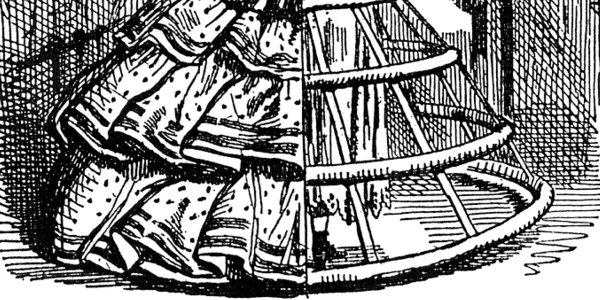
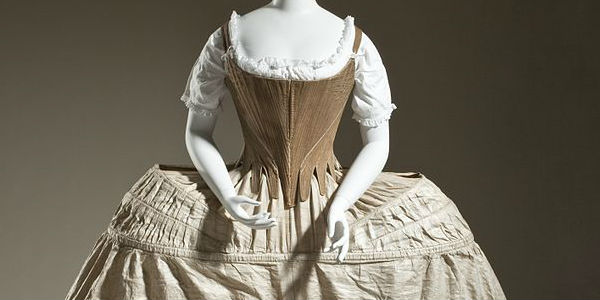
Hoop skirts were around for a surprisingly long time considering how impractical they were. From the 16th to 19th centuries, women used these undergarments to give the appearance of tiny waists and ample buttocks. However, large hoops were very inconvenient for the wearer. They were heavy, and could do damage to the tops of the hips where they rested. They also impeded women's ability to sit down, walk through doors and generally go about their daily business. On some occasions, these fashion statements could even prove deadly. In 1863, a fire broke out at a church in Santiago, Chile. The women's hoop skirts blocked the exits as they attempted to escape, and between 2,000 and 3,000 people died. On several occasions women were also blown off piers, bridges and even cliffs as their skirts caught the wind. Ouch.

9. Bliauts

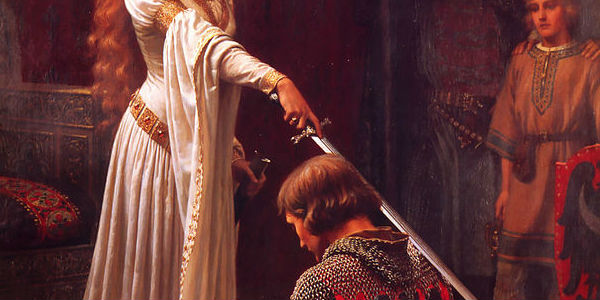
Bliauts were dresses reserved for the highest echelons of society in medieval Europe, from around the 11th to 13th centuries. The dangling floor-length sleeves were the ultimate way of letting people know that you were far too important to do anything useful with your hands. Someone wearing a bliaut could not prepare food without getting it everywhere, or stoke a fire without being a danger to themselves and everyone else in the room. They were limited to delicate activities that did not require much movement in the arms, like embroidery. So, while it looks very romantic and pretty, the bliaut can be thrown in the pile of fashion trends that were very silly, impractical and a bit snobbish.

8. Wax Cones

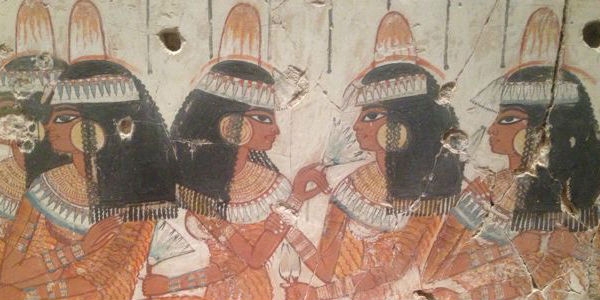
We can't be exactly sure what the Egyptians were wearing on top of their heads in these paintings, but archaeological evidence suggests they were probably perfumed cones made of wax or fat. It is mostly women that are depicted wearing them, but men of all social statuses, including servants, are also shown wearing them to parties. They wore them on the tops of their wigs, where they would slowly melt over the course of the evening. Women today often put oils in their hair to give it moisture, but this is something else. For one thing it must have been a pretty unpleasant sensation having a big lump of wax dripping down the back of your head, and secondly it must have ruined the wig.

7. Enormous Wigs

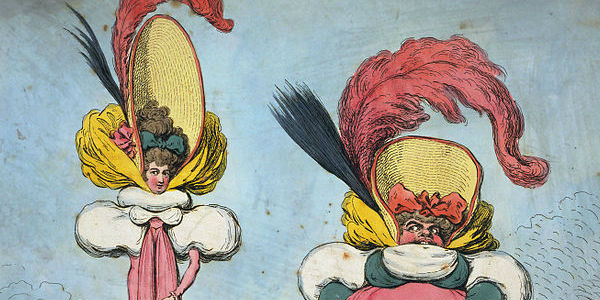
Enormous wigs took off as a fashion trend in the early 17th century when Louis XIII of France used one to cover his baldness. Soon after the battle over the title of most ridiculous wig began. If you've seen The Duchess, you'll know that they could reach very dangerous heights. They were not only difficult to balance, but they also caught fire very easily. By the beginning of the 18th century, white wigs were all the rage and men were pouring bucketfuls of powder on their heads to try and make them as white as possible. When a hefty tax was imposed on the powder, and when aristocratic fashion fell out of favour around the time of the French revolution, the wig mania finally came to an end.

6. Crakows

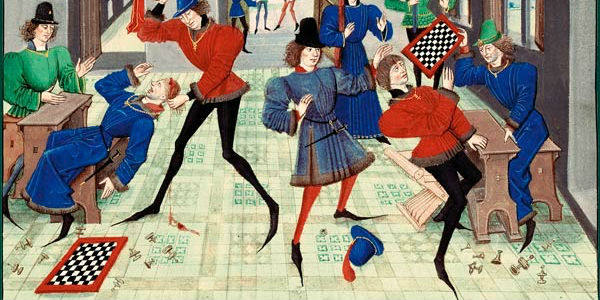
As if the men in this painting don't look silly enough in their tights and feathery hats, they are wearing ridiculously pointy shoes. Named crakows after the city in which they were thought to originate, these hilariously long shoes were everywhere in Europe in the 14th and 15th centuries. They were worn by both sexes, but men's crakows were especially extravagant. These trip hazards often had whalebone inserts or strings at the end that tied to the knees so that walking was still possible. They were so unnecessary and impractical that both the pope and the king of England tried to ban them, and they were included in sumptuary laws that restricted what people were allowed to wear. Nobles were allowed to wear shoes that were 2 feet long, merchants were allowed one foot and peasants half a foot. Presumably no one was going around with a tape measure though.

5. Beauty Spots

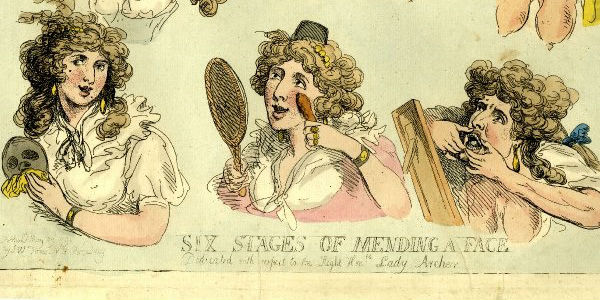
Women in Georgian England were often ridiculed for their peculiar fashion choices, such as in this illustration 'six stages of mending a face'. It was suggested by the satirists that most of a woman's beauty regime was about covering things up, rather than enhancing their beauty. Wigs were used to hide baldness, makeup to mask wrinkles and beauty spots or patches to cover up marks. The idea that Georgians used heart-shaped patches to cover syphillitic and other undesirable marks was mainly spread by William Hogarth, the 18th century troll of the day, but was probably partly true. Another way that patches were used, like the Victorians with their subtle fan language, was to send messages to people at parties. The specific placement of a patch on someone's face acted like a Facebook relationship status, letting everyone know if they were single, married or if it was 'complicated'. Georgian face patches don't actually seem too bad until you learn that some were made with animal skin and stuck on with bits of fish bladder.

4. Corsets

It is possibly a bit unfair to lump all corsets into the same category, since there were so many varieties over time. The short stays worn by Jane Austen and her friends, for example, were designed to give support, much like modern bras today, and were not tightly laced. The big offenders when it came to corsets were the Victorians, who took their hour glass figures to crazy extremes.What makes it really insane is that the doctors of the day suspected that corsets could cause dyspepsia, cardiac palpitations, mammary abscesses, displaced livers, prolapsed uteri... and a hundred other serious medical conditions. Despite this, women continued to wear them, with the smallest recorded waist being 13 inches in diameter. As a result of their pursuit of beauty, Victorian ladies suffered from difficulty breathing, fainting episodes and even broken ribs in some cases.

3. Beaks

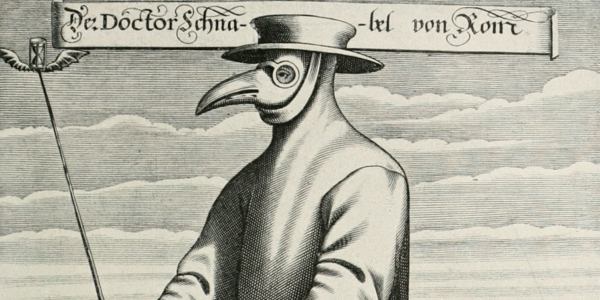
Okay, so maybe this one wasn't a fashion trend as such, but you have to admit it's pretty darn crazy. Plague doctors in the 17th and 18th centuries were called 'quacks' because of these beak-like masks that they wore which were filled with perfume. This was because at the time people believed in the miasma theory, which was the idea that germs came from bad smells. The logic was that if you couldn't smell it, you couldn't die from it. Even so, you'd think that these travelling doctors would have been able to come up with a slightly less terrifying outfit. You wouldn't want to meet a doctor like this in a dark alley, let alone by your death bed.

2. The Alexandra Limp

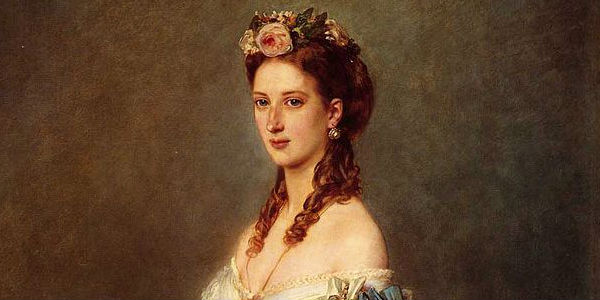
Alexandra of Denmark, the wife of king Edward VII, was so beautiful and fashionable that women all over England copied her dresses, hair styles and even the way she moved. When Alexandra was left with a pronounced limp after some complications in childbirth, her dedicated followers suddenly developed the same hobble in their walk. To the bafflement of many men, the women of 1860s London even went as far as to alter their shoes to aid their imaginary affliction. A bemused John Farmer called the Alexandra limp a 'fit of semi-imbecility' by 'a crowd of limping petticoated toadies'.

1. Lead Based Makeup

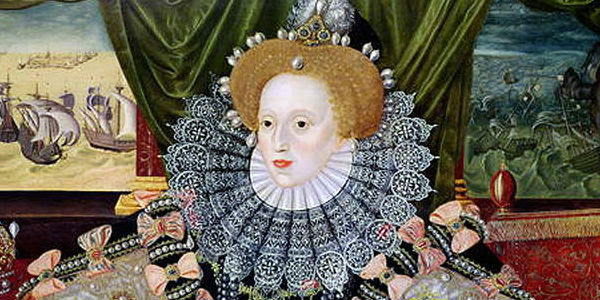
This is probably the longest-running crazy fashion trend in history, beginning in at least 200 BC with the ancient Greeks and finally ending in the late 19th century. Lead based makeup was toxic, and killed many people in their pursuit of pale skin. Elizabeth I famously started painting her face white after a bout of smallpox left her with scars. The thick 'mask of youth' that she achieved with combination of vinegar and white lead ironically poisoned her over time and would have made her natural skin look even worse. Other people had similarly dangerous methods of making themselves appear pale. Medieval women sometimes bled the colour out of the skin, while Victorian women drank iodine, ate chalk and applied mercury to their faces. Do not try any of these at home!

Contributor

Lauren Butler hasn't written a bio just yet, but if they had... it would appear here.