10 Shocking Origins Of Everyday Items

A look at the origins and original uses of items we see and use every day.
Items that we come into regular contact with often become so familiar to us that we forget that they each have their own history and origin story. Sometimes these stories are straightforward and predictable, while other times mundane items have histories that are downright shocking. Here we gather together 10 everyday items that have origin tales that are far from what you would expect.

10. Vending Machines

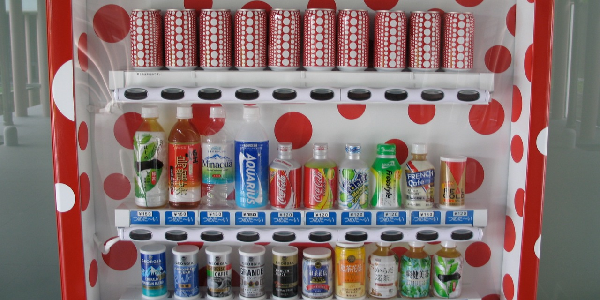
A vending machine is a sight that we're all used to seeing gracing the corridors of offices, hotels and gyms. While the idea of an automated goods dispenser seems like a highly modern idea, the origin of the worlds first vending machine is quite a lot older, Ancient Greek older to be exact. We owe the invention of the vending machine to Hero of Alexandria, a greek mathematician and engineer living in the first century AD. While the vending machines used today dispense all manner of items from fizzy drinks to live crabs, Hero's machine was designed with the slightly more divine intention of dispensing holy water. When a coin was inserted into the machine, it would trigger a lever to temporarily open a valve and allow some holy water to pass through.

9. The Chainsaw

Chainsaws are used today as tools for cutting wood, stone and other construction materials but their original purpose is a lot more shocking. The worlds first chainsaw came into being in 1830 and was the brainchild of Bernhard Heine, a German orthopaedist. Heine's chainsaw, as his occupation suggests, was developed for use on the human body. The device had edges made up of a series of sharp teeth that were in turn attached to a chain that could be manually rotated by the turning of a handle. Heine's creation was used for cutting bone during operations and became a widely used surgical instrument during the 19th Century.

8. High Heels

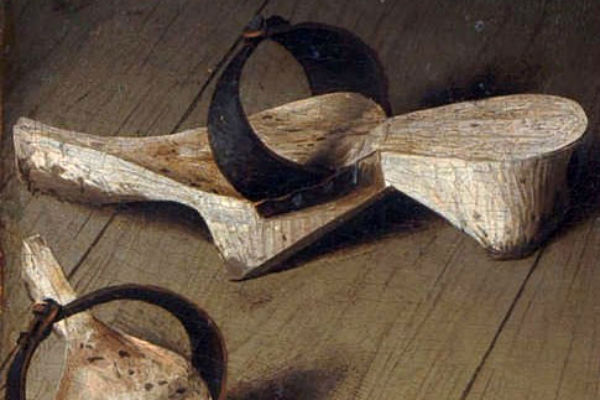
From stilettos to kitten heels, high heeled shoes are considered a fashion staple that can be seen everywhere from the workplace to Hollywood award shows. While high heeled shoes are now worn exclusively for style and aesthetic purposes, their ancestors were worn for far more practical and less glamorous reasons. High heel type shoes were first developed for use as protective overshoes in Medieval Europe. They were crafted out of wood and worn over the top of normal shoes in order to elevate their wearer above the horrors of the streets, streets which also served as communal rubbish tips and sewers. Elevated heels were also given a practical use in the early days of horse riding. Riders feet were prone to slipping free of their stirrups, a problem that was countered by wearing high heels. The shape created by the heel's height served to grip the stirrup and prevent the foot from moving around during wear. Modern day cowboy and riding boots still show signs of this function in their respective designs.

7. Brandy

Due to brandy's reputation as a sophisticated choice of drink and the high price that it can fetch at retail, it is shocking to think that its inventor never intended for it to be a drink. Brandy came into being during the 16th century with its origins cited to a Dutch sea captain. The story goes that the captain was searching for a way to concentrate wine in order to make it easier to transport and lower the cost of import tax, which was measured by volume. The process of distillation was used to remove water from the wine and leave behind a far more condensed liquor, the substance known today as brandy. The original intent was for the wine to only remain this way during transportation and that the distilled water would be re-added before consumption. However, it was soon discovered that the distilled product didn't actually taste that bad and it quickly became a popular choice of beverage throughout Europe.

6. Chewing Gum

The chewing of gum is a something that humans have practiced for thousands of years. Evidence exists that both the Ancient Greeks and the Ancient Mayans chewed on naturally occurring tree gums. The man-made variety of chewing gum that we know today was created by Thomas Adams during the 1800s. Adams was searching for a way to make synthetic rubber out of naturally occurring chicle gum. His intention was use the synthetic rubber to manufacture tires, boots and children's toys. However, all of his experiments and prototypes failed leaving him with a soft product that was pretty much useless. For one reason or another, some of Adams' product found its way into his mouth and he discovered that he actually quite liked the taste and consistency. This discovery led to Adams opening the first ever chewing gum factory where he perfected the flavour and later began to sell it for one penny a strip.

5. Nike Trainers

A common sight in gyms and on the street, Nike trainers have a very strange origin story. Nike co-founder, Bill Bowerman, was a running coach from Oregon who was keen to invent a shoe sole that would be lightweight and grant grip without the need for running spikes. A solution to his predicament came to him on a morning in 1971 while he was having breakfast with his wife. Bowerman saw the grooves and patterns created by his waffle iron and thought instantly that they would be an excellent mould for a running shoes sole. Bowerman then set about making his first prototype Nike running shoe using his waffle iron. The shoe was a huge success and an updated version of the shoe, the Nike Waffle, is still available to purchase today.

4. Croissant

Ah, le croissant, a breakfast staple and internationally recognised symbol of France. It is therefore quite shocking to learn that the croissant's origins can actually be traced back to Austria. A crescent shaped desert known as a Kipferl is believed to be the ancestor and inspiration of the croissant and exists in Austrian records dating back to the 13th century. The croissant as it is recognised today was created in 1839 by an Austrian man, August Zang, who owned a Viennese bakery in Paris. Zang produced and sold the Austrian Kipferl, which became so popular that other French bakeries began to recreate them. The desert then spread rapidly on the French bakery scene and became known as a croissant due to its crescent shape.

3. The Corkscrew

The corkscrew originated in the early 1630s when it was used for an entirely different purpose to the wine opener it is today. Originally known as a gun worm, the device was used for removing unspent gun cartridges from the barrels of muskets. It is believed that the jump from guns to wine was made in England in 1681 and that the corkscrew was born out of a spontaneous moment of improvisation. Once its highly effective use as a wine opener was established, many different variations of the corkscrew began to be developed, all with the nobel aim of making it easier to have a glass of wine. The first patented corkscrew was designed in 1795 by an English Reverend, Samuell Henshall, and incorporated a small stop disk at the top of the screw to prevent it from burrowing too deeply into the cork.

2. Crisps

Crisps are an essential savoury snack that are as commonplace as they are delicious. The genius behind the invention of crips is a man named George Crum, who worked as a cook during the mid 1800s at Moon's Lake House, a restaurant in Saratoga, New York. It was on the 24th August 1853 that a particularly fussy customer was dining at the restaurant and kept sending his fried potatoes back to the kitchen complaining that they were too thick. Crum became increasingly annoyed with every plate of potatoes the customer returned until he snapped and sent the customer the thinest potato shavings he could cut, fried in oil. To Crum's amazement, the customer was finally pleased with their potatoes and praised Crum for his creation. Following this praise, Crum began to make potatoes in this was on a regular bases naming them 'Saratoga Chips.' They became so popular that other restaurants began to copy them until they spread and became an international favourite.

1. Play-Doh

Play-Doh is a fun and simple concept that has been marketed as a children's toy since the 1950s. However, Play-Doh first hit retailers in the 1930s when it was actually sold as a wallpaper cleaner. Who would have thought something so colourful and entertaining could have started life as something so dull and mundane?! The company who manufacture Play-Doh originally made soap and were suffering financial difficulties in the early 1930s. At the time, homes were heated by coal fires and this often left a covering of soot that was difficult to remove from wallpaper. It was then that a man named Noah McVicker came up with the formula for a new wallpaper cleaner that could remove soot without causing any damage. His invention proved highly popular and generated sales that helped to save the company. Unfortunately, the sales of McVicker's wallpaper cleaner soon died off as homes began to be heated by gas and not coal. Once again, the company found itself in trouble and once again it was a member of the McVicker family who would come to the rescue. Noah McVicker's sister in law, Kay Zufall, ran a nursery school and told Noah of how she would give the wallpaper cleaner to the children to play with. The company subsequently replaced the detergent in the dough with colouring and an almond scent. They rebranded as Play-Doh and targeted sales towards schools in the run up to Christmas.

Contributor
Contributor

Recent History graduate living in Newcastle. I like to travel and experience new things, my favourite place on earth has got to be the Great Barrier Reef. To date my greatest achievements include completing the National Pokedex and mastering how to make cheesy nachos.