15 Bizarre Jobs Working With Bugs And Beasts

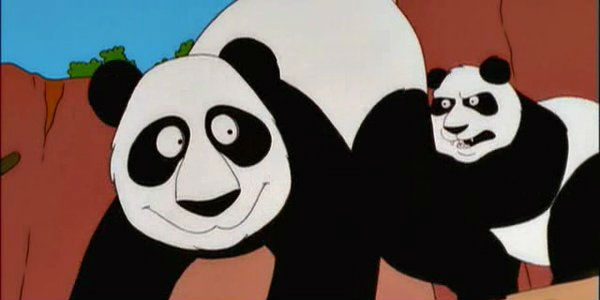
Panda fluffing - it's not what you think.

When people ponder upon working with animals, their minds tend to wander to professions such as vet and zookeeper; although dog-grooming may well be enough if you've just had enough of office politics. For bug lovers, (yes there are more than you'd expect); perhaps breeding or taxidermy is your entomological utopia. But if you forage a little further there's a whole world of weird out there, and it offers roles for all skill sets and constitutions. Some of the tasks require a particularly strong stomach (or weak sense of smell), while for others it's a fertile imagination that's a must. There are even odd opportunities for people who simply want to be nice to animals - they don't usually come with a pay packet though. One of the jobs that didn't make it onto this list is the worm picker, who searches soggy land after sunset to find the best bait to can and sell. Another is a chicken sexer, the person who determines whether the newly hatched cuties are girls or boys. It's probably best not to dwell on what happens to the vast majority of the male chicks once they've been identified. What did make the list is a mixed bunch, ranging from the necessary to the purely profitable. Just don't expect to see any of these peculiar posts advertised at your local job centre.

15. Nit Picker

Bearing in mind this is all about destruction, it isn't really a job for bug lovers. But you can't deny that rooting out head lice is most definitely working with insects. It's estimated that every year one in three children will play host to a colony of lice and just the thought of them crawling around all those scalps should make your own start to itch in sympathy. There are numerous home extermination products available but for those too squeamish or posh to thoroughly pick, help is at hand from the experts. One UK firm refers to its staff as assassins, promising that they are 'certified, armed and motivated'. No nasty chemicals for these trained killers, they use hair hoovers to suck up the live lice, hot air to dry out the eggs then a good old fashioned 'hand extraction' to pluck and comb out the debris. Patience is said to one of the key attributes for a nit picker. And good eyesight is likely an advantage too. The average salary is unknown but for a heavy infestation you're likely to be charged about £200 per scratchy head

14. Monkey Chaser

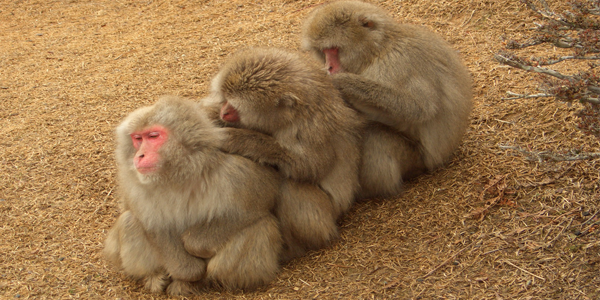
In the UK, you don't tend to have wild animals tearing down the high street - unless it's after dark at the weekend and the bars have been offering three-for-one on Tequila. However, New Delhi is at times overrun with rhesus monkeys who steal food, break into homes, climb into cars, trash buildings and bite people. The real trouble makers will even swipe your booze. The council pays men to chase them away from the likes of government buildings, tourist hot-spots and schools. The chasers aren't allowed to kill the monkeys, but they can catch them for delivery to a simian sanctuary. Tactics to free public areas from the marauding menaces involve shouting, firing warnings with sling-shots and beating sticks against trees to try to shake them down. The best solution was to work with a side-kick monkey that's bigger and tougher than the rhesuses running riot. The problem being the ideal chaser companions are langurs and they're on the protected species list so are illegal to own. A recent crack-down means only those willing to use the black market for the serious scare service will get it.

13. Pet Psychic

Pet psychics say they connect with your animal's mind via telepathy to reveal their innermost thoughts and problems, which apparently run deeper than deciding whether to kill a bird or a mouse. Some claim they don€™t even need to be in the same room as your cat in order to know what he's thinking, staring at a photograph of him is enough to establish a connection. And this connection is said to be so strong that therapies such as reiki massage can be done at a distance as well. Which is fortunate because this is a bit of a specialist trade and finding enough custom in your own town may prove difficult. The most startling fact about this service is that the subject doesn't even need to be alive in order for the truly talented pet communicators to get through. Death is but a divide and animal psychics can seemingly cross it with ease. Oh, and if your pet is missing, guess who can strike up a telepathic conversation to find out where they are?

12. Insect Counter

If counting sheep is dull enough to send you to sleep, then trying to count insects must keep your head buzzing long into the night. It's a strange job, but somebody needs to do it if scientists are to discover dips in the bug population before they affect crops. One popular method of helping track the numbers is the annual National Farm Pollinator Survey, which prompts thousands of people across the country to head to participating estates in order to play spot the bee. Insects are also food, which is why the Royal Society for the Protection of Birds launched the Big Bug Count a few years ago. The charity wanted to know how many got squished on car number plates during one journey and almost 40,000 worryingly eager drivers responded The results were surprisingly low and the RSPB calculated that on average only one bug gets splattered every five miles, perhaps they should have asked for the windscreens to be checked.

11. Snake Milker

Snakes such as vipers and cobras can kill you with their fangs but, perversely, the venom that drips from them can also cure you. Scientists use it when mixing antidotes for people who've been bitten and also to develop cures for illnesses including cancer, heart disease and diabetes. As a consequence, venom is in high demand. Unfortunately there's a supply problem which is partly caused by the need for it to be hand 'milked'. One method is to grab the snake at the back of the head so its fangs are exposed, then a membrane covered container is placed underneath the top of its jaw. As the snake bites down on the membrane the poison slowly falls into the pot below. In America, depending on the type of snake used, vials can sell for thousands of dollars and the average anti-venom treatment requires about 25 of them. The price is high because it's a laborious as well as risky process, at times it can take several sessions with numerous snakes just to get a couple of teaspoons of their wares.

10. Animal Make-Up Artist

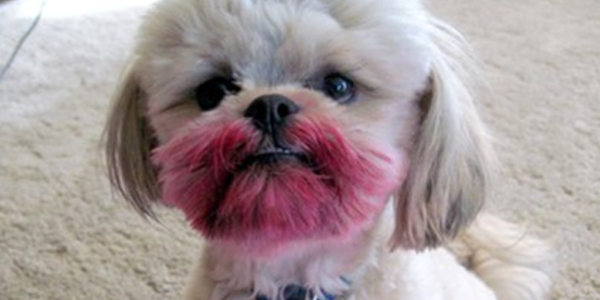
There are rules regarding how long animals can spend working on a tv or film set, which means that every time there's a starring role to fill the screen time is split between a number of look-a-likes. In the live action 101 Dalmations, Perdy and Pongo were actually played by six different dogs. This is where the animal make-up artist comes in. It's not to make them look good for the cameras, it's to make sure they fool the audience into thinking they're looking at the same beast in every scene. Special animal dye will be used to create the right colour fur and it can also be dotted about the body to add or cover-up identifying patches. Sometimes the make-up artist will be asked to use their skills to create the illusion of an entirely different animal. A common trick is dyeing white horses with black stripes to create zebras - because the real thing is said to be much too temperamental to direct.

9. Insect Wrangler

Dogs can be taught a fair few tricks and cats could definitely be taught more if they didn€™t think it was beneath them, but what about cockroaches? They can if there's an insect wrangler on hand. For a film called Race in the Sun, entomologist Steven Kutcher managed to somehow encourage a cockroach to crawl out of a shoe, walk up a bag of Cheetos then stroll onto a surfing magazine and stop dead on the picture of the board. All on cue. The directors' favourite bug coach has a cv boasting almost 100 film credits, including Arachnophobia and Jurassic Park. One of his other most notable stunts is making a wasp fly straight into an actors mouth. Kutcher, who is also a lecturer and environmental activist, has numerous ways of making his stars perform. Such as dabbing honey on a fly's feet and head if he needs a shot of it cleaning itself .

8. Cat Hotelier

There's a southern franchise of luxury cat hotels that could never be confused with a normal cattery, in fact it offers a much better stay than a lot of the places humans have to put up with. And with prices starting at about £20 a night it's certainly something to be considered next time you fancy a cheap weekend in London. These pet paradises offer boutique suites with wrought iron beds, a gourmet menu served on bone china, grooming services and personalised background music. Then there are the cat entertainers, whose sole job is to play with the feline guests. But there are equally indulgent hotels up north. One of them celebrated Halloween with a laser-light show, fancy dress competition and disco with prizes for the best dancers. During the rest of the year it offers numerous extras for owners who really are feeling guilty about going away on holiday. They include bowls of freshly grown organic wheat grass, cat-nip bubble chasing and bed-time stories from Wind in the Willows. Just how these V.I.P moggies adapt to life back home is anyone's guess.

7. Shark Tank Cleaner

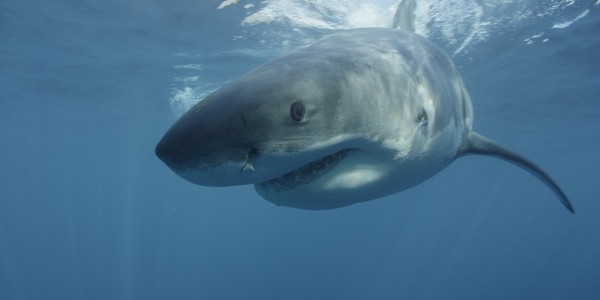
You might not believe it, but if done properly, shark tank cleaning is a pretty safe job according to aquarium bosses. Even though the divers spend their working days submerged with the razor-teethed killing machines. In the UK the divers don't swim with Jaws, nevertheless some of the Great White's cousins are more than capable of taking a fairly big bite out of your body. Wearing just a wet-suit and brandishing nothing more dangerous than a brush, the tank cleaners rely on their knowledge of the shark's behaviour to keep them safe. Aquariums only use divers who are already highly experienced and further specialist training periods tend to be mandatory, as are medical checks. They never go into the tank alone and a supervisor provides a third set of eyes by watching from above. But still........

6. Forensic Entomologist

Professional creepy crawly lovers, also known as entomologists, are used to making people squirm when they reveal their job. But there's one branch of the field that tends to create more shudders than the rest. Forensic entomology is the study of insects to gather evidence for criminal and legal investigations. Why is there such an extreme reaction to their work? The bugs are generally found in decaying corpses. Their most useful purpose is to establish a time of death because the number, length and size of the larva reveals how long the body has provided bed and breakfast. Another thing insects can tell us is whether the deceased was moved, this is because some species will only be found in certain locations. Due to the speed with which they feast upon their food, tests on the bugs can also detect drug or alcohol intoxication when what remains of the human has become an unreliable source.

5. Rabbit Cuddler

Everybody surely knows that the whole point of a rescue shelter is to eventually re-home the animals that are taken in, but did you realise that part of the rehabilitation for the abandoned pets is some serious snuggle time? Due to their past experiences the dogs, cats, rabbits, mice, gerbils, rats and ferrets that shelters care for can be nervous of people. So they need to get used to human contact before a new family can be found for them. Staff are generally too busy to carry out the intense stroking sessions themselves so many shelters advertise for volunteer cuddlers to come forward. It's an unsurprisingly popular pursuit and there's normally a lengthy waiting list for those who want to help out.

4. Farm Inseminator

Thanks to Rebecca Loos' stint on Channel 5 reality show The Farm, more people than necessary were enlightened to the process of artificial insemination for animals. For those that remained blessedly unaware, your happy ignorance is about to be shattered. First of all someone needs to collect the goods from the bull or pig. This is either done entirely by hand or by bravely nipping in with quick reflexes and a container at the crucial moment between the stud and his decoy mate. Then it's down to the inseminator to, well, inseminate. It's either a visiting full-time professional or someone on the farm who's had the relevant training. This is not a role for the odd-job man. There are a number of reasons why AI is commonplace for cattle. It allows prize animals to impregnate from miles away, meaning farmers aren't restricted to using local supplies. It helps stop the spread of disease due to a lack of physical contact between beasts. And, it's also a lot quicker than having a whole heard line-up to be serviced naturally.

3. Mosquito Bite Harvester

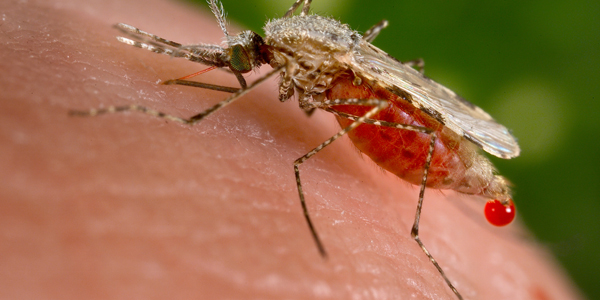
In the name of science, there are actually people who willingly offer up their bodies for malaria infected mosquitoes to snack on. The volunteers are exposed to the tropical killer for a nominal payment in a bid to further vaccine development. The bites are induced in experimental conditions and the study of their reactions can take months. For all the obvious reasons, those with physical or psychological problems are automatically disqualified from the selection process. The majority of the trials take place in either Africa, America or Europe but scientists say the reasons for taking part are universal. Sometimes it's idealistic students or humanitarians who step-up. They're keen to play a part in the battle against malaria, which causes more than 600,000 deaths world-wide each year. Another motivation is the less altruistic possibility of developing personal immunity to the deadly disease, which is exactly what happens in a high number of cases.

2. Elephant Dung Collector

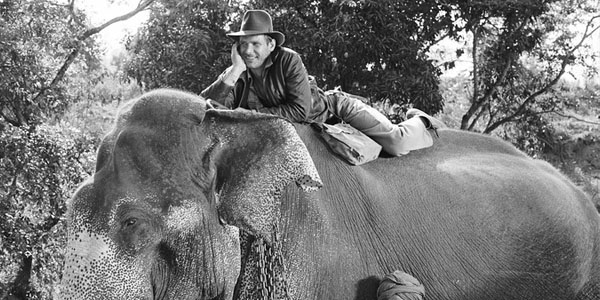
Elephant dung is providing a surprising boost for the coffers of a number of animal parks and zoos, including the Thai Elephant Conservation Centre. Why? It can be turned into paper products. An elephant will munch its way through about 250kg of food a day and what comes out at the other end is about 50kg's worth of waste - enough to make 115 sheets of A4. All very well and good but somebody has to go and pick it all up - the dung collector. Then it's taken to be washed and boiled for five hours, spun for three hours to cut the fibres up, weighed out into balls, sifted into frames and left to dry in the sun. After being sanded for a smooth surface it's a simple and sanitary process to make the notebooks, cards etc. Environmentally friendly as well as profitable, The Thai centre is rightly proud of its side-line and even insists that the dung does not smell 'that bad'. Luckily for the sales team the paper it's turned into doesn't smell at all.

1. Panda Fluffer

Pandas do not like company, even when it comes in the form of other pandas. They live alone until it's that 2-3 day slot a year when the females ovulate and instinctively holler at males in the area to let them know sex is finally on the table. Considering the elusive nature of breeding in their natural habitat, you can imagine how difficult it is to encourage them get it on in the zoo. Another massive stumbling block is the sad truth that male Pandas born in captivity don€™t actually know what to do when it's that special grown-up bear time. So, enter stage left, the fluffers. With little prospect of success, they will try to help their confused charges get going by showing them how it's done in the wild. Donning costumes and playing out the scene themselves is seen as way beyond the call of vocation so the fluffers rely on ready filmed panda porn. The fluffers are keepers at the zoo and for the other 362 days of the year it's presumed they're looking after the animals rather than hunting down more stimulating footage for the mating season.

 
Posted On: 
Contributor
Contributor

Steph Johnson is a freelance writer living in the north, follow her on Twitter @Johnson77Steph