20 Facts Every Harry Potter Super-Nerd Should Know

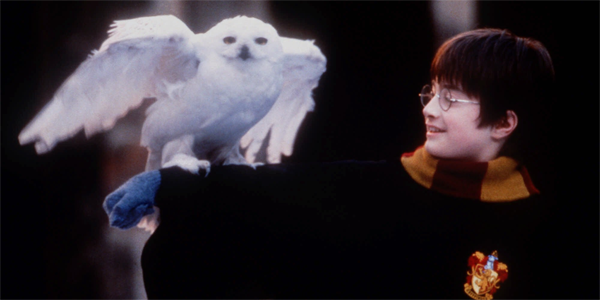
11. The Death Of Hedwig Represents Harry€™s Loss Of Innocence

In any coming-of-age story €“ which Potter, despite its many other inclinations, most certainly is €“ there generally is a symbolic event of the young hero€™s actual coming of age €“ the loss of his childhood innocence to signify his transition into adulthood. In Harry Potter €“ who, it seems, never really had innocence in spades, from the untimely death of his parents, to the neglect and abuse he suffered as a child, to the sociopathic Dark wizard out for his blood, to pretty much every parental figure he ever had kicking the bucket at one point or another €“ Rowling revealed that the heartrending death of Hedwig in Deathly Hallows was the final and official symbol of Harry losing his childhood innocence. This notably coincides with his coming of age to 17 and his leaving school to enter the real battle against evil. Especially with Hedwig being a constant comfort to Harry €“ and one of his first real €œsteps€ into the Wizarding world at age 11 €“ the death of the owl was a hard-hitting reminder that our hero has grown up at last.

10. Parallel Between The Philosopher€™s Stone And The Resurrection Stone

While not officially confirmed by Rowling, it€™s an interesting observation that shows our hero€™s flaws and his ultimately good heart. In the first book, Harry finds himself somewhat tempted by the Philosopher€™s Stone (€œwho wouldn€™t want that?€ he asks when learning of it), and, of course, in the seventh book €“ after experiencing so much loss in life €“ finds the idea of the Resurrection Stone to be very enticing, and spends a great deal of time obsessing over the Hallows. Further than that, however: ultimately, Harry in the first book finds the Philosopher€™s Stone only because he didn€™t want to exploit its uses for himself; in Deathly Hallows, the Stone only ends up working for Harry because he is not trying to bring the dead back, because, as he says, €œhe was about to join them€ (or so he thought) €“ he was no longer, as Dumbledore was, tempted by its powers. A similar parallel can be observed between the Mirror of Erised and the Resurrection Stone, both causes of temptation for Harry and, furthermore, Dumbledore (who sees his dead sister in the Mirror). It€™s not much of a stretch to think that Rowling €“ a master of symbolic parallels €“ would have purposefully included this nod to the beginning at the end, but, regardless, it remains an interesting perspective.

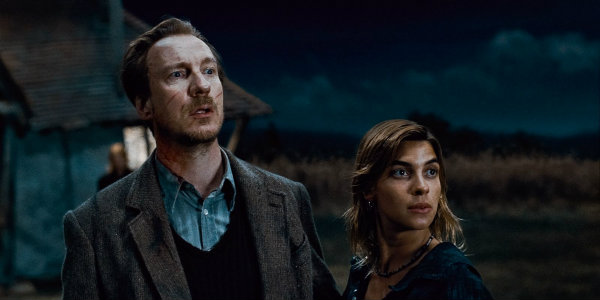
9. Lupin And Tonks Died To Complete The €œOrphan Cycle€

Rowling originally had no intention whatsoever to kill beloved but beleaguered character Remus Lupin in the climax of the series, a decision which was ultimately met with much outcry by fans everywhere who were understandably upset that Lupin lost out on the chance at happiness with his new family after the war was won. In reality, this is the very reason that Rowling decided to kill him. According to her, the seventh book €“ and, indeed, much of the series €“ was focused on the horrors of war, specifically on the tragedy of it snatching parents from their children, as exemplified by our orphaned hero himself. As such, Lupin and Tonks both, she expressed, had to die in order to bring home the reality of the repercussions of war at the end of the seventh book. This, additionally, completes the circle from Harry€™s becoming orphaned at the beginning of the series and the end of the first war, paralleling Teddy Lupin at the end of the second.

8. McGonagall Fell In Love With A Muggle
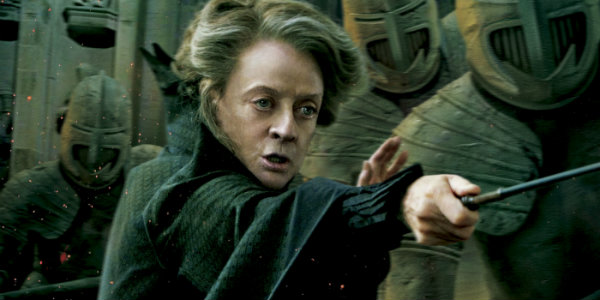
McGonagall After graduating from Hogwarts, an eighteen-year-old Minerva McGonagall spent a summer at her family home in the Scottish Highlands before moving on to work with the Ministry of Magic, and, there, she fell in love with a handsome and charming Muggle farm hand by the name of Dougal McGregor. McGregor eventually proposed to her, but she found that she couldn€™t marry him because it would mean giving up her magic and her career €“ just as her mother Isobel did unhappily to marry her father. Devastated, she told him she had changed her mind and left for London. On a lighter note, it€™s also noted on Pottermore that consummate badass McGonagall played Quidditch for Gryffindor during her student years: but a nasty foul during the finals match between Gryffindor and Slytherin left her injured, and also left her with an avid hatred for the Slytherin Quidditch team, manifested in her support of Harry and the Gryffindor team during his student years.

7. Remus Lupin Was Targeted By Werewolves
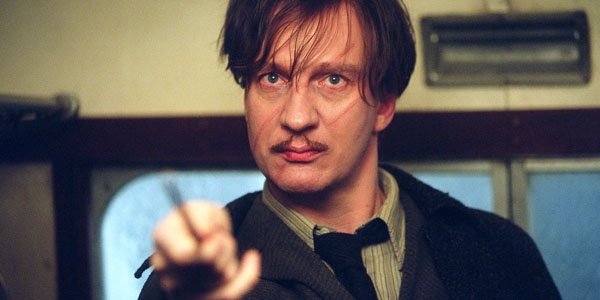
Back to Remus Lupin, whose life was no walk in the park even before his untimely death. As it turns out, he was not the victim of a random werewolf attack, but was targeted by one Fenrir Greyback and his cronies after an incident with his father, Lyall Lupin, who worked for the Department of the Regulation of Magical Creatures. Greyback was in custody for allegedly attacking two children, but he had convinced the other Ministry employees that he was a mere Muggle tramp; Lyall, more clever, was sure that he was a werewolf, and, when he was laughed off, became angry and said that all werewolves were €œsoulless, evil, deserving nothing but death.€ Greyback was released despite Lyall€™s suspicions, and shared with his friends Lyall€™s views. Greyback then took his revenge on Lyall by biting Remus shortly before his fifth birthday, breaking into his room as he slept. Even though Lyall lived with regret for his words his whole life, this began a lonely childhood for his son, culminating in a life of hardship and little happiness due to views like the ones his father once had.

6. Yew And Holly Wand Woods Conflict

Wandlore is one of Rowling€™s most interesting disciplines, and one for which she did a great deal of research into European folklore. This is manifested in complements of wand wood to the wizard in question €“ the prime example being that of Harry Potter and Lord Voldemort. Harry€™s wand wood is holly, and the holly tree in European folklore, according to Rowling, has been used to represent that which is good and the repulsion of evil, its name associated with the word €œholy.€ Perhaps not intentional, but holly relates to Christianity as well €“ associated with Christmas and the solstice €“ which relates to Harry€™s story€™s deliberate religious parallels. Conversely, Voldemort€™s wand is made of yew wood: European yew trees are known for reaching up to two thousand years of age and, subsequently, the yew has represented longevity. Yews have been related with death in much folklore, and, since it is evergreen, has associations with immortality and resurrection. They are also poisonous. In this way, Rowling deliberately juxtaposed the associations of the two woods to contrast the two paralleling but opposite characters.

5. Dumbledore Was In Love With Grindelwald
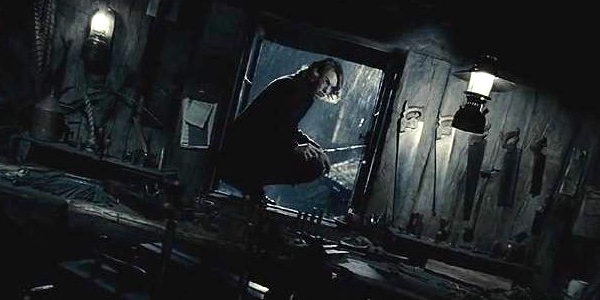
Though it sounds like a fanfiction writer€™s idle conception, ever since JKR confirmed that Dumbledore was gay, the theories about his relationship with the charming wizard gone dark side were flying fast and far, until Rowling herself revealed that Dumbledore was indeed in love with Grindelwald. The actual text of The Deathly Hallows hints towards Dumbledore€™s and Grindelwald€™s strong friendship as highly intelligent and ambitious teenagers with troubled pasts, and Rowling describes Dumbledore as being immensely drawn to the young, brilliant but sinister Grindelwald €“ and then €œterribly, horribly€ let down by him when he turned towards the Dark side. This adds yet another dimension of meaning and sentiment to the backstory of the headmaster, who in 1945 had to vanquish Grindelwald when he put into practice the anti-Muggle plans that they worked on together as young men.

4. The Elder Wand Contains A Thestral Tail Hair

360707-voldemort_harry_potter_deathly_hallows_wallpaper_2_super The three usual wand cores, used by Ollivander, throughout the series are phoenix feather, dragon heartstring, and unicorn hair. However, it€™s said that other magical substances can be used, such as Fleur Delacour€™s Veela hair. The Elder Wand, in the same vein, contains a Thestral tail hair as its magical core, which is a €œtricky substance€ to master, as only somebody who has seen and accepted death can even see it. This is interesting as it ties in with the €œMaster of Death€ aspect of the Elder Wand, as whosoever possesses it €“ along with the two other Hallows €“ effectively masters death. Also, the Elder Wand has a bloody history, filled with the death of its many masters €“ enough so that it garnered the moniker €œDeathstick€ €“ and Thestrals are closely associated with death as well. Another interesting point Rowling made on the Elder Wand is that it is not, like most wands, loyal to an owner: it is €œunsentimental,€ giving its allegiance only based on strength.

3. An Early Version Of Philosopher€™s Stone Has Hermione & Harry As Neighbours

A very early idea of Rowling€™s was to have the Grangers be neighbours to the Potters €“ and, in fact, to have Harry taken in by the Grangers rather than the Dursleys. On her official website, Rowling wrote that the very, very early versions of Philosopher€™s Stone has the Grangers living on the mainland while the Potters inhabit (for whatever reason) a remote island: on the eve of the Potters€™ demise Mr. Granger spots an explosion out at sea and sails a storm to find their corpses among ruins, and, presumably, an alive baby Harry who is then raised by the Muggles. While certainly a very dramatic introduction to the boy wizard€™s story, it would definitely have changed the tone of the series in many ways; Rowling acknowledges the shortcomings of the bombastic beginning, saying, €œI can€™t remember now why I thought this was a good idea,€ and the Potters were henceforth relocated to die in Godric€™s Hollow.

2. Harry And Voldemort Are Blood Relatives

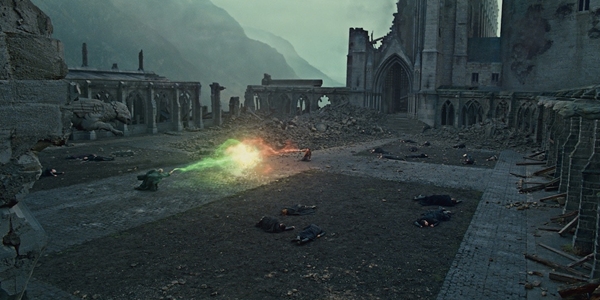
deathlyhallows600 Particularly diligent readers will have noted this already, but when considering the Tale of the Three Brothers and the information we have on the Riddle and Potter genealogies, it becomes clear that Harry Potter and Lord Voldemort are, however distantly, related through blood, specifically through the Peverells. It€™s assumed that the Deathly Hallows €“ the wand, the ring, and the cloak €“ were passed down through the Peverell family lineage: now, as the cloak belonged to Harry, which was given to him by his father, it€™s fairly safe to say that the Potters are distant descendants of Ignotus Peverell. Similarly, the Resurrection Stone fell into the hands of the Gaunts €“ Voldemort€™s mom€™s side of the family €“ which implies that Voldemort is descended from the Peverell brothers as well, later confirmed by Rowling as true. This adds yet another layer of significance and parallelism between Harry and Voldemort, who are already connected by many facets of their story, such as their shared wand core.

Contributor

Canadian student. Spends probably an unhealthy amount of time enthusing over musicals, unpopular TV shows, and Harry Potter. Main life goal: to become fluent in Elvish.