8 Weird Questions That Courts Have Legally Answered
FUN FACT: A tomato is a fruit. INSANE FACT: The U.S. Supreme Court disagrees.

Ever since mankind established the earliest judicial systems, we've been using the courts to answer pivotal questions that speak to the very heart of what it means to be a citizen. Questions like: What checks should there be on political power? What's the appropriate balance between security and civil liberties? Should all speech be protected?
Are the X-Men, like... human, or what?
Yes, every now and then our courts are called away from serving as the foundation of our legal system to answer some very weird, very ridiculous questions. And I'm not just talking about those "wacky lawsuits" that turn out to be one guy who tried to sue God or something - these are actual cases wherein judges were presented with baffling questions and provided real, legally-binding responses.
So if you've ever actually found yourself arguing with a friend over whether or not the X-Men are human, rest assured that that debate and several other, equally crazy ones have already been settled - legally.
8. Are Tomatoes Fruits Or Vegetables?

"A tomato is actually a fruit" is the one "fun fact" everybody has heard but still feels smart for knowing. That's because, as it turns out, botanists have a definition of "fruit" that extends beyond "would taste pretty good dipped in caramel." Like all fruits, tomatoes contain the seeds of their plant and grow from the ovaries of the plant's flowers. It's simple botany, and who would argue with botanists about botany?
The United States Supreme Court, that's who.
In Nix v. Hedden, a New York produce seller named John Nix argued that his tomatoes shouldn't be subject to a recent vegetable tariff because they were fruits, not vegetables. Nix's argument was backed up with irrefutable science, but the government had something far more powerful on their side: public ignorance.
In a unanimous and very confusing decision, the Supreme Court ruled that although a tomato is technically a fruit, it's still subject to the tariff because most people think it's a vegetable. Apparently something false can become true if people are wrong about it hard enough, even in the days before Wikipedia.
Verdict: A tomato is a vegetable and not a fruit, despite being a fruit and not a vegetable.
7. Are Haunted Houses Real?

In 1989, Jeffrey Stambovsky purchased a house in Nyack, New York, from Helen Ackley, but was dismayed when he later found out that Ackley had spent the last twelve years convincing the community that the house was haunted. She had written to Reader's Digest and the local newspaper with stories of ghosts that would leave unexplained gifts in the home and spectres that would shake her daughter's bed to wake her up for school.
Apparitions that leave you cool presents and make sure you're on time in the morning actually sound pretty nice, but Stambovsky sued nonetheless, arguing that the haunting affected the value of the home and that Ackley was required to disclose it prior to the purchase. Ackley counterargued that she was under no such obligation because this isn't The Shining and ghosts don't really exist.
Ackley's response actually forced a decision early in the case about whether the house was really haunted. Because Ackley had spent several years claiming that the home was plagued by netherworld wraiths who kept people punctual, she had effectively established the haunting as fact within the community. The court ruled that for the purposes of any legal proceedings, the house was 100% haunted.
Verdict: G-g-g-g-ghosts!
6. Is A Talking Animal's Testimony Admissible In Court?
There's an inevitable aftermath of every Scooby-Doo episode that we never get to see, and that's the villain going on trial after his arrest - obviously you can't just impersonate a ghost pirate or the Mummy of Ankha and get off with a warning. But as soon as Scooby was called to the witness stand, the presiding judge in The People v. Witch Doctor would have a very weird decision to make: is a talking animal's testimony even admissible?
As it turns out, one judge had to make that call in real life.
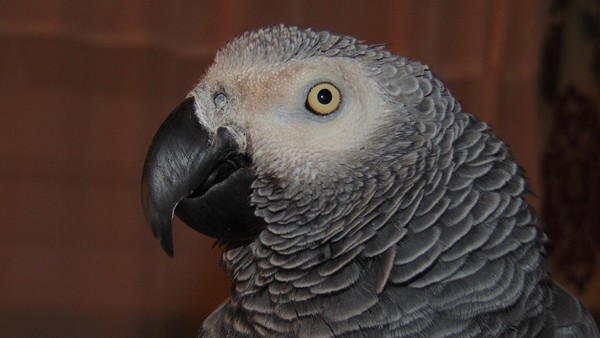
During the 1993 murder trial of Gary Joseph Rasp, the defense moved to enter into evidence testimony from the victim's African gray parrot, Max. They claimed that Max had been present for the murder and was later heard yelling, "Richard, no, no, no!" That wasn't the defendant's name, so they claimed this proved he hadn't committed the murder.
You might expect an Air Bud-like moment where somebody points out that the rulebook doesn't say the witness has to be human, but the real world is boring, so the judge blocked the attempt to enter Max's testimony into evidence.
Verdict: Talking animals can't testify because real life is not a cartoon.
5. What Is A Pringle?

In the U.K., a value-added tax is added to certain snack foods, like crisps ("potato chips" in the U.S.). That's why Proctor & Gamble, makers of Pringles, argued that their product wasn't a crisp at all. They claimed that being made with less than 50% potato should exclude Pringles from the tax, suggesting they were less like crisps and more like biscuits ("cookies" in the U.S. - we really need to get on the same page with international snack nomenclature).
Her Majesty's Revenue & Customs disagreed with P&G, countering that making a potato crisp that's more filler than potato shouldn't preclude the company from paying the tax.
Proctor & Gamble won a 2008 High Court decision. This might seem like a matter too trivial for that venue, but when you consider that "what is a Pringle?" is the kind of question you'd only ask when stoned, the High Court was probably the most appropriate setting.
Nonetheless, the government appealed the decision, with the Court of Appeals ruling in their favor in 2009. P&G was forced to pay the tax - no word on whether they delivered the money in long, tubular cans.
Verdict: Pringles are delicious, taxable crisps.
4. Should Taxes Be Paid On Criminal Income?
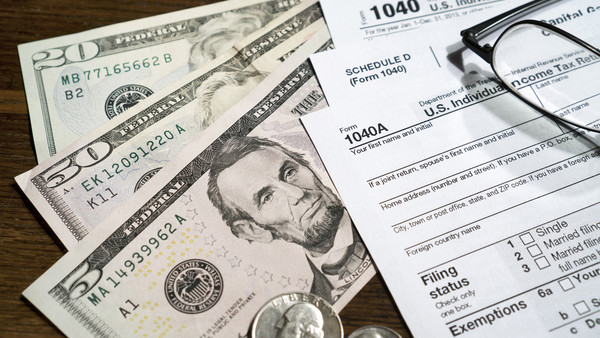
Eugene James was a labor union official who embezzled more than $738,000, and, as a criminal does, neglected to report it as taxable income. You know, because he stole it. But, as it turns out, the Internal Revenue Service doesn't care whether you got your money through embezzlement or armed robbery or by selling bootleg Pokémon cards.
James was put on trial for tax evasion, but claimed in his defense that criminally-sourced funds were not subject to income tax. See, in the United States, money that one has an obligation to eventually repay (such as a loan) is not considered taxable. James argued that he had a legal duty to return the $738,000 (because, again, he stole it) and that he should therefore not have to pay taxes on it.
The IRS weren't impressed with James' argument that only legally-obtained money should be taxed, and the case waged its way to the U.S. Supreme Court. They ruled that criminal income was still income, and James was forced to pay taxes on the embezzled money.
Verdict: "Everybody pays their fair share!" - WWF Tag Team Champion and noted tax expert Irwin R. Schyster.
3. Who Owns The Sky?

The question "who owns the sky?" sounds like it wouldn't have a real answer (except maybe dragons). But a 1946 U.S. Supreme Court case actually addressed the issue definitively.
Prior to United States v. Causby, common law recognized a concept called ad coelum. It basically stated that if you owned land, you owned everything above that land, infinitely upward. So if you purchased a nice little acre of property in the country, congratulations! You now own part of the Andromeda galaxy.
Ad coelum was the basis under which Thomas Causby sued the U.S. government in 1946. During World War II, the military used an airstrip less than a mile away from Causby's chicken farm, sometimes flying planes so low above his land that his chickens literally started killing themselves.
Causby claimed that because of ad coelum, he owned the sky above his farm and demanded compensation. The government claimed the 1926 Air Commerce Act granted them ownership over all airspace.
The Supreme Court's ruling was somewhat of a compromise: a person does own the space above his land, but only "the lower altitude airspace." Sorry if you were already making plans for all that Andromeda property.
Verdict: Nobody owns the entire sky. Except maybe dragons.
2. What Is Golf?

We've all had disagreements over the rules of a game. Do you get money for landing on Free Parking in Monopoly? Is it cheating to look at your opponent's screen in Mario Kart? How long are you allowed to choke somebody for never moving their back row in checkers?
But no matter how heated your arguments have become, I bet they never made their way to the Supreme Court.
Casey Martin was a golfer who wanted to qualify for the PGA Tour, but a medical condition impaired his ability to walk. He asked for permission to use a golf cart between holes of the tournament, but the PGA Tour claimed that walking between holes was a fundamental aspect of the sport and denied his request.
Martin sued, claiming that the rules of golf don't actually require players to walk between holes and that the PGA Tour was obliged by the Americans With Disabilities Act to accommodate him.
The case eventually went to the Supreme Court, who weren't swayed by the PGA Tour's assertion that using a golf cart would somehow be cheating. Martin was allowed to use a cart, though he never managed to qualify for the tour.
Verdict: Walking isn't a fundamental part of golf. No ruling yet on the legality of mulligans.
1. Are The X-Men Human?

In the early 2000s, Toy Biz, the division of Marvel Comics that produced their action figures, was looking for a way to lower the tariff they paid on imported toys. Like most action figure manufacturers, they had been paying the import tax applicable to "dolls" (which are intrinsically human-like), but they discovered there was a lower rate available for toys representing "nonhuman creatures."
Toy Biz argued before the U.S. Court Of International Trade that the superhero characters their toys depicted, such as the X-Men and the Avengers, weren't human and were therefore subject to the lower tariff. After reviewing (or, probably more accurately, playing with) more than 60 Toy Biz action figures, the judge agreed, and officially ruled that the toys represented "nonhuman creatures."
Toy Biz and Marvel celebrated their victory, but the decision had an unexpected group of critics: Marvel's own fans.
For years, Marvel storylines had centered around the struggle of mutants (like the X-Men) to be accepted as equally human to everybody else. These stories were frequently lauded as allegories for real-world civil rights issues, and fans felt that Marvel had undermined all of that by legally establishing that the X-Men and other characters were "nonhuman."
Verdict: Nope! Sorry, muties.