8 Straight Up Revolting Things In Nature
All things bright and beautiful indeed.

Nature is beautiful, for sure. Rainbows, sunsets and kittens and all that.
However, there's also evidence to suggest that Mother Nature had some serious off days, producing a hellscape of hideous creations to counteract the lovely stuff.
For every beautiful sunrise, there's a parasite burrowing into somebody's eye, for every pristine beach, there's a deep sea fish with a bad attitude, and for every trill of children's laughter, there's a bug biting off the head of its mate and laying eggs down its neck.
A gross as this stuff is, it's also equally fascinating, so long as it remains safely on the internet where we can observe from a distance and close our browsers at any time.
8. Birth: Surinam Toad

Hey, so do you know what's not fun? Surinam toad birth.
This toad, found all over South America, is brownish, flatish and has possibly one of the most revolting reproductive processes in the animal kingdom.
Rather than laying a load of spawn and leaving it to fend for itself, the female Surinam toad releases her eggs and then has them embedded into her skin. The look created is a trypophobe's worst nightmare, and it only gets worse.
The larvae develop through the tadpole stage whilst still stuck into mum's back before emerging, fully formed, nightmarishly through the holes in scenes that resemble a cross between Alien and squeezing blackheads.
7. Mammal: Koalas
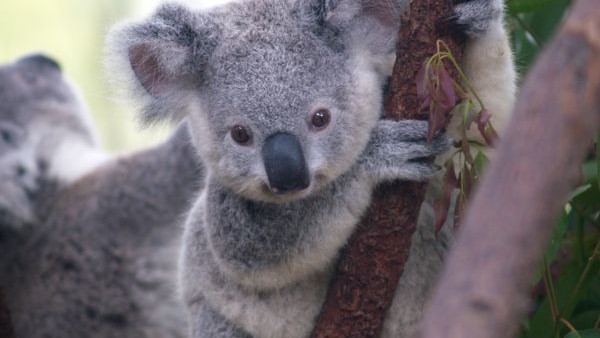
Pretty cute, right? Don't be fooled.
Koalas might be mostly cute and fluffy, but there's plenty about them that's just plain nasty - chief of which being that the baby, or joey, koalas regularly eat their mothers' poop. Not just normal poop either, but a special "wet" kind of poop called "pap".
In order to get its fix of pap, the joey will have to stimulate the mother's cloaca with its mouth (translations: they pretty much lick her butthole), this usually happens at about 6 months old. The poop-eating, or coprophagy if you want to get technical, is not just for fun, but a vital part of the koala's development.
The pap contains vital gut bacteria from the mother's intestines that allow her to digest a tough diet of eucalyptus leaves. If the joey, for whatever reason, doesn't get a good dose of these bacteria, then it will never be able to eat eucalyptus - a big problem for koalas.
Just to add to the gross-out factor, 90% of koalas are infected with chlamydia. Oh, and the males have an odour that can only be described as "pungent". Maybe not so cute after all.
6. Plants: Corpse Flower
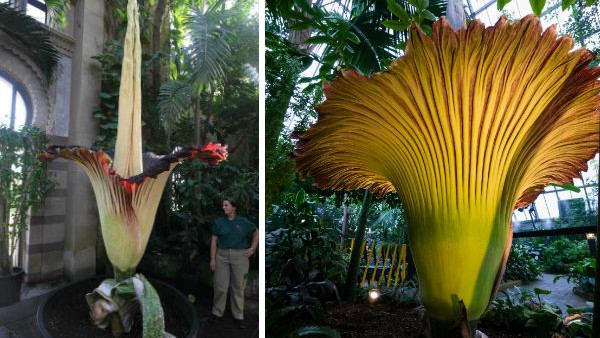
A big bunch of flowers is one of the most pleasant things on god's green Earth, but there's a black sheep in every family and even these delightful splashes of colour have a bigger, weirder older cousin that ruins family get-togethers by refusing to wash their hair and lecturing everybody about conspiracy theories.
The corpse flower is native to western Sumatra. It can grow bigger than a man and gives off the distinct odour of rotting flesh (hence the name).
The unpleasant aroma is totally repellant to pretty much anything with a nose, apart from certain carrion-eating insects who can't get enough of it. The smell is for these insects' benefit, as they pollinate the plant.
As though to add to the levels of sheer creepiness, the plant's bloom is almost a perfect match for human flesh and the tip of the large, protruding spadix is warm - about the same temperature as the human body.
5. Slimiest: Hagfish
1189796There are no two ways about it, hagfish are grim from the gills up.
Where most animals' defence mechanisms consist of things like venoms, aggressive displays, thick armour, super speed and agility or some badass spines, the hagfish has taken a decidedly oozier approach.
When the hagfish, an eel-like deep sea fish, feels threatened, it will exude large amounts of fibrous, viscous slime. This not only makes them tricky to get a good grip on, but will almost immediately clog up the gills and mouthparts of anything that tries to eat it. If the slime gets too much for even the hagfish, it can sort of scrape it off by literally tying itself in knots and sloughing off its coat of mucous.
The out-and-out disgusting-ness (technical term) of the hagfish hasn't put people off from eating it, skinning it for leather and some scientists are even looking into using its slime to create a sort of hagfish silk to make clothes from. Presumably, we'll all be clamouring for a "genuine hagfish" jacket in the future.
Oh, and their mouths look like straight up toothy vaginas from hell. So enjoy that.
4. Meanest: Onchocerca Volvulus

We all know that one person who is just a total parasite. They might eat all your food, borrow money without paying it back or use your sofa as their own personal hotel room. This worm is a little bit like that, apart from instead of finishing your Corn Flakes, it causes debilitating blindness.
Onchocerca volvulus is a nematode that causes onchocerciasis or "river blindness" and it is a particular problem in developing parts of Africa.
The worm is spread by the bite of a black fly. Once the parasite is inside its host, the larvae spread throughout the subcutaneous tissue and into the eyes. The larvae in the eye will cause repeated scarring and, eventually, blindness.
The slightly less damaging, but infinitely more disgusting Loa loa nematode worm (pictured), will actually live in the eyeball as an adult creating the rather charming effect above.
Both of these parasites can live for nearly 20 years, that's a long time to play host to an unwelcome guest.
3. Disease: Faecal Vomiting

Unfortunately, this is not some kind of complicated medical term. Faecal vomiting does exactly what it says on the tin.
This is a rare but revolting condition in which the content of the colon makes an about turn and heads right back from whence it came. This generally occurs in the case of a severe obstruction in the bowels, either through constipation, torsion or a tumour.
Seeing as there are really only two options in the digestive tract, the only way out is then through the mouth.
Mercifully, the material that comes back up is not generally a fully formed log, as it likely comes from the small intestine. This is probably little consolation to the poor folks afflicted with the condition as it still looks and smells like the real deal and is, for all intents and purposes, poo. In your mouth.
The human body is a magical machine.
2. Sexytime: Leopard Slug Mating
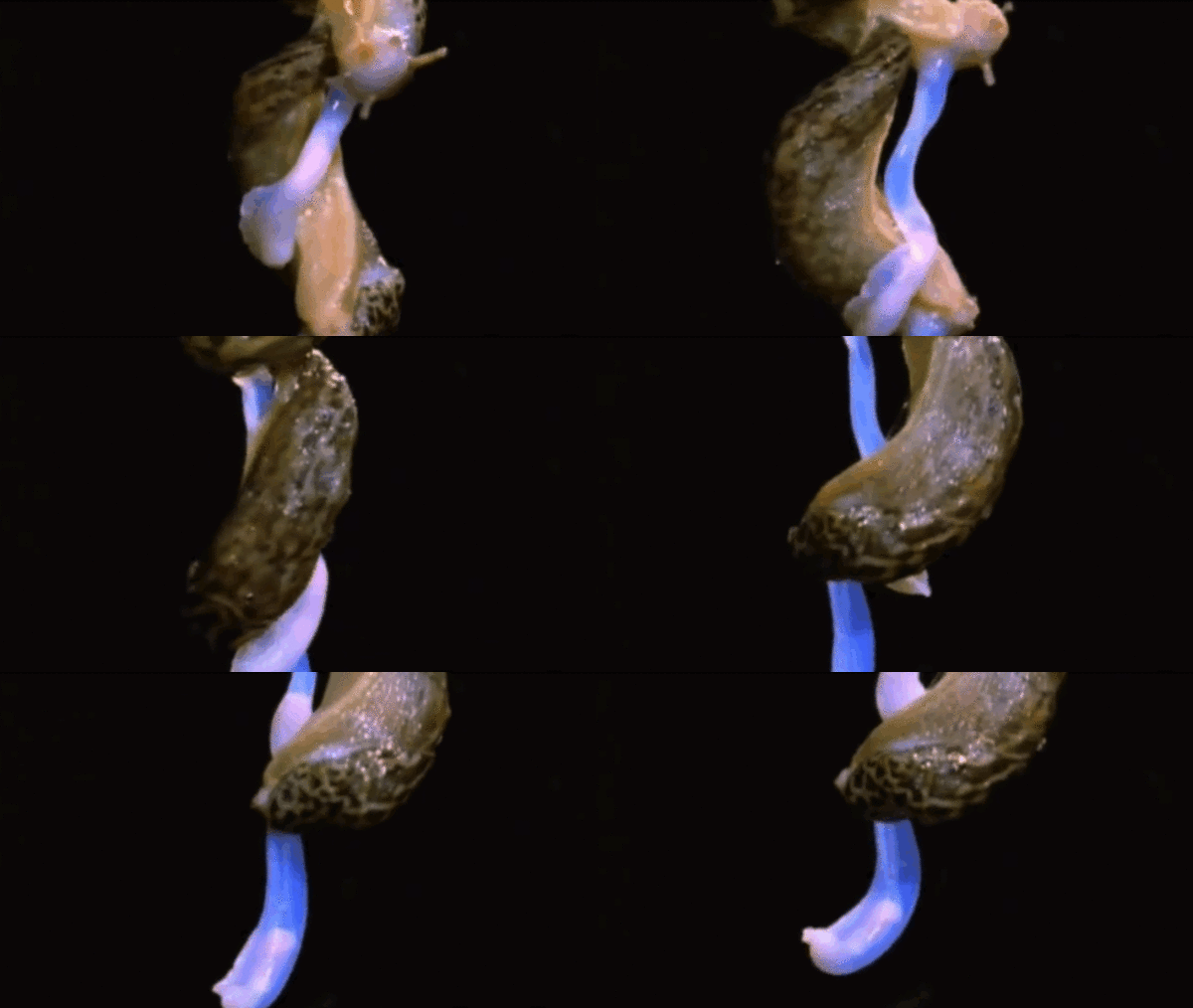
No, these leopard slugs aren't at a rave, those blue glo-sticks are actually their penises, emerging from the sides of their heads.
The amorous encounters of the leopard slugs can only be described as needlessly complicated and morbidly fascinating. As land slugs are hermaphrodites, meaning that they have both male and female reproductive parts, they can simultaneously fertilise one another by wrapping their long blue penises around each other. It's certainly an efficient set up.
Leopard slugs in particular make a big song and dance of this ritual as they, for some reason, insist on hanging upside down from a long string of mucous in an acrobatic act of slug ove.
It is thought that they have to hang upside down in order to be able to extend their frankly enormous penises, which can extend the length of their bodies. Afterwards, they can lay up to 200 eggs, from which their teeny tiny babies will emerge.
Seeing as slugs can actually fertilise their own eggs, it makes you wonder why they even bother in the first place. Perhaps they get lonely.
1. Food: Casu Marzu
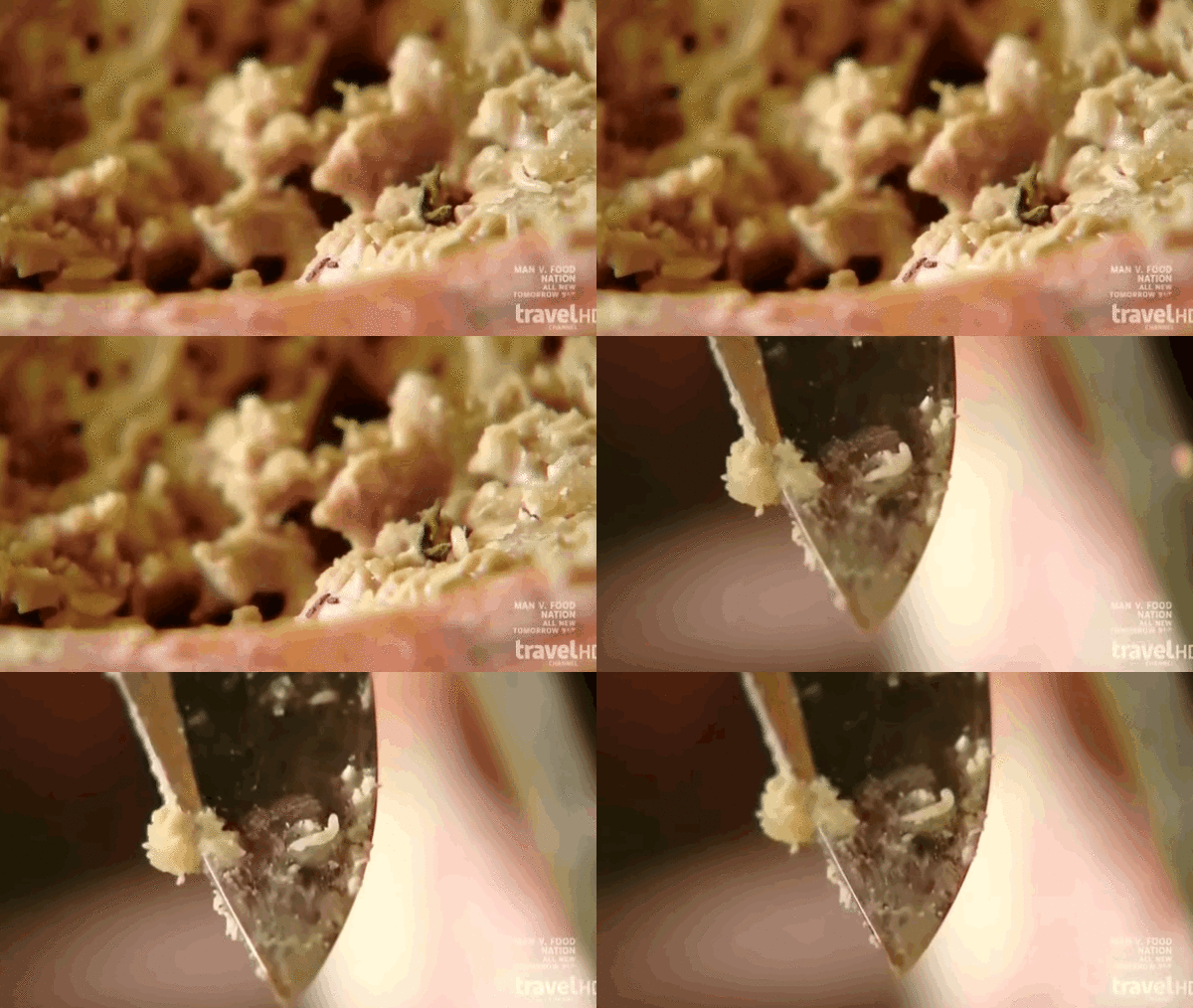
No matter how bad your cooking skills are, you can rest easy knowing that you've probably never served up anything quite as stomach churning as this. Unless you're super into your traditional Sardinian cuisine that is.
Casu marzu, or "rotten cheese", is a traditional Sardinian sheep's cheese, with a notable twist. Rather than using moulds to ferment the cheese, casu marzu contains live maggots. These little critters work their way through the cheese, essentially liquefying it by eating and excreting it. Yep. It's maggot poop.
It is made by removing the rind of a perfectly good sheep's cheese and leaving it outside in the hope that a passing cheese fly will lay its eggs in it. A typical cheese will contain thousands of maggots.
The flavour has been described as "so ammoniated that it burns the tongue" and it has a distinctive aftertaste that can last for hours. The maggots can leap up to 15 cm when disturbed, so it is customary to hold one's hand above it whilst eating in order to prevent the maggots from flying off.
If you would rather eat the cheese without maggots (and why would you?) then the technique is to seal it in a paper bag. The maggots become oxygen starved and begin to leap and writhe, creating a "pitter patter" sound against the bag. When the noise subsides, the maggots are dead and you may eat the cheese. It's like popcorn, but from the deepest circle of hell.
Oh yeah, and it is considered an aphrodisiac. So sexy.
Love all things science? Like us on Facebook or follow us on Twitter for plenty more where that came from.
Want to write for WhatCulture Science? Click here to find out how you could get paid to write about what you love.