10 MORE Important Doctor Who Details That Are Almost Never Mentioned
That one TARDIS detail that's been staring you in the face all along.

Doctor Who lore goes miles deep, and it's more than any one person could possibly hope to remember.
Any show that can unironically start a story with, "Previously... 709 episodes ago", is going to forget some details along the way, and when that show has been actively making it up as it goes along for over 60 years, it's to be expected that a few things are going to slip through the cracks of the collective fan consciousness.
Helpfully, the show itself doesn't tend to care too much about these things either, so it's not like people are missing out on some massive deeper meaning by not knowing what X character said to the Doctor in episode three of story Y 44 years ago.
But occasionally, there are forgotten details that are worth remembering. From important character moments to small bits of worldbuilding that are actually quite huge, these are even more of those interesting corners of the Whoniverse that probably should be mentioned a lot more than they currently are.
10. There's A REAL Superhero In New York City

It’s been pointed out more than a few times that the Doctor is a sort of superhero. They’ve got the supernatural powers, a strict moral code, a sidekick or two, and they selflessly defeat a wide array of villains intent on destroying the Earth.
The only thing missing is the spandex, the cape, and the red underpants. But let's not go there, shall we?
Someone who isn’t lacking in those other departments is the Ghost, Doctor Who’s actual, literal superhero.
Sure, Ghost's human alter-ego Grant Gordon may have pledged to hang up his cape and leave the world-saving to the Doctor, but he also said that he'll keep his superhero outfit, "just in case." And outfit or not, it doesn’t change the fact that there’s a bonafide Superman hanging around in New York City!
Even with how London-obsessed most invading aliens seem to be in the Doctor Who universe, you’d think Ghost would've made an appearance in one of the many alien invasions since he got his powers. You'd think the Doctor would've called in a favour by now too – wouldn't Ghost have been incredibly useful during the crazy events of Flux?
On the other hand, maybe there’s an entire rogues gallery of supervillains the Doctor’s never heard of because Ghost dealt with them first. No news is good news, right?
9. The Doctor Started The Time War

Nothing divides the classic and revival eras of Doctor Who more than the Time War. Ever since 2005 it’s hung heavy over the series – sometimes so important it defines entire series arcs, and sometimes just sitting there in the back of the Doctor’s mind, influencing their actions.
We knew that the Doctor had stopped the war offscreen by destroying both the Time Lords and the Daleks, before The Day of the Doctor but a neat little bow tie on the matter by giving the Doctor the chance to save their people instead. But for all the talk of how the Doctor ended the Time War, there’s surprisingly little mention that they were also responsible for starting it.
In Genesis of the Daleks, the Fourth Doctor is pulled out of his timestream by the Time Lords, who give him a mission: destroy the Daleks before they are created. Eventually, the Doctor decides that he doesn’t have the right to erase an entire species, and leaves the Daleks trapped in their city on Skaro instead.
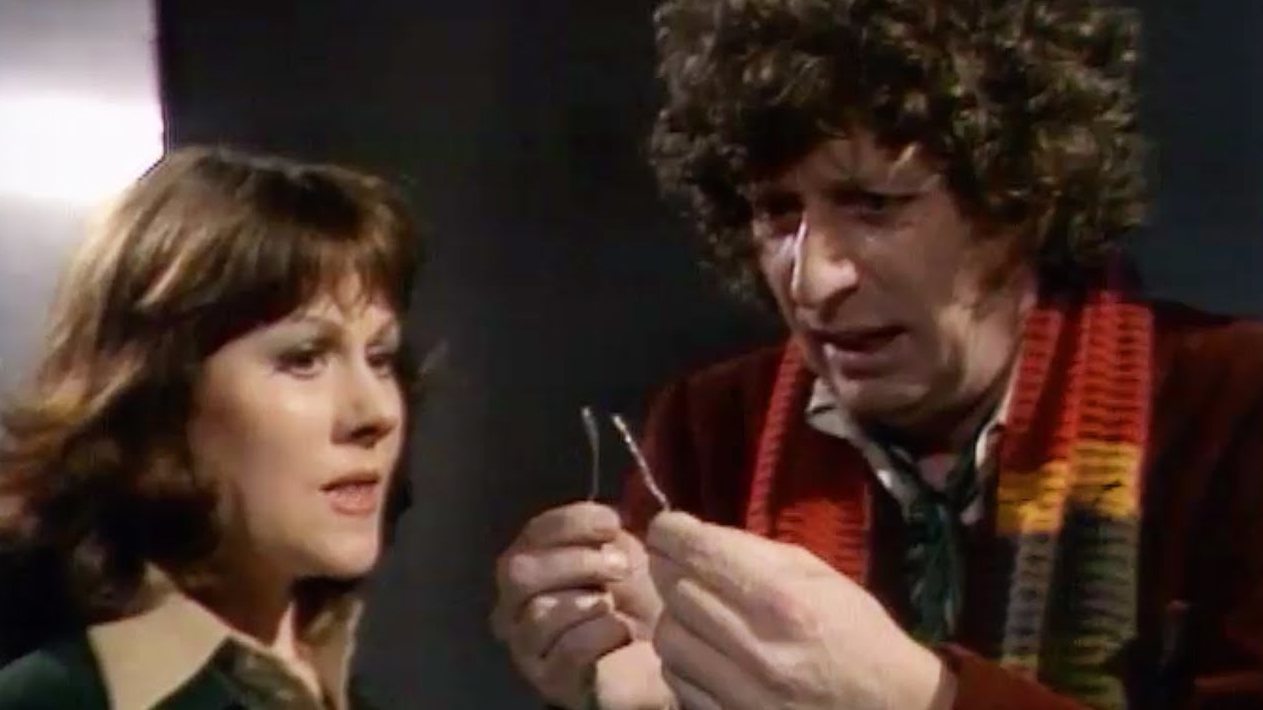
Rather unsurprisingly, the Daleks immediately develop a massive grudge against the Time Lords. Before the Fourth Doctor's mission they hadn’t seemed to care all that much about Gallifrey, but considering that the Doctor almost wiped them out, you can't really blame them for deciding that the Time Lords are their sworn enemies.
Several stories and one destroyed Skaro later, and this mutual animosity has escalated into a full-on Time War. With Russell T Davies suggesting that Genesis of the Daleks was the "first shot" fired in this war, that means it was the Doctor who was responsible for kicking it all off in the first place!
No wonder the Time Lords developed a strict non-interference policy.
8. The Mona Lisa Is A Fake (Sort Of)

In City of Death, some timey-wimey shenanigans have resulted in the alien Scaroth being split into 12 telepathically-linked people scattered throughout human history.
In desperate need of some cash to fund his attempts to reverse these shenanigans, he uses his fractured selves to his advantage, with his 16th century splinter approaching Leonardo da Vinci and convincing him to paint six copies of the Mona Lisa. In the present day, he steals the “original” painting from the Louvre, and intends to sell all seven versions on the black market, with each buyer thinking they have the real, original version.
True to form, the Fourth Doctor has an equally ingenious plan to stop Scaroth: he travels back in time and writes “THIS IS A FAKE” on the canvasses for the six Mona Lisa copies. Eventually, a fire destroys all but one of these Mona Lisas, which is returned to its normal place in the Louvre.
This doesn’t seem like a big deal at first – after all, da Vinci did still paint the duplicates, and he did paint over the "THIS IS A FAKE" message – but it leaves a ticking time-bomb in present-day Earth. If discovered, this message would create doubt over the authenticity of arguably the single most famous painting in the world, and further still, this painting now holds undeniable proof that somebody in the 16th century was running around with a felt-tip pen!
It's also fun to imagine that when the Spy Master defaces the Mona Lisa and when the painting comes to life in The Sarah Jane Adventures, that's actually one of da Vinci's "fakes". The news would have an absolute field day if the truth was ever discovered!
7. The Doctor Sucks At Regenerating

Regeneration is a messy and chaotic process. These days, the Doctor seems incapable of changing their face without half-destroying the TARDIS, crashing on some random planet, and spending a good few days as a deranged amnesiac before everything settles back down again.
But the thing is, this only seems to apply to the Doctor themselves.
Most other Time Lords seem to be pretty darn good at regeneration, at least to the extent that they don’t nearly blow up the room while they’re in the process! In fact, Romana had so much control over her regeneration that she was able to “try on” various different bodies and ask the Doctor’s opinion, before eventually settling on one she liked.
River Song was able to control her aging and didn't suffer from any sort of post glowy face trauma, and even the Master is back to his old self almost immediately after regenerating in Utopia – although, since he’s already insane 100% of the time, he likely didn’t have any marbles left to lose.
This seems to imply that regeneration is a skill that needs to be mastered – like playing the guitar or riding a horse – rather than a basic bodily function that comes naturally and effortlessly, like breathing.
Either the Doctor has the regeneration equivalent of asthma, or they need to get their act together and start practicing. Then they can finally just choose to be ginger after so many centuries of waiting.
6. There Are Silent Corpses EVERYWHERE

Have you ever felt murder-y, without really knowing why? Well, you can blame the Doctor for that.
When Eleven defeated the Silents by giving every human on the planet the compulsion to kill them on sight, he didn't only turn you, me, and little Timmy down the road into killers – he also turned Earth into a mass grave.
Since humanity didn’t experience the sudden appearance of a bunch of alien corpses in the late '60s and early '70s, we can only assume that the Silents' memory-altering powers continue after death. And if that's the case, it means we're walking among their dead bodies day in, day out.
Humanity certainly isn't cleaning them up, and we can’t imagine the Silence is going out of its way to deal with them either, considering that would involve putting themselves directly in the path of a bunch of murderous humans. So are they all just… lying there? To put it bluntly, it seems like the human race has spent the last few decades unknowingly stepping over an endless parade of invisible and very very dead alien bodies.
We've all tripped over thin air at one point or another – and now you know why.
5. Harold Saxon Murdered The American President

After a hellish year of the Master's rule in Last of the Time Lords, the Doctor is able to destroy the Paradox Machine and rewind the timeline, undoing all the horrors that happened in the year he controlled the Earth.
Except... this didn’t undo everything.
Just before the Toclafane emerged from the sky and murdered one tenth of the population, the Master – at that point the Prime Minister of the UK – assassinated Arthur Winters, the President of the United States of America. And since the timeline was only rewound to the point of the Toclafane invasion, that assassination still happened. In the Doctor Who universe, the British Prime Minister murdered the American President. On live TV.
If nothing else, the continued existence of the UK in this timeline at least means that the USA didn’t respond by nuking Great Britain into oblivion. But still, the political fallout from this must have been absolutely massive. One head of state murdering another would be the biggest news story in the world, and it's a minor miracle that America was willing to offer help to the UK after the destruction of London in Turn Left!
Still a better PM than Roger ap Gwilliam, though.
4. The TARDIS Is Designed For Multiple Pilots

If Gallifrey requires young Time Lords to pass some sort of driving test before allowing them behind the console of a TARDIS, we’re pretty sure the Doctor’s been driving illegally for most of their lives.
It might be a fantastically advanced time-and-space machine that defies all known laws of physics and pretty much functions like magic, but a smooth ride it is not, especially when the Doctor's at the wheel.
Then again, maybe it's not the Doctor's fault. That's because, as firmly established in Journey’s End, the TARDIS was never designed to be piloted by a single person, but a crew of six.
Generally, the Doctor really doesn’t seem to have any idea what they’re doing (whether she was lying or not, the Eleventh Doctor seemed to take River's remark about him leaving the brakes on at face value) but you can't blame them for banging and crashing about all over the place when they're supposed to have 12 hands instead of two.
It's interesting then that the Doctor never brings this up, nor have they ever really tried to get together a regular crew of six people. From an out-of-universe perspective it's obviously not feasible to have such a large regular cast, but the character themselves would surely want to inform their companions that they aren't bad at driving – they're just understaffed!
Then again, this is also the same person who once installed a randomiser on the TARDIS console, so maybe they just enjoy the chaos.
3. The Sontaran-Rutan War

The Sontarans are one of Doctor Who’s most iconic returning monsters. A war-obsessed race of potato-headed clones whose entire existence is dedicated to fighting battles and winning wars? What’s not to love!
But for all of the Sontarans' many appearances across the past 50 years, there’s one major aspect of their existence that has barely been touched upon: their war with the Rutans.
You know, the Rutans? The Sontarans' sworn enemies, who they've been waging war with for an eternity? We know this war exists, we know who’s fighting it, and we know it's absolutely huge... which makes it all the more bizarre that we've never actually seen it.
Doctor Who has delved into the backstories of the Daleks, the Cybermen, and the Master – pretty much every major recurring villain. But the Sontaran-Rutan War feels strangely off-limits, only ever mentioned in passing, and happening distantly in the background of the show’s universe. Even the Rutans themselves have only shown up once, and that was in a story without any Sontarans!
While you could argue it’s more interesting having it kept as something almost mythological happening off-screen, it would also be perfect fodder for a Sontaran story, and it's really quite surprising it hasn’t shown up before now.
2. The Chameleon Circuit Isn’t COMPLETELY Broken

The TARDIS might just be the single most iconic image in Doctor Who history. It's either that, or a Dalek!
A whimsical ship that can travel through all of time and space, is bigger on the inside than it is on the outside, and is permanently stuck in the form of a 1960s British police box somehow effortlessly embodies the chaotic charm of the show.
But is it permanently stuck as that same 1960s British police box?
While broadly speaking, yes it is, the TARDIS’s exterior has still gone through a number of changes over the years, most noticeably in its size, the colour of the sign on its left door (which has also appeared on the right door a few times), and the occasional reappearance of the “St John Ambulance” logo.
So at the very least, it’s not completely fixed in one specific style.
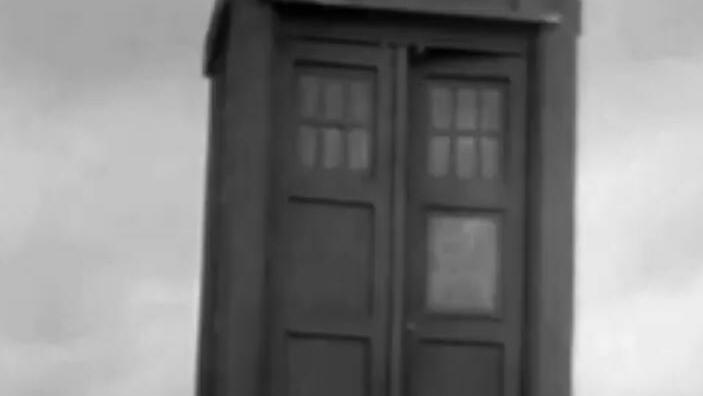
In Attack of the Cybermen, the Sixth Doctor had a reasonably successful crack at fixing the chameleon circuit, and even got as far as convincing the TARDIS to take on other forms. Though this didn't last long.
Obviously, the real-world explanation is that the BBC doesn’t want to ditch one of its most recognisable images, while the props department occasionally changes the exterior design when it needs freshening up a bit.
But frankly, it’s more fun to think that the chameleon circuit is broken in the sense that the TARDIS can't change its police box form, but that it can make adjustments within that form.
1. Time Lords Can Fly

As mentioned, Time Lords have a few tricks that are basically superpowers. Regeneration, telepathy, super taste, and the occasionally ineffectual ability to sense other Time Lords, to name just a few.
But one that isn’t mentioned so often is that they’re apparently able to learn what might be the most quintessential superpower of all: flight.
This is directly mentioned by the Doctor and Romana in a throwaway comment in City of Death. Having enjoyed a trip to the top of the Eiffel Tower, Romana asks the Doctor if they should “take the lift or fly” back to ground level, and the two Time Lords briefly consider their options before the Doctor decides that flying would look silly.
This was quickly forgotten about, and in the moment ends up coming across as a joke between two friends – until you remember that in the previous season's The Armageddon Factor, the Time Lord Drax had asked the Doctor to fly up and shut the TARDIS door.
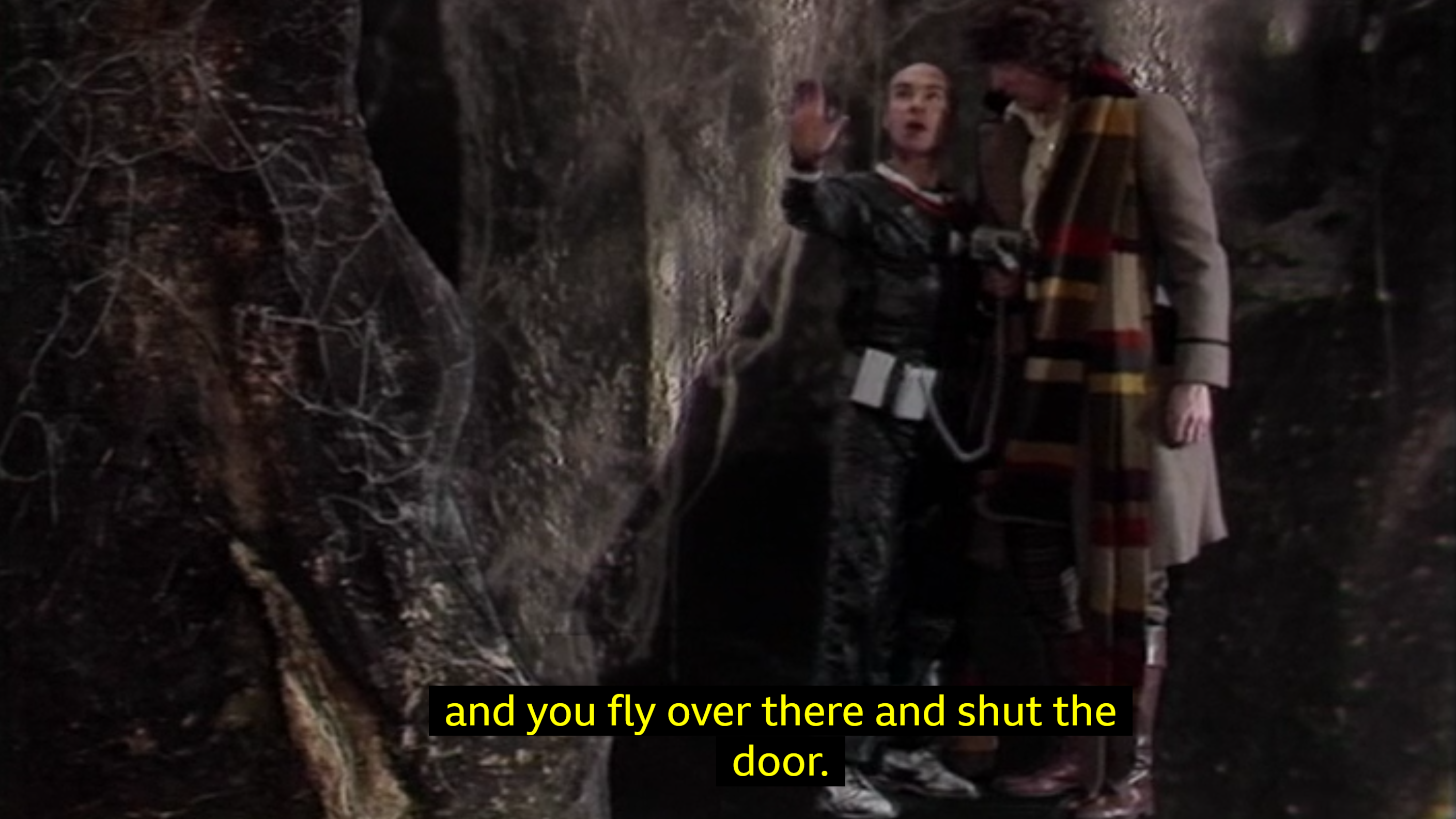
It goes without saying that the power of flight would've come in handy so many times for the Doctor over the years, but for understandable reasons, we've never seen it used. It would look weird if the Doctor was flying about all the time – plus, from a writing perspective, it would make the solutions to most situations far too easy.
Then again, that's what the sonic screwdriver does, and the Doctor uses that every two minutes. Bring on a flying Doctor!