10 Important Doctor Who Details That Are Almost Never Mentioned
Did we all just forget that the Doctor isn't technically the Doctor?

Doctor Who has been running for so long – and has had so many different writers, showrunners, and producers at its helm – that it's had more of its lore forgotten than most other TV shows will ever have written for them.
Even the most hardcore Whovian can't always recall what Character X said 42 minutes into an old Troughton serial from the 1960s, even if that dialogue is actually super important.
Most of the time it's minor details – things that were never meant to have much of an impact and disappeared almost as soon as they arrived. But there are some bits of lore sitting quietly in the background that, when you actually stop and think about them, have huge implications for the show.
From oft-forgotten details about the Whoniverse at large to a disturbing tidbit about the Doctor themselves, these are some of the fairly major Doctor Who details that most people seem to have completely forgotten about.
10. The Entire Universe Is Already Dying

Doctor Who is all about saving the universe. Whether it's evil aliens or temporal paradoxes that threaten to tear the fabric of reality in two, the Doctor spends most of their lives trying to prevent the untimely end of life as we know it.
But in Logopolis, there's a twist: it turns out our universe it already dying.
In Part Three of Tom Baker’s finale as the Fourth Doctor, we find out from Logopolis’s Monitor that “the universe long ago passed the point of total collapse.” It’s only due to the smarty-pants people of Logopolis opening CVEs (essentially pathways between universes) to siphon off our excess entropy that all of existence hasn’t already crumbled into dust.
And when the Master unknowingly stops Logopolis from carrying out its vital calculations, we see entire sections of the universe begin to fade into nothingness in an event more catastrophic than even the Flux.
Thanks to an unlikely alliance with the Master and at the cost of a regeneration, the Doctor manages to open a new CVE and stave off the universe’s inevitable collapse. But it’s harrowing to think that the entire Doctor Who universe has always essentially been on life support.
Imagine that weighing on the Doctor's mind constantly. No wonder Fourteen needed a rest!
9. Multiple K9s Exist At Once

Everybody loves K9. How could you not? He’s a time-travelling robot dog.
It's been years since his last regular appearance, and he’s still as iconic as blue police boxes, sonic screwdrivers, and inconveniently long scarves. It’s little surprise that three different Doctor Who spinoffs have featured him as a character – the failed K9 and Company pilot from 1981, The Sarah Jane Adventures, and the Australian-made K9 show that we never ever talk about.
So you’ll be happy to hear that there are not one, but three different K9s cutting about the galaxy simultaneously (and that’s just going by the TV show).
The first is the original, created by Professor Marius on a far-future space station, who first travelled with the Doctor before leaving with companion Leela when she chose to remain on Gallifrey. Then there was K9 Mark II, built by the Doctor himself, who left to accompany Romana in E-Space. And finally we have K9 Mark IV, left by the Tenth Doctor to replace Sarah Jane’s Mark III after his heroic sacrifice at the end of School Reunion.
We usually think of K9 as being just one character, but the universe is full of them, and that's quite reassuring really. The only question is: where do we get ourselves a K9 construction kit, and are they as difficult to build as Ikea furniture?
8. History's Greatest Criminals Are Being Tortured

In Let’s Kill Hitler, the Doctor, Amy, and Rory come across the Teselecta, a time-travelling android-like vehicle piloted by miniaturised people whose mission is to put history’s greatest criminals on trial.
They do this by kidnapping the criminals right at the end of their historically-recorded lives and torturing them for however long they deem appropriate, before eventually returning them to the original moment of their deaths, to avoid any disruption of the timeline.
Despite mucking up their maths and arriving in the wrong year for Hitler's trial, this doesn’t seem like the Teselecta’s first rodeo. If anything, its mission is presented as reasonably mundane, which implies that they've done this many other times before.
If we’re being honest, the Teselecta comes across as more of a plot device than anything else, providing setup for how the Doctor will eventually escape his own death.
Still, it’s weird to think that pretty much any historical villain you can think of – including ones the Doctor has encountered, like Genghis Khan and Napoléon – has more than likely been kidnapped and tortured by this strange machine from the future.
7. The Moon Has Always Been An Egg

Kill the Moon has always been a hotly-debated episode for various reasons, but we're bringing it up now because of something pretty straightforward: it reveals that Earth's moon has always been (and always will be) the egg of a gigantic space dragon.
This detail is mostly there to justify the rest of the episode without much thought being given to its ramifications, because when you stop to consider what it means, it can have a massive effect on how you view pretty much every other Doctor Who episode set on Earth.
The titular weather-controlling moonbase from 1967’s The Moonbase? Actually built on top of a giant egg. When Martha Jones’ hospital gets teleported to the moon in Smith & Jones? She’s actually meeting the Doctor on the surface of a giant egg. Neil Armstrong landing on the moon, as shown in The Impossible Astronaut? That’s one small step for man… onto the surface of a giant egg!
It might not be the most narratively consequential of details, but we guarantee that once you really start to think about it, a lot of completely unrelated Doctor Who episodes become a whole lot stranger.
6. The Original Doctor Is Actually Dead

Heaven Sent earned itself a place on the list of all-time great Doctor Who episodes as soon as it was broadcast. Peter Capaldi's epic solo performance blew everybody away, and the mind-bending story of the Doctor endlessly reliving the same events inside his confession dial for billions of years might just be Steven Moffat's finest hour as a writer.
But this story also has some interesting implications for the show, which have never been properly explored: the original Doctor is dead.
Most “time loop” stories simply have everything magically reset at the end of each loop. No matter what happens to the characters, we always know they’ll be fine once whatever timey-wimey shenanigans are going on have put everything back in place. But that’s not what happens in Heaven Sent. Here, the current version of the Doctor dies, using their body as fuel to power the teleporter so it can output another version of the Doctor.
As the Doctor himself puts it, he's “burning the old me to make a new one.”
We’re not looking to kick-off a debate about whether or not teleporters are actually murder-boxes (we’ll leave that one for the Star Trek fans), but in this instance, the teleporter can’t be simply rematerializing the Doctor out of the same atoms that were initially dematerialised, because we see the current Doctor dying as the new one is made.
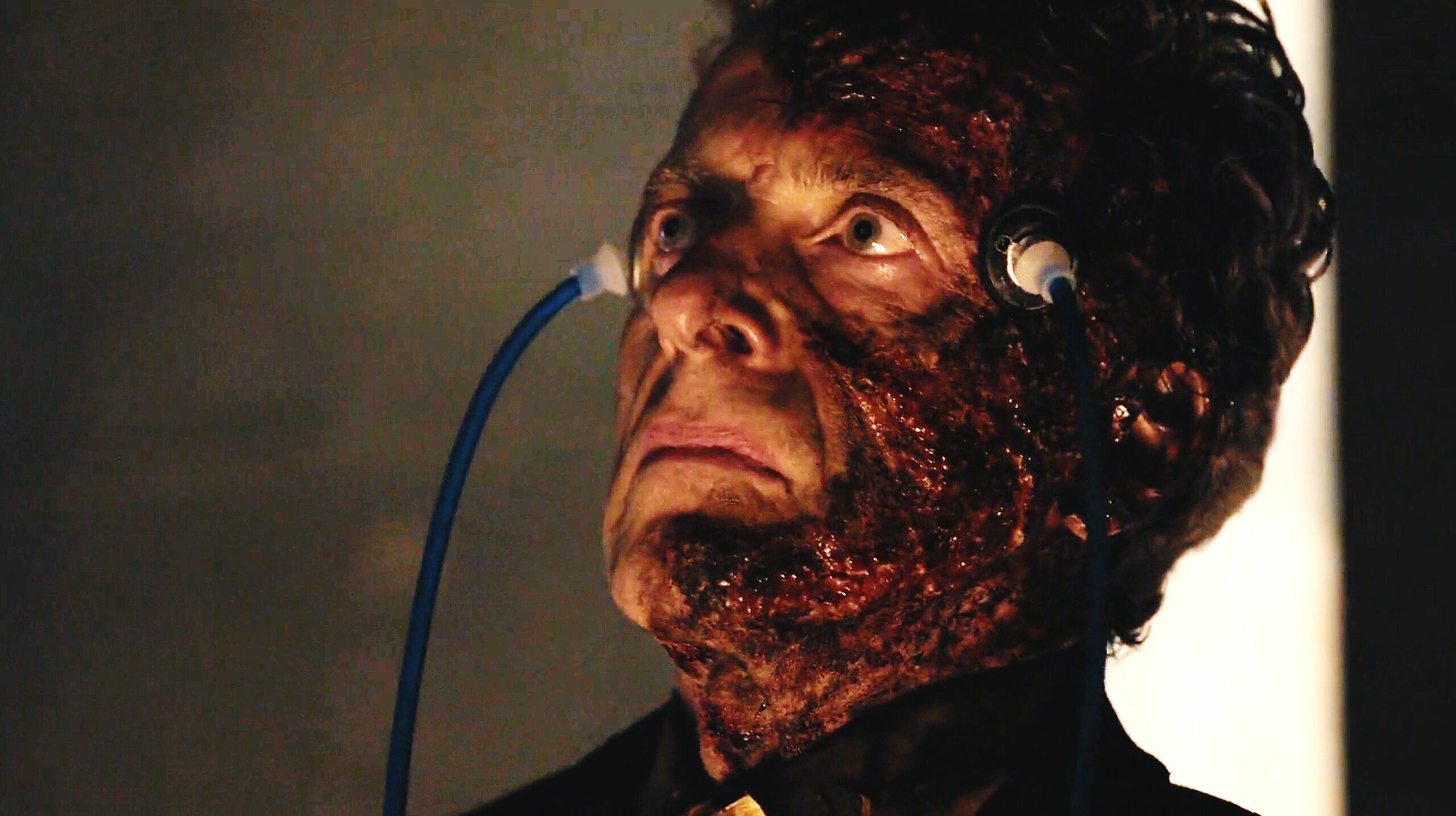
Even Moffat has sort-of confirmed this theory, cheekily responding that "[the Doctor] first teleported in The Keys of Marinus – he's been a copy since then – deal with it."
In other words, the Doctor who originally stole a magic box and ran away is no more. Since Heaven Sent, we’ve actually been watching the adventures of the Doctor’s teleporter clone number 3,000,000.
5. UNIT Can Destroy The Earth At Any Moment

UNIT are well-established as the heroic defenders of Earth. The long-running military organisation is our first line of defence against alien attacks, and the Doctor's first port of call whenever he needs some human assistance (or someone to sign his HMRC paperwork).
It's also having a bit of a renaissance at the moment, arguably being more relevant now than at any point since Jon Pertwee had the keys to the TARDIS. But between their shiny new London base, Kate Stewart’s friendly relationship with the Doctor, and the ever-increasing list of ex-companions they have on their payroll, it’s easy to forget that UNIT has a much darker side too.
Nothing embodies this more than the Osterhagen Project. Hidden around the world are 25 nuclear warheads, positioned at key locations underneath the Earth’s crust so that, when detonated, they will destroy the entire planet. Considered a weapon of last resort, the Project is only to be activated in the event that the Earth has fallen, to prevent an alien enemy fully taking control.
As mentioned in The Day of the Doctor, UNIT also has a nuclear warhead underneath the Black Archive, which would destroy London if activated – which it very nearly was!

Though the Doctor implores Martha to decommission the Osterhagen Project, there's no onscreen proof that it was – and let's be honest, UNIT doesn't always listen to the Doctor.
It’s not exactly comforting to think that the show’s ostensible “good guys” are sitting on a stockpile of WMDs powerful enough to literally end the world. Let’s hope nobody trips and hits the detonate button.
4. Humans Have Dormant Psychic Abilities

Though we wouldn't describe it as "hard science-fiction", Doctor Who does tend to err on the side of skepticism when it comes to the supernatural. Or at least, it used to, before the Toymaker changed the rules and we got singing goblins.
Think of the Gelth not actually being ghosts in The Unquiet Dead, or our depictions of the Devil actually being based on the trapped creature from The Impossible Planet/The Satan Pit.
There is one notable exception to this however: humans in Doctor Who are psychic.
We first get an idea of this in Planet of the Spiders, when the Third Doctor is running experiments on psychic abilities, and claims that extra-sensory capabilities are dormant in most humans.
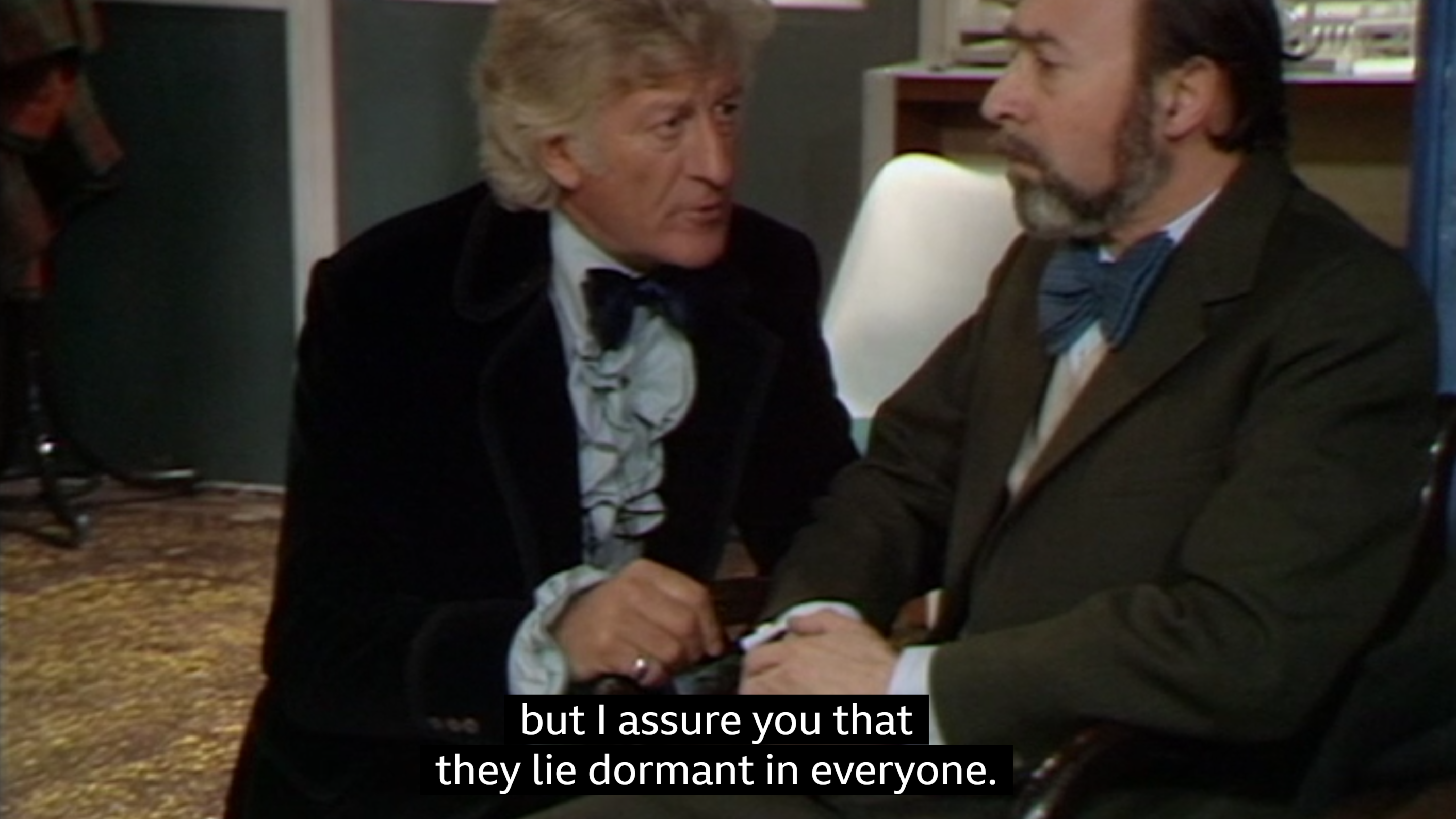
Since then though, references to this hidden innate power have been few and far between.
Timothy Latimer in Human Nature/The Family of Blood was confirmed to have some level of psychic ability, as was Emma Grayling in Hide. But besides them and a few others, humanity’s latent psychic abilities have gone largely unexplored, which is surprising for a show with close to a thousand episodes!
3. There Are Zygons Living Among Us

Series 9's iconic Zygon two-parter deals with the repercussions of the compromise forged at the end of The Day of the Doctor to allow the Zygons to stay on Earth.
After Peter Capaldi delivers one of the best-acted speeches in Doctor Who history and halts the Zygon rebellion, Bonnie and the rest of the Zygons agree to resume the truce, and go back to living in secret.
And we have to assume the renewed peace treaty worked, because in the nine years since, there has been absolutely no mention of the continuing Zygon presence on Earth.
Presumably the remaining Zygon refugees integrated themselves into human society, but it still leaves a lot of interesting questions. Do the Zygons let themselves die out, or do they seek out other Zygons in order to keep their species alive? And is there ever a point in the future where their presence becomes public knowledge, or are they still hiding among us as far forward as New Earth, or even Utopia?
We understand why following up on these plot threads might not be the writers’ top priority, but it’s interesting to think that, at least for the time being, there’s still a sizeable population of Zygons living on Earth, posing as humans.
For all we know, Ruby Sunday could be one of them... now wouldn't that be a twist.
2. All Human Life Came From A Spaceship Explosion
Doctor Who has had a lot of grand revelations about the history of humanity throughout its run. But something that doesn’t get quite as much attention as it should is that the entire existence of our species hinges on the tragic and accidental end of a spaceship containing the last of another, completely different species. Twice.
In Douglas Adams’ brilliant serial City of Death, the Doctor and Romana encounter Scaroth, the last member of the Jagaroth species, who was fractured across Earth’s timestream when the spaceship he was piloting exploded on take-off while trying to leave prehistoric Earth.
While Scaroth is trying to change history to stop the tragic end of his people, the Doctor has to make sure the same events happen. It turns out that the radiation released by Scaroth's firey end was the spark that led to the evolution of human life on Earth.
If that wasn’t enough of a cosmic coincidence, it’s then revealed in The Runaway Bride that Earth itself is actually formed around the last Racnoss spaceship. That's two different alien motherships meeting an untimely end before we even get as far as humans evolving. Umm... thanks, we guess?
1. The Nickname Of The Doctor
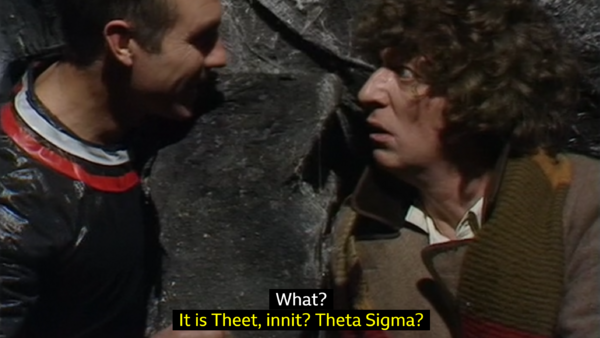
The question “what is the Doctor’s name?” is as old as Doctor Who itself. And while we’ll most likely never have a definitive answer, some writers have offered their own ideas about what our favourite Time Lord went by before adopting the title of “the Doctor”.
One of these that has flown under the radar is that, while we might not know the Doctor’s birth name, we do know their college nickname.
In The Armageddon Factor, the Doctor bumps into Drax (no, not that one) a fellow alumni of the Time Lord Academy who calls the Doctor “Theta Sigma”, or “Theet” for short. The Seventh Doctor later confirms this as his college nickname, and since nicknames are often shorter versions of full names, is the Doctor's real name a slightly longer variation of Theta Sigma?
Interestingly, the Doctor seems rather embarrassed about the name, and asks Drax to just call him “the Doctor.” True to his wishes, the name “Theta Sigma” has never been used again, so we’ll likely never know why the Doctor spent his university days being addressed like he was at a frat house.
There's also the weird collection of mathematical symbols that have been proposed as the Doctor's name in various non-canon sources, like Marvel Comics.
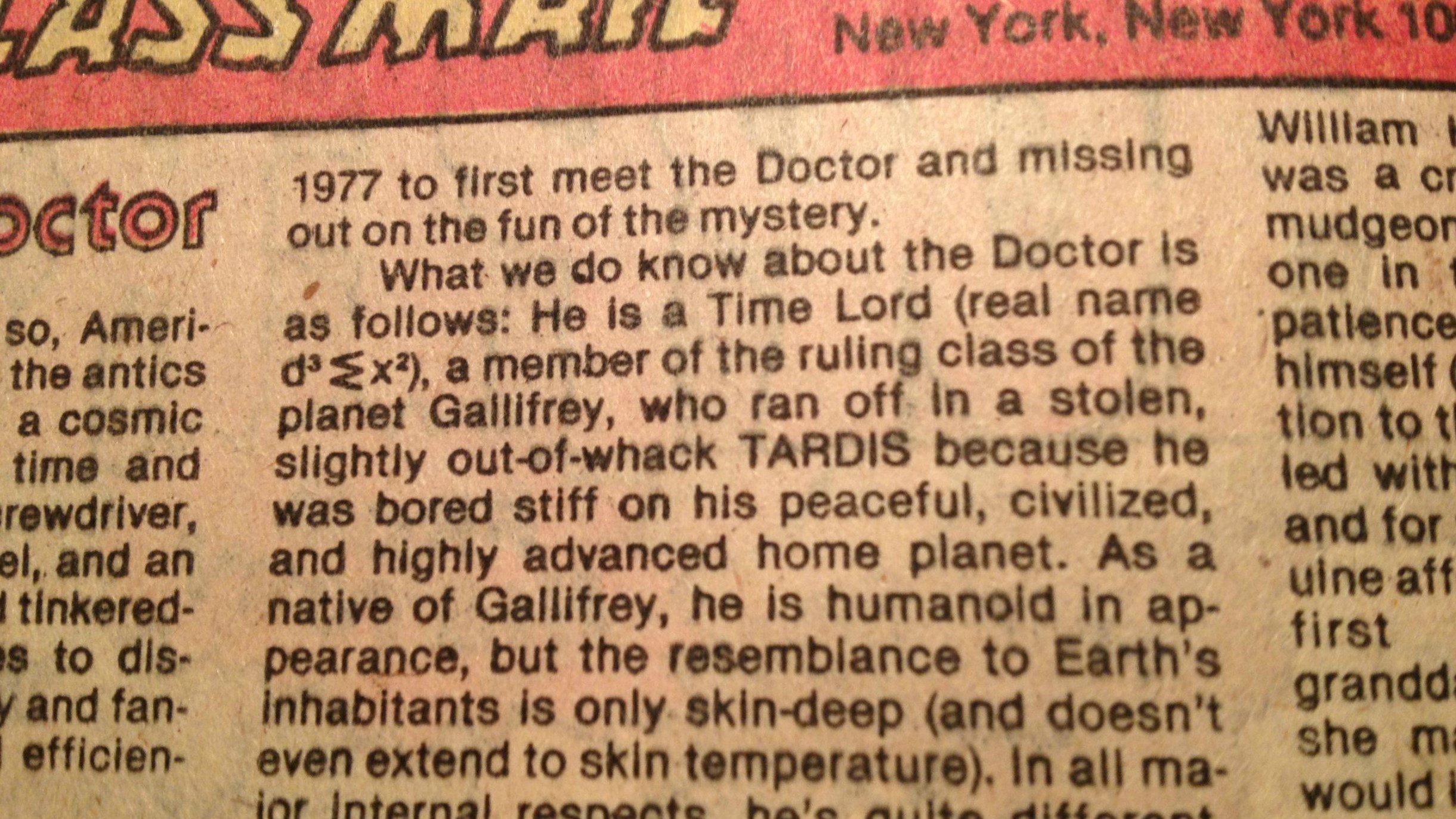
Similar symbols also appeared on a pedestal in The Five Doctors, though these don't appear to have any connection to the Doctor themselves.
"Doctor Who?" It's the one question we'll likely never know the answer to.