10 REAL Mysteries That Would Make Great Doctor Who Episodes
Did Charlie Chaplin really meet a time-traveller? In the Doctor Who universe, potentially yes...

Doctor Who loves a real-life mystery or urban legend. Since it began in 1963, it's given us two separate explanations for the Loch Ness monster, and three different accounts of the fall of Atlantis. There's an enjoyable shorthand when riffing on these classic myths and legends, which can make the eventual reveal quite satisfying.
The Pudding Lane reveal at the end of The Visitation is a nice touch, while the Abominable Snowman being a robot is a great fun Doctor Who idea. But what about other real-life mysteries and unexplained phenomena?
Obviously, sensitivity is a key factor. There's a danger sometimes that Doctor Who plundering a historical mystery could come off as crass. Although, The Unicorn and the Wasp pulled off the disappearance of Agatha Christie with a surprising amount of tact for a Gareth Roberts script.
So, what real-life mysteries and urban legends should Doctor Who turn its attention to next? There are still a surprising amount of historical figures who haven't yet appeared in the show, as well as dozens of WTF historical occurrences that would be perfect for a sci-fi spin. Russell, take note!
10. The Dancing Plague Of 1518

In 16th century France, it's said that people literally danced themselves to death.
While there's some understandable controversy over whether or not that's actually the case, historical documents do back up the idea of a "dancing plague", that swept the region of Strasbourg in the summer of 1518. In July of that year, a woman began dancing in the streets, with reports suggesting that anywhere between 50 and 400 others then joined in, dancing non-stop for weeks, many of them collapsing and dying.
It's a bizarre mystery that attracted the attention of the local authorities, medics, and the church, so why not throw the Doctor into the mix too? Interestingly, the local council banned music as an attempt to curb the dancing, which reminds me... didn't we just see a Doctor Who villain create a world that was free of music?
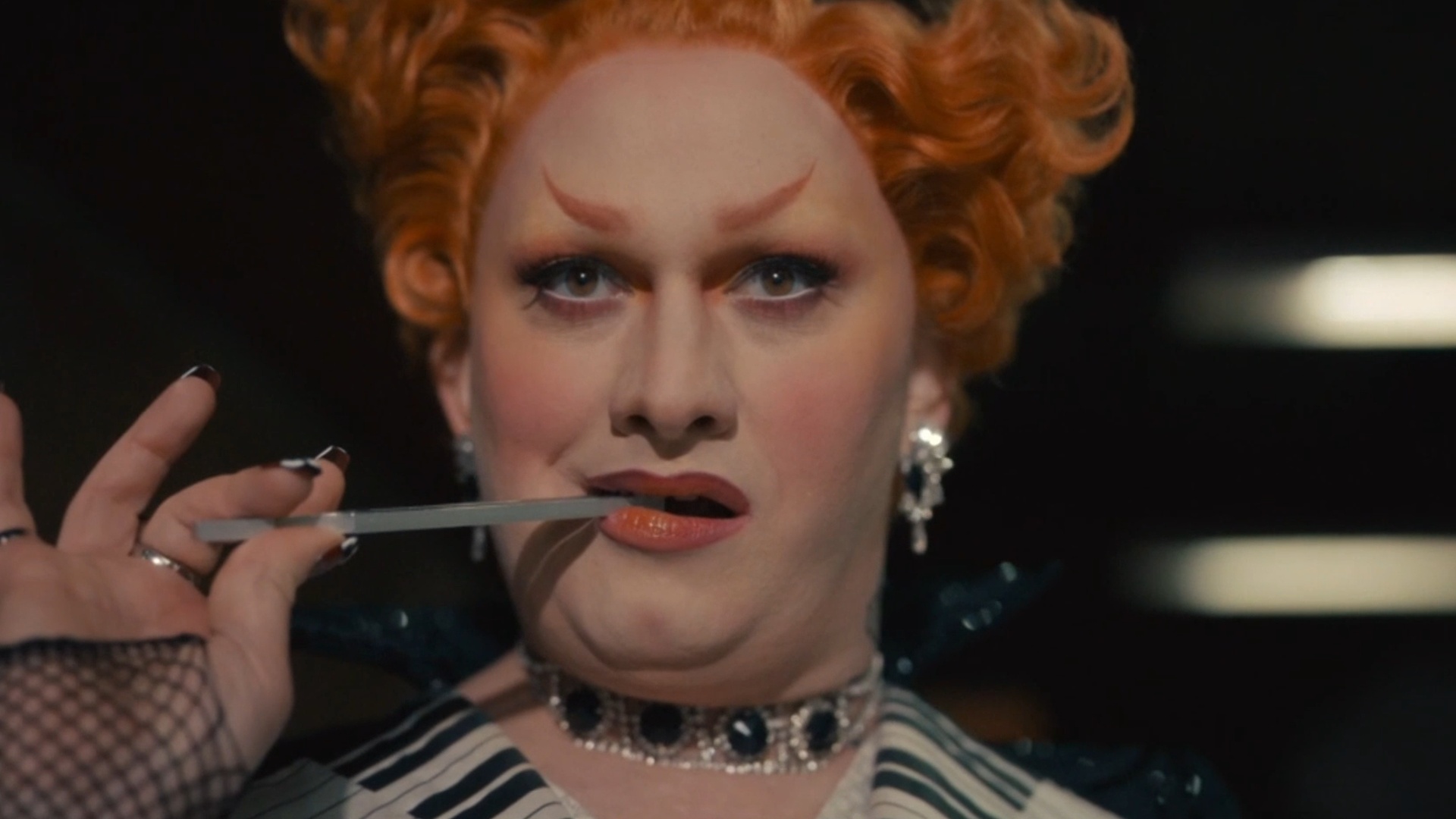
The dancing plague of 1518 feels like the perfect opportunity to bring back Jinkx Monsoon as Maestro, using their powers on the people of Strasbourg.
It would be a great sequel to The Devil's Chord because, where that episode had a big song and dance number to signify the return of music, this story could invert that by giving everyone a nice lie down after all that dancing.
Hell, go the whole hog and dress up Strictly's Johannes Radebe and Shirley Ballas as dancing 16th century peasants! Throw Murray Gold in there too, while you're at it.
9. The Mothman

On 15 November 1966, Roger and Linda Scarberry reported seeing a "slender, muscular man", about seven feet tall and with glowing red eyes, who was standing by the site of a disused World War II munitions plant in Point Pleasant, West Virginia.
Soon, other people were also reporting sightings of a man-sized bird creature with glowing red eyes. The creature was dubbed the Mothman by the local press, and was later popularised beyond West Virginia by John Keel's 1975 book The Mothman Prophecies, which was subsequently adapted as a movie starring Richard Gere in 2002.
So what was this mysterious creature? A supernatural being? An alien from another planet? An omen, warning of the Point Pleasant Silver Bridge collapse a year later, an incident which claimed the lives of 46 people? Or just a really big heron?
It's fertile ground for a Doctor Who story, one that could perhaps begin during World War II, with the Doctor and their companions discovering that the munitions plant is harbouring a terrifying secret. Maybe the Mothman was the result of some experiments to create a supersoldier, or a fugitive escaping from an alien spacecraft that was downed during the war.
Or maybe the TARDIS lands in Point Pleasant at the height of the Mothman sightings and the Doctor decides to investigate, only to discover a misunderstood and lost alien creature that actually means no harm.
8. The Death Of Edgar Allan Poe

It's surprising that the Doctor and Edgar Allan Poe's paths haven't crossed on television before. The acclaimed gothic author feels like a perfect fit for one of Doctor Who's celebrity historicals, and yet, no such episode has surfaced.
Inspiration could also be taken from the bizarre circumstances surrounding Poe's death in 1849.
On 3 October – four days before his death – Poe was discovered in a disoriented and dishevelled state in a Baltimore tavern. However, no credible evidence exists to account for his whereabouts in the week leading up to this point. Nobody can explain how he found himself in Baltimore, wearing ill-fitting and shabby clothes, and reportedly very very intoxicated. He was taken to hospital and died a few days later, with his cause of death remaining undetermined to this day.
It would be a difficult tonal tightrope to walk, as Poe's missing days and subsequent death are a sensitive topic. However, a creepy Doctor Who story that riffs on the author's works while providing a sci-fi explanation for his unusual final days could be brilliant, if handled correctly.
Historical characters from outside the UK are quite under-represented in Doctor Who's celebrity historicals, so Edgar Allan Poe would be a great figure to redress that balance.
After all, we've met Charles Dickens and Mary Shelley! It's only right that the other key figure in the early days of gothic fiction is given his due.
7. Polybius

While there's no firm evidence to confirm whether the Polybius arcade game ever existed, that might just be exactly what those involved want us to think.
Polybius is an urban legend that recounts how, in the early 1980s, a mysterious arcade cabinet called Polybius was used as a government psy-op.
Polybius was said to cause seizures, night terrors, and hallucinations, and it was also incredibly addictive. The story goes that government agents in black suits would collect data from these arcade cabinets, before they disappeared altogether a month later.
It's certainly possible that young people at the time were falling ill from the effects of arcade games – either from spending too much time on them, or experiencing epileptic seizures triggered by the games – so perhaps the Polybius legend grew out of media scaremongering based on one or two isolated incidents.
Or... perhaps it was real.
The idea of a computer used for nefarious purposes is a key storyline from both Russell T Davies' BBC drama Dark Season, and the Doctor Who episode School Reunion. So why not revisit that concept with a big modern-day budget?
Doctor Who could reveal that Polybius was part of a villainous scheme to invade the Earth. The mention of men in black collecting data from the arcade machines recalls the Silence, who shaped all of human development before being foiled by the Doctor in 1969.
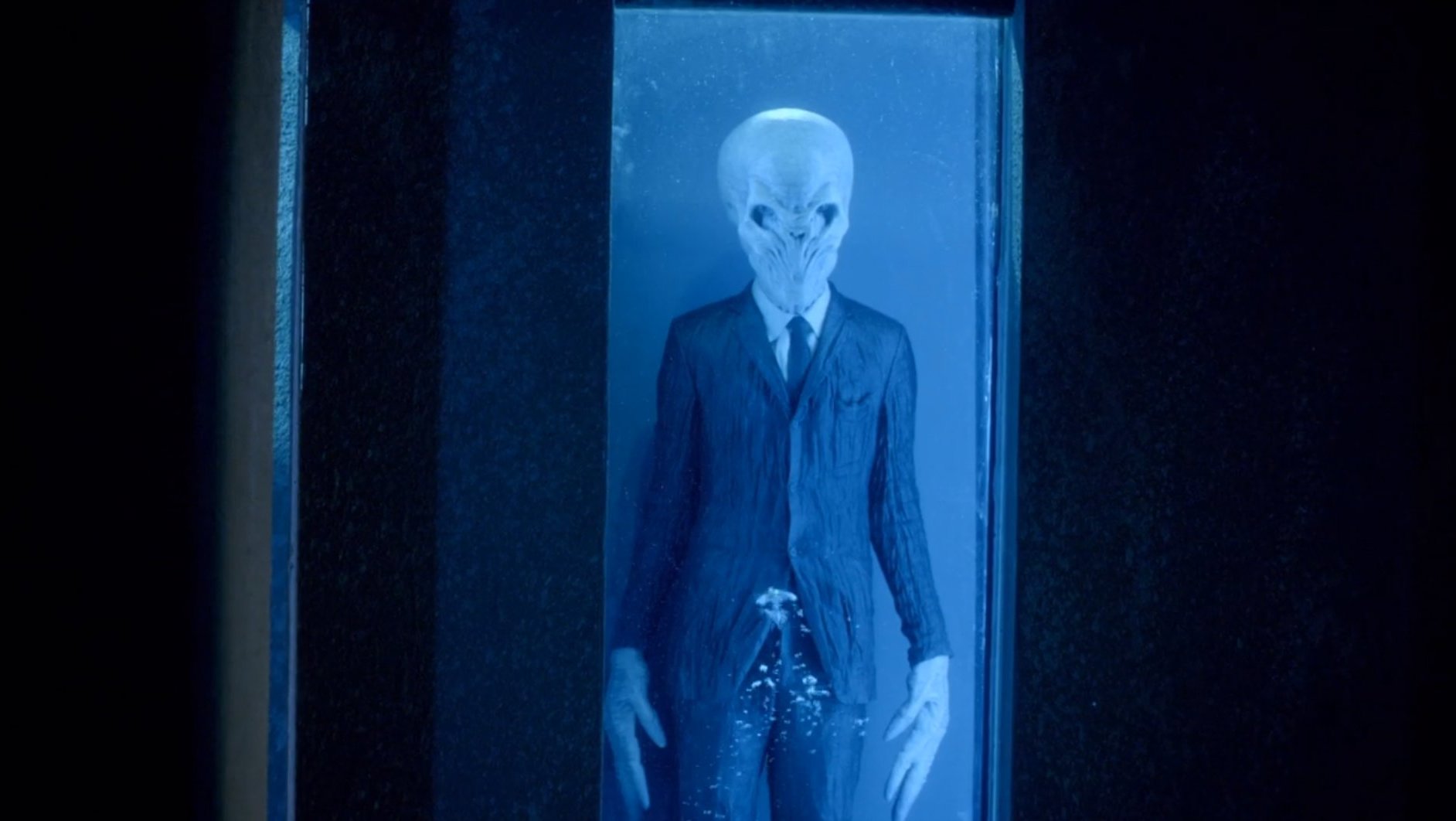
Maybe Polybius was how they took their revenge – using a machine to brainwash the population and turn them against the Doctor. After all, with the whole River Song thing, the Silence do have a history with brainwashed assassins.
6. The Identity Of D.B. Cooper

From Breaking Bad to Loki, D.B. Cooper has been referenced in popular culture for decades.
On 24 November 1971, Cooper hijacked Northwest Orient Airlines Flight 305. He claimed to be carrying a bomb and demanded $200,000 in ransom, and after securing the money during a brief stop in Seattle, the plane took off again. Around 30 minutes later, Cooper opened the aircraft's door, and escaped via parachute.
To this day, nobody has been able to track down Cooper, nor discover his true identity.
But hang on a second... a master of disguise with a penchant for aircraft? We know from Time Flight and Spyfall that the Master is partial to some casual airline piracy. Could D.B. Cooper be the Master? And if so, what purpose would they have for hijacking this Northwest Orient flight?
A thrilling 1970s-set Doctor Who story could answer this question. Imagine Ncuti Gatwa dressed in 1970s fashion, trying to stop the Master from detonating his "bomb" aboard the plane. An entire Doctor Who story set onboard a plane would be a great, budget-friendly idea in and of itself – think Midnight, but it's the Doctor versus the Master, 35,000 feet in the air.
The possibilities – like the list of D.B. Cooper's potential identities – are endless.
5. Spring-Heeled Jack

Fourth Doctor serial The Talons of Weng-Chiang drew inspiration from the mystery of Jack the Ripper, but there's another Victorian Jack worthy of Doctor Who's attention.
The first sightings of Spring-heeled Jack were in 1837, with one reported by Mary Stevens, who had been assaulted by a strange figure with deathly cold claws on Clapham Common.
Jack was reportedly seen to jump over a wall that was nine feet high, earning his spring-heeled moniker. Stories spread throughout London, claiming that Spring-heeled Jack was either a ghost or the devil. Descriptions of this mysterious creature got even more outlandish over the years, with one woman in 1838 claiming he was able to breathe fire, and that his eyes were bright red.
Interestingly, Spring-heeled Jack wasn't just confined to old London town. Later reports were submitted from East Anglia and Northamptonshire, focusing on his devilish appearance and predilection for attacking coaches.
To avoid treading on the toes of Talons, a fog-bound horror story with the Doctor chasing Spring-heeled Jack around the UK could be incredibly atmospheric. The Victorian angle could also allow for the return of the Paternoster Gang, who have been conspicuously absent for the last ten years now, and who fans are still clamouring for to this day.
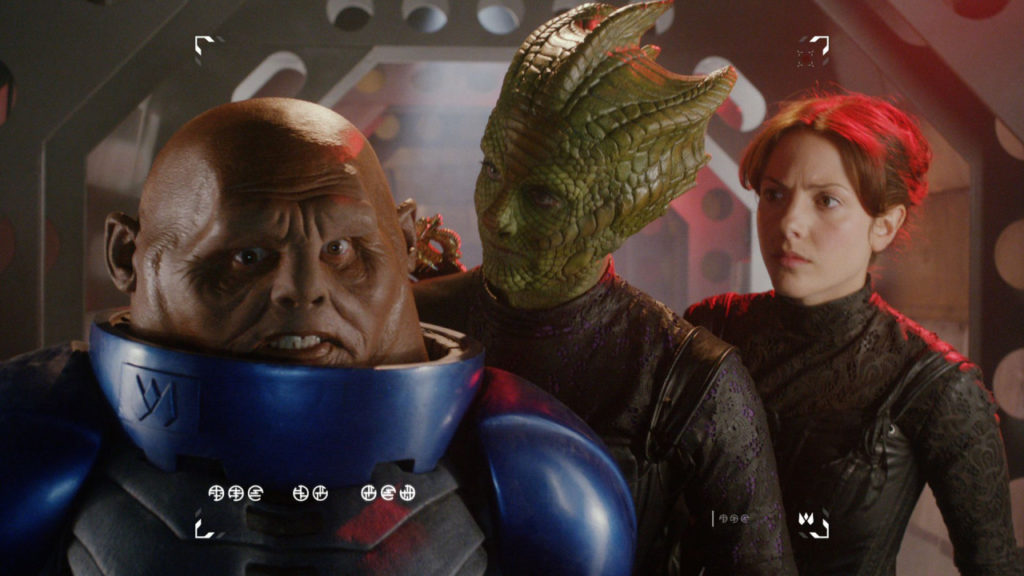
The description of Spring-heeled Jack's superpowers sounds distinctly otherworldly, so it would be very easy for Doctor Who to take the 'It's an alien!' angle, with Strax, Vastra, and Jenny along for the ride.
4. The Well To Hell

Ncuti Gatwa has been open about his desire for the Fifteenth Doctor to face the Beast, and a bizarre incident from 40 years ago could provide the perfect setting for the Doctor's rematch with the Devil.
In the 1980s, in the Kola Peninsula bordering Norway and Finland, the Soviet Union dug a borehole that was more than 7.5 miles deep. The team responsible did then discover some geological anomalies, but no ancient monsters or an incarcerated Beast.
This story was then wildly embellished by the Trinity Broadcasting Network (no, not that Trinity) in 1989. The network claimed that scientists had discovered a pathway to literal Hell in a hole in the ground. It's been said that they found an empty space with recorded temperatures of over 2000 degrees Fahrenheit, along with the sounds of tortured screams.
It was clearly a load of nonsense, but combining The Satan Pit with an urban legend could make for a belter of a Doctor Who story.
Could UNIT have been involved in overseeing the drilling, in the spirit of international cooperation? Did they run interference by sending out clearly-faked audio clips to the press, to draw attention away from the Doctor's rematch with Satan?
The Doctor survived The Satan Pit – so let them face The Well to Hell!
3. The Fairy Coffins Of Arthur's Seat

In 1836, a group of boys discovered some dolls inside 17 miniature coffins, no more than three or four inches long, in a cave on Arthur's Seat, the extinct volcano that overlooks the city of Edinburgh.
Ever since, people have debated the origins of these tiny coffins, which have since been dubbed the Fairy Coffins. One theory suggests that they were a tribute to the victims of notorious murderers Burke and Hare, while another suggests a link with witchcraft and demonology.
It's a fascinating mystery, and there are plenty of explanations that Doctor Who could provide.
The 17 dolls could've easily been victims of the Master's Tissue Compression Eliminator, a weapon that shrinks the target down to the size of a small figurine. Alternatively, what about those known sci-fi grave-robbers, the Cybermen?
Or perhaps Doctor Who could explain that the coffins were a tribute to Burke and Hare's victims, but that they were working under an alien influence. Of course, the Sixth Doctor already met Burke and Hare in the audio drama Medicinal Purposes, which also featured David Tennant as one of their victims.
Whatever story it inspires, the fairy coffins would be a perfect excuse for Doctor Who to finally film in Scotland. Edinburgh is a stunning city, rich with history that feels tailor-made for a great Doctor Who location.
Hell, even the Avengers have been to Edinburgh. The Doctor has no excuse!
2. The Charlie Chaplin Time Traveller

In 2010, filmmaker George Clarke discovered what appeared to be a time-traveller attending the premiere of Charlie Chaplin's 1928 movie The Circus.
This mystery woman was seen walking past Mann's Chinese Theater in Hollywood, clasping what looks like a mobile phone to her ear, and talking into it!
In the years since Clarke's discovery, there have been various rational explanations offered as to what the woman could be holding, such as a hearing aid. But rational explanations don't give us a great Doctor Who story now, do they? The Doctor tracking down a rogue time-traveller who has designs on Charlie Chaplin could make for a great celebrity historical set in 1920s Hollywood.
Alternatively, the Doctor and their companions could unearth alien goings-on at the Chinese Theater in the lead-up to the premiere of The Circus. Maybe the woman on the phone is the Doctor's companion, making a panicked phone call to the Doctor when their plan starts going wrong?
It's strange that we've never seen an entire Doctor Who story about Charlie Chaplin before – as such a pivotal figure in the silent film era and in Hollywood history in general, there are endless possibilities for stories to tell. This real-life mystery is the ideal way to finally team up the Cosmic Hobo with the Little Tramp!
1. The Hairy Hands Of Dartmoor

Doctor Who and the Hairy Hands may not sound like the most amazing story idea in the world, but it's a fascinating mystery nonetheless.
Since around 1910, cyclists and motorists have suffered unusual accidents on the B3212. This road leads through a remote area of Dartmoor near Postbridge, and for decades there have been reports of a pair of disembodied hands that appear to grab a car's steering wheel or bicycle's handlebars, and force the vehicle off the road.
Psychic projection? Witchcraft? Nobody can tell for certain, but the idea of a Doctor Who story set purely in a remote stretch of Dartmoor late at night sends shivers down the spine. For what reason could an alien telepath want to force cars off the road? As a food source, perhaps? Or just to cause chaos?
Since Russell T Davies has re-introduced the Pantheon, the hairy hands needn't even be alien in origin. Maybe it's the work of a bored god, forcing stranded drivers into the moors to meet a terrifying fate. It sounds a lot like the work of Reprobate, the god of spite, who we're yet to meet, but who was name-dropped by Harriet Arbinger in The Legend of Ruby Sunday.
Think something along the tone of 73 Yards, but it's set in the foggy English countryside and features a vindictive god. Someone get Bad Wolf Studios on the phone!