10 Reasons Steven Moffat Has Saved Doctor Who

It's not all bad news, you know.

Steven Moffat is the Whovian equivalent of Marmite - you either love him or you hate him. Before 2010, Moffat was an unimpeachable nerd God with four of the best stories in Doctor Who history under his belt. So the fandom creamed its collective corduroys when the Grand Moff was announced as the new showrunner, taking over from Russell T Davies. But, with the additional responsibilities of executive producer and head writer whilst simultaneously launching the wildly successful Sherlock, a small but vocal corner of the fandom feel that the show has suffered under Moffat's stewardship. Whatever your opinion on the direction Steven Moffat has taken the show, he will go down in Doctor Who history as one of the show's most influential creative forces. His name has joined the ranks of Lambert and Newman, Letts and Dicks, Holmes and Hinchcliffe, Nathan-Turner and Cartmel, T and Davies among many others who have put their distinctive mark on the series. Love him or hate him, he deserves credit for a lot of good in the Whoniverse. So beware of spoilers, dust off your Fez and timey your wimey and prepare to embark on a countdown of 10 reasons Steven Moffat has saved Doctor Who. As you'll soon see, he isn't so bad after all!

10. His Russell T Davies Era Stories

Between 2005 and 2010, Steven Moffat wrote four television stories for Doctor Who. Five, if you include Time Crash. Each Moffat episode was so hotly anticipated that fans eventually stopped referring to them by name and just called them "this year's Moff episode". No matter how many farting aliens, Abzorbaloffs, terrible 'Noo Yawk' accents or unconvincing old age make up that came in between, all would be forgiven when his name appeared in the titles. Having a section for each of the things Moffat brought to the Whoniverse before he became showrunner would easily fill this entire post, especially since Russell "The" Davies has said repeatedly that he never altered a word of his scripts, so it's all pure Moff. The only partial exception is Captain Jack Harkness, who Russell characterised but Steven originally brought to life, so let's say that they conceived Jack together (no, not like that!). Gas mask zombies, Clockwork robots, Madame de Pompadour, Sally Sparrow, Arthur the Horse, Vashta Nerada as well as a deep seated fear of statues, shadows, blinking and the sound of a ticking clock. Basically, fans have Moffat to thank for making us fear things from everyday life. Thanks, Steven.

9. River Song

River Song is almost as divisive as Steven Moffat himself. To some fans, River is a fantastic new take on the companion story with a uniquely complex relationship (both temporally and emotionally) with the Doctor. To others, she's the epitome of some nebulous criticism of Moffat's inability to write strong female characters without resorting to a hypersexualised action-girl trope with a downright dependence on her man... or rather, Time Lord. Technically, the concept of meeting a character out of sequence has been done before. The Sixth Doctor met his second companion Mel during his trial, by which point she was already familiar with him though he had no idea who she was. In the Big Finish audios, companion Charley Pollard (no relation to Vicky) originally travelled with the Eighth Doctor only to later partner up with the Sixth Doctor as well. Though Mel's origins weren't explored on screen, her time as a companion lent her tenure a certain sense of continuity that River's sporadic interactions with the Time Lord lacked. Though the idea wasn't entirely original, and whether or not you like River as a character, you have to give Moffat credit for his ambitious approach to developing a time travelling ally for the Doctor over the course of several years. Whereas Davies took the show one year at a time, having taken a risk by helming the relaunch in the first place, keeping each storyline and character arc fairly self contained in case the show got axed, Moffat took advantage of the show being established to experiment with storytelling. How well it worked is a matter for debate, but you must credit Moffat having the brass to try.

8. Return Of Classic Series Doctors

Classic Who fans were disappointed that Moffat had seemingly failed to invite any of the living pre-2005 Doctors to return for the 50th anniversary special. The fact that both Paul McGann and Tom Baker got surprise cameos did nothing to placate the fans who wanted to see the trifecta of Davison, Baker the Second and McCoy - the 80s Doctors - included in proceedings as well. Especially because Moffat really missed an opportunity to bring back the old Doctors. All five actors spend a decent chunk of their working lives in the recording studio, playing their respective incarnations for Big Finish, so it couldn't have taken more than a phone call and a modest fee for an hour of recording a few quick voice cameos. In The Day of the Doctor, when every incarnation unites to save Gallifrey, it would have been a great surprise to have original dialogue from the old guard rather than a bundle of awkward and inconsistently cobbled together archive clips. However, this is really an unfair criticism since Steven Moffat has done more to resurrect former Doctors than any other showrunner. How many times did any old Doctors make a reappearance in the entirety of the Classic Series run? Thrice. How many times did it happen under Russell "The" Davies? Once... and that was a Moffat script! Between Tennant, Capaldi and Baker in The Day of the Doctor, McGann in The Night of the Doctor and Davison in Time Crash, Moffat alone has been directly responsible for three different multi-Doctor stories. He may not have acquiesced to the fanboys who wanted to see seven actors jostle for screentime, but he gave us some great double Doctor moments that should not be ignored. And that's not to mention the bonus Doctor he gave us...

7. The War Doctor

Doctor Who has had its fair share of cliffhangers but none of them got tongues a-waggin' more than the reveal in the final seconds of The Name of the Doctor. Clara, trapped in the Doctor's time stream with every incarnation running by (it was a long story!), sees one shadowy figure standing unmoved. A figure that the Eleventh Doctor looks upon with disgust as he rescues Clara and leaves. The figure turns around to reveal... John Hurt! As the Doctor! OMG! Six months went by before fans finally learnt where in the pantheon of Doctors this husky-voiced legend stood. All the evidence suggested he was a past incarnation, but how could that be with a seemingly unbroken lineage of on screen Doctors? Was he the Valeyard, a distillation of the darker side of the Doctor's nature from the Classic Series? A pre-Hartnell Doctor? An elderly Eighth Doctor? An intermediate incarnation? All of the above!? But when the War Doctor finally shared the TARDIS with Ten and Eleven for 76 glorious minutes one cold November night, everyone stopped fretting over the somewhat clumsy retcon or griping that Christopher Eccleston had declined. Between John Hurt's performance and Steven Moffat's characterisation, there is nobody who would wish John Hurt out of Doctor Who history. So fans must thank Moffat for opening us up to more mystery about the Doctor by overturning seemingly entrenched continuity and giving us an almost blank slate new Doctor to play with in spin off media. Although, given how expensive John Hurt is to book, don't expect him to pop up on Big Finish any time soon!

6. International Recognition

Now, Doctor Who has maintained a patchy presence in other regions since the Tom Baker era. During the 1970s, the Fourth Doctor was regularly shown on international screens, albeit usually on niche sci-fi channels, just enough for the bescarfed Doctor to seep into popular culture but not enough to spark mainstream interest in the show. Revived Who was broadcast to other corners of the globe, too, but often weeks or months after the UK broadcast and without anything near the hype and publicity it enjoyed at home. The BBC decided to use the ingress of Moffat and Series 5's soft reboot of the show as an opportunity to take Who worldwide. Moffat took pains to shorten the gap between original broadcast and international outings. The US now gets its helping of new Who within hours of its British airing and that's only really because of the time difference. Though most hardcore Whovians would stay up to watch new stories being simulcast (as The Day of the Doctor proved), it wouldn't help introduce new people to the show, which is exactly what Moffat's era has done. In the US, Matt Smith's debut story The Eleventh Hour was almost as instrumental for introducing a new audience to Doctor Who as Rose was in the UK back in 2005. The generation of Whovians unfairly dismissed as the "Tumblr fans" will usually cite it as the first episode they saw and deem Eleven to be "their Doctor". Since it's unlikely that such a global initiative would have been feasible under the weight of five years of Davies-era continuity, fans can thank Moffat (or at least the timeliness of his arrival) for growing the Whovian family in such a diverse way.

5. Ambitious Story Arcs

Russell T Davies treated each series as an almost self contained narrative with few, if any, recurring plot threads from year to year. It's easy to see why. When he agreed to helm the relaunch of a daft teatime science fiction show from a bygone era, sacred to fans and unknown to everyone else, he didn't expect to get a second series. For the first series and the subsequent three, all major story arcs would be tied up by the end of each run. If the show got axed during the breaks, nothing would be left unresolved. It was a simple and effective formula but it was a tad predictable by the end of the third series. Steven Moffat took a bolder approach. Series 5 also had a recurring motif in several episodes that was explained and mostly resolved in the finale as well, but some big questions remained when the credits rolled on The Big Bang. The sixth series answered many of these questions but still left a few mysteries. While the plot thread would mostly be put on hold during Series 7, the story would culminate in a whirlwind Christmas special that cleared up (for the most part) the remaining questions and also saw Matt Smith bow out of the title role. The Silence arc in its entirety lasts from the Eleventh Doctor's first episode to his last, which is unprecedented for any previous incarnation. The success of the Silence arc in the dramatic sense notwithstanding, pulling off such an ambitious three year story proved that the show can withstand intricate plot threads. It has set the groundwork for future showrunners, writers and producers to make Doctor Who in new ways. The show will remain what it's always been: a story, now half a century long, about a mad man in a box who travels time and space to fix things, but a richer connective tissue in each story will be an extra reward for dedicated fans.

4. Weeping Angels

Everybody knows the excellent things Moffat created in the Russell T Davies era, but most would agree that the Weeping Angels are a special case. Plucked from the unfiltered imagination of the Moff for a story that he admits he put together in a hurry after Stephen Fry's original script fell through, they quickly became one of the high points of New Who. Don't turn your back. Don't even blink. Or they've got you. The Series 3 episode Blink was the second "Doctor-lite" episode and, after the disastrous Love & Monsters the previous year, nobody expected much. But the absence of the main cast actually became a strength for the story. Instead of the Weeping Angels menacing the Doctor and Martha who, as series leads, have Main Character Immunity, the entire episode was carried by a pair of guest stars (including the now globally recognised Carey Mulligan) whose fates were uncertain. Add a thoroughly well-crafted script and the tension from an advancing swarm of Weeping Angels and it spells an instant classic. Whether or not you feel that Moffat did the Weeping Angels a disservice in their later appearances, there's no doubt that he created one of the most recognisable and terrifying monsters in Doctor Who history. Even after Moffat has hung up his pen as showrunner, future production teams would be foolish not to put these scary statues to work.

3. Eleventh & Twelfth Doctors

When it comes to creating a new Doctor, the most important thing is not the actor or the costume or the catchphrases. It's the script. Each story, particularly a new incarnation's first outing, must establish them both as a distinct character and also as the same old Doctor. Moffat nailed it both times. He recognised the incredible versatility of Matt Smith, an actor who can go from daft overgrown kid to stern elder statesman with little more than a hand gesture. But if casting a relatively unknown twenty-something as the Doctor was a risk, it was nothing compared to casting an older actor just coming off a role so distinctive it was hard to see him as anyone else. Moffat took a chance both times and, between the actors and his writing, made it spectacular. Better yet, he matched the actors to well crafted introductory episodes that made the new audience immediately accept the new incarnations. The Eleventh Hour was probably one of the strongest debut episodes for a new Doctor, setting up a companion dynamic that would prove to be indicative of the direction Smith and Moffat would take the Eleventh Doctor. Four years later, Twelve's establishment in Deep Breath was a unique and tense, if a little overstuffed, story that set the new Doctor in immediate contrast with his predecessor. Without doubt, fans should be thanking Moffat (as well as Smith and Capaldi, obviously!) for giving us the Eleventh and Twelfth Doctors.

2. Rory Pond (Née Williams)

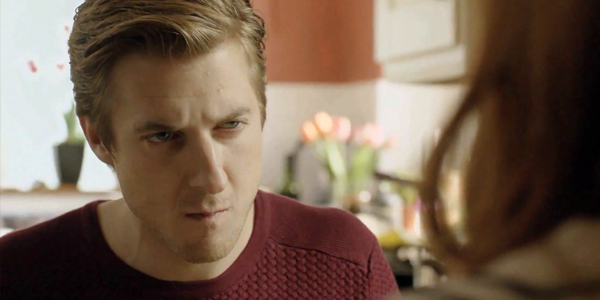
Oh Rory, we hardly knew ye. Then we hardly knew ye several more times. As well as a new Doctor, new companion and new TARDIS console design, the freshly appointed showrunner also introduced a beleaguered boyfriend for the new companion who would go on to play a recurring role in the series. Though initially fearful of the Doctor and the outer space shenanigans he wrought, the character would grow over his subsequent appearances, briefly becoming a full time companion before being separated from the TARDIS seemingly forever... oh, wait a tick. Sorry, these are our notes on Mickey Smith. OK, so Rory didn't exactly bowl us over with his first appearance, but he quickly grew out of the "tin dog" role previously held by Mickey and became an independent, if frustratingly transient, TARDIS inhabitant. Though initially irked by Amy's obvious attraction to the Doctor, he was nevertheless brave and a worthy addition to the team. His defining moment came, oddly enough, when he died (the first time) in Cold Blood. It would have been so easy to have him croak while saving Amy, but instead he dies saving the Doctor. Despite being jealous and somewhat bumbling, Rory was smart enough to see how important the Doctor was to the Universe and sacrificed his life to save the Time Lord without hesitation. What a hero. Over the course of his subsequent appearances, Rory became perhaps one of the most likeable companions in Doctor Who history. He's strong but not arrogant. Loyal without being obsequious. Brave without bravado. Kind but not stupid. Amy will always be the one people think of when asked who the Eleventh Doctor's companion was, but spare a thought for the Last Centurion and thank Moffat and Arthur Darvill for bringing him to life.

1. Doctor Who As Fantasy

Doctor Who is a show about change. Not just the title character or the companions but also behind the scenes. The show is unusual, particularly in modern television, for having a single showrunner who dictates the creative direction of the show. Because of this, Doctor Who has been several different shows during its half century history. It started as an educational show, but over the years it's been pure sci-fi, espionage, gothic horror, courtroom drama, action-adventure, the 80s... The transition from Russell T Davies to Steven Moffat was the first modern example of something that occurred numerous times in the Classic Series. Newer fans, who were only dimly aware of the original show, had come to know Doctor Who as a reasonably grounded sci-fi show about a lonely god who plucks people from their mundane existence and shows them how to reach their full potential. Under Moffat the show has become more fantastical, a mad wizard in a magic box who comes to whisk you away to Wonderland where the timey is wimey and nothing makes sense. Whoever the next showrunner is, no doubt their take on Doctor Who will be vastly different from either one. Times change and so must we. One day, probably the same day that Peter Capaldi hangs up his Crombie coat, fans will have to say goodbye to Moffat and close the book on his era. They'll compare, critique and over analyse for years to come and people will form their own opinions on the Moffat years. But the one thing they'll never be able to say is that they weren't entertained. Moffat has added innumerable things to the Doctor Who canon, things that future writers will be able to play with, build on break apart. His influence on Doctor Who will be felt for as long as Doctor who continues to exist and the show is stronger for what he's added. So thanks for the stories, Steven. What did you think of this list? Are there any other reasons Steven Moffat has saved Doctor Who? Join the conversation in the comments section below!

In this post: 
Doctor Who
 
Posted On: 
Contributor
Contributor

I'm a freelance technology journalist with an unhealthy obsession for Doctor Who.