10 Star Trek Twists That The Actors Hated
Twists may keep the fans entertained but that doesn't mean the actors always love them.

Twists, turns, and reveals are a common enough occurrence in Star Trek, helping to keep the show moving along the way. Sometimes they are fantastic, like the fact that Ambassador Spock was working with the Romulan dissidents or that Commander Riker had a dark secret in his past that threatened Starfleet security and the balance of peace in the Alpha Quadrant.
Then there are twists that, while entertaining, don't sit well with the actors on the show. That doesn't mean that every twist on this list refers to the specific people in those scenes but rather how Star Trek alumni reacted to them, in some cases. While some actors can always be counted on for a fairly blunt bit of feedback (looking at you, Robert Beltran), there are also those who rarely speak out who are featured here as well.
Doctors with secrets, magic portals in space, or even a rickety bridge can sometimes draw the ire of the actors tasked with bringing them all to life. Unsurprisingly, there's a fair amount of deaths in this list so set Condition Spoiler throughout the fleet.
10. Garak Murders Weyoun In Cold Blood - Jeffrey Combs

The finale of Star Trek: Deep Space Nine is generally regarded as one of the finest episodes of the show, somehow managing to tie up many of the loose ends of the series. There are several characters who don't make it all the way through to the final scenes, one of whom is the Vorta Weyoun. He is murdered in cold blood by Garak, who raises his phaser and fires with no warning.
Jeffrey Combs wasn't a fan. He felt that while this was a great scene for Garak and the former spy's story, it was a weak ending for his own character. 'I didn't want to die like that,' he said. 'I thought I'd get involved in a struggle and have a grand death.'
He tried to joke it off to Ira Steven Behr, saying that there was simply no way that the Vorta wouldn't have a secret clone out there somewhere, but he conceded that the sudden move on Garak's part suited that character perfectly.
The scene also went a little further to showing Garak's true nature. He joined the mission to Cardassia to help liberate it from the Dominion, but in the end, he simply wanted revenge against the ones who had wronged him. He may not have had personal dealings with Weyoun before, but as he raised his weapon he was firing at everyone responsible for the deaths of millions of Cardassians.
Combs just wished that it didn't have to be him.
9. Sulu Is Gay - George Takei
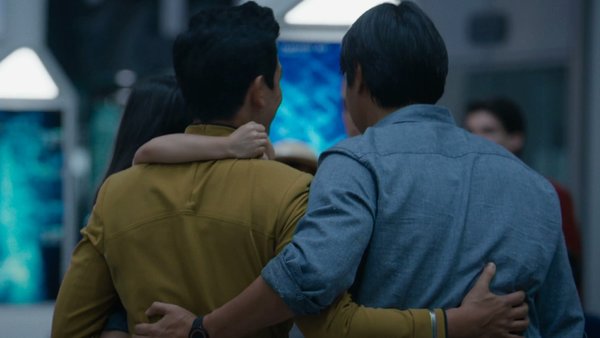
In Star Trek Beyond, Hikaru Sulu from the Kelvin timeline is revealed to be LGBT, who has a male partner and a daughter on Starbase Yorktown. This was meant as a tribute to George Takei, the original Sulu who was and remains an openly gay man and LGBT activist. This in-universe nod was a representation of the real life man, though Takei himself felt that it was the wrong decision.
When the news broke that Sulu would be revealed as gay in the film, Takei said that, while he was glad there was a gay character in the film, changing Sulu in that way was a twisting of Gene Roddenberry's vision, into which he put much thought. He felt it was very unfortunate.
The argument stems from the fact that Spock's travel back in time, and creation of the Kelvin universe, shouldn't have affected something like the sexuality of a character, as Sulu in the Prime Timeline was, in Takei's view, a straight man. There are several examples of him attempting to woo a female crewman, and his daughter Demora appears in Star Trek: Generations. Writer and Actor Simon Pegg 'respectfully' disagreed with him, stating that he believed Roddenberry's decision to make the main cast straight was more to do with the limitations of the period, rather than an artistic decision.
8. Captain Kirk Falls To His Death - William Shatner

When the seventh Star Trek film was going into production, the executives at Paramount knew that they wanted The Next Generation crew to be the main focus. The reason for this was two-fold. First, their show had recently wrapped, with its seven seasons proving extremely popular with the fanbase. Capitalizing on this seemed like common sense.
The other reason for this was that the salaries that The Original Series' cast now commanded were simply too high. So, Generations was seen as a passing of the torch. Initially, Kirk, Spock and McCoy were all to appear. DeForest Kelley and Leonard Nimoy did not appear for various reasons, though William Shatner did. This, he said, was because he was given a fairly poor set of choices.
Appear, and die.
Don't appear, and die.
Naturally, he took the role to ensure a measure of control over the part, even though he was unhappy with it. He did receive slight script revision rights and the opening skydive scene, which was later deleted, was written and filmed at his insistence. He wanted to show that Kirk was obsessed with living. In the end, the filming only really showed him dying.
7. Voyager's Sudden Return Home - Robert Beltran
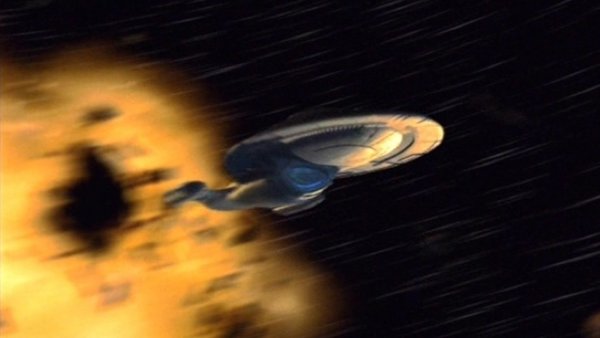
Robert Beltran has never been shy about expressing his opinions on Star Trek: Voyager, even while he was actively making the show. He was deeply critical of Endgame, the feature-length finale, asking the question 'This is what we're going out with?'
He had many issues with the show throughout the years, though character development (or lack thereof) seemed to be ranked most highly on his list of gripes. But his real problem with the last episode was that it ended so suddenly, without giving the crew or the audience a chance to breathe after the ship returns home. He felt that it was a direct response to dwindling viewership, but also an attempt by the writers to end the series as fast as possible so that they could get to work on the new show, Enterprise.
The one thing he did like was the addition of Chakotay's relationship with Seven, which he felt was Brannon Braga's way of proving he wasn't a jealous man. Braga and Jeri Ryan were dating at the time and Beltran made a joke in which he told Ryan he was sure Braga would never put them together romantically, as he didn't want the two actors kissing. So, the inclusion of their date was as sudden to the actors as it was to the audience.
6. Tasha Yar Dies - Patrick Stewart

Denise Crosby played Lt. Tasha Yar for most of Star Trek: The Next Generation's first season, though she quickly grew frustrated with how little the character was being used. There were many scenes in which she simply stood at the security station, answering yes, no or hailing frequencies open. This got to the point where she felt that if the production crew were to paint a mural of her legs and place it behind the captain's chair, it would do the same job that she was supposed to.
She elected to leave the show, with Skin of Evil being her big exit episode. Gene Roddenberry decided that, to really shock the audience, he would kill off the character. He wanted it to be sudden and brutal, or at least as brutal as the show could get away with. One person who truly hated this idea with Patrick Stewart.
In the documentary Chaos on the Bridge, which traces the many production woes of The Next Generation's first season, he said that losing Denise Crosby was a dreadful mistake, one that lessened the show's already poor representation of women in the future. He felt that there could have been any number of negotiation tactics that would have prevented this call but in the end, she is killed by a giant oil slick.
Thankfully, Crosby returned as Yar twice more, in Yesterday's Enterprise and All Good Things, while also appearing as Commander Sela.
5. Spock Can't Tell The Difference - Leonard Nimoy

The third season of Star Trek: The Original Series is a mixed affair to say the least. There are some true classics like Let That Be Your Last Battlefield and Day Of The Dove. And then there are Spock's Brain and And The Children Shall Lead. Whom Gods Destroy comes down somewhere in the middle in the rankings, as it is not terrible at all, nor is it one of the best.
Leonard Nimoy was particularly dissatisfied with the episode, citing several reasons, including the reuse of props from earlier episodes, such as the agony chair, but most of all the dumbing down of his character.
Garth of Izar is one of the prisoners that Spock and Kirk encounter on Elba II. The man has the ability to take on another's appearance, which he does so in the climactic stand-off. Two Kirks stand in front of Spock and the Vulcan is unable to tell the difference between the two. While the scene gave the audience the immortal line 'shoot us both, Spock,', Nimoy complained at length via memos that there was simply no way that Spock wouldn't be able to recognise his captain and friend over the imposter.
His concerns were ignored.
4. Archer Let's The Valakians Die - John Billingsley

Dear Doctor is one of the most controversial episodes of the first season of Enterprise. The ship encounters a world that houses two distinct species, the Valakians, and the Menk. The former is the dominant species, while the latter lives in a subservient state. Like most oppressors, the Valakians are certain that the Menk enjoy their lives, with their roles giving them meaning.
Nature then plays a cruel twist on the Valakians - they are all dying. They have reached an evolutionary dead end, and they can't find a cure for the illness on their own. Dr. Phlox, on the other hand, manages to find a cure in record time, only to be faced with a dilemma. Should he give them the cure, seeing as this will change the natural evolutionary journey of the planet?
John Billingsley was disappointed in how the episode ended. Archer makes the call not to give them the cure, though this wasn't always the case. In the early version of the script, Phlox simply kept the cure secret, making the choice himself. The network wanted the supporting cast to be there to prop Archer up, so the choice was taken from him in the script and given to the captain. Billingsley felt that this weakened the conflict that his character faced, ultimately making the episode poorer for it.
3. Dr Bashir's Genetic Enhancements - Alexander Siddig

The revelation of Dr Bashir's genetic enhancements was a bittersweet moment for Alexander Siddig. While he praises the episode Dr Bashir, I Presume? overall, mentioning the fun of working with Robert Picardo and the fact that his character finally received a family, he was very unhappy about the way it came about.
First, he was told at the eleventh hour that this enormous character trait was going to be added to the script. Producer Ira Steven Behr later admitted that even halfway through season five, they hadn't decided to make Julian enhanced, so everyone was learning on the fly. The pressure fell on Siddig to deliver a meaningful performance and convey the weight of carrying this secret forever, having only learned about it mere days before filming commenced.
The second thing that really annoyed him was the original ending, in which only he, O'Brien, Zimmerman, and the audience would know the truth. This, he felt, would make the character more of an overtly deceptive person. He pushed for the secret to be revealed to the rest of the crew, allowing them all to deal with the fallout, including having a measure of peace with his parents.
Overall, he feels the final product was stronger than some of its traits, with his genetic modifications going on to play crucial plot points in the seasons to follow.
2. Icheb's Fate - Manu Intiraymi

In Star Trek: Picard, Icheb, the former Borg drone who was liberated from the Collective in Star Trek: Voyager, makes a surprise appearance in the episode Stardust City Rag. He is shown being harvested for parts, tortured, and, in a shocking move, euthanized by Seven of Nine. The actor playing him for this scene is Casey King, who was notably not the originator of the role.
Manu Intirayami played Icheb on Voyager, appearing in much of the sixth and seventh seasons. On returning to the Alpha Quadrant, he enlisted in Starfleet properly, though Intiraymi was not seen again after Endgame. This stemmed largely from some well-publicized personal issues, which led to the actor not being considered for the part in Picard.
Intiraymi was publically dismayed at both not being asked to reprise the role, and the decision to kill the character off in such a brutal fashion. Though it had been almost twenty years since last playing the part, he had remained active in fan productions where he portrayed Icheb again. He said on his Twitter account that he was devastated with the decision, believing it to be the wrong course of action on the writers' part.
1. Jadzia Dies - Terry Farrell
Jadzia Dax was one of the central characters of Star Trek: Deep Space Nine for six of its seven-season run, appearing in almost every episode along the way. This exhausted Terry Farrell who, by the sixth season, was ready to start reducing her workload while also looking for other projects to take on. According to Farrell, the one person who truly took issue with this was executive producer Rick Berman.
She approached him and asked to be reduced to a recurring role, still remaining with the show without necessarily having to appear in every episode. He flatly refused, stating that it was all or nothing for her, going into the next season. He then gave her time to think about it, while also hounding her with calls just before some scenes were due to be filmed.
Farrell opted to leave, though she hadn't planned on the character being killed off. In Tears Of The Prophets, a possessed Gul Dukat beams into the Bajoran Shrine and murders her. Not only was it a sudden and deeply unsatisfying death but also the very fact that she was on the station was contrived. This was one of the very few times she didn't pilot the Defiant into battle, simply so that she could be axed.